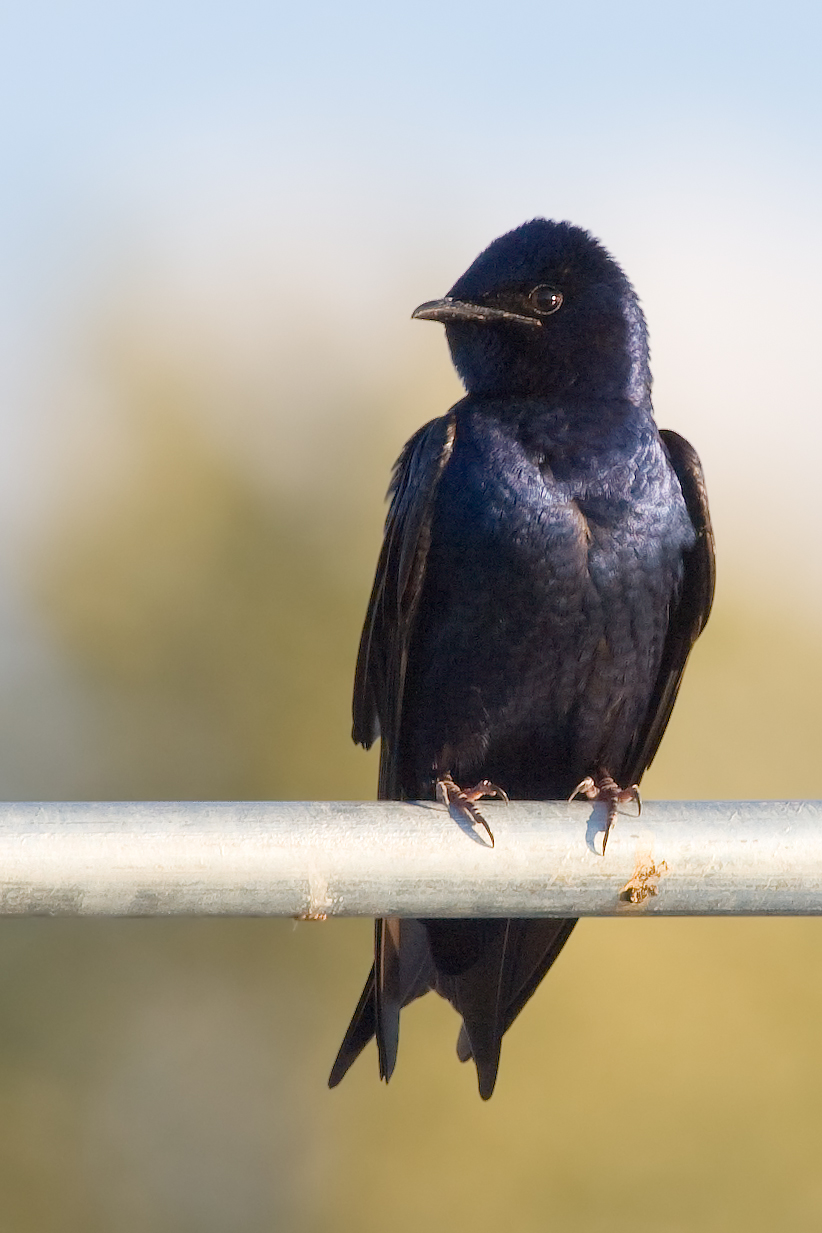
Sinaloa Martin
Progne sinaloae
Order: Passeriformes / Family: Hirundinidae

Wikimedia Commons
About the Sinaloa Martin
The Sinaloa Martin, scientifically known as Progne sinaloae, is a species of swallow that captures the attention of ornithologists and birders due to its limited distribution and distinctive appearance. This medium-sized bird is part of the family Hirundinidae, which includes other swallows and martins known for their aerial agility and insectivorous diet. The Sinaloa Martin is primarily found in the northwestern regions of Mexico, particularly in the states of Sinaloa and Sonora. Its presence is often associated with montane forests and semi-open areas where it can hunt for flying insects. The bird's restricted range and specific habitat preferences make it a species of interest for conservationists.
The ecological role of the Sinaloa Martin centers around its insectivorous diet, which helps control insect populations in its habitat. This bird plays a vital role in the ecosystems it inhabits by reducing the number of flying insects, which can include agricultural pests. The presence of the Sinaloa Martin is an indicator of healthy ecosystems, given its reliance on a stable supply of insect prey and suitable nesting sites. During the breeding season, which typically occurs from May to July, these birds can be seen performing aerial displays as part of their courtship rituals.
Significantly, the Sinaloa Martin's population dynamics are not well-documented, which adds a layer of mystery and urgency to its study. The bird is believed to undergo some migratory movements, although its wintering grounds remain largely unknown. Conservationists express concern about habitat degradation, which threatens its limited breeding areas. Research into the Sinaloa Martin's breeding biology, migration patterns, and habitat preferences is crucial for developing effective conservation strategies. The bird's elusive nature and restricted range highlight the importance of targeted conservation efforts within its known habitats.
The Sinaloa Martin belongs to the family Hirundinidae, within the order Passeriformes. These birds typically live average 5-7 years, with a maximum recorded of 9 years..
How to Identify a Sinaloa Martin
Identifying the Sinaloa Martin involves observing its sleek, glossy plumage and distinctive size. Adult males exhibit a striking blue-black coloration that can appear iridescent in sunlight, making them easier to spot against the sky. Females and juveniles, on the other hand, have a duller appearance, often displaying a mix of gray and blue hues. This sexual dimorphism is typical among many martin species, aiding in identifying the sex of the bird. Compared to similar species like the Purple Martin, the Sinaloa Martin is slightly smaller, with a more tapered body and longer wings.
In flight, the Sinaloa Martin showcases a distinctive silhouette characterized by its long, pointed wings and forked tail. These features contribute to its agile flight patterns, allowing it to maneuver swiftly through the air while hunting for insects. Perched, the bird maintains an upright posture typical of swallows, often seen resting on branches or wires in its preferred habitats.
Confusion can arise with other members of the Hirundinidae family, such as the Tree Swallow or the Violet-green Swallow, especially when viewed from a distance. However, the Sinaloa Martin's unique combination of size, coloration, and habitat preference helps differentiate it from these similar species. Observers should pay attention to the bird's flight behavior and vocalizations, which can provide additional identification clues.
Having trouble telling birds apart? Upload a photo to our bird identification tool for an instant species match.
Sinaloa Martin Habitat and Range
Preferred Habitat
The Sinaloa Martin inhabits montane forests and semi-open areas that provide a mix of trees and clearings. These environments offer the bird ample flying space for hunting insects, its primary food source. The hills and low mountains of northwestern Mexico, particularly in Sinaloa and Sonora, host populations of this species. The bird typically ranges between elevations of 500 and 1500 meters, where the climate and vegetation suit its breeding and feeding needs.
During breeding season, the Sinaloa Martin can be found in areas with a combination of trees for nesting and open spaces for foraging. There is little evidence to suggest a significant urban presence, as the species favors natural landscapes over developed areas. Seasonal habitat shifts are not well-documented, but it is expected that the bird might move to different elevations or areas in response to food availability and climatic conditions.
Geographic Range
The Sinaloa Martin has a breeding range largely confined to northwestern Mexico. This includes the states of Sinaloa and Sonora, with potential sightings in adjacent areas such as Nayarit and Chihuahua. The bird's range is one of the most restricted among North American martins, which contributes to its elusive status.
During the breeding season, populations concentrate in suitable montane forest habitats where they can find nesting sites and food. The full extent of their migratory patterns remains unclear, though some evidence suggests they may move southward or to lower elevations post-breeding. Potential wintering areas could include southern Mexico or even Central America, but these regions are not definitively documented as part of their range.
Population density hotspots are challenging to pinpoint due to the bird's limited and poorly understood distribution. Further study is needed to map its precise range and understand the factors influencing its seasonal movements, which will aid in conservation and management efforts.
Want to know which birds visit your area? Browse our backyard birds by location guides for region-specific species lists.
What Does the Sinaloa Martin Eat?
The diet of the Sinaloa Martin consists primarily of flying insects, which it captures while in flight. This diet includes a variety of insect species such as beetles, flies, and moths. The bird employs agile and acrobatic flight techniques to catch its prey, often undertaking long foraging flights to locate abundant insect swarms.
Seasonal changes in diet are not well documented, although it is likely that the availability of certain insect species fluctuates with seasons and weather conditions. During the breeding season, when energy demands are high, the Sinaloa Martin may exhibit more intensive foraging behavior to support the needs of its chicks.
The bird's feeding schedule largely coincides with periods of high insect activity, typically during the warmest parts of the day when insects are most active. Its feeding behavior plays a critical role in controlling insect populations within its range. The Sinaloa Martin's dietary habits highlight its role as an important insect predator in its ecosystem.
Sinaloa Martin Behavior and Social Structure
The Sinaloa Martin exhibits social behavior typical of many swallow species. While it can be seen alone or in pairs during the breeding season, it often forms small flocks during non-breeding times, which may include other swallow species. These flocks enhance the bird’s efficiency in locating food and provide some protection against predators.
Territorial behavior is evident during the breeding season, with pairs defending their nesting sites against intruders. Courtship displays involve aerial acrobatics and vocalizations that establish pair bonds and deter rivals. The male often performs complex flight patterns to attract a mate and establish a breeding territory.
The Sinaloa Martin maintains a daily routine centered around feeding, with peak activity occurring during daylight hours. Its response to predators includes aerial evasive maneuvers and alarm calls to alert other birds of danger. The martin's keen eyesight and flight agility are its primary defenses against aerial predators such as hawks and falcons. Understanding these behaviors provides insight into the Sinaloa Martin’s ecological niche and survival strategies.
Sinaloa Martin Nesting and Reproduction
The Sinaloa Martin typically nests in natural cavities found in trees or cliffs, although the specifics of nest site selection are not thoroughly documented. The bird may also take advantage of artificial structures such as buildings or nesting boxes if available within its habitat.
Nest construction involves gathering a variety of materials, including twigs, grass, and mud, which are used to create a secure and insulated environment for the eggs. The female typically lays a clutch of 3-5 eggs, with incubation lasting approximately 14-16 days. Both parents participate in feeding the chicks, which fledge about 22-28 days after hatching.
Parental roles are shared, although the female often takes a more prominent role in incubation. The number of broods per year is usually limited to one, given the specific and limited breeding season. Understanding the nesting habits of the Sinaloa Martin is vital for conservation efforts, particularly in maintaining suitable nesting sites in their natural habitat.
Sinaloa Martin Sounds and Vocalizations
The primary song of the Sinaloa Martin is a series of melodious chirps and whistles, characterized by a rhythmic and slightly trilling quality. These vocalizations serve multiple purposes, including mate attraction and territory defense. The song's pitch is medium, with a pleasant and rolling cadence that can be heard during courtship and territorial displays.
Call notes include a variety of sharp, chip-like sounds used for communication between individuals, particularly during flight. Alarm calls are more rapid and higher-pitched, serving to alert other martins of potential threats.
The Sinaloa Martin participates in a dawn chorus, where males sing vigorously at first light to establish their presence and assert territorial boundaries. These vocalizations, while not as elaborate as some songbirds, play a crucial role in the bird's social interactions and reproductive success.
Interesting Facts About the Sinaloa Martin
- 1The Sinaloa Martin is one of the least studied swallows in North America, making it an intriguing subject for ornithologists.
- 2This species was first described in 1889, yet its population and ecological habits remain largely a mystery today.
- 3The Sinaloa Martin is primarily found in Mexico, with its presence verified in only a few specific locations.
- 4Its song is less complex than many other songbirds, yet it plays a crucial role in its social interactions.
- 5The Sinaloa Martin's flight agility allows it to catch insects mid-air, showcasing impressive aerial acrobatics.
- 6Despite its name, the Sinaloa Martin is not limited to the state of Sinaloa, as it also inhabits parts of Sonora.
- 7The bird's striking blue-black plumage provides excellent camouflage against the sky when viewed from below.
Sinaloa Martin Conservation Status
The Sinaloa Martin is currently listed as Near Threatened by the IUCN, with its population trend believed to be decreasing. Habitat loss due to deforestation and land conversion for agriculture poses significant threats to its restricted range. The bird's reliance on specific habitats makes it vulnerable to environmental changes and human activities. Conservation efforts focus on protecting and managing its breeding habitats, particularly in the montane forests of northwestern Mexico. Historical population changes are not well documented due to the bird's elusive nature and limited distribution. Continued research and monitoring are needed to better understand its ecological requirements and inform conservation strategies. Engagement with local communities and stakeholders is crucial in efforts to preserve the natural habitats of the Sinaloa Martin. Conservation programs may include habitat restoration and the installation of artificial nesting structures to support population recovery.
Other Hirundinidae Species


Birds Similar to the Sinaloa Martin
These species are often confused with the Sinaloa Martin due to similar appearance or overlapping range.