Speckled Tinkerbird
Pogoniulus scolopaceus
Order: Piciformes / Family: Lybiidae

Wikimedia Commons
About the Speckled Tinkerbird
The Speckled Tinkerbird, scientifically known as Pogoniulus scolopaceus, is a small, vibrant member of the Lybiidae family, notable for its distinctive speckled appearance and persistent vocalizations. This bird primarily inhabits the tropical forests of West and Central Africa, where it plays a crucial role in the ecosystem as both a seed disperser and predator of various insects. The Speckled Tinkerbird is most commonly found in countries such as Nigeria, Cameroon, and the Democratic Republic of the Congo, thriving in dense, humid forest environments. These birds contribute to the ecological balance by feeding on a variety of fruits and insects, thus aiding in seed dispersal and pest control.
In terms of behavior, the Speckled Tinkerbird is a sedentary species, meaning it does not undertake long migrations. Instead, it remains within its home range throughout the year, adapting to seasonal changes in food availability. During the breeding season, which varies slightly depending on the region, these birds engage in complex courtship displays that include vocal duets between mates. The male and female collaborate in nesting activities, showcasing their monogamous nature.
The Speckled Tinkerbird's ecological role extends beyond its dietary habits. As a cavity nester, it often relies on abandoned woodpecker holes or natural crevices found in trees to rear its young. This behavior underscores the interconnected nature of forest ecosystems, where the nesting activities of one species can influence the availability of suitable sites for others. The Speckled Tinkerbird's presence serves as an indicator of forest health, as its populations are usually stable in well-preserved habitats while showing signs of decline in areas experiencing deforestation and habitat fragmentation.
The Speckled Tinkerbird belongs to the family Lybiidae, within the order Piciformes. These birds typically live typically 5-8 years, though specific data is limited..
How to Identify a Speckled Tinkerbird
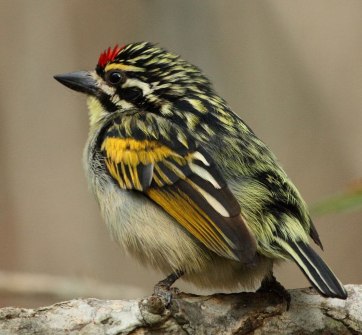
The Speckled Tinkerbird is a small bird, measuring about 12 cm in length, with a robust, compact build typical of the Lybiidae family. Its plumage is primarily black and white, with a distinctive speckled pattern across its back and wings, which serves as its key identifying feature. The bird's underparts are generally white, providing a stark contrast to its darker upperparts. A notable yellow patch graces its forehead, adding a splash of color to its appearance.
Adult Speckled Tinkerbirds exhibit little sexual dimorphism, meaning males and females look quite similar. However, juvenile birds can be distinguished by their more muted coloration and less defined speckling, which becomes more pronounced as they mature. The bird's bill is stout and strong, adapted for its diet of fruits and insects. Its flight is characterized by quick, flitting movements, which, coupled with its small size, make it a challenge to spot in dense foliage.
When perched, the Speckled Tinkerbird often adopts an upright posture, remaining still for extended periods as it surveys its surroundings. This posture, combined with its distinct call, helps observers locate it within its forest habitat. While it may be confused with other tinkerbirds, the Speckled Tinkerbird's unique speckled pattern and distinctive vocalizations typically set it apart.
Having trouble telling birds apart? Upload a photo to our bird identification tool for an instant species match.
Speckled Tinkerbird Habitat and Range
Preferred Habitat
The Speckled Tinkerbird primarily inhabits tropical and subtropical forests, favoring dense, humid environments rich in epiphytes and lianas. It is often found at elevations ranging from sea level to about 1,500 meters, depending on the forest type and geographical region. This bird is a resident of the lowland and montane forests of West and Central Africa, including regions like the Congo Basin and the Upper Guinea Forests.
While preferring primary forests, the Speckled Tinkerbird can also adapt to secondary growth and forest edges, provided there is sufficient tree cover. Unlike some other bird species, it does not typically venture into heavily urbanized areas, although it may occasionally be spotted in rural gardens or plantations adjacent to forests. Its reliance on forest habitats means that any significant changes in these environments, such as logging or land conversion, can impact its populations.
Geographic Range
The Speckled Tinkerbird's range extends across the tropical belt of West and Central Africa. Its distribution includes countries such as Sierra Leone, Liberia, Ghana, Nigeria, Cameroon, Gabon, and the Democratic Republic of the Congo, among others. This species is non-migratory, with populations established in suitable habitats throughout its range year-round.
The bird is most commonly encountered in the dense forests of the Congo Basin, where it benefits from the rich biodiversity and complex ecosystems. While it maintains a broad range across several countries, the Speckled Tinkerbird's population densities are highest in areas with minimal human disturbance. These forests provide the necessary resources for breeding, feeding, and sheltering, making them vital for the bird's survival.
Despite its broad range, the Speckled Tinkerbird's presence is closely tied to the availability of mature forests. Areas experiencing deforestation or significant habitat fragmentation often see a decline in tinkerbird populations, underscoring the importance of forest conservation efforts in maintaining this species.
Want to know which birds visit your area? Browse our backyard birds by location guides for region-specific species lists.
What Does the Speckled Tinkerbird Eat?
The Speckled Tinkerbird's diet primarily consists of fruits, which it plucks from trees with precision using its stout beak. Figs are a favored food source, though it also consumes a variety of other small fruits and berries available within its forest habitat. This frugivorous diet plays a critical role in seed dispersal, as the bird excretes seeds away from the parent tree, aiding in plant propagation.
In addition to fruits, the Speckled Tinkerbird supplements its diet with insects, particularly during the breeding season when the demand for protein increases. It catches insects by gleaning them from leaves or snapping them out of the air in a behavior known as hawking. The bird's foraging activity is primarily diurnal, with peak feeding occurring in the early morning and late afternoon when the forest is most active with insect life.
Seasonal variations can influence the Speckled Tinkerbird's diet. During periods of fruit scarcity, it may rely more heavily on insects and other invertebrates, demonstrating its adaptability to fluctuating food resources. This dietary flexibility is crucial for its survival in ever-changing forest environments.
Speckled Tinkerbird Behavior and Social Structure
The Speckled Tinkerbird is a solitary and territorial bird, often found alone or in pairs. It maintains a well-defined territory, which it defends vocally against intruders. Its vocalizations, consisting of repetitive notes, serve both as a territorial proclamation and a means of communication between mates.
During the breeding season, the Speckled Tinkerbird engages in elaborate courtship displays. These displays often include vocal duets, where males and females sing in harmony to strengthen pair bonds. The birds also perform aerial displays, characterized by fluttering flights and exaggerated wing movements, to attract mates and ward off competitors.
In terms of daily activity, the Speckled Tinkerbird is most active during the cooler parts of the day, such as early morning and late afternoon. It spends much of its time foraging, interspersed with periods of rest and preening. When faced with potential predators, the bird employs a combination of cryptic plumage and stillness to avoid detection, relying on its ability to blend into the forest environment.
Speckled Tinkerbird Nesting and Reproduction
The Speckled Tinkerbird nests in cavities, often utilizing holes in trees created by other species, such as woodpeckers, or natural crevices. Nesting sites are typically located within the bird's established territory, ensuring proximity to food resources and protection from predators.
The nesting process begins with the selection of a suitable cavity, which both the male and female inspect and prepare. The nest itself consists of a simple lining of plant fibers and debris, providing a stable and insulated environment for the eggs.
Clutch size generally ranges from 2 to 3 eggs, with both parents sharing incubation duties. The incubation period lasts approximately 13 to 15 days, after which the chicks hatch. Both parents participate in feeding the young, delivering a diet rich in insects to meet their nutritional needs. Fledging occurs around 20 to 25 days after hatching, at which point the young birds begin to explore their surroundings while remaining dependent on parental care for several more weeks.
The Speckled Tinkerbird typically raises one brood per year, although in some regions with favorable conditions, a second brood may be attempted. The timing of breeding is often influenced by seasonal food availability, ensuring that young chicks have access to abundant resources.
Speckled Tinkerbird Sounds and Vocalizations
The primary song of the Speckled Tinkerbird consists of a series of rapid, high-pitched notes that are repeated continuously. This call is often described as a 'tink tink tink' sound, with a clear, bell-like quality. It is a characteristic sound of the bird's forest habitat and serves as both a territorial marker and a mating call.
In addition to its primary song, the Speckled Tinkerbird produces a variety of call notes. These include short, sharp 'chip' sounds used in communication between mates or as alarm calls when potential threats are detected. During the dawn chorus, its vocalizations are particularly pronounced, contributing to the rich tapestry of sounds within the forest.
The bird's vocal range and persistence make it an effective communicator, allowing it to maintain social bonds and defend its territory. These vocal habits are akin to those of other barbet species, though the Speckled Tinkerbird's unique rhythm and pitch help distinguish it from its relatives.
Interesting Facts About the Speckled Tinkerbird
- 1The Speckled Tinkerbird belongs to the barbet family, known for their stout bills and vibrant plumage.
- 2Despite its small size, the Speckled Tinkerbird's call can be heard over long distances in the dense forest.
- 3The bird's speckled plumage provides excellent camouflage among the dappled light and shadows of its forest home.
- 4Speckled Tinkerbirds help control insect populations, making them valuable allies for maintaining forest health.
- 5Their reliance on fruit makes Speckled Tinkerbirds important seed dispersers, aiding in the regeneration of tropical forests.
- 6The Speckled Tinkerbird's diet versatility allows it to adapt to seasonal changes in food availability.
- 7This bird often uses cavities abandoned by other species for nesting, showcasing a unique interspecies dependence.
Speckled Tinkerbird Conservation Status
The Speckled Tinkerbird is currently classified as Least Concern by the IUCN, indicating a relatively stable population. However, the species faces threats from habitat destruction due to logging, agriculture, and urban expansion, which can lead to localized population declines. Conservation efforts for the Speckled Tinkerbird focus on preserving its forest habitat. This includes establishing protected areas and promoting sustainable land-use practices that minimize deforestation and habitat fragmentation. Historical population changes have been influenced by the overall health of forest ecosystems in its range, with declines noted in areas experiencing significant environmental disturbance. While the Speckled Tinkerbird itself is not considered endangered, its dependence on forest habitats makes it vulnerable to the broader threats facing these ecosystems. Continued conservation efforts are essential to ensure the long-term survival of the species and the ecological balance it supports.
Other Lybiidae Species


Birds Similar to the Speckled Tinkerbird
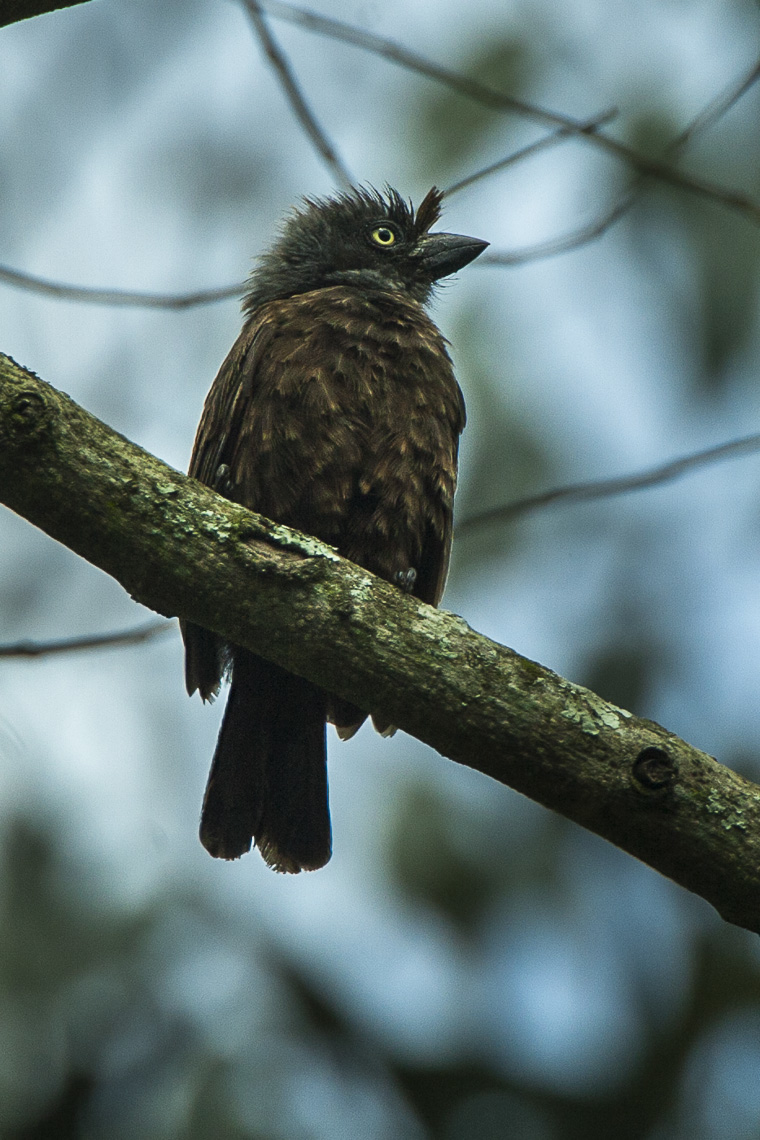
These species are often confused with the Speckled Tinkerbird due to similar appearance or overlapping range.