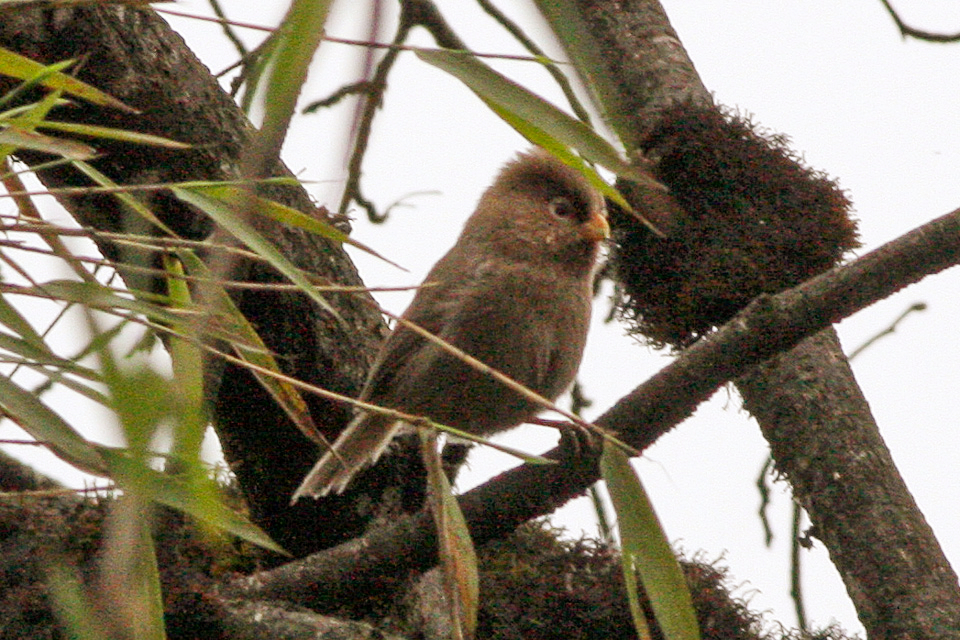
Spectacled Fulvetta
Fulvetta ruficapilla
Order: Passeriformes / Family: Sylviidae

Wikimedia Commons
About the Spectacled Fulvetta
The Spectacled Fulvetta, scientifically known as Fulvetta ruficapilla, is a small passerine bird belonging to the family Sylviidae. This bird is particularly notable for inhabiting the montane forests of central China, where it plays a crucial role in the ecosystem. As a resident species of the temperate regions of Asia, the Spectacled Fulvetta can be seen in the dense undergrowth of mixed forests, where it contributes to the ecological balance by aiding in seed dispersal and insect population control.
Navigating the forest understory, the Spectacled Fulvetta often forms mixed-species feeding flocks. This behavior not only enhances its foraging success but also minimizes the risk of predation. The bird’s year-round presence in its habitat provides stability to the local avifauna community. Fulvetta ruficapilla is an important part of the temperate forest ecosystem, participating in mutualistic relationships with both flora and fauna.
The seasonal behaviors of the Spectacled Fulvetta vary, although it does not typically migrate. During the breeding season, observed from April to July, the bird becomes particularly vocal and territorial. This period witnesses an increase in its insectivorous diet, necessary to meet the high protein demands of its developing young. In contrast, during the non-breeding season, the bird's diet slightly shifts towards more plant-based materials, such as seeds and berries, readily available in the harsh winter months of its mountainous habitat.
The importance of the Spectacled Fulvetta extends beyond its ecological role. It serves as an indicator species for the health of montane forest ecosystems. Changes in its population size or distribution can signal shifts in environmental conditions, such as climate change or habitat degradation. Conservationists closely monitor this bird, recognizing its significance in maintaining the intricate balance of its native habitat.
The Spectacled Fulvetta belongs to the family Sylviidae, within the order Passeriformes. These birds typically live average 5-6 years with a max recorded of 8 years.
How to Identify a Spectacled Fulvetta
The Spectacled Fulvetta measures approximately 13 cm in length. It is easily recognized by its distinctive reddish-brown cap, which contrasts with its otherwise grayish-brown body. The bird has a white eye-ring, giving the appearance of spectacles, hence its common name. Its underparts are paler, blending into a dusky white throat.
In terms of sexual dimorphism, the males and females of Fulvetta ruficapilla are similar in appearance, making it challenging to distinguish them in the field. Juveniles resemble adults, although they may exhibit slightly duller plumage until they molt into their adult feathers. The flight silhouette of the Spectacled Fulvetta shows a rounded tail and short wings, typical of birds adapted to maneuvering through dense vegetation.
While the Spectacled Fulvetta may be confused with other fulvettas, its unique head pattern and the contrast between its cap and body make it identifiable. Its perching posture is upright, often seen clinging to slender branches or twigs while foraging. This bird rarely forages on the ground, unlike some of its relatives, which helps distinguish it from similar species.
Having trouble telling birds apart? Upload a photo to our bird identification tool for an instant species match.
Spectacled Fulvetta Habitat and Range
Preferred Habitat
The Spectacled Fulvetta primarily inhabits the montane forests of central China, thriving at elevations between 1,500 and 3,500 meters. These forests are characterized by a mix of conifers and broadleaf trees, providing a dense and sheltered environment. The bird favors areas with thick undergrowth, which offer ample foraging opportunities and protection from predators.
Seasonal habitat shifts are minimal, as Fulvetta ruficapilla is a non-migratory species. However, there might be slight altitudinal movements during the colder months, as the bird seeks out areas with less snow cover and more available food sources. While primarily a forest dweller, the Spectacled Fulvetta occasionally ventures into scrubby areas or edges of clearings, especially during the non-breeding season when food is scarcer.
The bird is rare in urban settings, preferring the tranquility and complexity of its natural habitat. Its presence is a testament to the pristine condition of the forests it inhabits, making it a valuable species for conservation monitoring.
Geographic Range
The breeding range of the Spectacled Fulvetta is largely confined to the montane regions of central China. It can be found in provinces such as Sichuan, Yunnan, and Shaanxi, where it is a resident species throughout the year.
Fulvetta ruficapilla does not undertake long migratory journeys. Its movements are mostly restricted to altitudinal shifts, necessitated by changing weather conditions and food availability. These minor movements ensure the bird can access optimal resources year-round without venturing far from its core habitat.
The population density of the Spectacled Fulvetta tends to be higher in areas with dense forest cover and minimal human disturbance. Regions like the Qinling Mountains serve as population hotspots, where the bird is commonly observed. Despite its relatively restricted range, the Spectacled Fulvetta is classified as common within its suitable habitat, benefiting from the expansive forest networks of central China.
Want to know which birds visit your area? Browse our backyard birds by location guides for region-specific species lists.
What Does the Spectacled Fulvetta Eat?
The Spectacled Fulvetta primarily feeds on insects and other small invertebrates. During the breeding season, insects such as caterpillars, beetles, and ants form a crucial component of its diet, providing necessary protein for chick development. The bird employs a gleaning technique, meticulously picking insects off leaves and branches as it navigates through the forest understory.
As the seasons change, Fulvetta ruficapilla's diet becomes more varied. In the autumn and winter months, the bird supplements its diet with seeds, berries, and small fruits. This dietary shift coincides with the decrease in insect availability, showcasing the bird's adaptability to its environment.
The foraging schedule of the Spectacled Fulvetta is diurnal, with peak activity occurring in the early morning and late afternoon. During these periods, the bird is most active, taking advantage of the cooler temperatures and heightened insect activity. Its small size allows it to exploit a range of food sources unavailable to larger birds, reinforcing its niche within the montane forest ecosystem.
Spectacled Fulvetta Behavior and Social Structure
The social structure of the Spectacled Fulvetta is characterized by its participation in mixed-species flocks. This gregarious behavior enhances its foraging efficiency and provides additional security against predators. Within these flocks, the fulvetta interacts with various other bird species, forming temporary alliances that benefit all participants.
Territorial behavior is most evident during the breeding season, when Fulvetta ruficapilla becomes more vocal and defensive of its chosen nesting area. Males engage in courtship displays, often involving song and subtle posturing to attract females. Pair bonds, once formed, appear monogamous for the duration of the breeding cycle.
The daily activity pattern of the Spectacled Fulvetta is predominantly diurnal. It spends most of its day foraging, interspersed with periods of rest and social interaction. The bird exhibits a remarkable agility in maneuvering through dense foliage, a behavior that is both a foraging strategy and a defensive tactic against predators. Its response to threats is swift, often involving a rapid retreat into thicker cover.
Though generally not aggressive, the Spectacled Fulvetta will defend its territory or food sources when necessary. Such interactions are typically brief and non-violent, with the bird preferring avoidance over confrontation. This behavior underscores its role as a cooperative participant in its ecosystem.
Spectacled Fulvetta Nesting and Reproduction
The nesting habits of the Spectacled Fulvetta involve constructing cup-shaped nests from twigs, moss, and leaves. These nests are usually situated low in shrubs or small trees, providing concealment and protection from potential predators. The female primarily undertakes nest building, although the male may assist by gathering materials.
A typical clutch comprises 3 to 4 eggs, with the female responsible for the majority of incubation duties. The incubation period lasts about 14 days, during which the female remains vigilant and attentive. The male supports by providing food and maintaining the territory.
Once hatched, the chicks are altricial, requiring significant parental care. Both parents participate in feeding the young, bringing a diet rich in insects to satisfy the chicks' nutritional needs. The fledging period occurs approximately 12 to 14 days post-hatching, at which point the young birds begin to explore their surroundings, though they remain dependent on the parents for food and protection for several more weeks.
The Spectacled Fulvetta typically raises one brood per year, though favorable conditions may permit a second. This breeding strategy reflects the bird's adaptation to its stable yet challenging environment, maximizing reproductive success without overextending parental resources.
Spectacled Fulvetta Sounds and Vocalizations
The primary song of the Spectacled Fulvetta is a series of clear, melodious notes delivered in a steady rhythm. This song serves both as a territorial marker and a courtship display. The pitch is moderate, with a pleasant, almost flute-like quality that carries well through the dense forest.
Call notes of Fulvetta ruficapilla are short and sharp, often used to maintain contact within flocks or to signal alarm. These calls are higher in pitch than the song, with a distinctive 'cheep' that alerts other birds to potential threats.
During the breeding season, the dawn chorus is a notable event, with males singing vigorously to establish territories and attract mates. The song of the Spectacled Fulvetta, while not as complex as some other passerines, is a critical component of its behavioral repertoire, facilitating communication and interaction within its environment.
Interesting Facts About the Spectacled Fulvetta
- 1The Spectacled Fulvetta's distinctive eye-ring gives it its name, acting as a visual cue among dense foliage.
- 2Despite its limited range, the Spectacled Fulvetta boasts a stable population thanks to the expansive forests of central China.
- 3The bird's primary song, a series of melodious notes, can be heard echoing through the forest during early morning hours.
- 4Fulvetta ruficapilla participates in mixed-species flocks, which enhances its foraging success and reduces predation risk.
- 5The Spectacled Fulvetta's nesting sites are often well-concealed within shrubs, providing protection from predators.
- 6This bird's adaptability is evident in its varied diet, shifting from insects to seeds and berries as seasons change.
- 7The Spectacled Fulvetta's presence is an indicator of forest health, making it valuable for ecological monitoring.
Spectacled Fulvetta Conservation Status
The Spectacled Fulvetta currently holds a status of Least Concern on the IUCN Red List. Its population trend appears stable, supported by the extensive forest habitats within its range, particularly in central China. The primary threats to Fulvetta ruficapilla stem from habitat destruction due to logging and land conversion for agriculture. Conservation efforts focus on habitat preservation and monitoring population dynamics. These strategies aim to ensure that the montane forests remain intact, providing the necessary resources for the fulvetta and other dependent species. Historically, the bird has maintained a steady population, benefiting from the conservation of large forest tracts in its native range. Continued vigilance is essential, as any significant changes in land use or climate could impact the Spectacled Fulvetta's habitat and, consequently, its population stability. Collaboration between conservationists and local communities is vital for maintaining the health of these ecosystems.