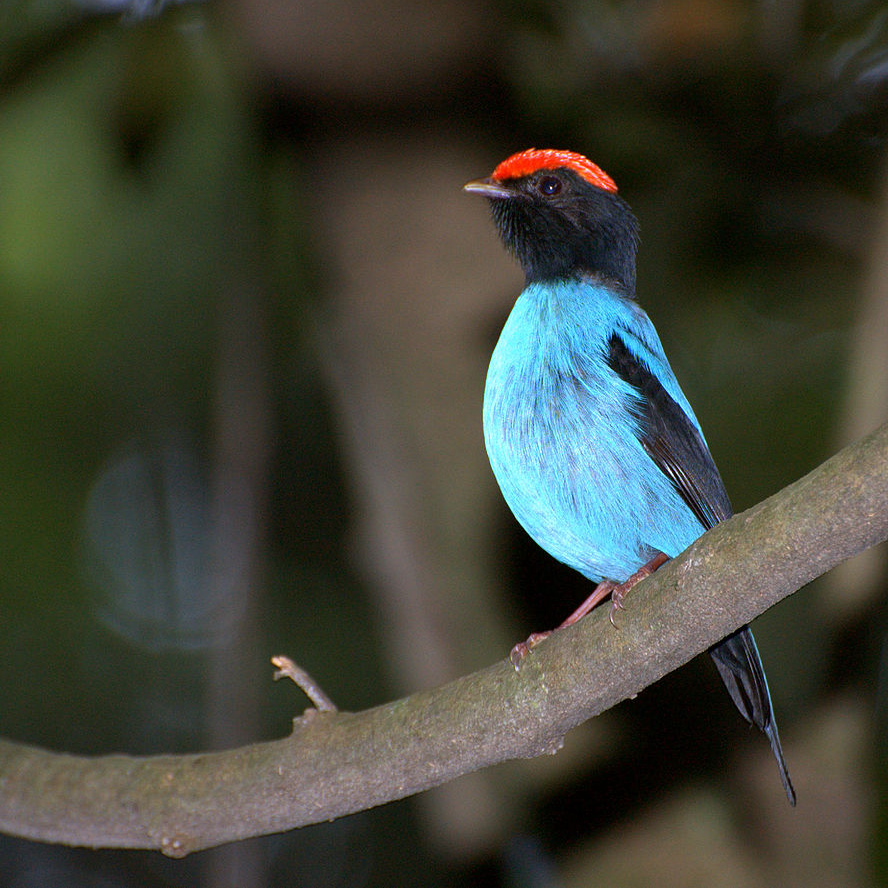
Striped Manakin
Machaeropterus regulus
Order: Passeriformes / Family: Pipridae

Wikimedia Commons
About the Striped Manakin
The Striped Manakin, scientifically known as Machaeropterus regulus, is a small passerine bird belonging to the family Pipridae. This captivating species is renowned for its striking appearance and elaborate courtship displays, which play a significant role in its social structure and ecological interactions. The Striped Manakin inhabits the dense, humid forests of South America, particularly found in countries like Brazil, Colombia, and Venezuela. These lush environments provide the perfect backdrop for the manakin's colorful displays and complex vocalizations. The Striped Manakin plays a vital role in its ecosystem as both a pollinator and a prey species. By feeding on a variety of fruits, it helps disperse seeds throughout the forest, contributing to the regeneration of plant life. Additionally, it serves as a food source for larger predators, maintaining the delicate balance of the forest food web. The presence of the Striped Manakin in these regions signifies healthy, biodiverse ecosystems. This bird's ecological significance extends beyond its immediate environment. Its behaviors and interactions with other species offer valuable insights into the dynamics of tropical forest ecosystems. During the breeding season, particularly in the wet months, the Striped Manakin becomes especially active. Males engage in complex displays to attract females, showcasing their vibrant plumage and acrobatic skills. These displays are not just for show-they play a critical role in mate selection and species propagation. Outside of the breeding season, the Striped Manakin's behavior shifts slightly. While still active and vocal, these birds form loose flocks, often joining mixed-species groups that roam the forest in search of food. This seasonal behavioral change highlights the adaptability of the Striped Manakin to its environment and its role in the broader avian community.
The Striped Manakin belongs to the family Pipridae, within the order Passeriformes. These birds typically live average 5-7 years with a maximum recorded of 10 years.
How to Identify a Striped Manakin
The Striped Manakin is a small bird, measuring about 10 cm in length, characterized by its vivid plumage. Adult males boast a bright red cap, a black face, and striking white stripes along the wings. Their underparts are predominantly white, contrasting with their olive-green back. Females and juveniles, on the other hand, display a more subdued color palette, with olive-green dominating their plumage, making them less conspicuous in the forest understory. One of the key identification features is the distinct pattern of white wing stripes, which are noticeable even in flight. Males, during their courtship displays, exhibit a unique posture, often raising their crown feathers to enhance the vibrancy of their red cap. This behavior, coupled with their vivid coloration, makes them easily distinguishable from other manakin species. In comparison to similar species, such as the Crimson-hooded Manakin, the Striped Manakin's wing stripes serve as a reliable field mark. When perched, they maintain an upright posture, often flicking their wings and tails as part of their display repertoire.
Having trouble telling birds apart? Upload a photo to our bird identification tool for an instant species match.
Striped Manakin Habitat and Range
Preferred Habitat
The Striped Manakin primarily inhabits lowland tropical forests, thriving in the dense canopy and understory layers. These habitats provide abundant food sources and suitable nesting sites. Found at elevations ranging from sea level to about 900 meters, this species tends to avoid open areas, preferring the cover of thick foliage. While predominantly a forest dweller, the Striped Manakin occasionally ventures into secondary growth and forest edges, particularly during the non-breeding season when food resources become more dispersed. Although not commonly found in urban areas, small populations may inhabit well-vegetated suburban gardens, provided there is adequate tree cover and minimal human disturbance.
Geographic Range
The Striped Manakin's range spans across several South American countries, including Brazil, Colombia, Venezuela, and Ecuador. It resides predominantly in the Amazon Basin, where the extensive rainforest provides ample habitat. The bird's distribution is patchy, influenced by forest density and the availability of fruiting trees. While the Striped Manakin does not engage in long-distance migrations, it exhibits some local movements in response to seasonal changes in food availability. During the breeding season, its presence becomes more concentrated in areas with abundant resources, whereas in the non-breeding season, it may spread out to explore different parts of its range. Population density hotspots are often found in protected areas where human impact is minimal, such as the Amazon Rainforest and certain national parks.
Want to know which birds visit your area? Browse our backyard birds by location guides for region-specific species lists.
What Does the Striped Manakin Eat?
The Striped Manakin primarily feeds on a diet of fruits, playing a crucial role in seed dispersal. It targets small to medium-sized berries, favoring those from the Melastomataceae and Rubiaceae families. During the wet season, when fruit is plentiful, the Striped Manakin's diet is almost exclusively frugivorous. In drier periods, it supplements its diet with insects, including beetles and ants, which it gleans from leaves and branches. The bird employs a methodical foraging technique, often hovering momentarily while plucking fruit or prey from foliage. Its feeding schedule is most active during the early morning and late afternoon, coinciding with peak insect activity and fruit availability.
Striped Manakin Behavior and Social Structure
The Striped Manakin exhibits a fascinating array of behaviors, particularly during the breeding season. Males engage in elaborate courtship displays, characterized by rapid wing flicks and acrobatic maneuvers designed to attract females. These displays often occur in specific lekking areas, where multiple males gather to perform and compete for female attention. The species is generally solitary outside the breeding season but may join mixed-species flocks for foraging. Territorial behavior is common, with males defending their display areas vigorously. In response to predators, the Striped Manakin relies on its agility and dense surroundings for protection, often freezing or retreating into thick foliage. Its daily activity pattern involves periods of intense foraging interspersed with rest, particularly during the hottest parts of the day.
Striped Manakin Nesting and Reproduction
The Striped Manakin constructs small, cup-shaped nests, typically placed on horizontal branches in the forest understory. These nests are crafted from fine plant fibers, leaves, and spider silk, offering stability and camouflage. The female takes on the primary role in nest building and incubation, laying a clutch of 2-3 eggs. The incubation period lasts approximately 18-20 days, after which the chicks fledge in around 15-18 days. Both parents participate in feeding the young, although the female invests more time in chick care. The Striped Manakin usually raises one brood per year, aligning its breeding cycle with peak food availability to ensure the successful rearing of its young.
Striped Manakin Sounds and Vocalizations
The Striped Manakin's vocalizations are a key component of its courtship displays. Its primary song consists of a series of rapid, high-pitched notes, often described as a repetitive "zee-zee-zee" pattern. These calls are delivered with precision and rhythm, serving to attract females and establish territory. In addition to its song, the Striped Manakin emits a variety of call notes, including soft whistles and clicking sounds used for communication within mixed-species flocks. Alarm calls are sharp and abrupt, alerting other birds to potential threats. The bird's dawn chorus is a vibrant mix of its various calls, contributing to the acoustic tapestry of the forest.
Interesting Facts About the Striped Manakin
- 1The Striped Manakin is known for its unique wing-snapping display, a sound produced during its courtship dance.
- 2Despite its vibrant colors, the Striped Manakin is often hard to spot due to its preference for dense forest habitats.
- 3This small bird can hover like a hummingbird, allowing it to feed on fruit without landing.
- 4Males perform in leks, congregating in specific areas to showcase their displays to potential mates.
- 5The Striped Manakin's diet changes seasonally, with more insects consumed during drier months.
- 6While primarily frugivorous, the Striped Manakin plays a significant role in controlling insect populations.
- 7Its nesting period is synchronized with the fruiting cycles of key tree species in its habitat.
Striped Manakin Conservation Status
The Striped Manakin is currently classified as Least Concern by the IUCN, with its population considered stable. However, habitat loss due to deforestation poses a significant threat to its long-term survival. Conservation efforts focus on preserving the integrity of tropical forests and promoting sustainable land-use practices. Protected areas and national parks play a crucial role in safeguarding the habitats of the Striped Manakin. Historical population data suggest that while localized declines have occurred, the species remains widespread across its range. Continuous monitoring and habitat conservation remain essential to ensuring the future of the Striped Manakin.