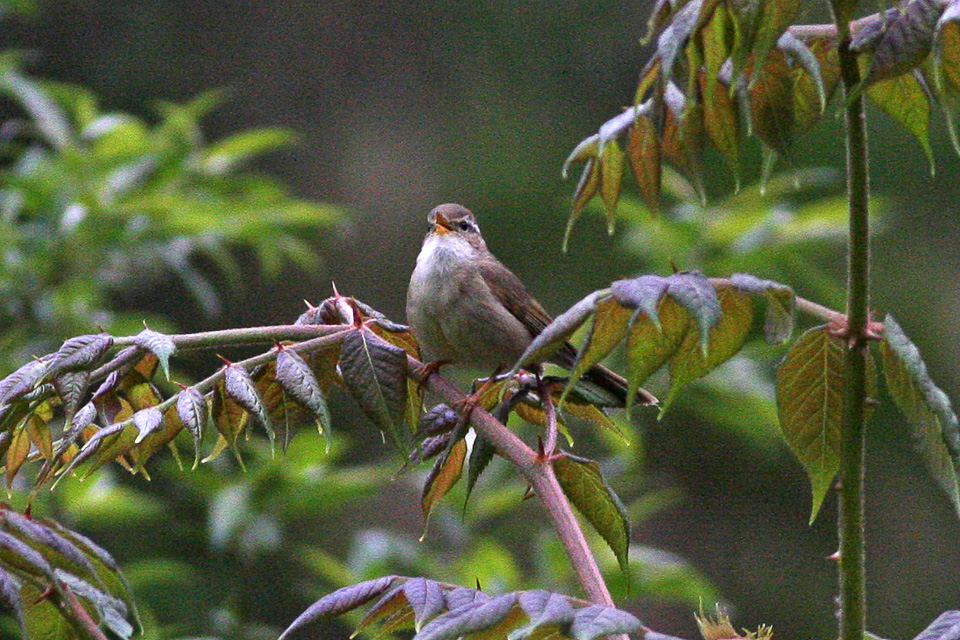
Sulawesi Leaf Warbler
Phylloscopus sarasinorum
Order: Passeriformes / Family: Phylloscopidae

Wikimedia Commons
About the Sulawesi Leaf Warbler
The Sulawesi Leaf Warbler (Phylloscopus sarasinorum) is a small bird endemic to the island of Sulawesi in Indonesia. This species plays a significant ecological role in the montane forests where it resides, acting as both a predator and prey within its ecosystem. The warbler is primarily found in the central and northern highland regions of the island, such as the Lore Lindu and Dumoga-Bone National Parks. As an insectivore, it contributes to controlling insect populations, thus maintaining the health of the forest ecosystem. In addition to its ecological contributions, the Sulawesi Leaf Warbler serves as a key indicator species for the health of montane forest habitats. Birdwatchers and researchers alike value this bird for its unique behavior and adaptability to its environment. Seasonally, the Sulawesi Leaf Warbler does not undertake long migrations, but it may move to slightly lower elevations during the wet season in search of food. This movement ensures that it can exploit different resources throughout the year. Conservation efforts focus on protecting the forests of Sulawesi, which are threatened by deforestation and habitat fragmentation. Preserving these habitats is crucial not only for the Sulawesi Leaf Warbler but also for the myriad of other species that share its environment.
The Sulawesi Leaf Warbler belongs to the family Phylloscopidae, within the order Passeriformes. These birds typically live average 4-6 years, with a maximum recorded of 7 years..
How to Identify a Sulawesi Leaf Warbler
The Sulawesi Leaf Warbler is identifiable by its olive-green upperparts and a paler yellowish underside. This small bird, approximately 12 cm in length, features a distinctive supercilium, or eyebrow stripe, that is pale and contrasts with its dark eye line. Adult plumage is fairly consistent between males and females, making sex differentiation challenging in the field. Juvenile birds resemble adults but tend to have duller colors and less distinct markings. In flight, the Sulawesi Leaf Warbler's slim silhouette and rapid, direct flight pattern are characteristic. When perched, it often flicks its tail and wings, a behavior typical of many Phylloscopus warblers. The bird can sometimes be confused with the Mountain Leaf Warbler, but the Sulawesi Leaf Warbler's more uniform olive-green back and lack of prominent wing bars are distinguishing features.
Having trouble telling birds apart? Upload a photo to our bird identification tool for an instant species match.
Sulawesi Leaf Warbler Habitat and Range
Preferred Habitat
The Sulawesi Leaf Warbler predominantly inhabits montane forests, typically between 1,000 and 2,500 meters above sea level. It favors areas with dense undergrowth and abundant foliage, which provide ample foraging opportunities and protection from predators. This bird can occasionally be found at lower elevations during the rainy season when it may venture into submontane and lowland forests. Unlike many other warblers, the Sulawesi Leaf Warbler is not commonly found in urban areas, preferring the dense canopy and rich biodiversity of its natural montane habitat.
Geographic Range
The Sulawesi Leaf Warbler is endemic to the island of Sulawesi, Indonesia. It resides primarily in the central and northern parts of the island, with established populations in areas like the Lore Lindu and Dumoga-Bone National Parks. Unlike many other warbler species, it does not undertake long-distance migrations. However, there is some altitudinal movement within its range, as it may descend to lower elevations during the wet season to adapt to changing food availability. Population densities are highest in well-preserved montane forest regions, where the habitat remains largely undisturbed.
Want to know which birds visit your area? Browse our backyard birds by location guides for region-specific species lists.
What Does the Sulawesi Leaf Warbler Eat?
The diet of the Sulawesi Leaf Warbler consists mainly of insects and other small invertebrates. It actively forages among the leaves and branches, employing a methodical gleaning technique to capture prey. During the dry season, when insect populations are lower, the warbler may supplement its diet with small fruits and berries. It primarily feeds during daylight hours, with peak activity in the early morning and late afternoon. The Sulawesi Leaf Warbler's feeding strategy involves quick, acrobatic movements as it searches for caterpillars, beetles, and spiders, which are its preferred prey.
Sulawesi Leaf Warbler Behavior and Social Structure
The Sulawesi Leaf Warbler is a solitary bird, often seen alone or occasionally in pairs. It establishes small territories during the breeding season and exhibits territorial behavior by singing and displaying to ward off intruders. Courtship involves the male performing a display flight to attract a mate, accompanied by a series of soft calls. This bird is diurnal, with most of its activity centered around foraging. It shows a keen awareness of predators, often giving alarm calls and seeking cover when threatened. Outside the breeding season, it may join mixed-species foraging flocks, which provides additional protection from predators.
Sulawesi Leaf Warbler Nesting and Reproduction
The Sulawesi Leaf Warbler constructs a cup-shaped nest, typically placed in a low shrub or small tree. Nesting materials include grass, moss, and spider silk, which provide insulation and camouflage. The typical clutch size is two to three eggs, with an incubation period of approximately 12 to 14 days. Both parents participate in feeding the chicks, which fledge about 14 days after hatching. The species usually produces one brood per year, though a second brood may occur if conditions are favorable.
Sulawesi Leaf Warbler Sounds and Vocalizations
The primary song of the Sulawesi Leaf Warbler is a series of high-pitched notes, repeated in a rhythmic pattern that can resemble a rapid trill. Its call notes are softer, consisting of a series of 'chip-chip' sounds. An alarm call, used when predators are nearby, is a sharp 'tsip' that alerts others to danger. During the dawn chorus, the warbler's song is particularly prominent, as males sing to establish territory and attract mates.
Interesting Facts About the Sulawesi Leaf Warbler
- 1The Sulawesi Leaf Warbler can be found at elevations higher than 2,500 meters, making it one of the highest-dwelling leaf warblers.
- 2Despite its small size, the Sulawesi Leaf Warbler plays a crucial part in controlling insect populations in its montane forest habitat.
- 3This species' tail-flicking behavior is thought to be a method of startling prey, making insects easier to catch.
- 4The Sulawesi Leaf Warbler's song is uniquely adapted to its dense forest environment, with high-pitched notes that penetrate thick foliage.
- 5Sulawesi's diverse habitats, including those of the Sulawesi Leaf Warbler, are among the most species-rich in Indonesia.
Sulawesi Leaf Warbler Conservation Status
The Sulawesi Leaf Warbler is currently categorized as Least Concern by the IUCN. However, its populations are threatened by habitat loss due to deforestation and agricultural expansion in Sulawesi. Conservation efforts aim to protect the remaining montane forests and promote sustainable land-use practices. Historically, the warbler’s population has remained stable, but ongoing habitat destruction poses a significant risk to its long-term survival.