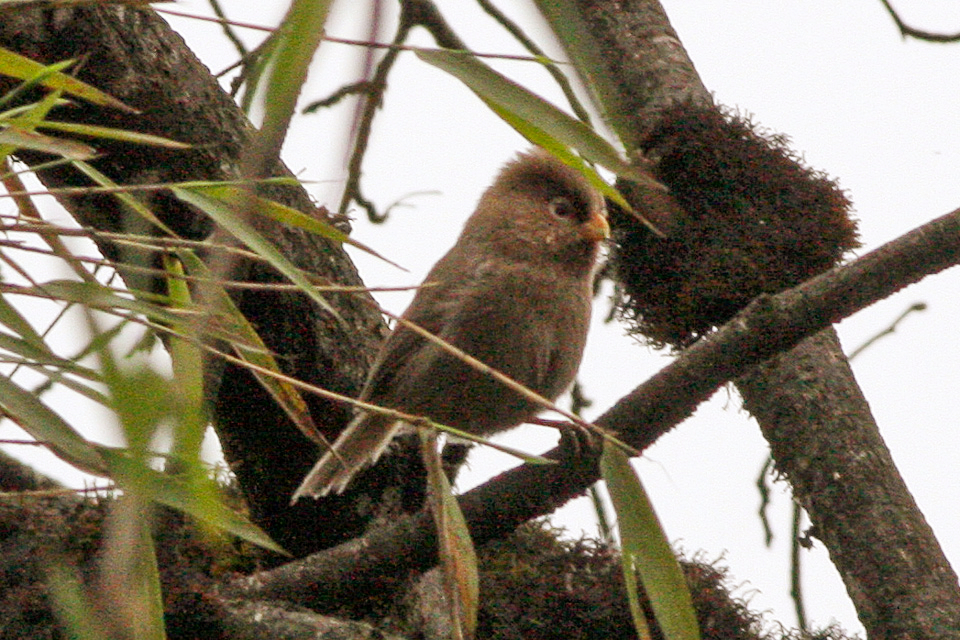
Sylvia australasiae
Sylvia australasiae
Order: Passeriformes / Family: Sylviidae
About the Sylvia australasiae
The Sylvia australasiae, commonly known as the Madagascar Warbler, is a distinctive member of the Sylviidae family, thriving primarily in the diverse ecosystems of Madagascar. As a resident species, it has adapted to the island's specific environmental conditions, making it an integral part of Madagascar's avian biodiversity. This bird is particularly significant due to its role in insect control and seed dispersion, contributing substantially to the ecological balance. The Madagascar Warbler is often found in forested regions across the island, engaging in various seasonal behaviors that align with Madagascar's unique climatic conditions. During the breeding season, the bird exhibits increased vocal activity and territorial behaviors, showcasing its adaptability to both temperate and tropical climates. The Madagascar Warbler's ecological role extends beyond insect control, as it also participates in pollination and acts as a prey species for larger predators, maintaining the delicate balance within its native habitat. Its presence is an indicator of healthy forest ecosystems, reflecting the overall biodiversity of the regions it inhabits.
The Sylvia australasiae belongs to the family Sylviidae, within the order Passeriformes. These birds typically live typically around 3-5 years, though exact data is limited..
How to Identify a Sylvia australasiae
The Madagascar Warbler is best identified by its greenish upperparts which contrast with its paler underparts. Adults display a subtle but distinctive eye-ring that aids in field identification. Juveniles often show duller plumage, lacking the brighter sheen of adults, which can lead to misidentification. Males and females resemble each other closely, though males might exhibit slightly brighter coloration during the breeding season. When compared to similar species, the Madagascar Warbler's plain and uniform coloration sets it apart. Its flight silhouette is characterized by rapid, short bursts, typical of many small passerines, and its perching posture exhibits a slight forward tilt, giving it a dynamic appearance.
Having trouble telling birds apart? Upload a photo to our bird identification tool for an instant species match.
Sylvia australasiae Habitat and Range
Preferred Habitat
The Madagascar Warbler predominantly inhabits the island's lush forests, including both lowland rainforests and montane regions. It thrives at elevations ranging from sea level to about 2,000 meters. Seasonal habitat shifts are minimal, as the bird is non-migratory, but it may move locally within an area to exploit seasonal food resources. Unlike many forest-dwelling birds, the Madagascar Warbler shows resilience in disturbed habitats, often venturing into secondary growth areas and even forest edges. However, it is less commonly found in urban environments, preferring the cover and food sources provided by dense vegetation.
Geographic Range
The Madagascar Warbler is endemic to Madagascar, making its range limited to this singular island. It occupies a variety of regions across Madagascar, with higher population densities in the eastern rainforests and scattered presence in the drier western and southern parts. This bird is non-migratory, maintaining its presence throughout the year across its range. Although it does not experience seasonal long-distance movements, it may undertake local migrations in response to food availability and breeding opportunities.
Want to know which birds visit your area? Browse our backyard birds by location guides for region-specific species lists.
What Does the Sylvia australasiae Eat?
The Madagascar Warbler's diet primarily consists of insects and arachnids, which it forages actively within its densely vegetated habitat. During the wetter months, it focuses on abundant caterpillars, beetles, and spiders. As the seasons change, it may shift to consuming seeds and small fruits, supplementing its diet with available resources. This warbler employs a methodical gleaning technique, picking insects from leaves and branches, and occasionally engaging in aerial sallying to capture flying insects. Its feeding schedule aligns with daylight hours, with peak foraging occurring during the early morning and late afternoon.
Sylvia australasiae Behavior and Social Structure
The Madagascar Warbler is predominantly solitary or found in pairs, showing a strong territorial nature, especially during the breeding season. Courtship displays involve male birds singing persistently while performing slight fluttering flights near a chosen perch. This species is known for its sharp response to intruders, often vocalizing loudly and engaging in brief chases to defend its territory. The Madagascar Warbler's daily activities include a mix of foraging, resting, and vigilant territorial patrols. This bird maintains a routine that mirrors the island's daylight cycle, being most active during the cooler parts of the day.
Sylvia australasiae Nesting and Reproduction
The Madagascar Warbler builds cup-shaped nests, strategically placed in dense shrubbery or low branches to conceal from predators. Nests are crafted from a mix of grass, leaves, and spider webs, providing a sturdy yet flexible structure. Clutch sizes typically range from two to four eggs, with an incubation period lasting approximately 12 to 14 days. Both parents partake in incubation and feeding duties, with fledging occurring about 10 to 12 days post-hatching. The species usually raises one brood per year, though favorable conditions may permit a second.
Sylvia australasiae Sounds and Vocalizations
The primary song of the Madagascar Warbler is a melodious, flute-like series of notes, delivered with a clear, rhythmic pattern. Its song can be heard throughout the day but is most prominent during the early morning hours, forming a key part of the dawn chorus. Call notes are sharp and metallic, often used as alarm signals or in response to threats. The warbler's vocalizations contribute significantly to its territorial and mating displays, with variations in pitch and rhythm indicating different communicative functions.
Interesting Facts About the Sylvia australasiae
- 1Despite its name, the Madagascar Warbler is not closely related to true warblers but shares similar ecological niches.
- 2The Madagascar Warbler's song is often described as one of the most melodious among Madagascar's avifauna.
- 3The species is known for its resilience, often thriving in secondary growth areas where other species decline.
- 4Madagascar Warblers can be seen engaging in mixed-species foraging flocks, benefiting from safety in numbers.
- 5The bird plays a crucial role in controlling insect populations, contributing to the health of forest ecosystems.
- 6Studies suggest that the Madagascar Warbler has adapted well to variable climatic conditions across its range.
- 7The warbler's presence in a habitat often indicates a healthy, thriving ecosystem due to its sensitivity to environmental changes.
Sylvia australasiae Conservation Status
Currently, the Madagascar Warbler is listed as Least Concern by the IUCN, with a stable population trend. However, ongoing deforestation and habitat degradation pose significant threats. Conservation efforts focus on habitat preservation through protected area management and reforestation projects. Historical population assessments suggest a gradual decline in certain regions, prompting increased conservation focus. Continued monitoring and habitat protection are crucial to ensure the survival of this endemic species.