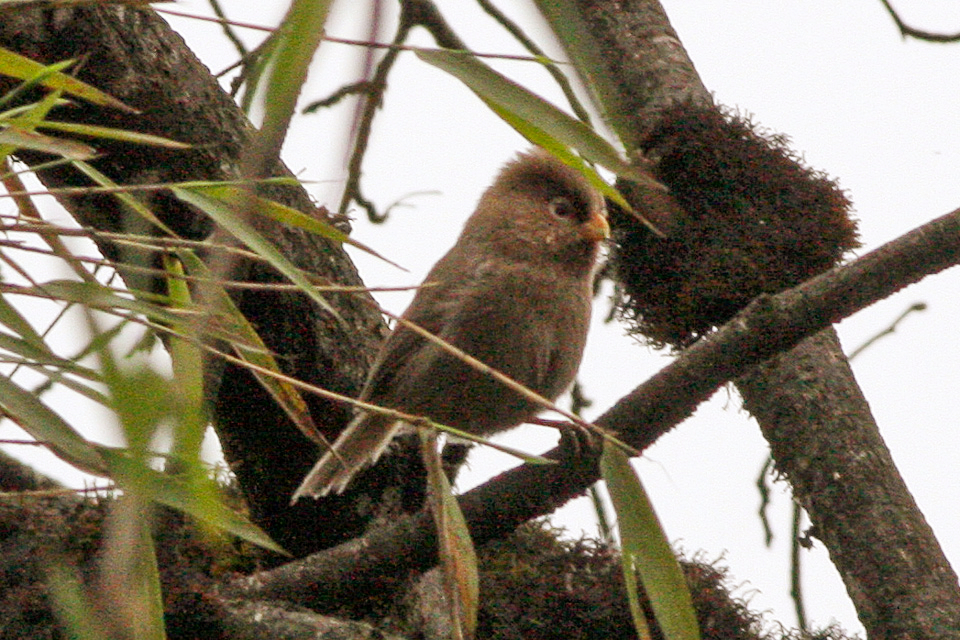
African Desert Warbler
Sylvia caerulescens
Order: Passeriformes / Family: Sylviidae

Wikimedia Commons
About the African Desert Warbler
The African Desert Warbler (Sylvia caerulescens) offers a fascinating glimpse into the adaptability of avian species to harsh environments. This small passerine bird inhabits the arid regions of North Africa, specifically across the Sahara Desert, where it has carved out a niche in a challenging ecosystem. Despite the formidable climate, the African Desert Warbler exhibits remarkable resilience, thriving in areas where temperatures soar during the day and plummet at night. Its presence in the dunes and semi-arid regions exemplifies its ecological significance as both predator and prey. In these regions, the warbler plays a crucial role in controlling insect populations, while also serving as a food source for larger predators.
This species is particularly notable for its ability to remain in its desert habitat year-round. Unlike many other bird species that migrate in search of more hospitable conditions, the African Desert Warbler stays put, adapting its behavior and diet to the seasonal changes of its environment. During the breeding season, which aligns with the brief desert spring, these warblers can be seen diligently constructing nests and raising their young, utilizing the sparse vegetation as both shelter and resource.
The ecological role of the African Desert Warbler extends beyond its immediate environment. By participating in the local food web, it contributes to the overall biodiversity and health of desert ecosystems. Its persistence and adaptability make it a subject of interest for ornithologists and ecologists studying the dynamics of life in extreme environments. The warbler's presence underscores the delicate balance of desert ecosystems, highlighting the importance of conserving these unique habitats.
The African Desert Warbler belongs to the family Sylviidae, within the order Passeriformes. These birds typically live average 3-4 years, with some reaching up to 6 years..
How to Identify a African Desert Warbler
The African Desert Warbler is a small bird, measuring approximately 12 centimeters in length, with a wingspan of around 16 to 18 centimeters. Its plumage is a pale sandy brown, perfectly camouflaged against the desert landscape. The bird's underparts are slightly lighter, often appearing whitish or cream-colored. Adult males and females are similar in appearance, although males may exhibit slightly more pronounced plumage during the breeding season. Juveniles resemble adults but can be distinguished by their slightly duller coloration and less defined facial markings.
In the field, the African Desert Warbler is identified by its distinctive coloration and small size. Its short, rounded wings and relatively long tail aid in its agile flight, allowing it to navigate through sparse desert vegetation with ease. The bird's perching posture is often upright, with a slight forward lean, which can help observers distinguish it from other similar-sized desert birds.
While it may be confused with other warblers in the Sylvia genus, especially in overlapping ranges, the African Desert Warbler's unique habitat preferences and coloration provide key identification markers. Observers should note the bird's behavior and habitat, as it is typically found in more arid environments compared to other similar species.
Having trouble telling birds apart? Upload a photo to our bird identification tool for an instant species match.
African Desert Warbler Habitat and Range
Preferred Habitat
The African Desert Warbler is quintessentially associated with arid and semi-arid desert habitats. It thrives in areas characterized by sparse vegetation, including sandy dunes and gravel plains with scattered shrubs. These habitats are primarily found across the Sahara Desert, extending from Morocco and Mauritania in the west to Egypt and Sudan in the east. The bird favors low elevations typical of desert basins, where it can exploit the limited resources available.
Throughout the year, the warbler remains in these harsh environments, demonstrating a high degree of adaptability to the extreme conditions. Unlike species that might shift habitats seasonally, the African Desert Warbler does not exhibit significant seasonal habitat shifts. Its presence in both rural desert expanses and, occasionally, in the outskirts of human settlements showcases its ability to coexist with minimal human disturbance.
Despite its preference for remote desert regions, the African Desert Warbler's adaptability allows it to thrive in a range of desert subtypes, making it a resilient and widespread species within its specific habitat niche.
Geographic Range
The African Desert Warbler's range is confined to the expansive Sahara Desert, a vast region that spans several North African countries. It is commonly found in Morocco, Algeria, Tunisia, Libya, and Egypt, with populations also present in Mauritania, Mali, and northern Niger. This bird is a resident species, meaning it does not undertake long-distance migrations, instead remaining within the desert throughout the year.
Breeding pairs are most commonly observed in areas with sufficient shrub cover, which provides necessary resources for nesting and foraging. Despite the vastness of its range, the African Desert Warbler's population density is relatively low, as the desert's harsh conditions naturally limit the number of individuals that can be supported in any given area.
While the species does not migrate in the traditional sense, it may make short-distance movements within its range in response to localized changes in resource availability, such as those caused by rare rainfall events or human activity. These movements, however, do not constitute significant range shifts.
Want to know which birds visit your area? Browse our backyard birds by location guides for region-specific species lists.
What Does the African Desert Warbler Eat?
The diet of the African Desert Warbler primarily consists of insects, reflecting its role as a predator in the desert ecosystem. It feeds on a diverse array of arthropods, including beetles, caterpillars, and spiders, which it finds among the sparse desert vegetation. The warbler employs a methodical foraging technique, often seen hopping from shrub to shrub in search of prey hidden in the foliage and ground litter.
Seasonal changes in the desert environment can influence the warbler's diet. During the brief periods of increased insect activity following rainfall, the warbler may consume a greater variety of insects, taking advantage of the temporary abundance. In contrast, during drier times, it may rely more heavily on available ants and other small invertebrates that can withstand the arid conditions.
The African Desert Warbler typically feeds during the cooler parts of the day, such as early morning and late afternoon, avoiding the intense heat of midday. This feeding schedule helps it conserve energy and maintain hydration in its desert habitat.
African Desert Warbler Behavior and Social Structure
The African Desert Warbler exhibits a range of behaviors well-suited to its desert environment. It is a solitary bird outside of the breeding season, with individuals maintaining distinct territories, which they defend against intruders. During the breeding season, pairs form temporary bonds, often displaying courtship behaviors such as singing and mutual preening to strengthen their partnership.
Territorial disputes between males can be observed, with individuals engaging in vocal displays and occasional physical confrontations to assert dominance. These territories are crucial for breeding success, as they provide access to nesting sites and food resources. The warbler's response to predators includes a variety of alarm calls, with individuals taking cover in dense vegetation to evade detection.
Daily activities of the African Desert Warbler are largely dictated by the desert climate. The bird is most active during the cooler hours of the day, engaging in foraging and territorial maintenance. During the hottest midday hours, it seeks shelter in the shade of shrubs, conserving energy and minimizing water loss.
African Desert Warbler Nesting and Reproduction
The African Desert Warbler constructs its nest in low shrubs, utilizing the limited vegetation available in its desert habitat. The nest is a small cup-shaped structure, intricately woven from grass stems, plant fibers, and occasionally spider silk, which provides strength and flexibility. These nests are strategically placed to minimize exposure to predators and harsh environmental conditions.
Clutch size typically ranges from two to four eggs, with incubation lasting approximately 11 to 13 days. Both parents share incubation duties, though the female generally spends more time on the nest. After hatching, the chicks are cared for by both parents, who diligently provide food and protection.
Fledging occurs about 14 days after hatching, with young birds remaining under parental supervision for a short time before becoming independent. The African Desert Warbler usually raises one brood per year, although a second brood may occur if conditions are favorable.
African Desert Warbler Sounds and Vocalizations
The song of the African Desert Warbler is a soft, melodic series of notes that can be likened to a gentle warble. It consists of alternating pitches and rhythms, often delivered from a concealed perch within a shrub. In addition to its song, the warbler produces a variety of call notes, including a distinctive "tschk-tschk" used for communication between mates and to alert of potential threats.
Alarm calls are sharp and rapid, serving as a warning to other warblers in the vicinity. During the dawn chorus, the African Desert Warbler's song contributes to the desert's acoustic landscape, providing an auditory signal of its presence and territory.
The warbler's vocal repertoire is not only a tool for communication but also plays a crucial role in courtship and territorial defense, with males often singing more vigorously during the breeding season.
Interesting Facts About the African Desert Warbler
- 1The African Desert Warbler is able to survive without direct water intake, obtaining moisture from its insect prey.
- 2Despite living in deserts, African Desert Warblers can endure temperature extremes ranging from near freezing to over 40°C.
- 3The warbler's song can carry up to 50 meters in open desert, helping it maintain territorial boundaries.
- 4The African Desert Warbler is closely related to the Sardinian Warbler, with which it shares some physical characteristics.
- 5Its nests are often camouflaged by desert shrubs, making them difficult for predators to spot.
- 6The warbler's ability to forage efficiently in harsh conditions showcases its remarkable adaptability.
- 7Even in the vast Sahara, the African Desert Warbler finds enough resources to maintain stable populations.
African Desert Warbler Conservation Status
The African Desert Warbler is currently classified as Least Concern by the IUCN, with population trends considered stable. However, the species faces threats from habitat degradation, primarily due to human activity such as overgrazing by livestock and expansion of agricultural areas. Climate change also poses a potential threat by altering the desert ecosystem in unpredictable ways. Conservation efforts focus on preserving natural desert habitats and mitigating human impact. Protected areas within the warbler's range offer some refuge, but ongoing monitoring and habitat management are essential to ensure the species' long-term survival. Historically, the warbler's population has remained relatively stable, benefiting from its adaptability to the harsh desert environment. Continued conservation attention will be necessary to maintain this stability in the face of emerging environmental challenges.