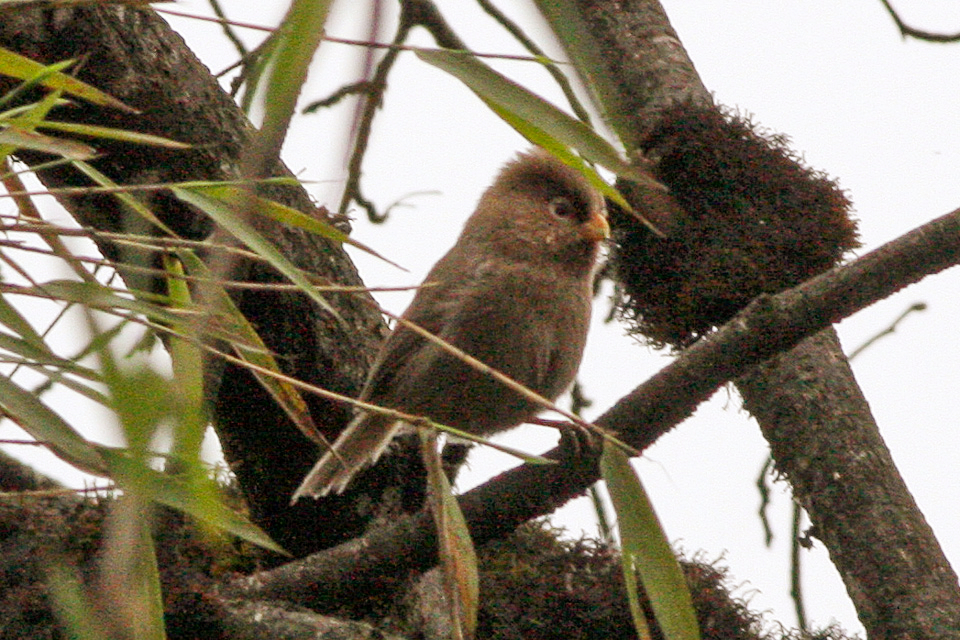
Asian Desert Warbler
Sylvia cambaiensis
Order: Passeriformes / Family: Sylviidae

Wikimedia Commons
About the Asian Desert Warbler
The Asian Desert Warbler, scientifically known as Sylvia cambaiensis, plays an integral role in the ecosystems of the arid regions it inhabits. This small passerine bird is part of the family Sylviidae and is particularly adapted to life in desert environments. Its range encompasses parts of Central Asia, the Middle East, and North Africa, where it thrives in open, arid landscapes. The Asian Desert Warbler is a resident breeder in areas such as Turkmenistan, Uzbekistan, and Kazakhstan, extending its presence into parts of Iran and the Arabian Peninsula.
The significance of the Asian Desert Warbler lies not only in its adaptation to challenging environments but also in its contribution to the biological diversity of these regions. It is known for its insectivorous diet, which helps control insect populations, thus maintaining the ecological balance. As a species, it serves as an indicator of environmental health, reflecting changes in habitat conditions through population trends.
During the breeding season, which typically occurs in spring, the Asian Desert Warbler exhibits fascinating behaviors. It constructs its nest close to the ground, often in shrubs that provide shelter and concealment from predators. The warbler's ability to thrive in harsh climates speaks to its evolutionary success, as it endures seasonal temperature extremes and resource variability. Its seasonal movements are not migratory in the traditional sense, but rather involve local dispersal, allowing it to exploit different resources as they become available.
The ecological role of the Asian Desert Warbler extends beyond its immediate environment. By participating in seed dispersal through its diet, it contributes to plant propagation, enhancing the diversity of flora in desert ecosystems. This warbler's presence is a testament to nature's resilience, showcasing how life persists and adapts even in the most inhospitable conditions. Its study provides valuable insights into the functioning of arid ecosystems and the intricate relationships between species that sustain them.
The Asian Desert Warbler belongs to the family Sylviidae, within the order Passeriformes. These birds typically live average 2-3 years, with some living up to 5 years..
How to Identify a Asian Desert Warbler
Identifying the Asian Desert Warbler involves observing its key field marks and behaviors. This small bird, typically measuring around 11-12 cm in length, exhibits a predominantly sandy-brown plumage that blends seamlessly into its arid surroundings. Its upperparts are a uniform sandy color, while the underparts are paler, almost white, providing a subtle contrast. The warbler has a short, rounded tail with white outer feathers that are noticeable in flight. Its bill is fine and pointed, well-suited for picking insects from foliage.
In terms of sexual dimorphism, male and female Asian Desert Warblers appear very similar, making it challenging to distinguish between the sexes in the field. Juvenile warblers resemble adults but may have slightly duller plumage, lacking the subtle sheen observed in mature birds. This similarity can make age determination difficult without close observation.
The Asian Desert Warbler's flight silhouette is characterized by its short, rounded wings and relatively long tail, which it flicks continuously while perched. When perched, it often adopts an upright posture, frequently flitting its tail. This behavior, along with its distinctive calls, can aid in identification. While there are few species with which it might be confused, novice birders may mistake it for other small desert-dwelling warblers, such as the Desert Warbler or the Scrub Warbler, but the Asian Desert Warbler's distinct coloring and behavior provide reliable differentiators.
Having trouble telling birds apart? Upload a photo to our bird identification tool for an instant species match.
Asian Desert Warbler Habitat and Range
Preferred Habitat
The Asian Desert Warbler inhabits arid desert regions and semi-arid steppes, where it finds both cover and food. It is typically found at low elevations, favoring areas with sparse vegetation such as shrubs and small trees that offer protection and nesting sites. This warbler is well-adapted to hot, dry climates, where temperatures can fluctuate dramatically between day and night.
Seasonal habitat shifts occur as the warbler seeks out optimal feeding grounds, although it remains within its general range throughout the year. Unlike many other birds, it does not venture into urban environments, preferring the solitude of natural landscapes. Its presence in deserts highlights its remarkable ability to survive where few other birds can. The warbler's habitats include the sandy deserts of Central Asia and the rocky plateaus of the Middle East, each providing unique challenges and resources.
Although the Asian Desert Warbler avoids dense forests and wetland areas, its adaptability to different arid environments demonstrates its resilience. The bird's habitat preferences underscore the importance of conserving desert ecosystems, which are often overlooked in conservation efforts yet support a unique array of wildlife.
Geographic Range
The Asian Desert Warbler's range is primarily centered in Central Asia, extending into parts of the Middle East and North Africa. Its breeding range includes countries such as Turkmenistan, Uzbekistan, and Kazakhstan, where it occupies arid and semi-arid habitats. During the non-breeding season, the warbler may disperse locally, maintaining its presence in the region while adjusting to seasonal changes in resource availability.
In countries like Iran and the Arabian Peninsula, the Asian Desert Warbler is a regular resident, benefiting from the extensive desert landscapes that support its life cycle. The warbler's range does not extend to Europe or the Americas, remaining confined to the specific ecological niches of its home continents.
Population density hotspots are often found in areas where suitable habitat coincides with abundant insect prey. These hotspots can shift with changes in environmental conditions, such as rainfall patterns that influence vegetation growth and insect abundance. The Asian Desert Warbler's range is a reflection of its ecological specialization, relying on the unique conditions of desert environments to sustain its populations.
Want to know which birds visit your area? Browse our backyard birds by location guides for region-specific species lists.
What Does the Asian Desert Warbler Eat?
The Asian Desert Warbler is primarily insectivorous, relying on a diet of insects and other small invertebrates that are abundant in its habitat. Its feeding habits play a crucial role in controlling insect populations within the desert ecosystem. The warbler forages actively, often seen flitting through shrubs and low vegetation in search of prey. It employs a 'gleaning' technique, picking insects from leaves and branches with its pointed bill.
During the breeding season, the warbler's diet remains consistent, though it may expand to include a greater diversity of prey types to meet the increased nutritional demands of raising young. Insects such as beetles, caterpillars, and ants form a significant portion of its diet, with occasional consumption of small spiders.
As resources fluctuate seasonally, the Asian Desert Warbler demonstrates dietary flexibility, adapting its foraging strategies to the availability of prey. This adaptability ensures its survival in environments where food can be scarce. The warbler typically feeds during the cooler parts of the day, avoiding the intense heat of midday. Its precise foraging behavior and diet composition underscore its role as an efficient predator within the desert ecosystem.
Asian Desert Warbler Behavior and Social Structure
The Asian Desert Warbler exhibits a range of behaviors well-suited to its challenging habitat. Socially, it tends to be solitary or found in pairs, particularly during the breeding season when territorial behavior becomes pronounced. Males establish and defend territories through song and displays, ensuring access to resources and breeding opportunities.
Courtship displays involve males performing flights and vocalizations to attract females, showcasing their fitness and territory quality. Once paired, the warblers maintain a close partnership throughout the breeding cycle, with both sexes involved in nesting duties.
Flocking behavior is uncommon in this species, as the desert environment does not support large congregations of birds. Instead, the warbler remains discreet and elusive, often blending into its surroundings to avoid predators. When threatened, it may use its agility to escape, darting into dense shrubbery for cover.
Daily activity patterns of the Asian Desert Warbler include foraging during the cooler morning and late afternoon hours, conserving energy during the hottest parts of the day. This schedule aligns with the behavior of many desert species, optimizing energy expenditure and resource use in a demanding environment. The warbler's behaviors reflect its specialization for survival in arid climates, balancing the need for food, reproduction, and predator avoidance.
Asian Desert Warbler Nesting and Reproduction
The nesting habits of the Asian Desert Warbler are adapted to its arid environment. It constructs cup-shaped nests using materials such as grasses, twigs, and feathers, carefully woven together to create a secure structure. These nests are typically located close to the ground within shrubs or low vegetation, providing concealment from predators and shelter from the elements.
Preferred nesting sites include dense bushes that offer protection and a stable microclimate. The Asian Desert Warbler lays a clutch of 3 to 5 eggs, which are incubated by both parents. The incubation period lasts about 12 to 14 days, during which the parents alternate between incubating the eggs and foraging for food.
After hatching, the chicks remain in the nest for approximately 10 to 12 days before fledging. During this time, both parents are actively involved in feeding and caring for the young, ensuring their rapid growth and development. The warbler may raise one to two broods per year, depending on environmental conditions and resource availability. Its nesting strategies exemplify the adaptations necessary for breeding success in desert habitats.
Asian Desert Warbler Sounds and Vocalizations
The song of the Asian Desert Warbler is a series of melodious notes, delivered in a rapid, flowing sequence. It features a mix of trills and whistles, creating a distinctive sound that resonates across its arid habitat. The pitch varies, adding a musical quality to the song, which is often used by males to establish territory and attract mates.
In addition to its primary song, the warbler produces a variety of call notes that serve different functions. Alarm calls are sharp and abrupt, alerting others to potential threats. These calls can be compared to the short 'chack' sounds made by other warbler species, though they possess their unique tonal quality.
Dawn chorus behavior is less pronounced in the Asian Desert Warbler compared to forest-dwelling species, as the desert environment influences the timing and intensity of vocal activity. This warbler's vocalizations form an essential part of its communication repertoire, facilitating interactions with conspecifics and maintaining social bonds.
Interesting Facts About the Asian Desert Warbler
- 1The Asian Desert Warbler can survive in temperatures exceeding 40 degrees Celsius, showcasing its incredible adaptability.
- 2Despite its name, the Asian Desert Warbler often finds refuge in semi-arid steppes, emphasizing its ecological flexibility.
- 3Adult Asian Desert Warblers weigh only about 10 grams yet manage to thrive in harsh desert conditions.
- 4This warbler's song can be heard over great distances in the desert, allowing it to communicate effectively despite vast expanses.
- 5Unlike many birds, the Asian Desert Warbler does not engage in long-distance migration, instead opting for local dispersal.
- 6The Asian Desert Warbler's diet shifts slightly in response to seasonal insect availability, demonstrating dietary adaptability.
- 7Its nests are often built low to the ground, providing protection from both predators and the harsh desert sun.
Asian Desert Warbler Conservation Status
The Asian Desert Warbler is currently classified as Least Concern by the IUCN, with stable population trends across its range. The primary threats to this species include habitat degradation due to human activities such as overgrazing and land conversion, which can reduce the availability of nesting and foraging sites. Conservation efforts focus on preserving desert habitats and mitigating the impacts of climate change, which can alter the delicate balance of these ecosystems. Historical population changes have been relatively stable, with the warbler showing resilience to environmental fluctuations. Continued monitoring and habitat protection are vital to ensure the long-term survival of the Asian Desert Warbler. Conservationists advocate for sustainable land-use practices that minimize habitat disruption and promote ecological integrity in the regions where this warbler resides.