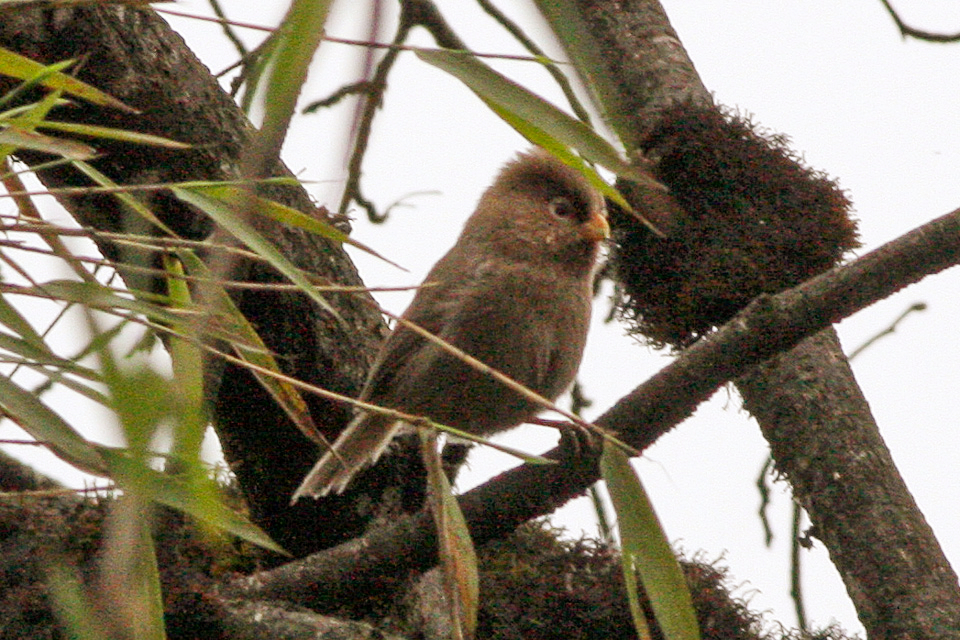
Sylvia domestica
Sylvia domestica
Order: Passeriformes / Family: Sylviidae
About the Sylvia domestica
Sylvia domestica, commonly referred to as the Common Warbler, is a small songbird belonging to the family Sylviidae. This species is notable for its adaptability to various environments, ranging from dense woodlands to suburban gardens across Europe. While not as visually striking as some of its relatives, the Common Warbler more than compensates with its vibrant vocalizations, a characteristic that endears it to birdwatchers and nature enthusiasts alike. Its presence in the avian community serves as a critical indicator of habitat health, given its sensitivity to environmental changes. The bird's ecological role extends beyond mere song, as it actively participates in controlling insect populations, thus maintaining a balanced ecosystem. Throughout the year, Sylvia domestica exhibits distinct seasonal behaviors. During breeding season, typically from April to July, the warbler becomes highly territorial, often seen defending its chosen area with vigor. As autumn approaches, it embarks on a migration journey, retreating to warmer climates in North Africa and southern Europe to escape harsh winters. This migration pattern highlights its adaptability and resilience. The species' ability to thrive in various habitats, including urban areas, reflects its significant ecological plasticity. However, it remains susceptible to habitat degradation and climate change, factors that pose ongoing challenges to its survival. Conservationists emphasize the importance of monitoring its population trends, as fluctuations can signal broader environmental shifts.
The Sylvia domestica belongs to the family Sylviidae, within the order Passeriformes. These birds typically live average 2-4 years with max recorded 6 years.
How to Identify a Sylvia domestica
The Common Warbler exhibits a subtle yet distinctive plumage, predominantly grayish-brown with a hint of olive on the back and wings. The underparts are lighter, often with a creamy or buff tint. Males and females share similar coloration, though males may appear slightly more vibrant during the breeding season, particularly around the head and throat. Juvenile Sylvia domestica can be distinguished by their fresher, more uniform plumage and lack of the subtle streaking seen in adults. In flight, the warbler presents a compact silhouette with rapid, direct wingbeats, a characteristic that helps differentiate it from similar species like the Garden Warbler. Perched, it often adopts a slightly upright posture, accentuating its slender build and long tail. Despite potential confusion with other warblers, such as the Blackcap, the Common Warbler's less pronounced cap and overall more muted coloration serve as distinguishing features.
Having trouble telling birds apart? Upload a photo to our bird identification tool for an instant species match.
Sylvia domestica Habitat and Range
Preferred Habitat
Sylvia domestica exhibits a preference for diverse habitats, thriving in both natural and urban environments. It commonly inhabits deciduous and mixed woodlands, hedgerows, and scrubby areas. In urban settings, it frequents gardens, parks, and even city peripheries, demonstrating a remarkable adaptability to human-altered landscapes. The species typically resides at elevations ranging from sea level to about 1,500 meters, though it predominantly favors lower altitudes. Seasonal habitat shifts occur as the warbler migrates from its breeding grounds in temperate Europe to wintering areas in the Mediterranean basin, where it seeks milder climates and abundant food sources.
Geographic Range
The breeding range of Sylvia domestica spans across much of Europe, from the British Isles eastward to western Russia. It is particularly prevalent in countries like France, Germany, and Poland, where favorable habitats abound. During the winter months, the warbler migrates to southern Europe and North Africa, with significant populations settling in Spain, Italy, and northern Morocco. Migration corridors include well-traveled routes across the Mediterranean, with some birds even reaching as far as the Sahel region. Population density tends to concentrate in areas offering ample food and suitable nesting sites, such as the fertile valleys of the Loire and the Danube.
Want to know which birds visit your area? Browse our backyard birds by location guides for region-specific species lists.
What Does the Sylvia domestica Eat?
The Common Warbler primarily consumes insects and their larvae, playing a critical role in controlling pest populations. Its diet includes a variety of small invertebrates, such as caterpillars, beetles, and aphids, particularly during the breeding season when protein demand is high. As autumn approaches, Sylvia domestica supplements its diet with berries and fruits, taking advantage of the abundant seasonal harvest. Foraging techniques involve active gleaning from foliage and branches, and occasionally hovering to snatch prey from the undersides of leaves. The warbler typically feeds in the early morning and late afternoon, aligning its activity with peak insect availability.
Sylvia domestica Behavior and Social Structure
Sylvia domestica is a generally solitary bird outside of the breeding season, exhibiting strong territorial instincts during nesting periods. Males perform elaborate courtship displays, often singing from prominent perches to attract mates and deter rivals. The warbler's song, a complex series of melodious phrases, serves as both a mating call and a territorial warning. Although not highly gregarious, the species may form loose flocks during migration, taking advantage of safety in numbers against predators. Daily activity peaks at dawn and dusk, with periods of intense foraging interspersed with rest and preening.
Sylvia domestica Nesting and Reproduction
The Common Warbler constructs its nest in dense vegetation, often choosing bushes or low trees for concealment. Nests are cup-shaped and comprised of grass, moss, and feathers, providing both insulation and camouflage. A typical clutch consists of 3 to 5 eggs, which are incubated primarily by the female over a period of 11 to 13 days. Both parents participate in feeding the hatchlings, which fledge approximately two weeks after hatching. Sylvia domestica may raise two broods per year, depending on environmental conditions and food availability.
Sylvia domestica Sounds and Vocalizations
The Common Warbler's song is a rich, melodious series of notes that varies in tempo and pitch, often delivered in a continuous stream. It is characterized by clear, flute-like phrases interspersed with trills and softer warbles. The bird also emits distinct call notes, including a sharp 'tack' and a softer contact call used during social interactions. Alarm calls are more urgent and rapid, alerting conspecifics to potential threats. During the dawn chorus, the warbler's song stands out for its complexity and volume, contributing to the natural symphony of its habitat.
Interesting Facts About the Sylvia domestica
- 1The Common Warbler can mimic the songs of other bird species, showcasing its impressive vocal repertoire.
- 2Sylvia domestica participates in long-distance migration, covering over 2,000 kilometers between breeding and wintering sites.
- 3Despite their name, Common Warblers are not the most common warbler species in some regions, with populations varying widely.
- 4The species displays a remarkable ability to adapt to urban environments, often nesting in city parks and gardens.
- 5Studies have shown that male Common Warblers with more complex songs tend to attract more mates, highlighting the role of song in sexual selection.
- 6Sylvia domestica's plumage provides effective camouflage, helping it evade predators in densely vegetated habitats.
- 7The warbler's diet shifts significantly with the seasons, emphasizing its role in maintaining ecological balance through insect control.
Sylvia domestica Conservation Status
Currently listed as Least Concern by the IUCN, the population of Sylvia domestica remains stable, though localized declines have been observed in areas facing significant habitat loss. Primary threats include agricultural intensification, urban expansion, and climate change, which affect both breeding and wintering habitats. Conservation efforts focus on habitat preservation and restoration, particularly in regions where land use changes threaten biodiversity. Historical data indicate fluctuating population trends, underscoring the need for ongoing monitoring and adaptive management strategies.