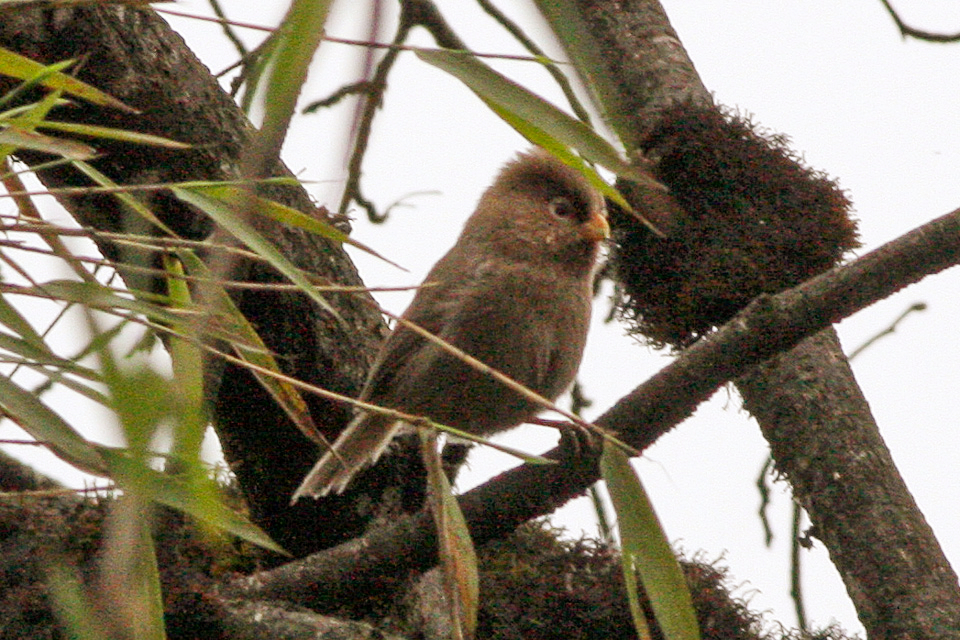
Yellow-breasted Sylvia
Sylvia icterops
Order: Passeriformes / Family: Sylviidae

Wikimedia Commons
About the Yellow-breasted Sylvia
The Yellow-breasted Sylvia, Sylvia icterops, is a notable member of the Sylviidae family, renowned for its vibrant yellow breast and its vivacious presence in dense thickets and shrublands. This species inhabits a range of habitats across Europe and parts of Asia, showcasing adaptability in various ecological zones. Its presence holds significant ecological value, as these birds play a pivotal role in controlling insect populations and facilitating seed dispersal. The Yellow-breasted Sylvia is primarily found in temperate deciduous forests, shrublands, and occasionally in urban green spaces where natural habitats interlace with human developments. During the breeding season, which spans from late spring to early summer, these birds are especially active and visible. They engage in elaborate courtship displays that include agile flights and melodious singing to attract mates. As the breeding season concludes, they enter a molting phase, preparing for the eventual migration. The ecological role of the Yellow-breasted Sylvia extends beyond its immediate environment. By consuming a variety of insects, it helps maintain a balance in the local ecosystem. Its preference for dense shrubbery not only provides it with ample feeding grounds but also aids in the regeneration of these areas through seed dispersal. This bird's presence in both natural and semi-urban landscapes underscores its resilience and adaptability, making it a fascinating subject for ornithologists and bird watchers alike.
The Yellow-breasted Sylvia belongs to the family Sylviidae, within the order Passeriformes. These birds typically live typically 4-5 years, with a maximum recorded of 7 years..
How to Identify a Yellow-breasted Sylvia
The Yellow-breasted Sylvia is easily identified by its striking yellow breast, which contrasts sharply with its greyish back and wings. Adult males and females exhibit similar plumage, although males might display a slightly brighter hue during the breeding season. Juveniles, on the other hand, have a duller coloration, with more subdued yellow tones and a flecked appearance. The bird's size is modest, with an average length of 12-14 cm and a wingspan of 18-20 cm. Its flight is characterized by a quick, darting motion, often low to the ground or just above the canopy. The perching posture of the Yellow-breasted Sylvia is distinctive, with a slightly upright stance and a constant flicking of the tail. Confusion with similar species, such as the Common Whitethroat, can occur, but the Sylvia's bright yellow underparts are a reliable distinguishing factor. In flight, the Yellow-breasted Sylvia's rounded wings and short tail are noticeable features, aiding in its identification among the foliage where it often forages and nests.
Having trouble telling birds apart? Upload a photo to our bird identification tool for an instant species match.
Yellow-breasted Sylvia Habitat and Range
Preferred Habitat
The Yellow-breasted Sylvia thrives in dense shrublands and deciduous forests, often favoring areas with thick underbrush and ample cover. These habitats provide not only protection from predators but also abundant food sources. Typically found at elevations ranging from sea level to 1,500 meters, the species shows a preference for lowland areas during the breeding season. As the seasons change, some populations may migrate to slightly higher elevations or move towards more urban-adjacent woodlands, where they can exploit garden shrubs and hedgerows. In rural settings, the Yellow-breasted Sylvia is a common sight, while in urban areas, its presence is more sporadic, relying on the availability of suitable green spaces. The bird's ability to adapt to different habitat types is a testament to its ecological versatility.
Geographic Range
The Yellow-breasted Sylvia has a broad range, primarily spanning across southern and central Europe, extending into parts of Asia Minor. Countries such as Spain, Italy, Greece, and Turkey host significant breeding populations. During the winter months, the species migrates southward, reaching the northern edges of Africa, including countries like Morocco and Algeria. Migration corridors often include the Mediterranean Basin, where birds stop to rest and feed. Within these regions, population densities vary, with some areas hosting dense concentrations, particularly where suitable habitats align with migratory paths. Despite its widespread range, the Yellow-breasted Sylvia is not uniformly distributed, with certain regions acting as key hotspots due to favorable environmental conditions and minimal disturbances.
Want to know which birds visit your area? Browse our backyard birds by location guides for region-specific species lists.
What Does the Yellow-breasted Sylvia Eat?
The diet of the Yellow-breasted Sylvia consists primarily of insects, which it gleans from leaves and branches in its dense habitat. During the breeding season, its diet shifts slightly to include a higher proportion of protein-rich insects, which are crucial for chick development. The bird's foraging technique involves agile movements through foliage, often hanging upside down or flitting between branches to catch prey. In addition to insects, the Sylvia consumes a variety of berries and seeds, particularly in the late summer and autumn months when these become more abundant. This dietary flexibility allows the bird to survive in diverse conditions, from lush forests to semi-arid shrublands. Feeding typically occurs during daylight hours, with peaks in activity during the early morning and late afternoon.
Yellow-breasted Sylvia Behavior and Social Structure
The Yellow-breasted Sylvia exhibits a dynamic social structure, often seen in small family groups or solitary when foraging. During the breeding season, males become highly territorial, engaging in vocal displays and aerial chases to ward off rivals. Courtship involves a series of agile flights and melodious songs, designed to attract females and establish pair bonds. Outside the breeding season, these birds become more gregarious, sometimes forming mixed-species flocks with other small passerines. When threatened, the Sylvia employs a range of tactics, including alarm calls and evasive maneuvers, to escape predators. Its daily activity patterns include periods of intense foraging interspersed with rest and preening, typically within the protective cover of dense vegetation.
Yellow-breasted Sylvia Nesting and Reproduction
Nesting for the Yellow-breasted Sylvia involves constructing a cup-shaped nest, typically positioned within dense shrubbery or low trees. The nest is crafted from twigs, grasses, and feathers, providing a secure environment for the eggs. Clutch size generally ranges from 3 to 5 eggs, which the female incubates for approximately 12-14 days. Both parents participate in feeding the chicks, which fledge about 10-14 days after hatching. The species may raise two broods per year, depending on environmental conditions and food availability. Parental roles are shared, with both sexes involved in feeding and protecting the young. Nest placement is strategic, often within thorny bushes or dense thickets, offering protection from predators and harsh weather conditions.
Yellow-breasted Sylvia Sounds and Vocalizations
The primary song of the Yellow-breasted Sylvia is a sweet, melodious series of high-pitched notes, often delivered from a concealed perch within dense foliage. This song, repeated frequently during the breeding season, serves both to attract a mate and to delineate territory. Apart from its song, the Sylvia also produces a variety of call notes, including a soft 'churr' and a sharp 'tack', the latter often used as an alarm call to warn of approaching predators. During the dawn chorus, these birds are particularly vocal, contributing to the vibrant soundscape of their habitat. The song's rhythm and quality are reminiscent of the Blackcap, though the Sylvia's melody tends to be more repetitive and less varied in pitch.
Interesting Facts About the Yellow-breasted Sylvia
- 1The Yellow-breasted Sylvia can consume up to 1.5 times its body weight in insects daily during the breeding season.
- 2In autumn, these birds may travel over 1,000 kilometers to reach their wintering grounds in North Africa.
- 3The Sylvia's song repertoire can include up to 20 distinct variations, each serving a different communicative purpose.
- 4Yellow-breasted Sylvias are known to use deceptive tactics, such as mimicking other species' alarm calls to deter predators.
- 5This species is often found in mixed-species foraging flocks, enhancing feeding efficiency and predator detection.
- 6During migration, the Yellow-breasted Sylvia can cover up to 200 kilometers in a single night.
- 7The Sylvia's intricate nests can contain up to 500 individual pieces of plant material.
Yellow-breasted Sylvia Conservation Status
Currently, the Yellow-breasted Sylvia holds a status of Least Concern on the IUCN Red List, with stable population trends across its range. However, habitat loss due to agricultural expansion and urbanization poses ongoing threats to certain populations. Conservation efforts focus on preserving key habitats and promoting sustainable land-use practices that mitigate habitat destruction. Historically, the species has shown resilience in the face of moderate environmental changes, although continued monitoring is essential to ensure its long-term viability. Efforts to educate local communities about the importance of maintaining natural habitats also play a crucial role in conservation strategies.