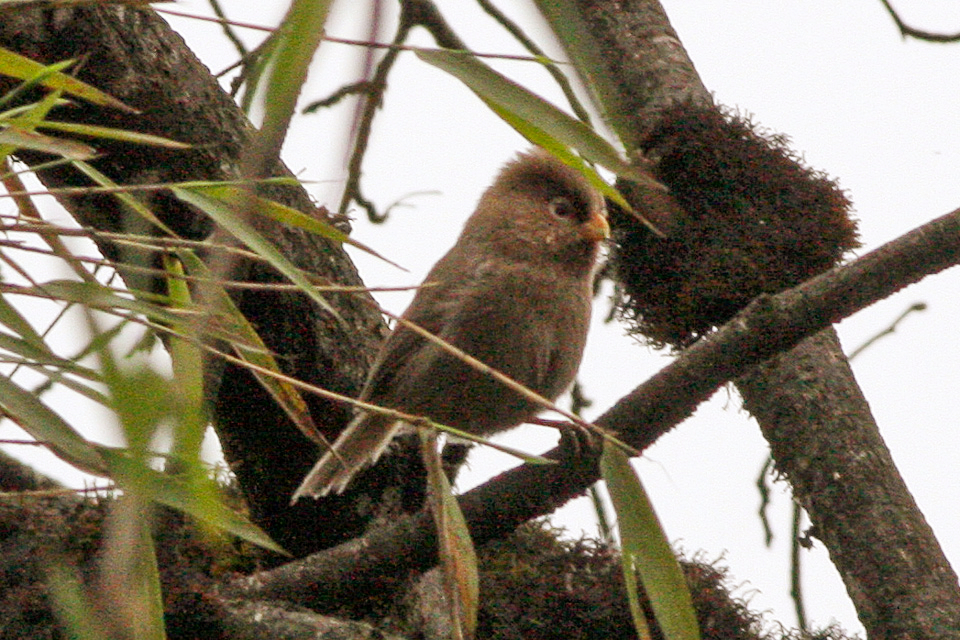
Sylvia leucoptera
Sylvia leucoptera
Order: Passeriformes / Family: Sylviidae
About the Sylvia leucoptera
Sylvia leucoptera, commonly referred to as the White-winged Warbler, is a small passerine bird belonging to the family Sylviidae. This bird is particularly known for its distinct white wing patches, which are a key identifying feature. The Sylvia leucoptera thrives across several habitats, primarily in temperate and subtropical regions. Its adaptability to different environments highlights its ecological significance as it plays a role in insect population control and seed dispersal. The species exhibits an intriguing seasonal behavior, including a notable migration pattern that sees it traveling between breeding and wintering grounds. During the breeding season, typically found in deciduous forests, it contributes to the ecosystem by controlling insect populations, thus maintaining a balance in its habitat. In contrast, during the winter months, Sylvia leucoptera migrates to warmer regions, adapting to various ecosystems, including scrublands and hedgerows. This migratory behavior ensures that the species can exploit different food sources throughout the year, showcasing its adaptability. The White-winged Warbler is significant not only for its ecological role but also for bird enthusiasts who admire its characteristic song and behavior. Observers often note the bird's lively movements and its melodious song, which adds to the charm of its natural surroundings. Its presence can indicate the health of the environment, as it thrives in regions with abundant insect life and healthy vegetation. Conservation of its habitats thus supports not only the Sylvia leucoptera but also a multitude of other species within the same ecological niche.
The Sylvia leucoptera belongs to the family Sylviidae, within the order Passeriformes. These birds typically live Unknown, highlighting the need for further research..
How to Identify a Sylvia leucoptera
Adult Sylvia leucoptera, or the White-winged Warbler, displays a striking combination of gray and white plumage. The upperparts are predominantly gray, contrasting with the bright white wing patches that give the bird its name. The underparts are lighter, with subtle hues of gray that can appear slightly off-white. Males and females are similar in appearance, though males may exhibit slightly brighter wing patches, particularly during the breeding season. Juvenile birds, however, display a more muted coloration, with less pronounced wing markings, which gradually become more distinct as they mature. In the field, the White-winged Warbler can be confused with other Sylvia species, such as the lesser Whitethroat, but the distinctive white wing patches of Sylvia leucoptera are reliable markers for identification. In flight, this warbler shows a compact silhouette with rounded wings. When perching, it often adopts a slightly upright posture, allowing for a clear view of its distinctive wing pattern, especially when it flicks its wings or tail. The combination of its size, coloration, and behavior makes Sylvia leucoptera a distinct presence in its habitat.
Having trouble telling birds apart? Upload a photo to our bird identification tool for an instant species match.
Sylvia leucoptera Habitat and Range
Preferred Habitat
Sylvia leucoptera inhabits a variety of environments, including deciduous and mixed forests, scrublands, and hedgerows. It is typically found at elevations ranging from sea level to about 1,500 meters, depending on the region. During the breeding season, it prefers dense understory vegetation within forests, where it can easily forage for insects. As the seasons change, the White-winged Warbler may move to more open areas such as grasslands or even urban parks, provided there is sufficient cover and food availability. This adaptability to different habitats is a testament to its resilience and flexibility in the face of environmental changes.
Geographic Range
The breeding range of Sylvia leucoptera predominantly spans across temperate regions of Europe and parts of western Asia. It is commonly found in countries such as France, Germany, and Poland, extending eastward into Russia. In winter, the White-winged Warbler migrates to southern Europe and North Africa, including countries like Spain, Italy, and Morocco, seeking milder climates and abundant food resources. Migration corridors typically include river valleys and coastal paths, which provide shelter and food during the journey. Population density is often higher in areas with a mix of woodland and open landscapes, which suit its ecological needs.
Want to know which birds visit your area? Browse our backyard birds by location guides for region-specific species lists.
What Does the Sylvia leucoptera Eat?
The primary diet of Sylvia leucoptera consists of insects and arachnids, which it actively gleans from foliage or catches in flight. During the breeding season, when insects are plentiful, the warbler's diet includes caterpillars, beetles, and flies. As the seasons shift and it migrates, its diet may expand to include berries and seeds, particularly in winter when insects are less abundant. The White-winged Warbler employs a variety of foraging techniques, such as hover-gleaning and fly-catching, which allow it to exploit different food sources effectively. Its feeding schedule is generally diurnal, with peaks in activity during the early morning and late afternoon.
Sylvia leucoptera Behavior and Social Structure
Sylvia leucoptera exhibits a complex social structure, often seen foraging in small mixed-species flocks outside the breeding season. During the breeding season, males establish and defend territories through song and displays, often engaging in aerial chases to ward off rivals. The courtship display involves wing-flicking and tail-spreading, accompanied by a soft warbling song. This warbler is generally solitary or found in pairs during the breeding season but becomes more social in the winter months. Flocking with other small passerines provides safety in numbers and enhances foraging efficiency. In response to predators, the White-winged Warbler employs alarm calls and evasive flight, retreating to dense cover when threatened.
Sylvia leucoptera Nesting and Reproduction
The White-winged Warbler builds cup-shaped nests, typically located in dense shrubs or low trees. The nest is constructed using twigs, grass, and spider silk, often lined with softer materials like feathers or moss. Clutch size generally ranges from 3 to 5 eggs, with both parents sharing incubation duties over a period of 10 to 14 days. Fledging occurs approximately 10 to 12 days post-hatching, with chicks remaining dependent on parental care for a further few weeks. Sylvia leucoptera often raises one to two broods per year, depending on environmental conditions and food availability.
Sylvia leucoptera Sounds and Vocalizations
The primary song of Sylvia leucoptera is a melodious warble, characterized by a series of rapid notes that rise and fall in pitch. This song, often heard during the early morning, serves to establish territory and attract mates. In addition to its song, the White-winged Warbler produces call notes that are sharp and metallic, used to maintain contact with mates or signal alarm. Its alarm call, a harsh chattering sound, is typically uttered in the presence of predators. The dawn chorus, where this bird is a prominent participant, creates a symphony of sounds in its habitat.
Interesting Facts About the Sylvia leucoptera
- 1Sylvia leucoptera's migration can cover distances of up to 2,000 kilometers between breeding and wintering grounds.
- 2The White-winged Warbler's song can be heard from distances of over 100 meters, especially in open habitats.
- 3During the breeding season, males sing continuously for up to 20 minutes to establish their territory.
- 4Sylvia leucoptera can consume up to 50 insects per hour, providing effective pest control in its habitat.
- 5The species exhibits site fidelity, often returning to the same breeding grounds year after year.
- 6Juvenile White-winged Warblers develop their distinctive wing patches over several molting cycles.
- 7Despite its small size, this warbler can maintain a flight speed of up to 20 km/h during migration.
Sylvia leucoptera Conservation Status
Sylvia leucoptera is currently listed as Least Concern on the IUCN Red List, with a stable population trend. However, habitat loss due to deforestation and agricultural expansion poses potential threats to its long-term survival. Conservation efforts focus on preserving natural habitats and promoting sustainable land use practices. Historically, the population has remained relatively stable, though localized declines have been noted in areas experiencing significant environmental changes. Continued monitoring and habitat protection are essential to ensure the conservation of this species.