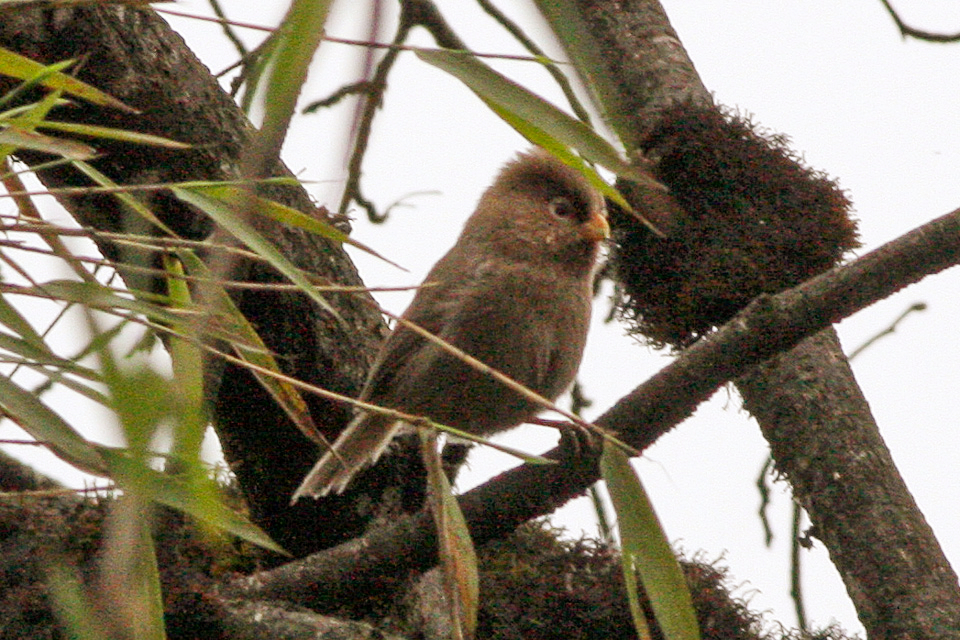
Moltoni's Warbler
Sylvia moltonii
Order: Passeriformes / Family: Sylviidae

Wikimedia Commons
About the Moltoni's Warbler
Moltoni's Warbler (Sylvia moltonii), a member of the Sylviidae family, inhabits the Mediterranean regions, particularly Sardinia, Corsica, and parts of Italy. This small songbird, known for its subtle yet distinctive plumage, plays a crucial role in its native ecosystems by controlling insect populations. The bird's presence in these regions provides an indicator of habitat health and biodiversity. Moltoni's Warbler thrives in Mediterranean scrublands, maquis, and mixed woodlands, where dense undergrowth provides cover and feeding opportunities. During the breeding season, this warbler is highly territorial, often seen defending its chosen area with fervor. As the seasons change, the bird's behavior shifts to adapt to environmental pressures, showcasing its resilience and ability to thrive in diverse conditions. Moltoni's Warbler's ecological role extends beyond insect control. It contributes to seed dispersal, aiding in the propagation of various plant species. As a prey species, it supports higher trophic levels, including raptors and small mammals. The presence of Moltoni's Warbler also enhances the area's avian diversity, attracting birdwatchers and contributing to ecotourism. This warbler's seasonal behaviors reflect its adaptability. During spring and summer, it focuses on breeding and rearing young, while in autumn, it prepares for migration. Though not a long-distance migrant, its movements are influenced by seasonal food availability and weather conditions. In recent years, studies have highlighted the importance of Moltoni's Warbler as an indicator species. Its sensitivity to environmental changes makes it a valuable subject for monitoring ecosystem health. Conservationists prioritize its habitats, ensuring the preservation of Mediterranean scrublands and maquis. As climate change impacts these regions, maintaining suitable habitats for the warbler becomes increasingly vital. The bird's adaptability, however, offers hope for its continued survival. Moltoni's Warbler exemplifies how specialized species contribute to ecological balance. By understanding its role and behaviors, conservationists can develop strategies to protect this and other species within the Mediterranean biome. The bird's subtle yet significant presence underscores the intricate connections within its environment, highlighting the importance of habitat conservation.
The Moltoni's Warbler belongs to the family Sylviidae, within the order Passeriformes. These birds typically live average 4-6 years, with a maximum recorded of 8 years..
How to Identify a Moltoni's Warbler
Moltoni's Warbler features a subtle yet distinctive plumage that aids birders in its identification. Adults exhibit a combination of gray and reddish-brown coloring, with the males generally displaying more vivid hues than females. The upperparts are primarily gray, providing a backdrop to the striking rusty-brown throat and breast, which serve as key field marks. The underparts are paler, often with a wash of buff or whitish tones. Juveniles resemble the adults but tend to have a more subdued coloration, lacking the intensity of the adult male's plumage. This can lead to some initial confusion, but careful observation reveals the characteristic rusty tones on the breast, setting them apart from other similar species. Additionally, the bird's eye is highlighted by a subtle white eye-ring, adding to its distinctive appearance. In flight, Moltoni's Warbler exhibits a fluttery silhouette with quick wingbeats and short glides. This flight pattern, combined with its rounded wings, aids in distinguishing it from other small songbirds. When perching, the warbler often adopts a slightly upright posture, frequently flicking its wings and tail, which are key behaviors to note for identification. Compared to similar species, such as the Subalpine Warbler, Moltoni's Warbler's coloration is less intense, with more muted tones. This subtle difference, along with the bird's habitat preferences, helps in accurate identification. The species' unique combination of plumage characteristics, behaviors, and habitat choices allows for reliable differentiation when observed in the field.
Having trouble telling birds apart? Upload a photo to our bird identification tool for an instant species match.
Moltoni's Warbler Habitat and Range
Preferred Habitat
Moltoni's Warbler primarily inhabits Mediterranean scrublands and maquis, where dense vegetation provides essential cover for feeding and nesting. These habitats, rich in shrub species like myrtle and juniper, offer abundant insect prey and nesting sites. The warbler can also be found in mixed woodlands, particularly those with a well-developed understorey. This bird favors elevations up to 1500 meters, adjusting its range based on seasonal conditions. During the breeding season, it shows a preference for areas with ample low-growing shrubs and open spaces that facilitate foraging. Outside of the breeding period, it may venture into more open habitats or lower elevations in search of food. In urban areas, Moltoni's Warbler is less common, though it may occasionally be spotted in parks and gardens that mimic its natural habitat. The bird tends to avoid heavily urbanized environments, preferring the tranquility and resources of rural and semi-rural locations. As seasons change, Moltoni's Warbler exhibits some habitat flexibility, adapting to available resources while maintaining a preference for shrubby, Mediterranean-type vegetation. This adaptability plays a key role in its survival, particularly as environmental conditions fluctuate.
Geographic Range
Moltoni's Warbler's breeding range is concentrated in the western Mediterranean, particularly on islands like Sardinia and Corsica, as well as parts of mainland Italy. These areas provide the ideal Mediterranean scrubland habitat essential for breeding and feeding. During the breeding season, its presence in these regions is pronounced, with specific population density hotspots in areas rich in dense shrubbery. In winter, Moltoni's Warbler migrates short distances, generally moving to lower elevations and coastal areas within the Mediterranean region. Its wintering range includes the northern coasts of Africa, where the climate remains mild and food sources are more abundant. The migration corridors used by Moltoni's Warbler reflect its adaptation to short-distance travel, with the bird often following the coastline or moving through lowland areas to reach winter habitats. This limited range, both in breeding and wintering, makes it particularly susceptible to habitat changes, reinforcing the importance of conservation efforts in these regions. Population density tends to be highest in areas that retain traditional Mediterranean landscapes, emphasizing the need for habitat preservation.
Want to know which birds visit your area? Browse our backyard birds by location guides for region-specific species lists.
What Does the Moltoni's Warbler Eat?
Moltoni's Warbler primarily feeds on insects and other small invertebrates, which form the bulk of its diet throughout the year. During the breeding season, it focuses on protein-rich prey to support the energy demands of nesting and feeding young. Common prey items include caterpillars, beetles, and spiders, which the warbler gleans from foliage and branches. As autumn approaches, Moltoni's Warbler's diet may diversify to include berries and small fruits, taking advantage of the seasonal abundance. This dietary shift not only provides necessary nutrients but also aids in seed dispersal, benefiting the local flora. The warbler employs a variety of foraging techniques, including gleaning, hover-gleaning, and flycatching, which demonstrate its adaptability in searching for food. Prey size typically ranges from small aphids to larger caterpillars, allowing the bird to exploit a wide range of food sources. Feeding generally occurs throughout the day, with peak activity in the early morning and late afternoon when insects are most active. This schedule aligns with the bird's energy needs and the availability of prey. The warbler's efficient foraging and diverse diet play a crucial role in its survival, especially during periods of food scarcity.
Moltoni's Warbler Behavior and Social Structure
Moltoni's Warbler exhibits a range of behaviors that reflect its adaptability and ecological role. Socially, it tends to be solitary or found in pairs during the breeding season, with each pair maintaining a well-defined territory. Territorial behavior is pronounced, with males often singing from prominent perches to assert dominance and deter intruders. Courtship displays involve the male singing persistently and performing aerial displays to attract a mate. Once paired, both male and female participate in nesting activities, though the division of labor often sees the female primarily responsible for incubation. Outside of the breeding season, Moltoni's Warbler may join mixed-species flocks, which offer increased foraging success and predator protection. These flocks often contain other small insectivorous birds, facilitating a cooperative yet competitive dynamic. When confronted with predators, the warbler employs various strategies, including alarm calls and evasive flight patterns. It may also use dense vegetation as cover, relying on its cryptic plumage to avoid detection. Daily activity patterns are influenced by temperature and prey availability, with the warbler most active during cooler parts of the day. This pattern ensures optimal foraging efficiency while minimizing energy expenditure.
Moltoni's Warbler Nesting and Reproduction
Moltoni's Warbler constructs a cup-shaped nest, typically located in dense shrubbery or low trees. The nest is built using grasses, leaves, and plant fibers, with a lining of softer materials like feathers or animal hair. This construction provides insulation and protection for the eggs and chicks. Preferred nesting sites include areas with ample cover and proximity to food sources, ensuring the safety and nourishment of the young. Clutch size generally ranges from 3 to 5 eggs, which are pale with speckled markings. The incubation period lasts approximately 12 to 14 days, during which the female primarily incubates the eggs while the male guards the territory and supplies food. After hatching, both parents share feeding duties, ensuring the chicks receive a steady supply of insects. The fledging timeline is typically around 10 to 12 days post-hatching, with fledglings remaining close to the nest as they develop flight skills. Moltoni's Warbler usually raises one brood per year, though favorable conditions may allow for a second. The success of each brood depends on factors such as weather conditions and predator presence, with parental roles finely tuned to maximize offspring survival.
Moltoni's Warbler Sounds and Vocalizations
The primary song of Moltoni's Warbler is characterized by a series of rapid, melodious notes delivered in a rhythmic sequence. This song, often described as a soft, warbling trill, serves as both a territorial marker and a courtship call. The pitch varies, with a gentle rise and fall that creates a melodic quality. Call notes are typically short and sharp, used for communication between mates or signaling alarm. Alarm calls are more insistent and repetitive, designed to alert other birds to potential threats. During the dawn chorus, Moltoni's Warbler participates with vigor, its song adding to the rich tapestry of morning bird calls. The song's quality has been compared to other Sylvia warblers, though it possesses a distinct cadence that aids in identification. Understanding these vocalizations enhances birders' ability to locate and identify this elusive species in its natural habitat.
Interesting Facts About the Moltoni's Warbler
- 1Moltoni's Warbler was once considered a subspecies of the Subalpine Warbler until genetic studies confirmed its distinct status in 2009.
- 2Despite its small size, Moltoni's Warbler can travel significant distances during migration, showcasing its endurance and adaptability.
- 3The bird's subtle plumage allows it to blend seamlessly into Mediterranean landscapes, aiding in camouflage from predators.
- 4On Sardinia, Moltoni's Warbler's presence is often associated with traditional landscapes, underscoring the link between culture and biodiversity.
- 5Moltoni's Warbler's song is noted for its complexity, with over 20 variations identified depending on context and environment.
- 6This warbler's preference for dense shrubbery makes it a challenging yet rewarding species for birdwatchers to observe in the wild.
- 7The species' reliance on insect prey highlights its role in controlling pest populations, benefiting agricultural practices.
Moltoni's Warbler Conservation Status
Moltoni's Warbler is currently listed as Near Threatened on the IUCN Red List, with its population trend showing slight declines in some areas. Primary threats include habitat loss due to agricultural expansion and urban development, which reduce the availability of suitable breeding and foraging sites. Conservation efforts focus on preserving and restoring Mediterranean scrublands and maquis, ensuring these habitats remain viable. Organizations work with local communities to implement sustainable land-use practices that benefit both wildlife and people. Historical population changes reflect fluctuations in habitat availability, with conservation measures proving crucial in stabilizing numbers. As climate change impacts the Mediterranean region, the warbler's future hinges on continued habitat protection and environmental monitoring. Collaborative efforts at regional and international levels aim to safeguard this species, highlighting its importance as a bioindicator and ecological contributor.