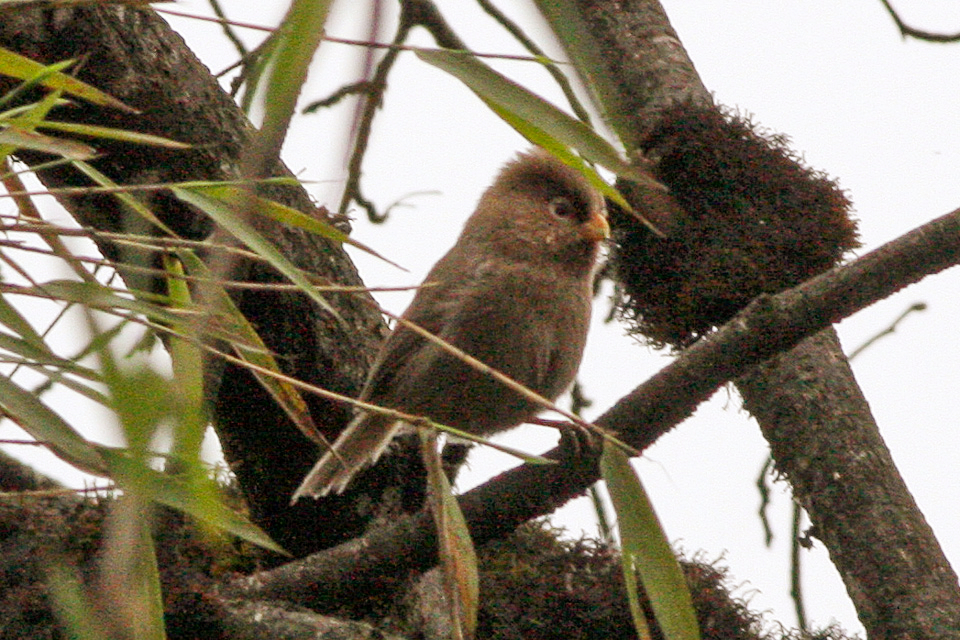
Sylvia solitaria
Sylvia solitaria
Order: Passeriformes / Family: Sylviidae

Wikimedia Commons
About the Sylvia solitaria
Sylvia solitaria, commonly known as the Blue-gray Warbler, is a notable member of the Sylviidae family, captivating bird enthusiasts with its stunning appearance and melodic vocalizations. This medium-sized passerine primarily inhabits Mediterranean woodlands, scrublands, and semi-arid regions across southern Europe and parts of North Africa. Its presence is a key indicator of healthy ecosystems in these regions. The Blue-gray Warbler plays a significant ecological role by controlling insect populations and participating in seed dispersal, contributing to the biodiversity of its native habitats. During the breeding season, typically from late spring to early summer, Sylvia solitaria is found in open woodlands and bushy areas where it constructs its nests. Its preference for dense shrubbery and undergrowth ensures protection from predators and harsh weather, enhancing its breeding success. As autumn approaches, the Blue-gray Warbler exhibits partial migratory behavior, with populations in northern regions moving southward to avoid colder climates. This seasonal migration highlights its adaptability and resilience in varying environmental conditions. Throughout its range, Sylvia solitaria is deeply integrated into the local avian community, often seen flitting through foliage in search of food or perched prominently while singing its complex and melodious song.
The Sylvia solitaria belongs to the family Sylviidae, within the order Passeriformes. These birds typically live average 2-3 years with a maximum recorded of 5 years.
How to Identify a Sylvia solitaria
The Blue-gray Warbler, Sylvia solitaria, displays a distinctive blue-gray plumage that makes it relatively easy to identify in its native habitats. Adult males exhibit a more vibrant blue-gray coloration compared to females and juveniles, who tend to be more muted with brownish tinges. Both sexes have a characteristic white eye-ring, which serves as a key identifying feature. The bird's underparts are generally lighter, with a pale gray or whitish hue. In flight, the Blue-gray Warbler exhibits a swift and agile silhouette, often darting through trees with quick, jerky movements. Its wings are slightly rounded, aiding in its maneuverability. When perched, the bird maintains an upright posture, often flicking its tail and wings. Juveniles can be confused with other warbler species due to their less pronounced coloration; however, the unique combination of eye-ring and overall body shape helps distinguish them. During the breeding season, males are more conspicuous due to their singing behavior, making them easier to spot.
Having trouble telling birds apart? Upload a photo to our bird identification tool for an instant species match.
Sylvia solitaria Habitat and Range
Preferred Habitat
Sylvia solitaria thrives in diverse habitats, predominantly favoring Mediterranean woodlands, scrublands, and semi-arid regions. These areas provide the dense cover and abundant food resources necessary for its survival. Typically found at elevations ranging from sea level to 1500 meters, the Blue-gray Warbler shows a preference for areas with a mix of open spaces and dense undergrowth. In urban settings, it is occasionally observed in parks and large gardens, especially during migration. Seasonal shifts in habitat occur as the species moves to lower elevations and warmer areas during cooler months, showcasing its adaptability to different environments.
Geographic Range
The Blue-gray Warbler's breeding range extends across southern Europe, including countries like Spain, Italy, and Greece, and extends into parts of North Africa, such as Morocco and Algeria. During the non-breeding season, some populations migrate southward, reaching as far as the northern parts of the African continent. While the species is not considered highly migratory, certain populations exhibit localized movements in response to seasonal changes. These migration corridors are vital for maintaining population connectivity and genetic diversity.
Want to know which birds visit your area? Browse our backyard birds by location guides for region-specific species lists.
What Does the Sylvia solitaria Eat?
Sylvia solitaria primarily feeds on insects, making it an integral part of its ecosystem by controlling pest populations. Its diet includes caterpillars, beetles, and various arthropods. During the breeding season, the need for high-protein food increases, leading the warbler to forage more extensively. The Blue-gray Warbler employs a variety of foraging techniques, including gleaning insects from leaves and branches and occasionally catching prey mid-air. In the autumn, its diet diversifies to include berries and small fruits, providing essential nutrients as insect availability declines.
Sylvia solitaria Behavior and Social Structure
The Blue-gray Warbler is known for its territorial behavior, particularly during the breeding season when males vigorously defend their territories with song and visual displays. Courtship involves a series of complex vocalizations and aerial displays, with males often performing short flights to attract females. While generally solitary or found in pairs during breeding, Sylvia solitaria may join mixed-species flocks in the non-breeding season, enhancing foraging efficiency and predator detection. Daily activity patterns peak during morning and late afternoon, with periods of inactivity during the hottest parts of the day.
Sylvia solitaria Nesting and Reproduction
Sylvia solitaria constructs its nests in dense shrubbery, often at a height of 1-3 meters above the ground. These cup-shaped nests are intricately woven from grasses, leaves, and spider silk, demonstrating the bird's remarkable nest-building skills. A typical clutch contains 3-5 eggs, with an incubation period of about 12-14 days. Both parents participate in feeding the chicks, which fledge approximately 10-12 days after hatching. The species is known to raise one to two broods per year, depending on environmental conditions and food availability.
Sylvia solitaria Sounds and Vocalizations
The Blue-gray Warbler's primary song is a rich and complex melody, characterized by a series of trills and whistles that vary in pitch and rhythm. This song serves as a territorial marker and an attractant for mates. In addition to its melodious song, Sylvia solitaria produces a variety of call notes, including sharp 'tchick' sounds used as alarm calls when predators are nearby. During the dawn chorus, males are particularly vocal, their songs resonating through woodlands and scrublands as they establish their presence.
Interesting Facts About the Sylvia solitaria
- 1Sylvia solitaria's song can last up to 30 seconds, making it one of the more complex vocalizations among warblers.
- 2The Blue-gray Warbler's nests are often camouflaged with lichen, helping them blend seamlessly with their surroundings.
- 3This species can consume up to 50% of its body weight in insects daily during peak breeding season.
- 4Sylvia solitaria is one of the few warbler species that exhibits partial migratory behavior, adapting to various climates.
- 5The warbler's eye-ring is a distinguishing feature that helps differentiate it from similar species in its habitat.
- 6Despite its preference for natural habitats, Sylvia solitaria has been recorded in urban areas, demonstrating adaptability.
- 7Nestlings of the Blue-gray Warbler fledge relatively quickly, often leaving the nest within 10-12 days post-hatching.
Sylvia solitaria Conservation Status
Currently, Sylvia solitaria is listed as Least Concern by the IUCN, with stable population trends across its range. However, habitat loss due to agricultural expansion and urban development poses a significant threat. Conservation efforts focus on preserving natural habitats and promoting sustainable land-use practices. Historical data indicates that the species has adapted to changing environments, but ongoing monitoring and habitat protection remain crucial to ensure its long-term survival.