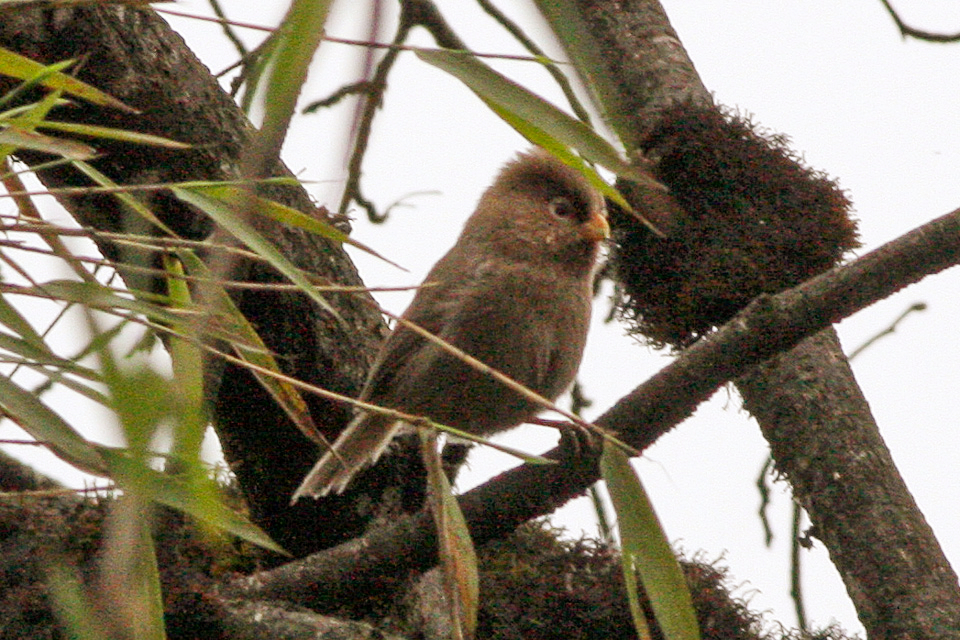
Sylvia spec
Sylvia spec
Order: Passeriformes / Family: Sylviidae
About the Sylvia spec
The Sylvia spec, belonging to the Sylviidae family, is a captivating songbird known for its vibrant plumage and melodious song. Found primarily in temperate regions of Europe, the Sylvia spec occupies a variety of habitats, including deciduous forests, scrublands, and gardens. This bird plays a significant ecological role by controlling insect populations and dispersing seeds, thus contributing to the health of its ecosystem.
In regions like the Iberian Peninsula and southern France, the Sylvia spec thrives, often spotted flitting between shrubs and trees. Its presence is a vital indicator of a healthy habitat, as the bird requires a rich diversity of insect prey and suitable nesting sites. The species' song, a complex series of whistles and trills, is not only a delight for bird enthusiasts but also a crucial tool for territory establishment and mate attraction.
During the breeding season, Sylvia spec becomes particularly active, engaging in elaborate courtship displays and vocal duets, which strengthen pair bonds. As seasons change, the bird may adjust its foraging behaviors, shifting from insect predation in spring and summer to berry consumption in autumn, showcasing its adaptability. The Sylvia spec's ability to thrive in both natural and semi-urban environments underscores its adaptability and ecological importance.
The Sylvia spec belongs to the family Sylviidae, within the order Passeriformes. These birds typically live Average lifespan not yet documented.
How to Identify a Sylvia spec
The Sylvia spec is a small, agile songbird with a length of approximately 13-15 cm and a wingspan ranging from 16-20 cm. Adult Sylvia spec males typically exhibit a striking combination of gray and brown plumage with a distinctive black head cap, lending them a bold appearance against the foliage. Females and juveniles, however, present a more subdued coloration with lighter gray and brown tones, lacking the stark black cap of the males.
In the field, identifying Sylvia spec involves noting its size, coloration, and distinct behaviors. While its plumage can resemble that of other Sylvia warblers, the combination of its melodic song and the male's striking head pattern aids in differentiation. Observers should be mindful of similar species, such as the Lesser Whitethroat, which shares a similar habitat and overall size but differs in its more muted coloration and lack of the distinctive black cap.
The flight of Sylvia spec is characteristically swift and direct, often punctuated by short, rapid bursts of wingbeats. When perched, it often adopts a slightly upright posture, allowing for better observation of its surroundings as it surveys for potential prey or threats.
Having trouble telling birds apart? Upload a photo to our bird identification tool for an instant species match.
Sylvia spec Habitat and Range
Preferred Habitat
Sylvia spec thrives in a range of habitats, primarily favoring deciduous woodlands, scrublands, and dense thickets. These environments provide the necessary cover and abundant food sources. The species is also adaptable to semi-urban areas, often inhabiting parks and gardens where suitable vegetation exists. Elevationally, it is typically found from sea level up to 1,500 meters, depending on the region.
During the breeding season, Sylvia spec shows a preference for dense, shrubby areas that offer protection and suitable nesting sites. In winter, the bird may shift slightly towards areas with ample food resources, such as berry-laden bushes. While it is more prevalent in rural settings, the species has been observed adapting to urban environments, particularly where natural green spaces are preserved.
Geographic Range
The Sylvia spec's range primarily encompasses Europe, with notable populations in the Iberian Peninsula, France, and further east into parts of Central Europe. During the breeding season, the bird establishes territories across these regions, favoring areas with dense shrubbery and forest cover.
As a migratory species, Sylvia spec undertakes seasonal movements, with northern populations migrating southward as winter approaches. Some may venture as far as North Africa, utilizing well-established migration corridors across the Mediterranean. In terms of population density, hotspots include regions like southwestern France and coastal Spain, where the bird can be found in abundant numbers during certain times of the year.
This migratory behavior ensures Sylvia spec can exploit different environments seasonally, accessing rich food resources in its breeding range and milder climates during the winter.
Want to know which birds visit your area? Browse our backyard birds by location guides for region-specific species lists.
What Does the Sylvia spec Eat?
Sylvia spec has a varied diet, primarily consisting of insects and other small invertebrates, which it actively hunts among foliage. During the breeding season, this insectivorous diet supports the energy demands of raising young. Prey typically includes caterpillars, beetles, and spiders, which the bird captures through agile maneuvers and careful stalking.
In autumn and winter, Sylvia spec's diet shifts towards berries and small fruits as insects become less abundant. This dietary flexibility ensures its survival through different seasons and highlights its adaptability. The bird often forages in the early morning and late afternoon, times when prey activity is highest.
The Sylvia spec employs a range of foraging techniques, from gleaning insects off leaves to snatching prey mid-air, showcasing its versatility as a hunter. The variety in its diet not only supports its nutritional needs but also contributes to seed dispersal, further benefiting the ecosystems it inhabits.
Sylvia spec Behavior and Social Structure
Sylvia spec exhibits a complex social structure, particularly during the breeding season when it becomes a territorial defender. Males establish and defend territories vigorously, often engaging in vocal displays to deter rivals and attract mates. The species is monogamous, with pairs forming strong bonds through mutual displays and vocal exchanges, which are essential for successful reproduction.
Courtship involves elaborate displays where the male performs aerial maneuvers and sings to the female. These behaviors are crucial for mate selection and pair bond reinforcement. Outside the breeding season, Sylvia spec tends to be less territorial, often forming small flocks to forage and roost, which provides safety in numbers.
Daily activity for Sylvia spec includes periods of intense foraging interspersed with rest and preening. The bird also exhibits a keen awareness of predators, often issuing alarm calls and retreating to cover when threatened. Its adaptability and social behaviors are key to its survival across diverse environments.
Sylvia spec Nesting and Reproduction
Sylvia spec constructs its nest in dense vegetation, often choosing low shrubs or small trees for placement. The nest is a compact cup made from grass, twigs, and other plant materials, lined with softer substances such as feathers or hair to ensure comfort for the clutch.
Typically, the female lays 3-5 eggs per clutch, with the incubation period lasting around 11-13 days. Both parents play active roles in feeding the young, although the female primarily incubates the eggs. Once hatched, the chicks fledge approximately 10-14 days later, during which both parents continue to provide food and protection.
Sylvia spec may produce two broods per year if conditions are favorable, taking advantage of abundant food resources to raise multiple young. The species' nesting habits highlight its adaptability and investment in reproductive success, crucial for maintaining population stability.
Sylvia spec Sounds and Vocalizations
The primary song of Sylvia spec is a melodious and complex series of whistles and trills, often delivered from a prominent perch. This song serves both to establish territory and attract mates, demonstrating the bird's vocal prowess. In addition to its song, the Sylvia spec produces various call notes that are softer and used for communication between mates and family members.
Alarm calls are sharp and urgent, alerting others to potential danger. During the dawn chorus, Sylvia spec's song is often one of the most prominent in its habitat, providing a musical backdrop to early morning birding activities. The distinctive quality of its song, with variable pitch and rhythm, makes it an auditory highlight for bird enthusiasts.
Interesting Facts About the Sylvia spec
- 1Sylvia spec can mimic the songs of other bird species, a skill that aids in both communication and deception.
- 2During migration, Sylvia spec can travel over 2,000 kilometers to reach its wintering grounds.
- 3Sylvia spec can change its diet from primarily insectivorous in summer to frugivorous in winter.
- 4The male Sylvia spec uses its song to not only attract mates but also to establish territory boundaries.
- 5Despite its small size, Sylvia spec can be quite aggressive in defending its territory from intruders.
- 6Sylvia spec often engages in 'anting' behavior, using ants to help remove parasites from their feathers.
- 7In urban areas, Sylvia spec can adapt to new food sources, including feeding on bread crumbs left by humans.
Sylvia spec Conservation Status
The Sylvia spec currently holds a status of Least Concern on the IUCN Red List, with populations generally considered stable. However, localized declines have been noted, primarily due to habitat loss and degradation. Agricultural expansion and urbanization pose significant threats, as they lead to the reduction of suitable nesting sites and food resources. Conservation efforts focus on habitat preservation and restoration, particularly in areas where human activities have significantly altered the landscape. Historical population changes have shown resilience, but continued monitoring is essential to ensure long-term stability. The species' adaptability and widespread range are positive factors in its overall conservation outlook.