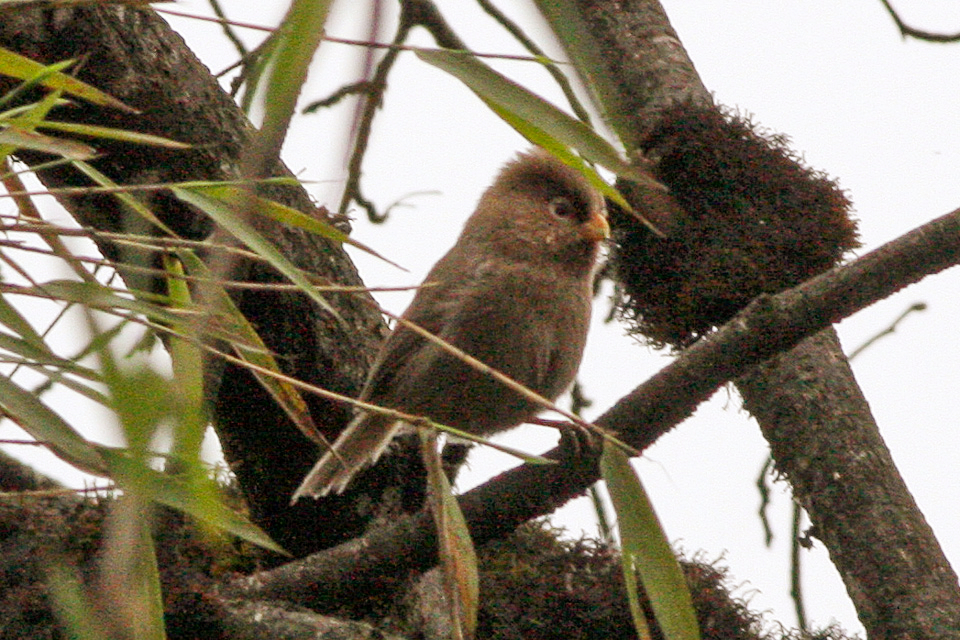
Taiwan Fulvetta
Fulvetta formosana
Order: Passeriformes / Family: Sylviidae

Wikimedia Commons
About the Taiwan Fulvetta
The Taiwan Fulvetta, scientifically known as Fulvetta formosana, is a captivating member of the Sylviidae family. This bird is endemic to Taiwan, meaning it is not naturally found anywhere else in the world. It plays a vital role in the island's avian biodiversity, being a common resident of the montane forests. The Taiwan Fulvetta typically inhabits elevations ranging from 1,000 to 3,000 meters, favoring dense undergrowth and bamboo thickets, which provide both food and shelter.
This species is significant not only for its ecological role but also as a point of interest for birding enthusiasts visiting Taiwan. Its presence indicates healthy forest ecosystems, as it contributes to insect control by feeding on various small invertebrates. In addition, the Taiwan Fulvetta aids in seed dispersal, indirectly supporting plant regeneration and forest health.
Seasonally, the Taiwan Fulvetta exhibits some altitudinal movement. During colder months, it may descend to lower elevations in search of more abundant food supplies, although it generally does not migrate long distances. The bird's adaptation to the varied climatic conditions of Taiwan's mountainous regions showcases its resilience and adaptability. Observing the Taiwan Fulvetta in its natural habitat offers insight into the delicate balance of the island's unique montane ecosystems.
The Taiwan Fulvetta belongs to the family Sylviidae, within the order Passeriformes. These birds typically live average 5-6 years with a max recorded of 8 years.
How to Identify a Taiwan Fulvetta
The Taiwan Fulvetta is a small songbird, measuring approximately 11 to 13 centimeters in length. Its plumage is primarily a mix of gray and brown, with a notable contrast between the darker brown cap and pale gray underparts. This combination provides excellent camouflage among the forest underbrush. The wings and tail exhibit a subtle brownish hue with faint streaks.
Adults typically show minimal sexual dimorphism, meaning males and females look alike. However, juveniles can be distinguished by their slightly duller plumage and less defined facial markings. The species features a short, slender bill and a rounded body, typical of many sylviid warblers. When perched, the Taiwan Fulvetta often holds its tail slightly cocked, a characteristic posture that aids in its identification.
In flight, the Taiwan Fulvetta displays a rapid, fluttering pattern, which, combined with its small size, can sometimes lead to confusion with other small forest birds. However, its distinctive plumage and the lively, social nature of its foraging groups often set it apart. The bird's vocalizations, a series of soft, musical notes, also aid in confirming its presence amid the dense foliage.
Having trouble telling birds apart? Upload a photo to our bird identification tool for an instant species match.
Taiwan Fulvetta Habitat and Range
Preferred Habitat
The Taiwan Fulvetta primarily inhabits subtropical and temperate montane forests, thriving in areas with dense undergrowth and bamboo thickets. It is most commonly found at elevations between 1,000 and 3,000 meters, where the forest is rich with ferns, mosses, and a variety of understory plants. These habitats provide ample food resources and nesting materials.
The bird's preference for montane environments means it is less commonly found in lowland areas, although it may descend to lower elevations during colder months in pursuit of food. In urban settings, the Taiwan Fulvetta is rarely observed, as it predominantly relies on natural forest habitats.
During the breeding season, the bird remains in higher elevations, where the dense vegetation offers protection and nesting sites. The Taiwan Fulvetta's habitat selection underscores its reliance on well-preserved forest ecosystems, making it particularly vulnerable to habitat destruction and fragmentation.
Geographic Range
As an endemic species, the Taiwan Fulvetta is found exclusively on the island of Taiwan. Its range is primarily restricted to the central and northern parts of the island, where suitable montane habitats are most prevalent. The bird is a non-migratory resident, although it may exhibit some altitudinal movement depending on seasonal food availability.
Within Taiwan, the Taiwan Fulvetta is considered relatively common in its preferred habitats. Population density is highest in protected areas like national parks and forest reserves, where the natural environment is preserved. However, outside these areas, habitat degradation poses a threat to its populations.
The Taiwan Fulvetta does not engage in long-distance migration, and its movements are typically limited to shifts in elevation. This limited range makes the species particularly sensitive to changes in its habitat, emphasizing the importance of conservation efforts within its native island.
Want to know which birds visit your area? Browse our backyard birds by location guides for region-specific species lists.
What Does the Taiwan Fulvetta Eat?
The Taiwan Fulvetta primarily feeds on small insects and other invertebrates, playing a crucial role in controlling pest populations in its forest habitat. Its diet consists of ants, beetles, caterpillars, and various other arthropods, which it gleans from leaves and branches with its short, agile bill.
During the breeding season, the bird's diet may expand to include more protein-rich prey to support the energy demands of raising young. In addition to insects, the Taiwan Fulvetta occasionally consumes seeds and berries, particularly in the autumn when fruit is more abundant.
Foraging in small, active flocks, the Taiwan Fulvetta moves quickly through the underbrush, often hanging upside down to reach prey on the underside of leaves. This dynamic foraging behavior not only aids in effective feeding but also reduces competition by utilizing a variety of microhabitats within the forest.
Taiwan Fulvetta Behavior and Social Structure
The Taiwan Fulvetta is a highly social bird, often seen foraging in small, cohesive flocks. These flocks can number from a few individuals to over a dozen, and they frequently include other species, forming mixed-species feeding groups. This social behavior enhances foraging efficiency and provides protection against predators through increased vigilance.
During the breeding season, the Taiwan Fulvetta becomes more territorial. Pairs establish and defend small territories where they build nests and raise young. Courtship displays involve a combination of vocalizations and physical gestures, such as wing-flicking and tail-posturing.
The bird is diurnal, with activity peaks in the early morning and late afternoon, corresponding to the availability of its insect prey. Its response to predators includes alarm calls and seeking cover within dense vegetation, relying on its cryptic plumage for concealment.
Taiwan Fulvetta Nesting and Reproduction
The Taiwan Fulvetta constructs cup-shaped nests using a variety of natural materials, including grasses, twigs, moss, and leaves. These nests are typically well-hidden within dense undergrowth or bamboo thickets, providing protection from predators and harsh weather.
Nesting sites are usually located at low to moderate heights above the ground, often in small trees or shrubs. A typical clutch consists of 2 to 4 eggs, which are incubated primarily by the female for about 14 days. During this period, the male assists by providing food.
Once hatched, the nestlings remain in the nest for approximately 12 to 14 days before fledging. Both parents participate in feeding and caring for the young, ensuring high survival rates. The Taiwan Fulvetta may produce one to two broods per year, depending on environmental conditions and food availability.
Taiwan Fulvetta Sounds and Vocalizations
The primary song of the Taiwan Fulvetta is a series of soft, melodious notes that rise and fall gently, resembling the tinkling of small bells. This song serves both to attract mates and to establish territorial boundaries during the breeding season.
Aside from its song, the Taiwan Fulvetta has a variety of call notes used in different contexts. These include short, high-pitched contact calls that help maintain flock cohesion and sharper alarm calls that signal the presence of predators.
During the dawn chorus, the Taiwan Fulvetta's voice blends with those of other forest birds, creating a complex tapestry of sound that defines the montane forest soundscape. Its vocalizations, while subtle, are distinctive enough to aid in field identification.
Interesting Facts About the Taiwan Fulvetta
- 1The Taiwan Fulvetta is one of the few bird species endemic to Taiwan, highlighting the island's unique biodiversity.
- 2Despite its small size, the Taiwan Fulvetta plays a crucial role in pest control by consuming large numbers of insects.
- 3The bird's altitudinal movement in response to seasonal changes is an example of its adaptability to varying environmental conditions.
- 4The Taiwan Fulvetta often forms mixed-species flocks, showcasing its social nature and cooperative foraging behavior.
- 5Its song, reminiscent of small bells, adds a distinctive melody to Taiwan's montane forests.
- 6The Taiwan Fulvetta's preference for dense undergrowth provides excellent camouflage against predators.
- 7The species' reliance on montane forests makes it a key indicator of forest health and biodiversity.
Taiwan Fulvetta Conservation Status
The IUCN currently lists the Taiwan Fulvetta as a species of Least Concern, reflecting a stable population within its restricted range. However, habitat loss due to deforestation and land development poses ongoing threats. Conservation efforts focus on preserving and restoring the montane forests of Taiwan, which are critical for the Fulvetta's survival. Protected areas like national parks provide essential refuges, though continued monitoring and habitat management are necessary to ensure long-term stability. Historically, the Taiwan Fulvetta's population has fluctuated with changes in forest cover and land use. Continued conservation actions, including habitat protection and restoration, remain vital to safeguarding this unique species.