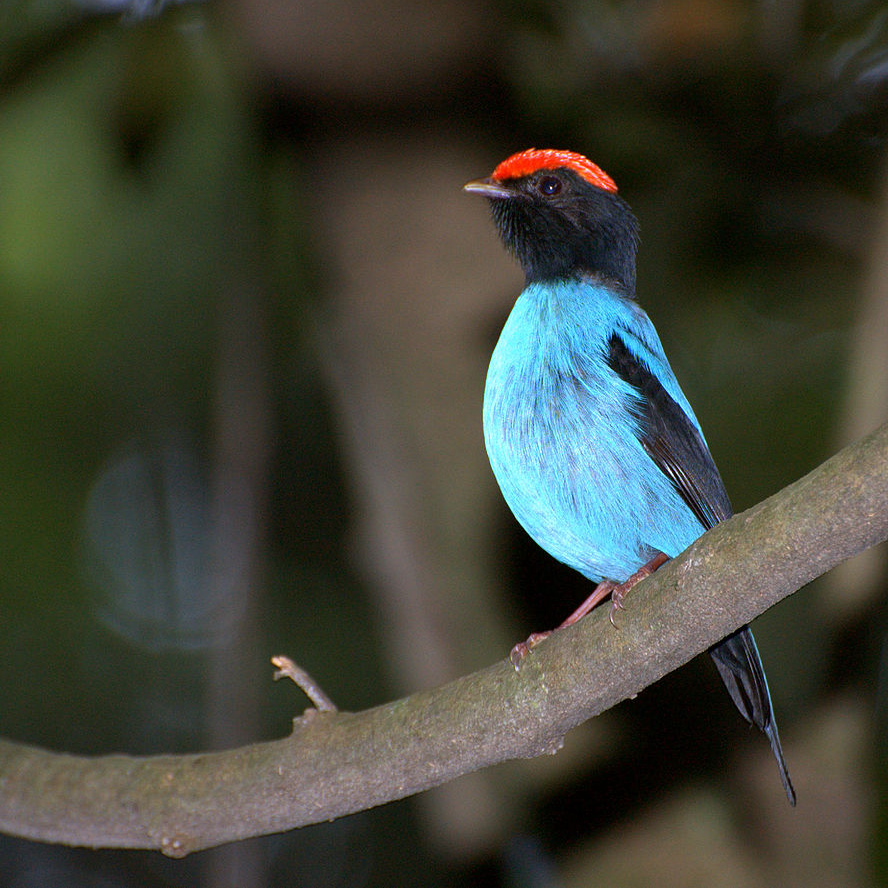
Tiny Tyrant-Manakin
Tyranneutes virescens
Order: Passeriformes / Family: Pipridae

Wikimedia Commons
About the Tiny Tyrant-Manakin
The Tiny Tyrant-Manakin, or Tyranneutes virescens, is a diminutive bird belonging to the Pipridae family, which makes its home in the lush rainforests of the Amazon basin. This species plays a significant role within its ecosystem, acting as both a seed disperser and a crucial component of the food web. Found predominantly in countries such as Brazil, Peru, and Colombia, the Tiny Tyrant-Manakin embodies the rich biodiversity of South America's tropical regions.
The ecological significance of the Tiny Tyrant-Manakin is considerable. As it forages for fruit, the bird inadvertently aids in seed dispersal, promoting forest regeneration and sustaining plant diversity. It also serves as prey for a variety of predators, thus maintaining the delicate balance within its habitat. The bird's presence indicates a healthy forest environment, making it an important species for monitoring ecological changes.
Throughout the year, the Tiny Tyrant-Manakin's behavior showcases its adaptation to the rainforest. With the advent of the breeding season, males perform elaborate courtship displays, a hallmark of manakin species. These displays, occurring during the wet season, are critical for mate selection and demonstrate the bird's dependence on seasonal cues. During the dry season, the bird's activity centers around foraging and maintaining territories, reflecting its adaptability to environmental changes.
The Tiny Tyrant-Manakin's role extends beyond ecological function, as it contributes to local biodiversity and attracts birdwatchers seeking to observe its unique behaviors. As a species intertwined with the health of its environment, the Tiny Tyrant-Manakin embodies the intricate relationships that define tropical ecosystems.
The Tiny Tyrant-Manakin belongs to the family Pipridae, within the order Passeriformes. These birds typically live typically 5-6 years, with some individuals reaching up to 9 years..
How to Identify a Tiny Tyrant-Manakin
The Tiny Tyrant-Manakin is a small bird measuring approximately 8-9 centimeters in length, with males and females exhibiting subtle differences in plumage. Adult males display a striking green coloration on their upperparts, complemented by a more subdued olive hue on the underparts. In contrast, females and juveniles tend to have duller plumage, aiding in camouflage within the dense foliage.
One of the distinguishing features of the Tiny Tyrant-Manakin is its short, rounded wings and tail, which contribute to its distinctive appearance in flight. The bird's perching posture often involves a slight forward lean, with wings held close to the body, a characteristic behavior of many manakins. Identification in the field can be challenging due to its small size and preference for remaining within the forest canopy.
Confusion with similar species can occur, particularly with other small green birds inhabiting the same range. However, the Tiny Tyrant-Manakin's unique combination of size, coloration, and behavior provides reliable identification markers. Observers should note the bird's rapid, jerky movements and listen for its calls to confirm sightings.
Having trouble telling birds apart? Upload a photo to our bird identification tool for an instant species match.
Tiny Tyrant-Manakin Habitat and Range
Preferred Habitat
The Tiny Tyrant-Manakin thrives in the dense rainforests of the Amazon basin. It prefers primary and secondary forests with rich understory growth, often found at elevations ranging from sea level to 1,000 meters. The bird's habitat choice reflects its reliance on the lush vegetation of tropical forests, which offers ample food and protection.
During different seasons, the Tiny Tyrant-Manakin exhibits slight habitat shifts, favoring areas with abundant fruiting trees during the wet season. Unlike some bird species, it is not commonly found in urban or highly disturbed areas, indicating its preference for undisturbed natural environments. Its presence in rural settings is typically limited to forested areas, where it can find suitable conditions for feeding and breeding.
Geographic Range
The Tiny Tyrant-Manakin's range is primarily concentrated in the expansive Amazon basin, encompassing regions in Brazil, Peru, Colombia, Ecuador, and parts of Venezuela. It does not undertake long-distance migrations, preferring to remain within its established territory throughout the year.
In terms of population density, the species is most abundant in the central regions of the Amazon rainforest, where the dense canopy provides ideal conditions for breeding and foraging. While it does not migrate, the bird exhibits some local movement in response to food availability, often shifting locations within its range to exploit seasonal fruiting events.
The bird's stable presence across its range underscores its adaptability to the diverse climates within the Amazon. However, its dependence on specific habitats makes it vulnerable to deforestation and habitat fragmentation, factors that could influence its distribution in the future.
Want to know which birds visit your area? Browse our backyard birds by location guides for region-specific species lists.
What Does the Tiny Tyrant-Manakin Eat?
The Tiny Tyrant-Manakin primarily feeds on a variety of small fruits and berries, which constitute the bulk of its diet. These fruits are foraged from the understory and mid-canopy levels of the rainforest, where the bird employs a methodical approach to locate and consume food.
Seasonal diet changes occur as the availability of fruit varies, with the bird occasionally supplementing its diet with small insects to meet protein needs. Its technique involves short, quick flights to pluck fruit, demonstrating agility and precision. The size of prey and fruit is generally small, aligning with the bird's modest stature.
Feeding schedules are largely dictated by daylight, with the Tiny Tyrant-Manakin most active during the early morning and late afternoon. This pattern allows it to optimize foraging efficiency while avoiding the midday heat, a common strategy among tropical forest birds.
Tiny Tyrant-Manakin Behavior and Social Structure
The Tiny Tyrant-Manakin exhibits fascinating social and behavioral traits, often seen in small groups or pairs. It displays a well-defined territorial behavior, especially during the breeding season when males aggressively defend their display sites.
Courtship displays are a highlight of this species, with males performing intricate dance routines to attract females. These displays involve a series of rapid, coordinated movements, accompanied by vocalizations that serve to both attract potential mates and assert dominance over rivals.
In response to predators, the Tiny Tyrant-Manakin relies on its agility and the dense foliage of its habitat for cover. It exhibits a heightened state of alertness, often freezing or retreating into the canopy to avoid detection. Daily activity patterns revolve around foraging and social interaction, with peak activity occurring in the cooler parts of the day.
Tiny Tyrant-Manakin Nesting and Reproduction
The Tiny Tyrant-Manakin constructs small, cup-shaped nests using a combination of plant fibers, leaves, and spider silk. These nests are typically situated in the fork of a tree branch, well-concealed within the forest understory to protect against predators.
A typical clutch consists of two eggs, with an incubation period lasting around 16-18 days. Both parents share responsibilities during incubation and feeding, although the female takes a more prominent role in nest maintenance. Fledging occurs approximately 15-20 days after hatching, with chicks remaining under parental care for a short period post-fledging.
The species usually raises one brood per year, although favorable conditions may allow for a second. The nesting strategy reflects an adaptation to the variable conditions of the rainforest, ensuring that offspring have the best chance of survival.
Tiny Tyrant-Manakin Sounds and Vocalizations
The primary song of the Tiny Tyrant-Manakin features a series of high-pitched, clear whistles, delivered in a rhythmic pattern. These songs are most commonly heard during the breeding season, serving both to attract mates and establish territory.
Call notes include short, sharp 'pip' sounds, used for communication between individuals and as alarm calls when predators are nearby. The bird's vocal repertoire contributes to the dawn chorus, a vibrant symphony of avian sounds characteristic of tropical rainforests.
Its vocalizations, though not as elaborate as those of some other manakin species, are distinctive and aid in identification. The song's quality, akin to a series of flute-like notes, resonates through the forest, adding to the rich acoustic landscape of its habitat.
Interesting Facts About the Tiny Tyrant-Manakin
- 1The Tiny Tyrant-Manakin can perform more than 100 wing snaps per minute during its courtship display.
- 2This bird's green plumage provides excellent camouflage, blending seamlessly with the rainforest foliage.
- 3Despite its small size, the Tiny Tyrant-Manakin exhibits remarkably complex social behaviors and interactions.
- 4The species' ability to disperse seeds aids in the regeneration of the Amazon rainforest, highlighting its ecological importance.
- 5Tiny Tyrant-Manakins often join mixed-species foraging flocks, increasing their feeding efficiency.
- 6Its agile foraging technique involves short flights and quick maneuvers, demonstrating exceptional coordination.
- 7The Tiny Tyrant-Manakin's vocalizations contribute to the diverse soundscape of the Amazon, enhancing the forest's acoustic environment.
Tiny Tyrant-Manakin Conservation Status
The IUCN currently lists the Tiny Tyrant-Manakin as of Least Concern, with stable population trends observed across its range. However, habitat loss due to deforestation poses a significant threat, particularly in areas of the Amazon experiencing rapid land-use changes. Conservation efforts focus on protecting large tracts of contiguous forest, ensuring that vital habitats remain intact. Historical population changes have been relatively minor, although localized declines may occur in heavily fragmented regions. Awareness and preservation of the Amazon's biodiversity remain crucial, as the Tiny Tyrant-Manakin's future hinges on the health of its forest environment. Continued research and monitoring are essential to understanding and safeguarding this vibrant species.