Tristram's Warbler
Sylvia deserticola
Order: Passeriformes / Family: Sylviidae

Wikimedia Commons
About the Tristram's Warbler
Tristram’s Warbler, scientifically known as Sylvia deserticola, is a small passerine bird belonging to the family Sylviidae. Endemic to arid and semi-arid regions, this species primarily inhabits North Africa, with significant populations found in Morocco, Algeria, and Tunisia. The bird is particularly adapted to the region's harsh climates, thriving in environments where few other species can. Its presence serves as an indicator of ecological balance within these ecosystems, contributing to the control of insect populations due to its insectivorous diet. Tristram’s Warbler occupies a niche where it can exploit food resources that may be inaccessible to less specialized species. In the context of the Mediterranean biome, the bird plays a crucial role in seed dispersal, thereby aiding in the regeneration of native flora. During the breeding season, typically from April to June, this warbler exhibits distinct territorial behaviors, often engaging in complex song displays to attract mates and deter rivals. The bird's adaptability to changing environmental conditions highlights its evolutionary success in a challenging habitat. As climate change and human activities continue to alter the landscape, Tristram's Warbler's resilience will be a testament to its ecological importance. Conservationists prioritize this species due to its restricted range and the increasing threat of habitat degradation. As an emblematic species of the North African scrublands, Tristram's Warbler serves as a flagship for conservation efforts aimed at preserving these unique ecosystems. The bird's presence is vital not only for the environmental balance but also for cultural heritage, as it often features in local folklore and traditions. Observing the seasonal behavior of Tristram's Warbler provides insight into the health of the broader ecosystem, making it a valuable subject for ecological studies and conservation initiatives.
The Tristram's Warbler belongs to the family Sylviidae, within the order Passeriformes. These birds typically live average 3-5 years with max recorded 7 years.
How to Identify a Tristram's Warbler
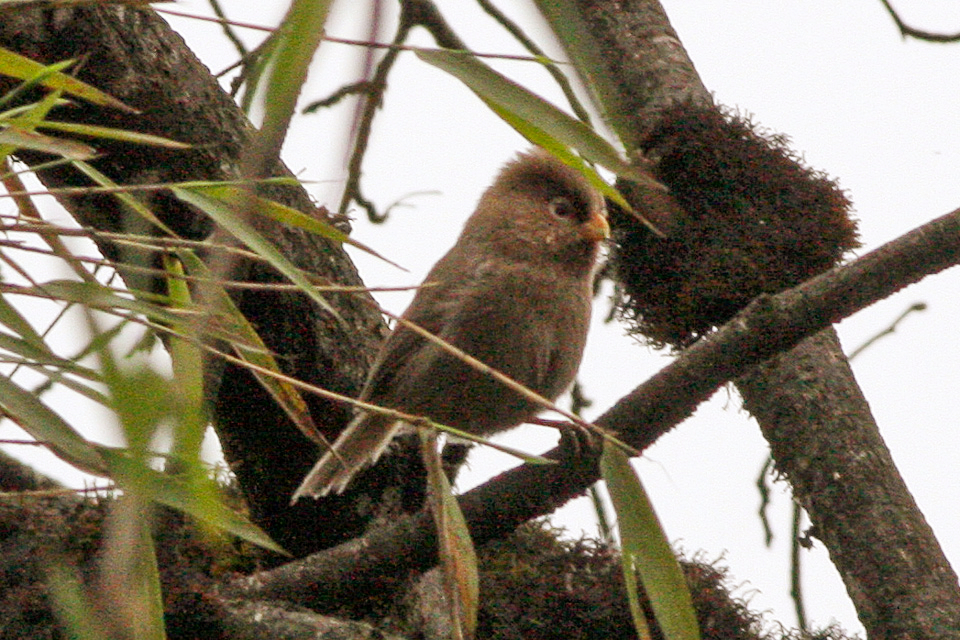
Tristram's Warbler is characterized by its distinctive plumage, which forms the basis of its identification in the field. Adults possess a striking combination of dark slate-gray upperparts and a reddish throat and breast that set them apart from other warblers. The males typically exhibit more vibrant coloring than females, whose hues are slightly subdued, often appearing more brownish. Juveniles, on the other hand, display a duller version of the adult plumage with a more pronounced brownish tone across their bodies, lacking the deep reds of mature birds. One might confuse Tristram's Warbler with the closely related Sardinian Warbler; however, the latter lacks the reddish breast and throat, making differentiation possible when viewed closely. In flight, Tristram's Warbler shows a relatively rapid wingbeat with a slightly fluttery flight pattern, typical of warblers, whereas its silhouette is compact, with a short tail and rounded wings. When perched, the warbler often adopts an upright stance, frequently flicking its tail, a behavior that aids in its detection. This posture, combined with its distinctive color pattern, ensures that the bird is unmistakable to keen-eyed observers familiar with its habitat.
Having trouble telling birds apart? Upload a photo to our bird identification tool for an instant species match.
Tristram's Warbler Habitat and Range
Preferred Habitat
Tristram's Warbler is predominantly found in arid and semi-arid scrublands, preferring areas with dense, low shrubs that provide both cover and food resources. The bird thrives in the maquis and garrigue ecosystems characteristic of the North African region. These habitats, often dominated by thorny bushes such as juniper and tamarisk, offer the warbler protection from predators and severe weather. The species typically occupies elevations from sea level up to 2500 meters, making use of both lowland and highland terrains. During the breeding season, Tristram's Warbler demonstrates a preference for more secluded, shrub-rich areas, while in other seasons, it may venture into more open landscapes. Although primarily associated with rural environments, the bird occasionally appears in suburban gardens, especially where natural vegetation has been preserved. Its ability to adapt to various shrubland types across different elevations reflects its ecological versatility.
Geographic Range
Tristram's Warbler exhibits a relatively limited breeding range confined to North Africa, particularly across Morocco, Algeria, and Tunisia. Within these regions, the bird occupies a patchwork of suitable habitats, forming localized populations. During the non-breeding season, there is some evidence of limited altitudinal migration, with birds potentially moving to lower elevations or more sheltered locations to escape harsh winter conditions. However, the species is largely resident, with no long-distance migratory behavior. Population density hotspots include the Atlas Mountains, where the combination of topography and vegetation offers ideal conditions. Unlike many warblers, Tristram's Warbler does not extend its range into southern Europe or the Middle East, maintaining a strong association with the specific ecological conditions of North Africa.
Want to know which birds visit your area? Browse our backyard birds by location guides for region-specific species lists.
What Does the Tristram's Warbler Eat?
The diet of Tristram's Warbler is primarily insectivorous, consisting mainly of small insects and arachnids. During the breeding season, the bird intensifies its foraging efforts to meet the increased nutritional demands of chick-rearing, targeting a higher proportion of caterpillars, beetles, and other larvae. In the cooler months, when insect availability decreases, the warbler supplements its diet with small berries and seeds, demonstrating an opportunistic feeding strategy. The bird typically forages at low heights, often seen flitting between shrubs, gleaning insects from foliage, and occasionally catching prey mid-air. This varied diet ensures that Tristram's Warbler can sustain itself through seasonal fluctuations in food availability, highlighting its adaptability to the changing conditions of its environment.
Tristram's Warbler Behavior and Social Structure
Tristram's Warbler exhibits a range of social and territorial behaviors, particularly evident during the breeding season. Males sing persistently from exposed perches to establish territories and attract mates, often engaging in aerial displays that showcase their agility. These territories are fiercely defended against intruders, with males engaging in chases and vocal duels to assert dominance. Outside the breeding season, the warbler becomes more gregarious, joining mixed-species flocks to forage, which offers protection from predators. The bird's daily activity patterns reveal a peak in foraging during the early morning and late afternoon, aligning with the activity of its insect prey. When faced with potential threats, Tristram's Warbler employs alarm calls to alert others and utilizes dense vegetation as cover to evade predators, demonstrating a well-developed anti-predator strategy.
Tristram's Warbler Nesting and Reproduction
Tristram's Warbler constructs its nest within dense shrubs, choosing sites that offer concealment from predators and harsh weather. The nest, a cup-shaped structure, is made from fine twigs, grasses, and lined with softer materials like feathers and hair. A typical clutch consists of three to five eggs, which are incubated primarily by the female over 12-14 days. Both parents partake in feeding the chicks, which fledge approximately two weeks after hatching. The warbler’s breeding cycle often allows for two broods per season, especially in years with favorable conditions. The cooperative nature of the parental roles ensures high fledgling success, with both adults participating in defense and provisioning.
Tristram's Warbler Sounds and Vocalizations
The primary song of Tristram's Warbler is a melodious, fast-paced series of trills and whistles, often delivered from a conspicuous perch. The rhythm is lively, with a sequence that can be described as a blend of sharp notes and softer whistles, creating a distinctive soundscape in its habitat. Call notes are typically short, sharp 'chit' sounds used for communication between individuals, while alarm calls are more strident to convey urgency. During the dawn chorus, males intensify their singing to establish their territory, making this an ideal time for birdwatchers to locate them by sound. The unique tonal quality of their song sets Tristram's Warbler apart from other sylviid warblers.
Interesting Facts About the Tristram's Warbler
- 1Tristram's Warbler can be heard singing from up to 100 meters away, making it easier to locate by sound than sight.
- 2Despite its small size, Tristram's Warbler can consume up to 200 insects a day during the breeding season, showcasing its voracious appetite.
- 3The species' name honors Henry Baker Tristram, a 19th-century British ornithologist who extensively studied North African birds.
- 4Tristram's Warbler exhibits a unique behavior known as 'anting,' where they use ants to help clean their feathers.
- 5These warblers can live up to 7 years in the wild, a considerable lifespan for a small passerine bird.
- 6During courtship, males perform a display flight with rapid wingbeats to attract females and establish territory.
- 7Tristram's Warbler's reddish throat is more than just for show; it plays a role in mate selection during the breeding season.
Tristram's Warbler Conservation Status
Currently, Tristram's Warbler is classified as Least Concern by the IUCN, with stable population trends. However, ongoing habitat degradation poses a significant threat, primarily from agricultural expansion and overgrazing. Conservation efforts focus on habitat preservation and restoration, aiming to maintain the ecological balance necessary for the warbler's survival. Historical data suggest the species has maintained stable numbers over decades, but continuous monitoring is vital to ensure this trend persists. Protecting the maquis and garrigue ecosystems is crucial for the bird's long-term conservation, requiring collaboration between local communities and conservation organizations.