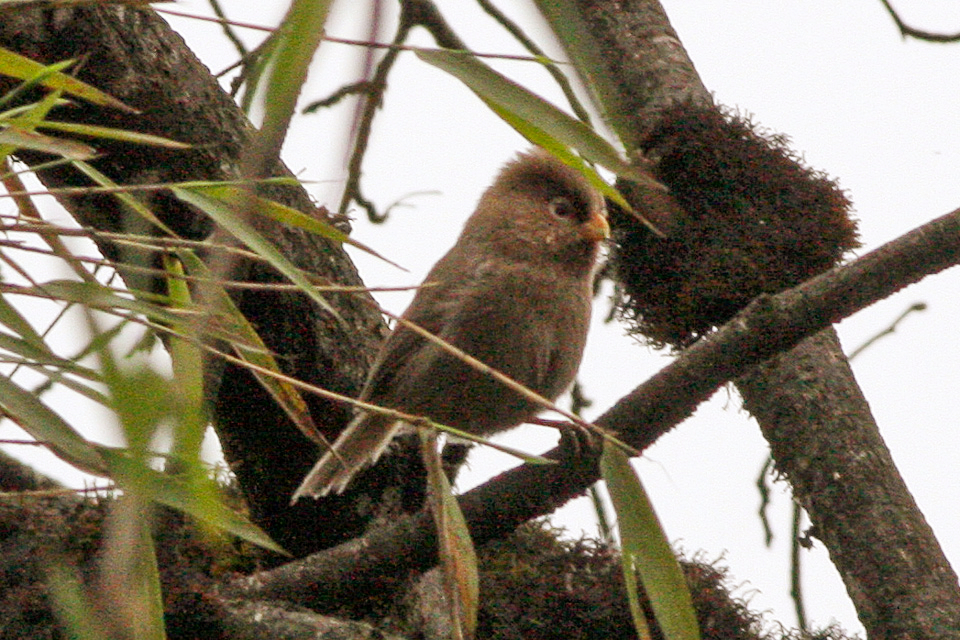
Western Orphean Warbler
Sylvia hortensis
Order: Passeriformes / Family: Sylviidae

Wikimedia Commons
About the Western Orphean Warbler
The Western Orphean Warbler, scientifically known as Sylvia hortensis, belongs to the family Sylviidae and exemplifies the quintessential characteristics of a Mediterranean songbird. With its distribution across southern Europe, North Africa, and parts of the Middle East, this species thrives in temperate climates and diverse habitats. The warbler plays a significant ecological role in its environment, acting as both a seed disperser and insect predator. Found in countries such as Spain, France, and Italy, as well as Morocco and Tunisia, the Western Orphean Warbler contributes to the biodiversity of these regions. During the breeding season, which occurs from late spring to early summer, males are known for their captivating and varied songs. These vocalizations serve not only to attract mates but also to establish and defend territories. In the autumn, the Western Orphean Warbler migrates to sub-Saharan Africa, where it spends the winter months in a more subdued existence compared to its vibrant breeding period. Its migration is a remarkable journey, highlighting its adaptability and resilience. The warbler's ecological role extends beyond its breeding and migratory habits. It aids in controlling insect populations through its diet, which consists primarily of invertebrates. This diet shifts with the seasons, as the bird consumes more berries and fruits in the autumn before migration. By contributing to the control of insect populations and the distribution of seeds, the Western Orphean Warbler supports plant reproduction and maintains ecological balance. The presence of the Western Orphean Warbler in various Mediterranean landscapes underscores its adaptability to different environments. From scrublands and open woodlands to areas of mixed vegetation, this warbler demonstrates a preference for habitats that provide ample cover and food resources. Its adaptability allows it to inhabit regions ranging from coastal plains to mountainous areas, further highlighting its ecological versatility. As a species with a relatively stable population, the Western Orphean Warbler serves as a valuable indicator of the health of Mediterranean ecosystems.
The Western Orphean Warbler belongs to the family Sylviidae, within the order Passeriformes. These birds typically live typically 4-6 years, with a maximum recorded of 8 years..
How to Identify a Western Orphean Warbler
The Western Orphean Warbler is a medium-sized songbird, measuring about 15-16.5 cm in length. Adult males exhibit a distinctive black head with a contrasting white throat, making them relatively easy to identify. Their upperparts are grayish-brown, while their underparts are lighter, often showing a subtle buff tinge. Females and juveniles, however, have more muted coloration, with a brownish-gray head and less contrast between the throat and the rest of the plumage. This dimorphism can lead to confusion with other similar species, such as the Lesser Whitethroat, which has a similar size and shape but lacks the bold head pattern of the male Western Orphean Warbler. In flight, the Western Orphean Warbler exhibits a steady, undulating pattern, with rounded wings and a slightly notched tail. When perched, it holds an alert posture, often flicking its tail as it moves through the foliage. Observers often note the bird's tendency to remain within the middle to upper canopy, where its subtle movements and distinctive song betray its presence. The warbler's silhouette, combined with its unique coloration, aids birdwatchers in distinguishing it from other warblers and small passerines in the region.
Having trouble telling birds apart? Upload a photo to our bird identification tool for an instant species match.
Western Orphean Warbler Habitat and Range
Preferred Habitat
The Western Orphean Warbler inhabits a range of environments, from the dense Mediterranean scrub known as maquis to open pine forests and olive groves. These habitats typically occur at elevations from sea level up to 1,500 meters, depending on the region. The warbler shows a marked preference for areas with a mix of shrubs and trees, offering both cover and abundant food sources. In the breeding season, it often selects territories with rich undergrowth, which provides suitable nesting sites. As the seasons change, the warbler may shift its habitat preferences slightly, moving to areas with more fruiting shrubs as it prepares for migration. While primarily a bird of rural landscapes, the Western Orphean Warbler occasionally ventures into suburban gardens, especially where there is a presence of native vegetation. Its adaptability to different habitat types demonstrates its resilience and ability to exploit various ecological niches.
Geographic Range
The breeding range of the Western Orphean Warbler extends across the western Mediterranean, encompassing much of southern Europe and parts of North Africa. It is found in countries such as Spain, southern France, Italy, and the islands of the Mediterranean, including Corsica and Sardinia. In North Africa, its range includes regions of Morocco, Algeria, and Tunisia. During migration, the warbler travels through a corridor that includes the Iberian Peninsula and parts of the western Mediterranean, eventually reaching its wintering grounds in sub-Saharan Africa. These wintering areas include the Sahel region, where it occupies a variety of habitats. The warbler's migration is a testament to its endurance, with birds covering thousands of kilometers between their breeding and wintering sites. Population densities are generally higher in areas of optimal habitat, such as the coastal maquis and well-vegetated inland areas.
Want to know which birds visit your area? Browse our backyard birds by location guides for region-specific species lists.
What Does the Western Orphean Warbler Eat?
The Western Orphean Warbler primarily feeds on insects and other invertebrates, which it gleans from foliage and branches. Its diet includes caterpillars, beetles, and spiders, which it skillfully extracts from the vegetation. During the breeding season, the demand for protein-rich food increases as the warbler feeds its young, leading to a higher consumption of insects. As autumn approaches, the warbler's diet shifts towards berries and fruits, such as those of the hawthorn and elderberry. This seasonal dietary change supports the bird's energy requirements for migration. The warbler employs a methodical foraging technique, often observed meticulously inspecting leaves and branches for prey. Its ability to adapt its diet according to seasonal availability underscores its ecological versatility and role as both a predator and a seed disperser.
Western Orphean Warbler Behavior and Social Structure
The Western Orphean Warbler exhibits a range of behaviors typical of its family, including territoriality and complex courtship displays. During the breeding season, males establish territories through song, which they deliver from conspicuous perches. These songs are not only a means of attracting a mate but also serve to ward off rival males. The warbler is generally solitary or found in pairs during the breeding season, becoming more social outside of it. Courtship involves a series of displays, where the male may perform aerial acrobatics and sing profusely to impress the female. Once a pair bond is formed, both partners participate in nesting duties. In response to predators, the warbler may employ distraction displays to lead threats away from the nest. Daily activity patterns include a peak in vocal activity during the early morning, with foraging occurring throughout the day.
Western Orphean Warbler Nesting and Reproduction
The Western Orphean Warbler constructs a neat, cup-shaped nest made of grasses, twigs, and moss. This nest is typically located in dense shrubs or low trees, providing concealment from predators. The female lays a clutch of 3 to 5 eggs, which she incubates for approximately 12 to 14 days. During this period, the male assists by bringing food to the nest. After hatching, both parents share the responsibility of feeding the chicks. The fledging period lasts around 10 to 13 days, after which the young leave the nest but remain dependent on their parents for several weeks. The warbler typically raises one brood per year, although in optimal conditions, a second brood may occur. The choice of nesting site and materials reflects the bird's adaptability to its environment, ensuring the successful rearing of its young.
Western Orphean Warbler Sounds and Vocalizations
The Western Orphean Warbler's song is a rich, melodious warble, characterized by a series of varied phrases and notes. It carries a sweet, flute-like quality that can be heard echoing through its habitat during the breeding season. The song often begins with a slow, deliberate rhythm, building in intensity and complexity. In addition to its primary song, the warbler produces a range of call notes, including a sharp 'tek' used as an alarm call. During the dawn chorus, the male's song is particularly prominent, competing with those of other early risers. These vocalizations serve as an auditory signature for the species, allowing it to communicate effectively within its densely vegetated environment.
Interesting Facts About the Western Orphean Warbler
- 1The Western Orphean Warbler can travel over 3,000 kilometers during migration from Europe to Africa.
- 2Despite its name, the Western Orphean Warbler shares little musical lineage with the mythological Orpheus.
- 3This warbler's song can vary significantly from one individual to another, showcasing its adaptability.
- 4The Western Orphean Warbler's nesting success is often higher in areas with dense Mediterranean scrub.
- 5During migration, the warbler can cross the Mediterranean Sea in a single, non-stop flight.
- 6The species has been recorded to live up to 8 years in the wild, a notable lifespan for a small passerine.
- 7The Western Orphean Warbler is one of the few warblers that adapts well to both coastal and inland habitats.
Western Orphean Warbler Conservation Status
The Western Orphean Warbler currently holds a status of Least Concern according to the IUCN. Its population trend remains stable, with no immediate threats posing significant risks to its numbers. However, habitat loss due to agricultural expansion and urban development could impact its breeding areas. Conservation efforts focus on habitat protection and management, particularly in key breeding sites across the Mediterranean. Historically, the warbler's population has fluctuated with changes in land use, but its adaptability has allowed it to maintain a stable presence. Continued monitoring and habitat conservation will be essential to ensure the species' ongoing stability.