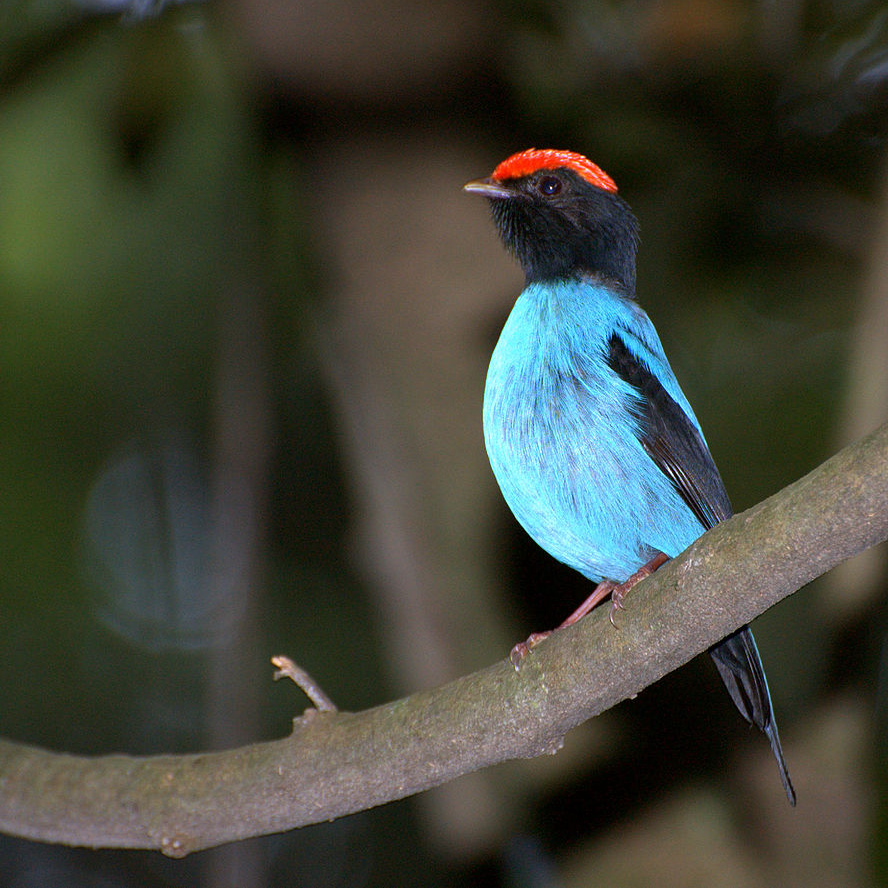
White-bibbed Manakin
Corapipo leucorrhoa
Order: Passeriformes / Family: Pipridae

Wikimedia Commons
About the White-bibbed Manakin
The White-bibbed Manakin, Corapipo leucorrhoa, is a distinctive bird species belonging to the family Pipridae. This small passerine is notable for its unique courtship behaviors and striking plumage. It inhabits the humid lowland and montane forests of the northwestern regions of South America, including countries such as Colombia, Venezuela, Ecuador, and Panama. These birds are particularly significant as they play a crucial role in the pollination and seed dispersal within their ecosystems. By interacting with various plant species, they help maintain the biodiversity of their forest habitats.
White-bibbed Manakins are found in tropical and subtropical forests, where they prefer dense understories that provide ample cover and food resources. These birds are non-migratory, meaning they remain in their territories year-round, exhibiting territorial behaviors especially during the breeding season. Their presence contributes to the rich tapestry of life in the neotropical regions, highlighting their importance not only for ecological balance but also as subjects of interest for ornithologists and bird watchers alike.
The ecological role of the White-bibbed Manakin extends beyond their immediate environment. By participating in the food chain as both predator and prey, they influence the population dynamics of insects and small fruits they consume. The manakin's vibrant displays and calls also serve as indicators of forest health, making them essential in environmental monitoring and conservation efforts. With increasing deforestation and habitat loss in their native ranges, understanding the habits and needs of Corapipo leucorrhoa becomes ever more important for preserving these colorful avian species and their habitats.
The White-bibbed Manakin belongs to the family Pipridae, within the order Passeriformes. These birds typically live average 8 years with a maximum recorded of 11 years..
How to Identify a White-bibbed Manakin
The White-bibbed Manakin features a distinctive plumage that aids in its identification. Adult males exhibit a striking white throat patch, or 'bib,' against a contrasting blackish body, which is a key characteristic for recognizing this species. The rest of the plumage is a glossy black with slight iridescence, which can appear bluish under certain lighting conditions. This contrast is more subdued in females, who have more olive-green tones and less pronounced white markings, allowing them to blend into the forest understory.
Juvenile White-bibbed Manakins resemble the females but possess more muted colors. As they mature, young males gradually develop their characteristic black and white plumage, a process that can take several months. This gradual change in coloration helps young birds avoid the attention of predators while they are still inexperienced.
In flight, the White-bibbed Manakin exhibits a rapid, buzzing wingbeat pattern typical of manakins, with a compact and slightly rounded silhouette. When perched, the bird's posture is upright, with a distinct alertness that reflects its active nature. Potential confusion with other manakin species is minimized by the presence of the white bib, which is a unique feature within its range.
Having trouble telling birds apart? Upload a photo to our bird identification tool for an instant species match.
White-bibbed Manakin Habitat and Range
Preferred Habitat
White-bibbed Manakins inhabit the humid tropical and subtropical forests of the Andean foothills and adjacent lowland areas. They thrive in dense forest understories where abundant cover provides protection and feeding opportunities. These birds are commonly found at elevations ranging from 300 to 1,800 meters, although they may occasionally venture into slightly higher areas.
During the breeding season, the White-bibbed Manakin remains within these forested areas, showing little to no seasonal habitat shifts. Unlike some other manakin species, they do not typically venture into urban settings, preferring the undisturbed forest environments where they can find sufficient food and nesting sites.
The White-bibbed Manakin's preference for dense forests highlights the importance of conserving these habitats. Deforestation poses a significant threat to their populations, as the removal of forest cover reduces available resources and nesting sites.
Geographic Range
The White-bibbed Manakin's range is primarily located in the tropical regions of northwestern South America. It is found along the eastern slopes of the Andes, extending from western Venezuela through Colombia and into Ecuador and northern Panama. This range includes some of the most biodiverse areas in the world, such as the Chocó-Darién moist forests and the Magdalena Valley.
Due to their non-migratory nature, White-bibbed Manakins do not undertake long-distance migrations. Instead, they maintain relatively stable territories throughout the year. Within these territories, they exhibit high site fidelity, often returning to the same lekking grounds and nesting areas season after season.
Population densities can vary significantly within their range, often depending on the availability of suitable forest habitat. Regions with intact primary forests tend to support higher densities of White-bibbed Manakins, while areas experiencing significant deforestation see fewer individuals.
Want to know which birds visit your area? Browse our backyard birds by location guides for region-specific species lists.
What Does the White-bibbed Manakin Eat?
The diet of the White-bibbed Manakin primarily consists of small fruits and berries, which they forage in the dense understory of their forest habitats. These fruits provide essential nutrients needed for their active lifestyle. The birds also consume insects and other small invertebrates, supplementing their diet, especially during the breeding season when protein requirements increase.
Foraging often takes place in the morning and late afternoon, when the birds move through their territories in search of food. They employ a technique known as 'hover-gleaning,' where they hover briefly to pluck berries or catch insects from foliage. This method allows them to exploit a variety of food sources within their environment.
Seasonal changes can influence the availability of different food items, prompting the White-bibbed Manakin to adapt its foraging habits accordingly. During periods of fruit scarcity, they may rely more heavily on insects to meet their dietary needs.
White-bibbed Manakin Behavior and Social Structure
White-bibbed Manakins are best known for their complex courtship displays, which play a vital role in their social structure. Males establish lekking sites where they perform elaborate dances to attract females. These displays include rapid wingbeats, acrobatic flights, and distinctive calls, all intended to showcase the male's fitness and genetic quality.
Socially, White-bibbed Manakins are relatively solitary outside of the breeding season. Males maintain small territories centered around their display sites, which they defend vigorously from rival males. Females, on the other hand, tend to be more dispersed, focusing on finding suitable nesting sites and raising their young.
In response to predators, these birds exhibit vigilant behavior, often using dense foliage as cover. They are most active during the cooler parts of the day, such as early morning and late afternoon, when they engage in foraging and social interactions.
White-bibbed Manakin Nesting and Reproduction
Nesting for the White-bibbed Manakin involves constructing small, cup-shaped nests made from plant fibers, leaves, and rootlets. These nests are typically located in the fork of a tree branch, several meters above the ground to protect against ground predators. The female is solely responsible for nest building, incubation, and chick rearing.
A typical clutch consists of two eggs, which she incubates for approximately 18-20 days. After hatching, the chicks remain in the nest for about 15-20 days before fledging. During this period, the female provides all necessary care, including feeding and protecting the young.
The White-bibbed Manakin typically raises one brood per year, although this can vary depending on environmental conditions and food availability. The success of nesting attempts can be influenced by factors such as predation and habitat quality.
White-bibbed Manakin Sounds and Vocalizations
The vocalizations of the White-bibbed Manakin are as distinctive as its plumage. The primary song is a series of rapid, high-pitched notes delivered in quick succession. This song is often described as a buzzing trill, with a rhythm reminiscent of an insect's call. These vocalizations play a crucial role during courtship displays, helping males attract potential mates and establish their territories.
In addition to their song, White-bibbed Manakins produce a variety of calls used for communication among individuals. Alarm calls are sharp and piercing, serving to alert other birds of potential threats. During the dawn chorus, these manakins contribute to the rich soundscape of the forest, their calls blending with the songs of other bird species.
The complexity and variation of their vocal repertoire reflect the importance of sound in their social interactions and territorial behaviors.
Interesting Facts About the White-bibbed Manakin
- 1White-bibbed Manakins are known for their spectacular acrobatic courtship displays, which involve flips and rapid wingbeats.
- 2The lekking behavior of White-bibbed Manakins allows females to choose mates based on their performance and plumage quality.
- 3These manakins are integral to seed dispersal, helping maintain forest biodiversity through their diet of fruits and berries.
- 4Despite their small size, White-bibbed Manakins exhibit strong territorial behaviors, especially during the breeding season.
- 5Their rapid vocalizations are unique, often compared to insect sounds due to their high pitch and buzzing quality.
- 6White-bibbed Manakins are one of the few manakin species that do not migrate, maintaining year-round territories.
- 7The dense understory of Andean forests provides crucial habitat for White-bibbed Manakins, highlighting the importance of forest conservation.
White-bibbed Manakin Conservation Status
The White-bibbed Manakin currently holds a status of Least Concern according to the IUCN Red List. However, its population is believed to be decreasing due to ongoing habitat loss and fragmentation. Deforestation for agriculture and logging poses the most significant threat to their habitats, reducing available resources and nesting sites. Conservation efforts focus on preserving the remaining tracts of primary forest within their range. Protected areas and national parks play a crucial role in safeguarding these habitats, providing refuge for the manakins and other forest-dependent species. Continued research and monitoring are essential to understanding population trends and addressing potential threats. Historically, the White-bibbed Manakin has thrived in its native range, but the pressures of human activity necessitate ongoing conservation efforts to ensure its continued survival.