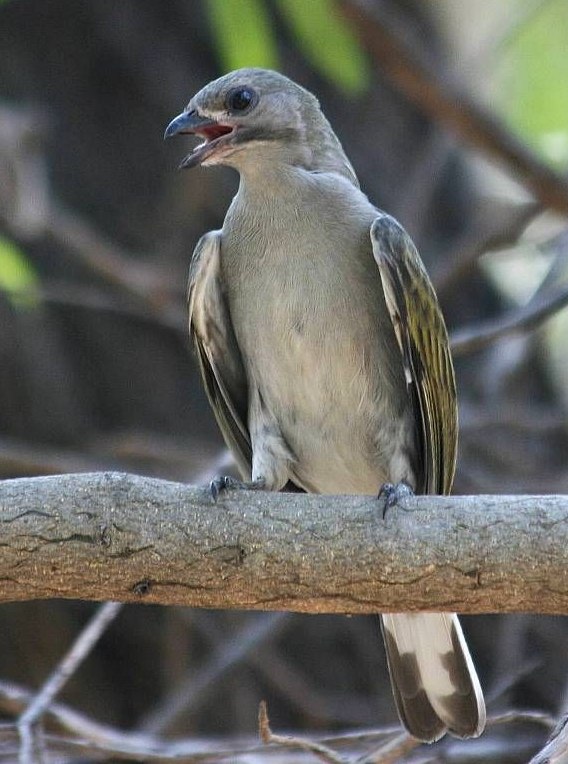
White-fronted Bee-eater
Merops bullockoides
Order: Coraciiformes / Family: Meropidae

Wikimedia Commons
About the White-fronted Bee-eater
The White-fronted Bee-eater (Merops bullockoides) is an avian spectacle found predominantly in sub-Saharan Africa, stretching from Angola and Namibia across to Tanzania and south to South Africa. This bird, belonging to the family Meropidae, is renowned for its vibrant plumage and agile flight. The White-fronted Bee-eater plays a significant role in controlling insect populations, particularly bees and wasps, which it expertly catches mid-flight with its acrobatic hunting technique. These birds thrive in open woodlands and savannas, often near water bodies, where they form large, noisy colonies. In the ecological tapestry of Africa, their presence is crucial for maintaining the balance of predator and prey dynamics.
During the breeding season, which varies depending on the region, the White-fronted Bee-eater can be seen engaged in complex social behaviors. These birds are cooperative breeders, a behavior that involves non-breeding individuals helping to raise the young of others. This cooperative nature is vital in regions where food availability is inconsistent. The White-fronted Bee-eater’s preference for sandy banks and river edges makes it a key species in these ecosystems, where it excavates nesting burrows in colonies. These colonies may contain up to 200 nesting pairs, highlighting the bird's social nature and its reliance on suitable habitat conditions.
The White-fronted Bee-eater's ecological importance extends beyond pest control. By feeding on bees, wasps, and other flying insects, these birds help to regulate populations that could otherwise impact agriculture. Their presence indicates a healthy ecosystem, as they require clean environments free of excessive pesticide use to thrive. During seasonal migrations, White-fronted Bee-eaters follow the rains, which ensures that they have access to abundant prey. This migration pattern contributes to their dispersal and aids in pollination processes indirectly, as they move across vast areas of the African continent.
The White-fronted Bee-eater belongs to the family Meropidae, within the order Coraciiformes. These birds typically live average 6-8 years with a maximum recorded of 12 years..
How to Identify a White-fronted Bee-eater
The White-fronted Bee-eater is a medium-sized bird, measuring approximately 23 cm in length. Its most distinguishing feature is the brilliant white forehead, contrasting sharply with its predominantly green body. Adults display a vivid spectrum of colors, including a rich chestnut throat patch, a striking black eye-line, and a green crown. The underparts are predominantly green, with a blue rump and a red chin, adding to its colorful appearance. In contrast, juveniles exhibit duller plumage, with less defined color contrasts and more muted tones. Both males and females appear similar, making gender differentiation in the field challenging.
Confusion with other bee-eater species can occur, particularly with the Little Bee-eater and the European Bee-eater. However, the White-fronted Bee-eater's distinctive white forehead and chestnut throat provide reliable field marks for correct identification. In flight, these birds present a sleek silhouette with pointed wings and a slightly forked tail, a characteristic shared by many members of the Meropidae family.
When perched, the White-fronted Bee-eater often chooses exposed branches and wires, allowing easy observation. Its upright posture and social behavior, coupled with its tendency to return to the same perch after aerial hunting, make it a delightful subject for birdwatchers. Despite their vibrant appearance, these birds can blend into the green foliage when viewed from a distance, a testament to their adaptation in the wild.
Having trouble telling birds apart? Upload a photo to our bird identification tool for an instant species match.
White-fronted Bee-eater Habitat and Range
Preferred Habitat
White-fronted Bee-eaters inhabit open woodlands, savannas, and grasslands, with a strong preference for areas near water such as riverbanks and lakeshores. These habitats provide ideal conditions for their nesting and feeding activities. Sandy banks, often found along rivers, are particularly important as they provide the substrate needed for burrow nesting. Elevation preferences range from sea level to about 2,000 meters, though they are most commonly found in lowland areas.
While they prefer rural settings that offer ample insect prey and nesting sites, White-fronted Bee-eaters can occasionally be seen in urban peripheries where suitable conditions exist. Unlike many bee-eater species that migrate extensively, the White-fronted Bee-eater exhibits more localized movement patterns, often dictated by food availability and breeding needs rather than seasonal temperature changes.
During dry periods, these birds may shift to areas with higher insect concentrations, including agricultural lands where irrigation attracts insects. This adaptability in habitat selection underscores their resilience and the importance of diverse landscapes in their survival.
Geographic Range
White-fronted Bee-eaters have a range primarily within sub-Saharan Africa. Their distribution extends from southern Angola and northern Namibia, eastwards through Botswana, Zambia, and Zimbabwe, reaching as far as Tanzania and Malawi. In the southern part of their range, they are present in regions of South Africa, particularly in Limpopo and Mpumalanga provinces.
The species does not undertake long-distance migrations typical of many northern hemisphere birds. Instead, it engages in regional movements, often dictated by ecological conditions such as prey availability and rainfall patterns. During the breeding season, from August to November in southern Africa, these birds are more sedentary, focusing on nesting and raising young in their chosen colonies.
Population density is highest in areas that offer optimal nesting sites and abundant food sources. The Zambezi River basin, with its rich biodiversity and varied landscapes, serves as a hotspot for these bee-eaters. In contrast, they are less common in regions that have been heavily altered by human activities, such as large-scale agriculture and urbanization.
Want to know which birds visit your area? Browse our backyard birds by location guides for region-specific species lists.
What Does the White-fronted Bee-eater Eat?
The White-fronted Bee-eater's diet primarily consists of flying insects, with a particular emphasis on bees and wasps, which they expertly catch in mid-air. This diet is supplemented by other insects such as dragonflies and beetles, depending on seasonal availability. The bee-eater's diet changes with the seasons, reflecting the availability of different insect prey as climate conditions shift across their range.
White-fronted Bee-eaters employ a distinctive hunting technique, known as 'hawking,' where they perch on vantage points to spot prey before launching into rapid, agile flights to capture insects. Their keen eyesight allows them to detect movement from considerable distances, and their flight agility ensures successful captures. Once caught, the birds return to their perch to subdue and consume their prey, often removing stingers from bees and wasps by repeated bashing against the perch.
Feeding activity peaks during the cooler parts of the day, such as early morning and late afternoon, when insect activity is highest. This schedule allows them to maximize energy intake while avoiding the heat of the midday sun.
White-fronted Bee-eater Behavior and Social Structure
White-fronted Bee-eaters are highly social birds, frequently observed in flocks that can number in the hundreds. Their social structure is complex, characterized by cooperative breeding and communal roosting. Non-breeding individuals, often offspring from previous broods, assist in feeding and protecting the young, a strategy that enhances the survival rates of the offspring.
Territorial behavior is evident during the breeding season, when pairs become aggressive in defending their nesting sites against intruders. Courtship displays involve aerial chases and vocalizations, with males often presenting food items to females as part of their courtship ritual. This behavior reinforces pair bonds and signals the male's ability to provide for the female and future chicks.
In response to predators, White-fronted Bee-eaters exhibit mobbing behavior, where groups will collectively harass and drive away threats. Their alertness to avian predators, such as hawks and falcons, is heightened by constant vigilance and communication within the flock. This social vigilance allows them to maintain a high level of awareness and safety.
Daily activities are structured around feeding, social interactions, and maintenance behaviors such as preening and sunning. They are most active during the cooler parts of the day, with periods of rest and shade-seeking during the midday heat.
White-fronted Bee-eater Nesting and Reproduction
White-fronted Bee-eaters are colonial nesters, preferring to establish their colonies in sandy banks or cliffs, often along waterways. These colonies can host upwards of 200 pairs, all engaged in the cooperative task of rearing young. The burrows are typically excavated by both members of a pair, extending horizontally into the bank up to one meter.
The breeding season varies by region but generally occurs from August to November in southern Africa. A clutch typically consists of 2 to 5 eggs, which are incubated by both parents and sometimes by helper individuals. Incubation lasts around 20 days, after which the altricial chicks are fed by all contributing members of the colony.
Fledging occurs approximately 30 days after hatching, but young birds may remain dependent on adults for some time thereafter. Pairs may raise two broods in a year if conditions allow, taking advantage of prolonged periods of food abundance. This cooperative breeding strategy ensures high fledging success and survival in fluctuating environments.
White-fronted Bee-eater Sounds and Vocalizations
The vocalizations of the White-fronted Bee-eater are characterized by a series of high-pitched, melodious calls that serve both social and territorial purposes. Their primary call is a rhythmic, chattering series of 'trrr-trrr' notes, often heard during flight or when perched. This call is used for communication within the flock and to maintain contact during foraging.
Alarm calls are sharper and more urgent, alerting other members of the colony to potential threats. These calls can escalate in intensity when a predator is nearby, prompting the group to engage in mobbing behavior. The dawn chorus, marked by increased vocal activity at sunrise, features a medley of calls that establish territory and strengthen social bonds among colony members.
The sound of the White-fronted Bee-eater is distinctive among the Meropidae and can be used as a reliable field indicator of their presence, even when the birds themselves are not visible.
Interesting Facts About the White-fronted Bee-eater
- 1White-fronted Bee-eaters can capture up to 250 insects per day, showcasing their role in pest control.
- 2These bee-eaters are known for their cooperative breeding behavior, with up to 10 individuals assisting a single nesting pair.
- 3The striking white forehead of the White-fronted Bee-eater distinguishes it from other bee-eater species in Africa.
- 4White-fronted Bee-eaters have a unique method of removing stingers from bees and wasps before consumption.
- 5This species can dig burrows up to one meter long, providing protection for their eggs and chicks from predators.
- 6White-fronted Bee-eaters perform complex aerial displays during courtship, involving rapid dives and swoops.
- 7They are among the few bird species that engage in communal roosting, enhancing their social structure.
White-fronted Bee-eater Conservation Status
The White-fronted Bee-eater is currently listed as Least Concern by the IUCN, indicating a stable population across its range. However, local pressures such as habitat destruction and pesticide use pose potential threats to specific populations. These birds rely on undisturbed nesting sites and healthy insect populations, both of which are impacted by human activities. Conservation efforts focus on habitat protection and sustainable agricultural practices that reduce pesticide usage. Preservation of riverbanks and natural landscapes is crucial for maintaining their breeding grounds. Historical population data suggest fluctuations in response to environmental changes, but overall trends remain stable. Awareness of the ecological role of White-fronted Bee-eaters, particularly in pest control, supports their protection and highlights the interconnectedness of biodiversity conservation.