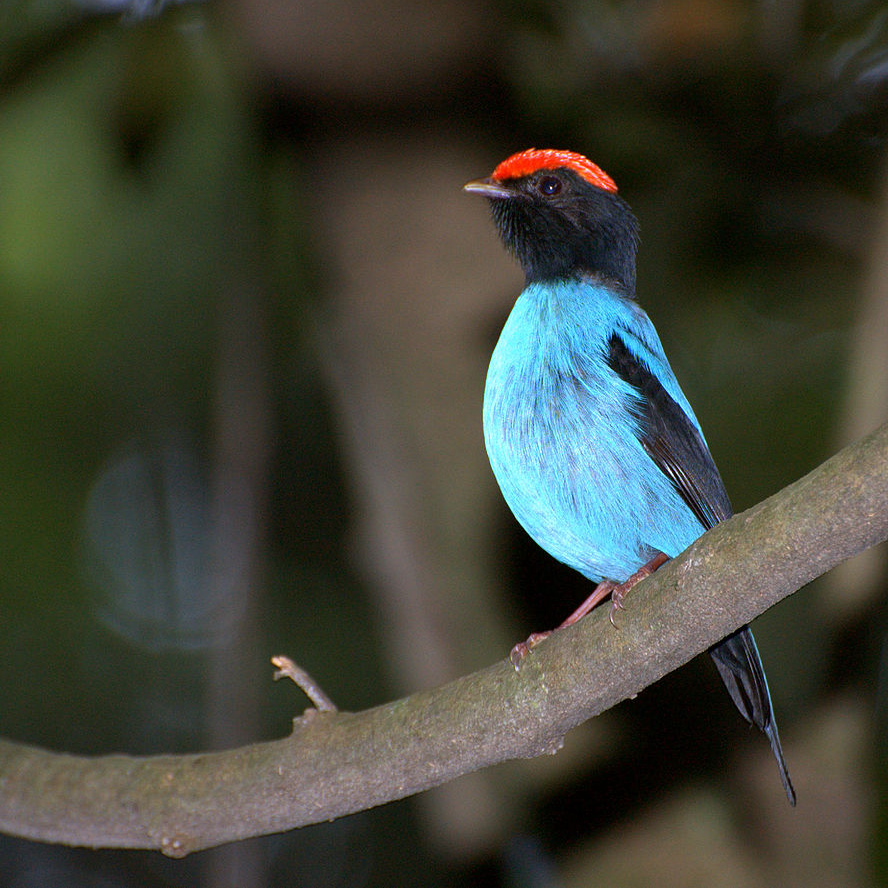
White-ruffed Manakin
Corapipo altera
Order: Passeriformes / Family: Pipridae

Wikimedia Commons
About the White-ruffed Manakin
The White-ruffed Manakin (Corapipo altera) is a small passerine bird belonging to the Pipridae family, renowned for its vibrant displays and unique vocalizations. This bird inhabits the tropical and subtropical forests of Central America, ranging from southern Nicaragua through Costa Rica to western Panama. Its presence is most notable in the dense, humid forest understory, where it plays a crucial role in the ecosystem as both a pollinator and seed disperser.
This species is particularly significant in its habitat due to its complex courtship rituals, which involve a combination of striking visual displays and vocal calls. The White-ruffed Manakin's lekking behavior, where males gather to perform competitive displays to attract females, is a fascinating aspect of its ecology. These displays are vital for maintaining genetic diversity and for the continuation of the species.
Ecologically, the White-ruffed Manakin contributes to the health of its forest environment by aiding in the pollination of various plant species. As it forages for fruit, it inadvertently assists in the dispersal of seeds, thus supporting the regeneration of the forest flora. Seasonally, the bird exhibits variations in behavior, with males becoming more vocal and active during the breeding season, which typically aligns with the rainy months when fruit is most abundant.
The White-ruffed Manakin belongs to the family Pipridae, within the order Passeriformes. These birds typically live average 7 years with a maximum recorded of 11 years..
How to Identify a White-ruffed Manakin
The White-ruffed Manakin is a small bird, measuring around 10 cm in length and weighing approximately 12 grams. The adult male is distinguished by its glossy black plumage contrasted with a bright white patch on the throat, which is the most identifiable feature of the species. This white ruff becomes particularly prominent during display behaviors.
Females and juveniles, in contrast, are predominantly olive-green, lacking the striking white ruff of the males. This sexual dimorphism aids birders in distinguishing between genders and ages in the field. Males have a slightly iridescent quality to their feathers, which can be observed when light catches them at certain angles.
In flight, the White-ruffed Manakin presents a compact silhouette with rapid, fluttering wing beats. When perched, it often maintains a horizontal posture, allowing its distinctive throat marking to be clearly visible. This species might be confused with other manakins, such as the Blue-crowned Manakin, but the latter's blue crown and lack of a white throat patch are key differentiators.
Having trouble telling birds apart? Upload a photo to our bird identification tool for an instant species match.
White-ruffed Manakin Habitat and Range
Preferred Habitat
The White-ruffed Manakin primarily inhabits the lower to mid-elevation tropical and subtropical forests, preferring the dense understory of primary and secondary growth woodlands. It is commonly found at elevations ranging from 500 to 1500 meters. This species thrives in humid forest environments and is particularly associated with regions that receive high annual rainfall, such as the Caribbean slopes of Costa Rica.
While the White-ruffed Manakin can occasionally be found in degraded forest areas and edges, it predominantly favors undisturbed habitats. Unlike some bird species, it does not typically venture into urban environments or cultivated areas. Seasonal habitat shifts are minimal, as the bird tends to remain within the forested regions year-round, taking advantage of the consistent availability of food sources.
Geographic Range
The breeding range of the White-ruffed Manakin is primarily concentrated in Central America. It spans southern Nicaragua, through the majority of Costa Rica, and into western Panama. This bird is primarily non-migratory, with individuals remaining within their established territories throughout the year.
In Costa Rica, it is particularly abundant on the Caribbean side, including in regions such as the Monteverde Cloud Forest Reserve and La Selva Biological Station. Population density tends to be higher in areas with undisturbed forest, reflecting the bird's reliance on intact habitats for survival.
While the White-ruffed Manakin does not exhibit long-distance migration, some local movements may occur in response to fruiting cycles and local climatic conditions. These movements, however, do not extend beyond its established range, ensuring its presence remains concentrated within the lush forests of Central America.
Want to know which birds visit your area? Browse our backyard birds by location guides for region-specific species lists.
What Does the White-ruffed Manakin Eat?
The diet of the White-ruffed Manakin primarily consists of small fruits and berries, which it forages from the dense forest understory. It exhibits a preference for fruits of the Melastomataceae and Rubiaceae families, which are abundant in its habitat. In addition to its fruit-based diet, the bird occasionally supplements its intake with insects, providing essential proteins.
Foraging behavior involves short, acrobatic flights from perch to perch, as the bird plucks fruit with its beak. During the breeding season, the availability of ripe fruit influences its foraging patterns, with manakins often seen in areas where fruit is plentiful.
The White-ruffed Manakin feeds throughout the day, with peak activity observed in the early morning and late afternoon. This schedule allows it to take advantage of the cooler temperatures and reduced competition from other frugivorous species. Its role as a seed disperser is vital for the maintenance and regeneration of its forest ecosystem.
White-ruffed Manakin Behavior and Social Structure
Socially, the White-ruffed Manakin is known for its lekking behavior, where males gather in groups to perform elaborate courtship displays. These displays involve a combination of vocal calls and physical movements, such as short flights and wing snaps, designed to attract the attention of females.
Territorial behavior is pronounced during the breeding season, with males defending their display sites vigorously. Outside of the breeding season, however, the bird is relatively solitary, though small groups may form in areas of abundant food.
Daily activity patterns are largely diurnal, with the bird most active during the cooler parts of the day. Its response to predators includes rapid, erratic flight to confuse and evade capture. The White-ruffed Manakin exhibits a strong fidelity to its lek sites, returning to the same locations year after year to participate in these complex social rituals.
White-ruffed Manakin Nesting and Reproduction
The White-ruffed Manakin constructs a shallow, cup-shaped nest made from fine plant fibers, moss, and leaves, often secured with spider silk. Nests are typically located in the fork of a tree branch, positioned several meters above the ground to protect against predation.
Clutch size generally consists of two eggs, which are incubated primarily by the female. The incubation period lasts approximately 18-20 days, after which the chicks hatch. Both parents participate in feeding the young, though the female takes on the majority of brooding duties.
Fledging occurs about 18-20 days post-hatching, with the chicks leaving the nest to become independent. The species typically has one to two broods per year, depending on environmental conditions and food availability. Parental investment is significant, ensuring the survival and growth of the next generation.
White-ruffed Manakin Sounds and Vocalizations
The primary song of the White-ruffed Manakin is a series of sharp, high-pitched whistles that resonate through the forest understory. These calls are often interspersed with mechanical-sounding wing snaps, particularly during display periods at leks.
Call notes are generally shorter and less complex than the song, serving as communication between individuals, especially during foraging. Alarm calls are abrupt and harsh, designed to alert others of potential threats.
During the dawn chorus, the White-ruffed Manakin's contributions are crucial, with its distinctive whistles adding to the symphony of forest sounds. Its vocalizations, while unique, bear some resemblance to those of other manakin species, though they are distinguishable by their rhythm and pitch.
Interesting Facts About the White-ruffed Manakin
- 1The White-ruffed Manakin's unique lekking behavior is a fascinating example of competitive courtship in birds.
- 2Male White-ruffed Manakins can perform up to 30 wing snaps per minute during their courtship displays.
- 3Despite its vivid courtship rituals, this manakin weighs only about as much as a tablespoon of sugar.
- 4The White-ruffed Manakin's lek sites are traditional, often used by generations of birds over decades.
- 5Females are the primary incubators of the eggs, highlighting sexual dimorphism in behavior as well as appearance.
- 6These manakins play a crucial role in seed dispersal for numerous plant species in the tropical forests.
- 7The bird's name refers to the white feathers on the male's neck, which are used prominently in displays.
White-ruffed Manakin Conservation Status
The White-ruffed Manakin is currently listed as Least Concern by the IUCN, with populations considered stable in much of its range. However, habitat destruction due to deforestation poses a significant threat to its long-term survival. Conservation efforts focus on preserving and restoring habitat, with numerous protected areas established in Central America to conserve these vital ecosystems. Although not currently endangered, continued habitat loss could impact future populations. Historically, the population of the White-ruffed Manakin has remained relatively stable, though localized declines may occur in areas of intense deforestation. Ongoing conservation initiatives aim to mitigate these threats and ensure the species' continued presence in its native forests.