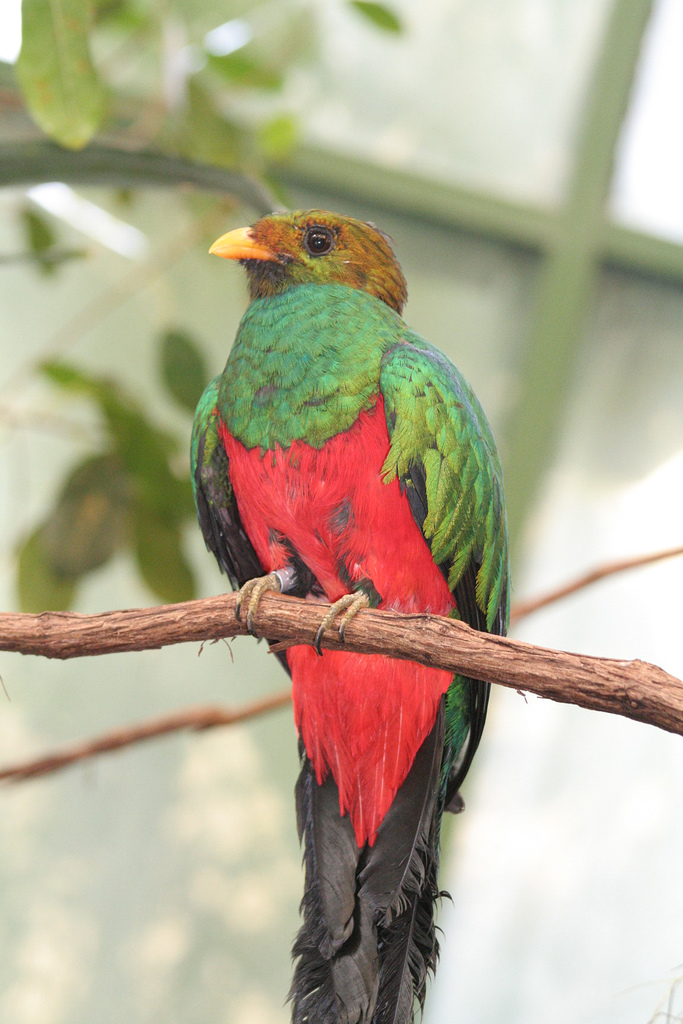
White-tipped Quetzal
Pharomachrus fulgidus
Order: Trogoniformes / Family: Trogonidae

Wikimedia Commons
About the White-tipped Quetzal
The White-tipped Quetzal, scientifically known as Pharomachrus fulgidus, belongs to the Trogonidae family and is a mesmerizing bird native to the Neotropical forests of South America. This species, found predominantly in Venezuela and Colombia, thrives in the montane cloud forests that blanket the Andes. The White-tipped Quetzal plays a vital role in its ecosystem by serving as both a pollinator and seed disperser. Its preference for dense forests offers it a niche where it can feed on a variety of fruits, insects, and small vertebrates. The bird's ecological significance extends further, as it contributes to the forest's regeneration through seed dispersal, aiding in the propagation of numerous plant species. Its presence in cloud forests also indicates the health of this fragile ecosystem. During the breeding season, which coincides with the rainy months from April to June, the White-tipped Quetzal becomes more active, engaging in elaborate courtship displays. These displays involve a mix of vocalizations and physical maneuvers, showcasing its vibrant plumage. Outside the breeding season, the species may exhibit altitudinal migration, moving to lower elevations during colder months to take advantage of available food resources. This seasonal behavior ensures its survival across varied conditions, demonstrating the bird's adaptability. The White-tipped Quetzal is also an indicator species for the health of cloud forests, as it requires specific habitat conditions to thrive. Despite its resilience, deforestation and habitat fragmentation pose significant threats, affecting its population dynamics. Conservation efforts are crucial in safeguarding its future, highlighting the need for habitat preservation and sustainable forestry practices. The White-tipped Quetzal embodies the beauty and complexity of tropical ecosystems, serving as a reminder of the interconnectedness of species and their habitats.
The White-tipped Quetzal belongs to the family Trogonidae, within the order Trogoniformes. These birds typically live typically around 5 years, with some individuals reaching up to 9 years..
How to Identify a White-tipped Quetzal
The White-tipped Quetzal is a medium-sized bird, approximately 30 to 35 centimeters in length, with a tail that extends gracefully beyond its body. Adult males are distinguished by their brilliant emerald green upperparts and reddish underparts, with a conspicuous white tip on the tail feathers. The head is adorned with a striking golden-green sheen, and the beak is a vibrant yellow, contrasting sharply with its plumage. Females, while similar in size, exhibit a more subdued coloration with less iridescence, featuring a brownish-green head and breast. Juveniles resemble females but with even duller plumage, lacking the full intensity of the adults. In flight, the White-tipped Quetzal presents a silhouette marked by long wings and an elongated tail, aiding in identification. Perched, it often sits upright, showcasing its resplendent colors. Confusion may arise with other quetzal species, such as the Resplendent Quetzal, but the White-tipped Quetzal's distinctive white tail tips and specific range help in differentiating them. Its unique combination of colors and plumage features make it a standout among forest birds.
Having trouble telling birds apart? Upload a photo to our bird identification tool for an instant species match.
White-tipped Quetzal Habitat and Range
Preferred Habitat
The White-tipped Quetzal thrives in the montane cloud forests of the Andes, particularly in Venezuela and Colombia. Its preferred habitat includes densely vegetated slopes and valleys within these forests, often at elevations ranging from 1,200 to 3,000 meters. These cloud forests provide ample food and nesting sites, crucial for the bird's survival. During non-breeding seasons, the White-tipped Quetzal may descend to lower elevations, seeking food sources that become scarce at higher altitudes. It typically avoids urban areas, favoring the seclusion and rich biodiversity of remote forest regions. This preference underscores its reliance on intact forest ecosystems, making it vulnerable to habitat destruction.
Geographic Range
The White-tipped Quetzal's range is primarily restricted to the northern Andes, spanning from western Venezuela to northern Colombia. Within this range, it is found in specific cloud forest corridors, where population densities can vary depending on forest health and food availability. Breeding occurs exclusively in these montane regions, with no significant long-distance migratory patterns observed. However, altitudinal movements are noted, with some individuals descending to lower elevations during the non-breeding season. These movements ensure access to food throughout the year, although they do not extend beyond their typical range. Conservation areas within national parks in its range provide critical refuge, highlighting the importance of protected habitats.
Want to know which birds visit your area? Browse our backyard birds by location guides for region-specific species lists.
What Does the White-tipped Quetzal Eat?
The White-tipped Quetzal primarily feeds on fruits, favoring those from the Lauraceae family, which provide essential nutrients and energy. It supplements its diet with insects and small vertebrates, including lizards, which it captures through agile flights from perches. During the breeding season, its fruit intake increases, supporting the energy demands of courtship and nesting. In contrast, the non-breeding season sees a shift towards more insects, as these become more abundant. The quetzal employs a sit-and-wait strategy, perching quietly before darting out to snatch prey or pluck fruit. This method conserves energy while maximizing its food intake.
White-tipped Quetzal Behavior and Social Structure
The White-tipped Quetzal displays a range of intriguing behaviors, particularly during the breeding season. Males engage in elaborate courtship displays, including vocalizations and aerial maneuvers, to attract mates. These displays often occur in the early morning when activity levels peak. Outside of breeding, the quetzal exhibits solitary or loosely paired behavior, seldom forming large flocks. Territorial during the breeding season, males defend prime nesting areas from rivals, using song and visual displays. The White-tipped Quetzal is generally quiet and secretive, blending into its forest surroundings. When threatened by predators, it relies on its agility to escape, often retreating to dense foliage. Its daily activity pattern involves foraging in the morning and late afternoon, with rest periods during the hottest part of the day.
White-tipped Quetzal Nesting and Reproduction
The White-tipped Quetzal nests in natural cavities found in trees within its montane forest habitat. These cavities, often in decaying wood, provide protection from predators and environmental elements. The bird does not construct traditional nests but relies on existing holes, which it may slightly modify. Clutch size typically ranges from two to three eggs, with both parents sharing incubation duties over a period of approximately 18 to 20 days. Upon hatching, the chicks are altricial, requiring intensive care and feeding by both parents. Fledging occurs about 23 to 25 days post-hatching, with the young remaining dependent on their parents for several weeks thereafter. The White-tipped Quetzal generally raises one brood per year, although favorable conditions may allow for a second.
White-tipped Quetzal Sounds and Vocalizations
The primary song of the White-tipped Quetzal consists of a series of melodious whistles, which are soft yet penetrating, carrying through the dense forest canopy. The rhythm is steady, with a lilting quality that rises and falls gently. Call notes include low, cooing sounds, often used in communication between mates or to signal alarm. In the presence of predators, the quetzal emits a sharp, harsh call, alerting nearby birds to danger. During the dawn chorus, its song blends seamlessly with those of other forest inhabitants, contributing to the rich soundscape of its habitat.
Interesting Facts About the White-tipped Quetzal
- 1The White-tipped Quetzal can hover briefly like a hummingbird when feeding on fruits from branches.
- 2Males and females of the White-tipped Quetzal take turns incubating eggs, showcasing shared parental duties.
- 3The White-tipped Quetzal’s call is often compared to a flute due to its melodious and soft quality.
- 4This quetzal species contributes to forest diversity by dispersing seeds over wide areas, aiding reforestation.
- 5Despite its vibrant plumage, the White-tipped Quetzal is remarkably adept at blending into the forest canopy.
White-tipped Quetzal Conservation Status
The White-tipped Quetzal is currently listed as Near Threatened on the IUCN Red List, with its population trend showing a slight decline. The primary threats to its survival are habitat loss due to deforestation and fragmentation, which reduce available nesting and feeding sites. Conservation efforts focus on preserving cloud forests and establishing protected areas, which are crucial for maintaining viable populations. Historical population declines have been mitigated in some regions through reforestation projects and legal protection of critical habitats, yet ongoing vigilance is required to ensure these gains are not lost.
Other Trogonidae Species


Birds Similar to the White-tipped Quetzal
These species are often confused with the White-tipped Quetzal due to similar appearance or overlapping range.