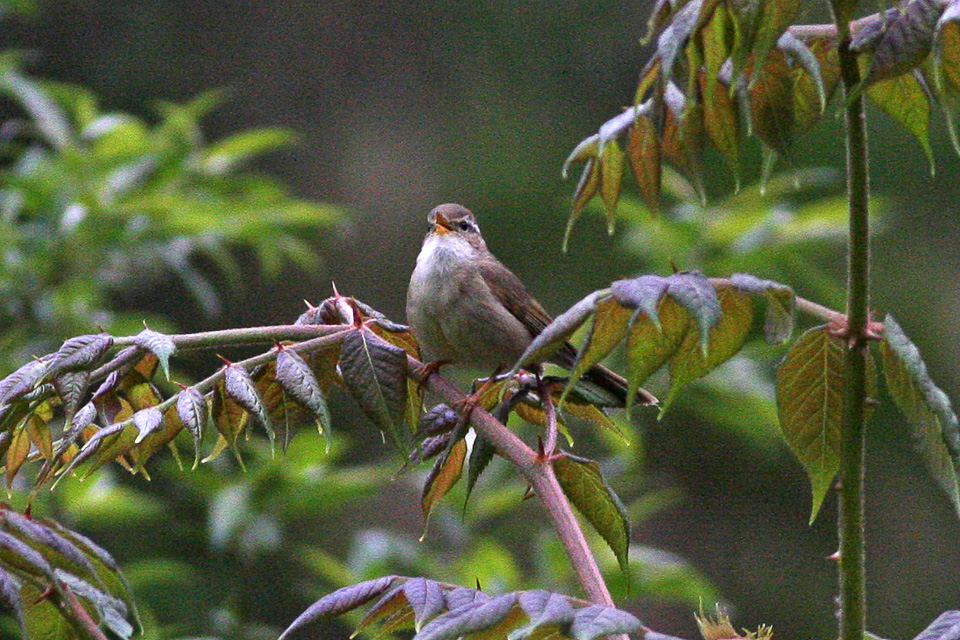
Yellow-breasted Warbler
Seicercus montis
Order: Passeriformes / Family: Phylloscopidae

Wikimedia Commons
About the Yellow-breasted Warbler
The Yellow-breasted Warbler, known scientifically as Seicercus montis, is a small yet striking bird that plays a significant role in the forest ecosystems of Southeast Asia. This species is particularly noted for its vibrant yellow breast, which serves as a key identifier among birdwatchers and ornithologists alike. Predominantly found in the montane forests of regions such as Indonesia, Malaysia, and Thailand, the Yellow-breasted Warbler thrives in these lush green habitats, which offer an abundance of food and suitable nesting sites. It is a member of the Phylloscopidae family, which encompasses leaf warblers, a group renowned for their vocal prowess and arboreal lifestyles. The ecological role of the Yellow-breasted Warbler is substantial, as it aids in insect population control, contributing to the health and balance of its native forest ecosystems. Through its foraging habits, the warbler helps maintain insect populations, thus enabling the proliferation of the forest's diverse plant life. During the breeding season, which typically occurs in the warmer months, the Yellow-breasted Warbler becomes especially active. The males engage in elaborate vocal displays to attract mates, using their melodic songs to establish territories and communicate readiness for reproduction. Outside of the breeding season, this warbler continues to be an active participant in its habitat's ecological network, albeit with a more subdued presence. The conservation of the Yellow-breasted Warbler's habitat is crucial, as deforestation poses a significant threat to its population. Preservation efforts are essential to ensure the continuation of this species, which in turn supports the broader biodiversity of the Southeast Asian montane forests. As climate change and human activity alter landscapes, safeguarding the natural habitats of species like the Yellow-breasted Warbler becomes an imperative task for conservationists and policymakers.
The Yellow-breasted Warbler belongs to the family Phylloscopidae, within the order Passeriformes. These birds typically live average 3-5 years with a maximum recorded of 6 years..
How to Identify a Yellow-breasted Warbler
The Yellow-breasted Warbler is relatively small, fitting comfortably within the typical size range of leaf warblers. Adults display a distinctive yellow breast, which provides a sharp contrast to their olive-green upperparts and grayish head. The wings and tail are similarly olive-toned, with subtle variations that may require careful observation to discern. Juvenile Yellow-breasted Warblers lack the vibrant yellow breast of the adults, exhibiting a more muted coloration that can lead to confusion with other species during the early stages of their development. Male and female Yellow-breasted Warblers are similar in appearance, though subtle differences may be noted during close inspection, with males occasionally exhibiting more intensely colored plumage. This warbler can be confused with other members of the Seicercus genus, such as the Bianchi's Warbler, but the latter lacks the bright yellow breast that is characteristic of the Yellow-breasted Warbler. When in flight, the Yellow-breasted Warbler showcases a rapid, fluttering flight pattern typical of warblers, and when perched, it maintains an upright posture, often flicking its wings and tail as it surveys its surroundings.
Having trouble telling birds apart? Upload a photo to our bird identification tool for an instant species match.
Yellow-breasted Warbler Habitat and Range
Preferred Habitat
The Yellow-breasted Warbler primarily inhabits montane forests, thriving in elevations typically ranging from 1,000 to 2,500 meters. These forests, rich with dense undergrowth and a variety of tree species, provide the ideal environment for foraging and nesting. Within this habitat, the warbler favors areas with ample foliage cover, which offers protection from predators and harsh weather conditions. While the Yellow-breasted Warbler is most commonly associated with rural, forested areas, it occasionally ventures into adjacent, less densely wooded regions during certain times of the year. Seasonal changes may prompt slight shifts in its habitat preferences, although it generally remains within the montane forest zone. Urban areas are less frequented by this species, as they offer limited resources compared to the expansive forests that the Yellow-breasted Warbler calls home.
Geographic Range
The Yellow-breasted Warbler is found predominantly in Southeast Asia, with its range encompassing several countries including Indonesia, Malaysia, Thailand, and parts of Myanmar. During the breeding season, these birds concentrate in the montane regions where they build nests and rear their young. The warbler's range does not extend extensively into the lowlands, as it prefers the cooler, more stable climate of high-altitude forests. In terms of migration, the Yellow-breasted Warbler is considered a partial migrant, with some populations undertaking short altitudinal migrations in response to seasonal changes in temperature and food availability. While the species is not known for long-distance migration, it does exhibit some movement within its range, particularly when searching for optimal breeding or feeding conditions. Population density hotspots for the Yellow-breasted Warbler are often found in well-preserved forest areas, where human impact is minimal, allowing these birds to thrive.
Want to know which birds visit your area? Browse our backyard birds by location guides for region-specific species lists.
What Does the Yellow-breasted Warbler Eat?
The diet of the Yellow-breasted Warbler consists primarily of insects, which it diligently hunts among the foliage of montane trees. Caterpillars, beetles, and small arthropods form the bulk of its diet, providing essential nutrients to sustain its active lifestyle. Seasonal shifts in food availability can influence dietary habits, with the warbler adapting its foraging techniques to exploit different insect populations. During the breeding season, when energy demands increase, the Yellow-breasted Warbler intensifies its foraging efforts, often focusing on areas with high insect density. The bird employs a methodical approach to foraging, moving through the foliage with agility and precision. It frequently gleans insects from the undersides of leaves and branches, using its sharp bill to extract prey from crevices and other hidden locations. While insects remain the primary food source, the Yellow-breasted Warbler may occasionally consume small quantities of plant material, such as seeds or berries, to supplement its diet when insect availability is low.
Yellow-breasted Warbler Behavior and Social Structure
The Yellow-breasted Warbler exhibits a range of behaviors that reflect its adaptability and social nature. During the breeding season, these warblers establish territories, with males singing prominently to mark their domain and deter rivals. The song serves as both a territorial proclamation and a courtship display, attracting females with its melodic complexity. Social structure among Yellow-breasted Warblers can vary, with some individuals forming loose associations with conspecifics outside of the breeding season. These associations often facilitate cooperative foraging, allowing the birds to efficiently exploit food resources. Flocking behavior may also be observed, particularly during periods of migration or in response to predator threats. When faced with potential predators, the Yellow-breasted Warbler employs various strategies, including seeking cover within dense foliage or emitting alarm calls to alert nearby birds. Daily activity patterns are primarily diurnal, with peak foraging occurring during the early morning and late afternoon hours, coinciding with high insect activity.
Yellow-breasted Warbler Nesting and Reproduction
The nesting habits of the Yellow-breasted Warbler reflect its preference for secluded, forested environments. Nests are typically constructed in dense shrubs or low trees, often just a few meters above the ground. The birds use a variety of materials, such as grass, leaves, and moss, to create a well-camouflaged, cup-shaped nest. A typical clutch consists of three to five eggs, which are incubated primarily by the female. The incubation period lasts approximately 12 to 14 days, during which the male may assist by providing food to the female. After hatching, both parents participate in feeding the chicks, which fledge approximately 10 to 12 days post-hatching. The Yellow-breasted Warbler may produce one to two broods per year, depending on environmental conditions and resource availability. Parental roles are clearly defined, with both sexes contributing to the care and protection of their offspring.
Yellow-breasted Warbler Sounds and Vocalizations
The primary song of the Yellow-breasted Warbler is a melodious sequence of clear, high-pitched notes. This song, often described as a series of trills and whistles, serves both as a territorial marker and a mating call. Call notes are distinct yet understated, usually consisting of soft 'chip' or 'tseep' sounds used for communication between individuals. Alarm calls are more pronounced, characterized by sharp, repetitive notes that convey urgency and alertness. During the dawn chorus, the Yellow-breasted Warbler's song stands out for its clarity and rhythmic precision, often drawing comparisons to the melodic calls of other forest songbirds like the willow warbler.
Interesting Facts About the Yellow-breasted Warbler
- 1The Yellow-breasted Warbler is primarily found at elevations between 1,000 and 2,500 meters, making it a montane specialist.
- 2Despite its vibrant coloration, the Yellow-breasted Warbler can be surprisingly elusive, often blending into the dense foliage of its forest habitat.
- 3The warbler's song, a series of high-pitched trills and whistles, can carry over long distances, making it a key tool for territory establishment.
- 4While primarily insectivorous, the Yellow-breasted Warbler occasionally supplements its diet with plant matter, including seeds and berries.
- 5The Yellow-breasted Warbler is a partial migrant, with some populations moving altitudinally in response to seasonal changes.
- 6Both male and female Yellow-breasted Warblers participate actively in rearing their young, sharing feeding and protective duties.
- 7The Yellow-breasted Warbler's vibrant yellow breast is a key field mark, setting it apart from other similarly sized warblers.
Yellow-breasted Warbler Conservation Status
The Yellow-breasted Warbler currently holds a conservation status of Least Concern according to the IUCN Red List. However, its population trend remains subject to fluctuations due to habitat loss from deforestation and land conversion for agriculture. Conservation efforts focus on preserving the montane forest habitats that are critical to the warbler's survival. Protected areas and national parks in Southeast Asia play a key role in safeguarding these environments. Historically, the Yellow-breasted Warbler has experienced stable population levels, but increased human activity poses ongoing threats. Continued monitoring and habitat preservation are essential to maintain population stability.