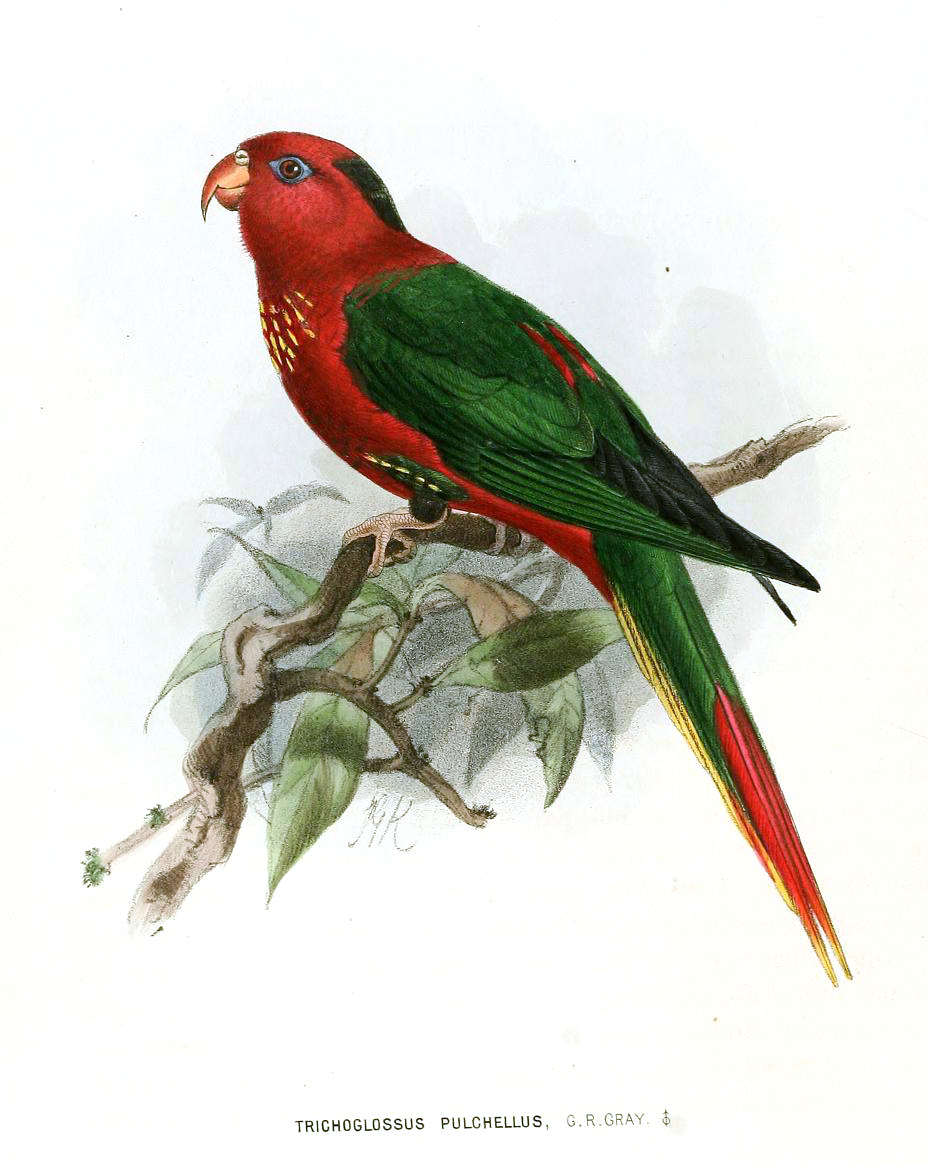
Yellow-cheeked Lorikeet
Saudareos meyeri
Order: Psittaciformes / Family: Psittaculidae

Wikimedia Commons
About the Yellow-cheeked Lorikeet
The Yellow-cheeked Lorikeet, scientifically known as Saudareos meyeri, is a vibrant and charismatic member of the parrot family, Psittaculidae. This species is native to the subtropical and tropical regions of Oceania, primarily found in the dense forests of New Guinea and its surrounding islands. The Yellow-cheeked Lorikeet plays a vital ecological role as a pollinator, visiting various flowering plants to feed on nectar, thus facilitating the transfer of pollen. Its presence in the forest canopy contributes to the health and proliferation of diverse plant species within its habitat.
These lorikeets are highly social birds often observed in pairs or small flocks, particularly during feeding times. They exhibit a playful nature, characterized by their acrobatic foraging habits and vocal interactions with their companions. Their vibrant plumage and active behaviors make them a popular subject for birdwatchers and researchers alike. The Yellow-cheeked Lorikeet's significance extends beyond its ecological contributions, as it serves as an important cultural symbol in some indigenous communities of New Guinea, representing vibrancy and vitality.
The Yellow-cheeked Lorikeet's adaptability to various forest habitats allows it to thrive in both primary and secondary growth areas. However, its reliance on forested environments also makes it susceptible to habitat destruction caused by logging and agricultural expansion. During the breeding season, which typically coincides with the dry season in its native range, these lorikeets become more territorial, defending nesting sites with vigor. Understanding the seasonal behaviors and ecological significance of the Yellow-cheeked Lorikeet aids in the development of conservation strategies to protect this species and its habitat.
The Yellow-cheeked Lorikeet belongs to the family Psittaculidae, within the order Psittaciformes. These birds typically live average 10-12 years with a maximum recorded of 15 years..
How to Identify a Yellow-cheeked Lorikeet
The Yellow-cheeked Lorikeet is a small to medium-sized parrot, measuring approximately 18-20 cm in length. Its most distinctive feature is the bright yellow patches on its cheeks, which contrast vividly with its predominantly green plumage. The wings and tail feathers are tinged with vibrant blue, adding to its colorful appearance. The beak is a striking orange-red, complementing its overall bright look. Males and females appear similar, making it challenging to distinguish between sexes based solely on plumage.
Juvenile Yellow-cheeked Lorikeets resemble adults but exhibit duller colors with less distinct yellow cheek patches. As they mature, their plumage intensifies, reaching full vibrancy by their second year. In flight, the Yellow-cheeked Lorikeet is identifiable by its agile and swift movements, often flying in straight, rapid bursts. When perched, it maintains an upright posture, typical of lorikeets, with a curious and alert demeanor.
While the Yellow-cheeked Lorikeet bears some resemblance to other lorikeet species in its range, such as the Coconut Lorikeet, the distinct yellow cheek patches provide a reliable field mark for differentiation. Observers should note the subtle differences in coloration and flight patterns to accurately identify this species in the wild.
Having trouble telling birds apart? Upload a photo to our bird identification tool for an instant species match.
Yellow-cheeked Lorikeet Habitat and Range
Preferred Habitat
The Yellow-cheeked Lorikeet inhabits a variety of forest types across New Guinea, including lowland and montane rainforests. It thrives at elevations ranging from sea level to approximately 1,500 meters. These lorikeets are particularly fond of areas with abundant flowering trees, which provide ample nectar sources. They can often be found in the forest canopy, navigating through the dense foliage with ease.
While primarily a forest dweller, the Yellow-cheeked Lorikeet can adapt to secondary growth forests and sometimes ventures into fruit gardens adjacent to forested areas. However, it is less commonly observed in urban settings, preferring the seclusion and resources offered by native forests. Seasonal habitat shifts are minimal, as this species remains largely sedentary within its established range, making it a year-round resident of its chosen environment.
Geographic Range
The Yellow-cheeked Lorikeet is predominantly found on the island of New Guinea, which is divided between the countries of Papua New Guinea and Indonesia. It inhabits both the northern and southern regions of the island, with its range extending to nearby smaller islands, including the Bismarck Archipelago. The species does not undertake long migrations but may move locally in response to food availability.
Within its range, certain areas exhibit higher population densities, particularly in regions abundant with flowering trees that provide critical nectar resources. These hotspots are crucial for sustaining healthy lorikeet populations. Despite its limited geographic range, the Yellow-cheeked Lorikeet is not considered migratory, remaining within its established range throughout the year.
Want to know which birds visit your area? Browse our backyard birds by location guides for region-specific species lists.
What Does the Yellow-cheeked Lorikeet Eat?
The diet of the Yellow-cheeked Lorikeet primarily consists of nectar and pollen, which it obtains from a wide variety of flowering plants. It is particularly fond of tree species such as Eucalyptus and Melaleuca, which produce copious amounts of nectar. The lorikeet's specialized brush-tipped tongue allows it to efficiently extract nectar, making it an essential pollinator in its habitat.
In addition to nectar, the Yellow-cheeked Lorikeet supplements its diet with fruits and berries, particularly during periods when flowering plants are less abundant. It occasionally consumes small insects and larvae, providing additional protein, especially during the breeding season when nutritional demands increase. The lorikeet's foraging activity occurs throughout the day, with peak feeding times in the early morning and late afternoon.
Yellow-cheeked Lorikeet Behavior and Social Structure
The Yellow-cheeked Lorikeet exhibits a social and gregarious nature, frequently observed in small flocks or pairs. Its social structure is evident in its vocalizations, which include a variety of chirps and squawks used for communication among flock members. These birds display a strong pair bond, often engaging in mutual preening and synchronized flight maneuvers.
Territorial behavior becomes more pronounced during the breeding season, as pairs defend their nesting sites from potential intruders. Courtship displays involve aerial acrobatics and vocal duets, strengthening pair bonds. The lorikeet's daily activity patterns include periods of foraging interspersed with rest and social interaction, with increased vocal activity during the early morning and late afternoon.
In response to predators, the Yellow-cheeked Lorikeet relies on its agility and speed to evade capture, often taking refuge high in the canopy. Flock members alert each other to potential threats through alarm calls, enhancing their collective vigilance.
Yellow-cheeked Lorikeet Nesting and Reproduction
The Yellow-cheeked Lorikeet typically nests in tree cavities, often selecting sites located high in the forest canopy to avoid ground-based predators. The choice of nesting site is influenced by the availability of suitable cavities in large, mature trees. The lorikeet pairs are monogamous, forming long-term pair bonds that persist over multiple breeding seasons.
The female typically lays a clutch of two eggs, which she incubates for approximately 25 to 28 days. During this period, the male assists by foraging and bringing food to the nest. After hatching, both parents participate in feeding the chicks, which fledge after about 8 weeks. This species generally raises one brood per year, although favorable conditions can occasionally lead to a second attempt.
Yellow-cheeked Lorikeet Sounds and Vocalizations
The primary vocalizations of the Yellow-cheeked Lorikeet include a range of high-pitched, melodic calls interspersed with harsher squawks. These sounds serve various purposes, from maintaining flock cohesion to establishing territory. The lorikeet's song is characterized by quick, rhythmic sequences that can be heard during feeding and social interactions.
Alarm calls are sharper and more urgent, alerting other flock members to potential dangers. During the dawn chorus, these lorikeets contribute to the symphony of forest sounds with their energetic and lively chatter, adding to the vibrant soundscape of their habitat.
Interesting Facts About the Yellow-cheeked Lorikeet
- 1The Yellow-cheeked Lorikeet's brush-tipped tongue is specially adapted for nectar feeding, making it an efficient pollinator.
- 2Despite their playful nature, Yellow-cheeked Lorikeets can be territorial during breeding, defending nest sites aggressively.
- 3These lorikeets often engage in synchronized flight patterns, strengthening pair bonds and flock cohesion.
- 4The vibrant yellow cheek patches of Saudareos meyeri are a key distinguishing feature, setting it apart from other lorikeets.
- 5Yellow-cheeked Lorikeets have a lifespan of up to 15 years in the wild, showcasing their adaptability and resilience.
- 6They contribute to the ecosystem by pollinating a variety of plant species, supporting biodiversity in their native forests.
- 7The lorikeet's vocal repertoire includes over ten distinct calls, each serving a specific communicative purpose.
Yellow-cheeked Lorikeet Conservation Status
The Yellow-cheeked Lorikeet is currently listed as Least Concern by the IUCN, with its population considered stable. However, ongoing threats such as habitat loss due to deforestation and land conversion pose significant risks. Conservation efforts focus on preserving forest habitats and promoting sustainable land use practices. Historically, population levels have remained fairly constant, although local declines have been observed in areas experiencing intense logging activities. Continued monitoring and habitat protection are essential to ensure the long-term survival of this species.