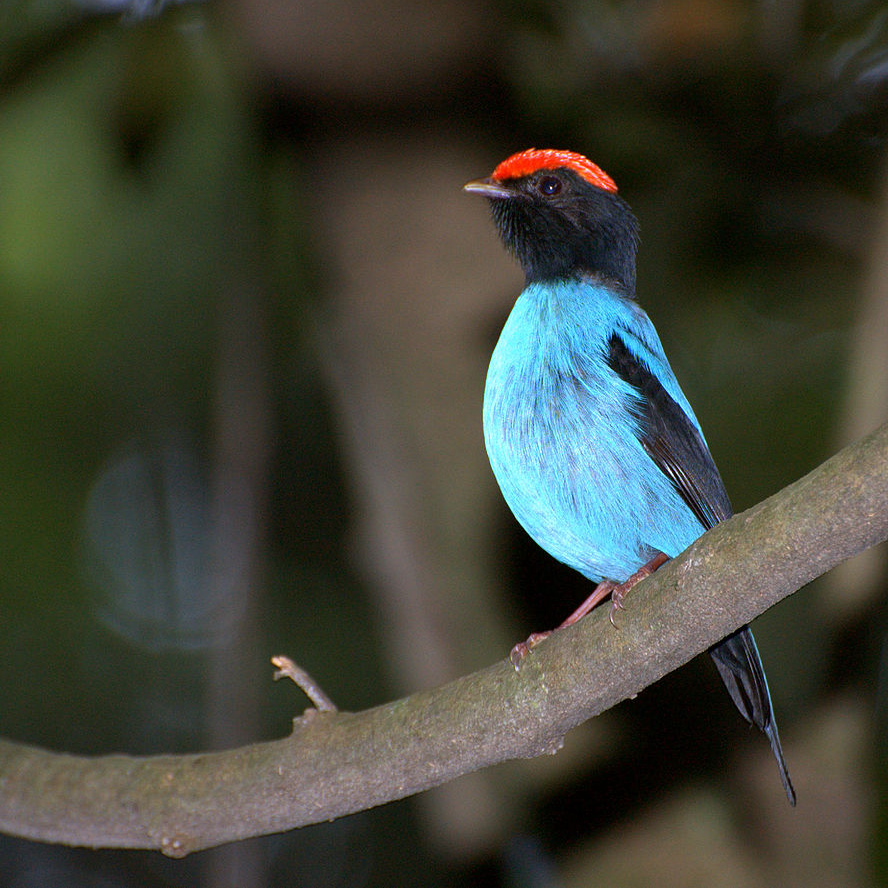
Yellow-crowned Manakin
Heterocercus flavivertex
Order: Passeriformes / Family: Pipridae

Wikimedia Commons
About the Yellow-crowned Manakin
The Yellow-crowned Manakin (Heterocercus flavivertex) is a small passerine bird belonging to the family Pipridae, known for its vibrant plumage and dynamic courtship displays. This species inhabits the humid lowland forests of South America, where its colorful presence contributes to the region's rich biodiversity. Found primarily in the western Amazon basin, the Yellow-crowned Manakin thrives in countries like Peru, Ecuador, Colombia, and Brazil, preferring forested areas with dense undergrowth. As an integral part of the ecosystem, this bird plays a critical role in seed dispersal, contributing to forest regeneration and plant diversity. The Yellow-crowned Manakin's breeding season coincides with the rainy season, ensuring an abundance of food for its offspring. Males often gather in leks, engaging in competitive displays to attract females. These leks are crucial for mating success and maintaining genetic diversity within populations. Despite its ecological importance, the Yellow-crowned Manakin faces threats from habitat destruction and deforestation. Conservation efforts focus on preserving its natural habitat, ensuring the survival of this vibrant species. The Yellow-crowned Manakin's presence in its native habitat underscores the interconnectedness of tropical ecosystems, highlighting the need for sustainable forest management. Seasonal behaviors of the Yellow-crowned Manakin include increased vocalizations during the breeding season and shifts in foraging patterns to adapt to food availability. Understanding these behaviors provides insight into the species' role within its ecosystem and informs conservation strategies.
The Yellow-crowned Manakin belongs to the family Pipridae, within the order Passeriformes. These birds typically live 4 years on average, with some individuals reaching up to 7 years..
How to Identify a Yellow-crowned Manakin
Identifying the Yellow-crowned Manakin involves observing several distinctive features. Adult males exhibit a bright yellow crown, contrasting with their olive-green body and black wings. This striking coloration makes them easily recognizable among the forest canopy. Females and juveniles, however, present a more subdued appearance, with olive-green plumage throughout and lacking the vibrant crown. This sexual dimorphism aids in distinguishing between the genders, particularly during breeding seasons when males display prominently. The Yellow-crowned Manakin's size, typically around 11 cm in length, classifies it as a small bird. Its compact, rounded body and short tail further contribute to its distinctive silhouette. In flight, the species exhibits rapid wing beats and agile movements, facilitating quick navigation through forested environments. While perched, the Yellow-crowned Manakin maintains an upright posture, often found on low to mid-level branches. Observers may confuse it with similar species such as the Flame-crested Manakin (Heterocercus linteatus), which shares its habitat. However, the Yellow-crowned Manakin's unique crown coloration and specific vocalizations serve as reliable differentiators. Additionally, the combination of olive and yellow hues sets it apart from other sympatric manakins.
Having trouble telling birds apart? Upload a photo to our bird identification tool for an instant species match.
Yellow-crowned Manakin Habitat and Range
Preferred Habitat
The Yellow-crowned Manakin inhabits tropical and subtropical forests, specifically favoring lowland evergreen forests with dense vegetation and ample undergrowth. It thrives in areas where the forest canopy provides cover and protection, aiding in both nesting and foraging activities. These birds can often be found at elevations ranging from sea level to about 500 meters, demonstrating a preference for humid environments with consistent moisture levels. Seasonal habitat shifts are minimal for the Yellow-crowned Manakin, as it remains largely sedentary within its established territory. However, slight movements may occur in response to food availability and breeding requirements. The species shows a strong preference for primary forests, though it can occasionally be found in secondary forests where sufficient vegetation cover exists. Unlike some bird species that adapt to urban environments, the Yellow-crowned Manakin remains closely tied to rural and forested areas, avoiding heavily disturbed landscapes. This adherence to natural habitats highlights the importance of forest conservation in preserving its population.
Geographic Range
The Yellow-crowned Manakin's range spans several countries within the western Amazon basin, including Peru, Ecuador, Colombia, and Brazil. This bird's distribution aligns with the dense, humid forests characteristic of these regions. The species does not engage in long-distance migrations, maintaining relatively stable territories throughout the year. In Peru, the Yellow-crowned Manakin is prevalent in the Amazonian lowlands, while in Ecuador, it can be observed in the eastern slopes of the Andes. Colombia hosts populations primarily within the Amazon region, where the species occupies forest interiors. In Brazil, sightings are common in the northwestern part of the country, particularly within protected areas that offer suitable habitat conditions. While the Yellow-crowned Manakin's population density varies across its range, certain hotspots exist where the bird is more frequently encountered. These include areas with well-preserved forests and minimal human encroachment, underscoring the species' reliance on intact natural environments. Although not subject to extensive migratory patterns, local movements within its range occur, often driven by breeding cycles and resource availability.
Want to know which birds visit your area? Browse our backyard birds by location guides for region-specific species lists.
What Does the Yellow-crowned Manakin Eat?
The diet of the Yellow-crowned Manakin primarily consists of fruit, which it actively forages within its forest habitat. This frugivorous diet plays a critical role in seed dispersal, benefiting the plant communities within its range. The bird selects small fruits, particularly those from understory plants, while occasionally consuming insects and other small invertebrates to supplement its nutritional intake. During the breeding season, the availability of ripe fruits influences the Yellow-crowned Manakin's foraging behavior, with individuals often concentrating in areas where food is abundant. The species exhibits a hover-gleaning foraging technique, whereby it hovers near fruit-bearing branches to pluck food items. This method allows it to access food with minimal disturbance to the foliage. The Yellow-crowned Manakin's diet can vary slightly with seasonal changes, adapting to the fluctuating availability of fruiting plants. While its primary diet remains consistent, the addition of insects provides essential proteins, particularly for growing juveniles. These dietary habits underscore the bird's adaptability within its forest habitat.
Yellow-crowned Manakin Behavior and Social Structure
The behavior of the Yellow-crowned Manakin is marked by its social structure and complex courtship displays. Males are known for their striking performances at leks, communal areas where they gather to attract females through elaborate displays. These behaviors include acrobatic flights, wing snaps, and vocalizations, creating an enchanting spectacle within the forest. The Yellow-crowned Manakin exhibits territorial behavior, with males often defending their display areas from rivals. Despite this competitive nature, outside the breeding season, the bird displays a more solitary disposition, foraging alone or in small, loose groups. Social interactions are limited to essential communication and occasional disputes over food resources or territory. In response to predators, the Yellow-crowned Manakin employs evasive maneuvers, utilizing its agile flight to avoid capture. The bird remains most active during daylight hours, with peak activity occurring in the early morning and late afternoon. This diurnal pattern aligns with the availability of food and favorable environmental conditions. Understanding these behaviors provides insight into the species' survival strategies within its ecosystem.
Yellow-crowned Manakin Nesting and Reproduction
Nesting practices of the Yellow-crowned Manakin involve constructing delicate cup-shaped nests from fine plant fibers, leaves, and spider silk. These nests are typically situated on slender branches, often concealed within the dense foliage of low to mid-level forest trees. The female takes on the primary role in nest building, carefully weaving materials to ensure stability and protection for the eggs. A typical clutch consists of two eggs, which the female incubates for approximately 18 to 20 days. During this period, the male may provide food or protection, though his involvement in the incubation process is minimal. Once hatched, the chicks remain in the nest for about two to three weeks before fledging. The mother continues to feed and care for the fledglings until they are capable of independent survival. The Yellow-crowned Manakin generally raises one brood per year, though favorable conditions may permit a second. These nesting habits reflect the species' adaptation to its environment, ensuring reproductive success amid the challenges of tropical forest life.
Yellow-crowned Manakin Sounds and Vocalizations
The vocalizations of the Yellow-crowned Manakin are characterized by a series of sharp, high-pitched notes, often described as a rapid 'zip-zip-zip' sound. These calls play a crucial role in communication, particularly during courtship displays at leks. Males utilize these sounds to assert their presence and attract potential mates, creating a symphony of calls within the forest. In addition to courtship songs, the Yellow-crowned Manakin produces a variety of call notes used for alarm or communication with conspecifics. These include short, repeated chips that alert others to potential threats. The bird's vocal repertoire is most pronounced during dawn and dusk, aligning with peak activity periods. Although not as melodious as some songbirds, the Yellow-crowned Manakin's calls are distinctive and serve essential functions within its social and ecological context.
Interesting Facts About the Yellow-crowned Manakin
- 1The Yellow-crowned Manakin's courtship displays at leks can involve up to 15 males, each competing for female attention.
- 2Despite its vibrant appearance, the Yellow-crowned Manakin is often elusive, blending seamlessly into the forest canopy.
- 3The species' reliance on fruit makes it an essential contributor to seed dispersal in the Amazon rainforest.
- 4Male Yellow-crowned Manakins can perform wing snaps at speeds of up to 80 times per second during displays.
- 5Though primarily fruit-eaters, these manakins will occasionally capture small insects for additional protein.
- 6The bird's bright yellow crown is not just for show; it plays a crucial role in mating success.
- 7Yellow-crowned Manakins can live up to 10 years in the wild, provided they evade predators and habitat threats.
Yellow-crowned Manakin Conservation Status
The Yellow-crowned Manakin currently holds a status of Least Concern on the IUCN Red List, with populations considered stable. However, ongoing deforestation and habitat fragmentation pose significant threats to its long-term survival. These activities lead to the loss of suitable habitat, impacting food availability and breeding sites. Conservation efforts focus on preserving forest habitats through protected areas and sustainable land management practices. Historical population changes highlight the importance of these efforts, as past declines have been linked to increased logging and agricultural expansion within its range. The Yellow-crowned Manakin serves as an indicator species, reflecting the health of its forest ecosystem. Continued monitoring and habitat conservation are essential to ensuring its persistence amid environmental challenges.