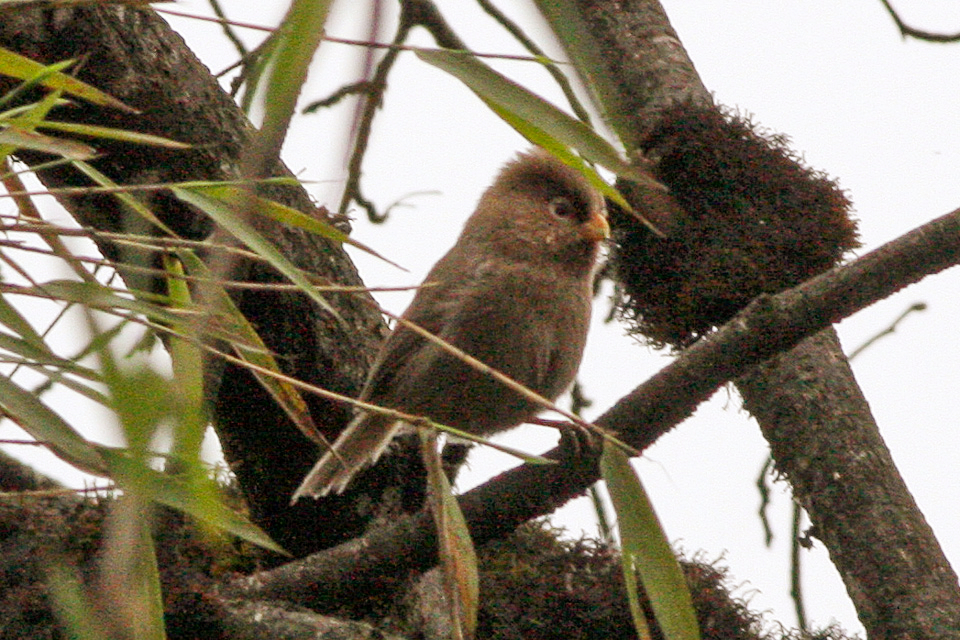
Yellow-crowned Tyrannulet
Sylvia elata
Order: Passeriformes / Family: Sylviidae

Wikimedia Commons
About the Yellow-crowned Tyrannulet
The Yellow-crowned Tyrannulet (Sylvia elata) is a small bird species that belongs to the family Sylviidae. This bird is widely distributed across the tropical and subtropical regions of South America, inhabiting countries such as Brazil, Argentina, and Paraguay. It thrives in forested areas, particularly those with dense foliage and a rich understory. The presence of this bird in varied forest environments highlights its adaptability and ecological significance. Its role in the ecosystem is multifaceted, primarily involving insect control due to its insectivorous diet. This tyrannulet plays a crucial role in maintaining the balance of insect populations in its habitat, thereby contributing to the health of the forest ecosystem. During the breeding season, which typically occurs from October to March, the Yellow-crowned Tyrannulet becomes more vocal and active. Males engage in courtship displays and vocalizations to attract mates. Outside the breeding season, these birds may be less conspicuous but continue to play an important role in their ecological niche. The Yellow-crowned Tyrannulet is also a valuable indicator species for scientists studying the health of tropical and subtropical forests. Its presence can signal the integrity of its habitat, as it requires specific environmental conditions to thrive. The conservation of forest habitats is therefore essential to the survival of this species, highlighting the interconnectedness of biodiversity and ecosystem health.
The Yellow-crowned Tyrannulet belongs to the family Sylviidae, within the order Passeriformes. These birds typically live average 3-5 years with max recorded 7 years.
How to Identify a Yellow-crowned Tyrannulet
The Yellow-crowned Tyrannulet is easily recognizable by its namesake feature, the vibrant yellow crown atop its head. Adult plumage is generally olive-green above with a more yellowish hue on the underparts. The wings and tail exhibit a darker, more muted coloration with subtle wing bars that are not always easily visible in the field. Juveniles resemble adults but may have a duller crown during their first year. Both male and female tyrannulets share similar plumage, making visual sex differentiation challenging. Similar species, such as the Yellow-bellied Elaenia, may cause confusion due to overlapping ranges and comparable colorations. However, the Yellow-crowned Tyrannulet's smaller size and distinctive crown set it apart. In flight, the bird’s silhouette appears compact with rapid wing beats, and while perching, it often adopts an upright posture, fluttering its wings intermittently.
Having trouble telling birds apart? Upload a photo to our bird identification tool for an instant species match.
Yellow-crowned Tyrannulet Habitat and Range
Preferred Habitat
This species predominantly inhabits tropical and subtropical forests, where it favors dense canopy and thick understory layers. Commonly found at low to mid-elevations, the Yellow-crowned Tyrannulet is often associated with humid forest environments, such as the Atlantic Forest and the Amazon Basin. Seasonal habitat shifts are generally minimal, as these birds tend to remain in forested regions year-round. While primarily forest dwellers, they can occasionally be spotted at forest edges or in secondary growth areas. Their presence in urban environments is rare, as they prefer natural, undisturbed habitats where insect prey is abundant.
Geographic Range
The Yellow-crowned Tyrannulet's range extends across much of South America, encompassing Brazil, Argentina, Paraguay, and parts of Bolivia. It is a non-migratory species, residing in its breeding and foraging territories throughout the year. Its distribution is primarily concentrated in the eastern and southeastern parts of the continent, with population density hotspots in the Brazilian Atlantic Forest and the Pantanal. While not considered a migratory bird, local movements within its range may occur, particularly in response to food availability or environmental changes.
Want to know which birds visit your area? Browse our backyard birds by location guides for region-specific species lists.
What Does the Yellow-crowned Tyrannulet Eat?
The Yellow-crowned Tyrannulet primarily feeds on insects, making it an adept insectivore. Its diet consists of small arthropods such as beetles, caterpillars, and spiders. Seasonal variations in diet are noted, with a higher intake of flying insects during warmer months when these prey are more abundant. The tyrannulet employs a variety of foraging techniques, including gleaning insects from leaves and branches and aerial sallying to catch flying insects mid-air. Its small size allows it to maneuver efficiently through dense foliage in pursuit of prey. Feeding generally occurs throughout the day, with peak activity during the early morning and late afternoon when insect activity is heightened.
Yellow-crowned Tyrannulet Behavior and Social Structure
Yellow-crowned Tyrannulets are generally solitary or found in pairs, especially during the breeding season. They exhibit territorial behavior, with males often singing to defend their territory and attract females. During courtship, males may perform display flights and present food offerings to potential mates. Outside of the breeding season, they may join mixed-species foraging flocks, benefiting from increased vigilance against predators. Their response to predators includes alarm calls and seeking cover in dense vegetation. Daily activity patterns involve active foraging interspersed with periods of rest, often during the hottest part of the day.
Yellow-crowned Tyrannulet Nesting and Reproduction
The Yellow-crowned Tyrannulet constructs cup-shaped nests using grasses, leaves, and other plant materials. These nests are typically situated in the fork of a branch or hidden within dense foliage, providing protection from predators. Clutch size generally ranges from two to three eggs, with both parents sharing incubation duties, which last approximately 14 days. After hatching, the chicks remain in the nest for about two weeks before fledging. Parental care continues post-fledging, with both parents involved in feeding and protecting the young. The species may produce one to two broods per year, depending on environmental conditions.
Yellow-crowned Tyrannulet Sounds and Vocalizations
The primary song of the Yellow-crowned Tyrannulet is a series of high-pitched, melodious notes with a rapid tempo. These vocalizations serve as both mating calls and territorial signals. The bird's call notes are short, sharp chips, often repeated during interactions with conspecifics. Alarm calls are more harsh and urgent, alerting others to potential threats. During the dawn chorus, their bright songs can be heard echoing through the forest, adding a lively soundtrack to the early morning hours.
Interesting Facts About the Yellow-crowned Tyrannulet
- 1The Yellow-crowned Tyrannulet's crown is not always visible, as the bird can raise or lower its crest depending on its mood.
- 2This species is known for its acrobatic flight maneuvers, often seen twisting and turning in pursuit of insects.
- 3Despite its small size, the Yellow-crowned Tyrannulet has a surprisingly loud and complex song, easily audible over long distances.
- 4The bird's scientific name, Sylvia elata, reflects its graceful and elevated flight patterns.
- 5Yellow-crowned Tyrannulets are known to participate in mixed-species flocks, enhancing their foraging efficiency.
- 6This species plays an important role in controlling insect populations, acting as a natural pest manager in its ecosystem.
- 7The Yellow-crowned Tyrannulet's presence is often an indicator of healthy, biodiverse forest environments.
Yellow-crowned Tyrannulet Conservation Status
According to the IUCN, the Yellow-crowned Tyrannulet is currently listed as Least Concern, reflecting a stable population trend. However, habitat loss due to deforestation poses a significant threat to its long-term survival. Conservation efforts focus on preserving forest habitats and promoting sustainable land-use practices. Historically, the bird's population has remained relatively stable, but continued vigilance is necessary to address potential future challenges.