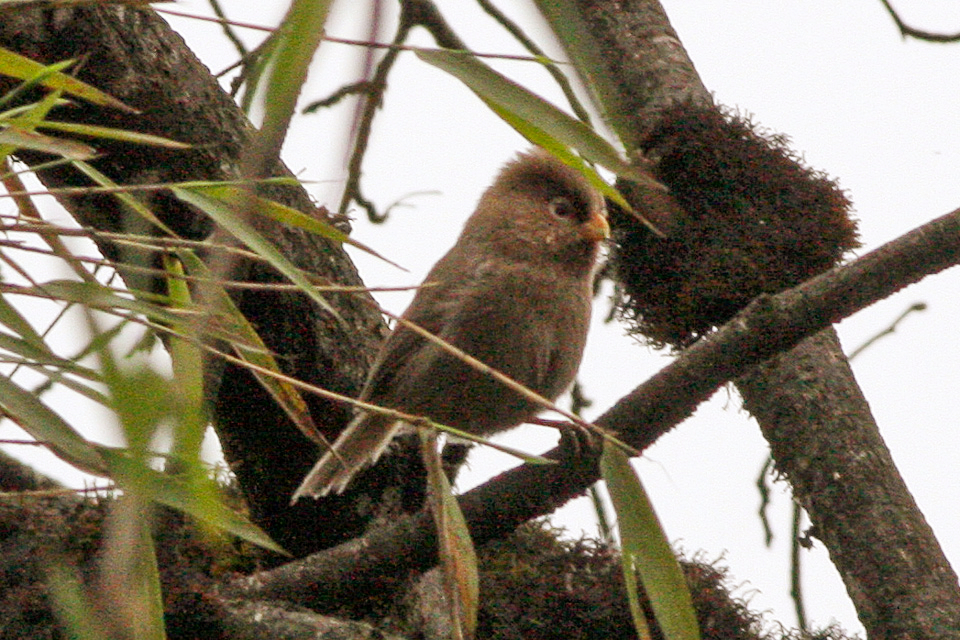
Yellow-eyed Babbler
Chrysomma sinense
Order: Passeriformes / Family: Sylviidae

Wikimedia Commons
About the Yellow-eyed Babbler
The Yellow-eyed Babbler, Chrysomma sinense, is a small passerine bird native to the Indian subcontinent and parts of Southeast Asia. This species belongs to the family Sylviidae, known for their active foraging and vocal communication. The Yellow-eyed Babbler plays a significant ecological role as both predator and prey within its environment. Commonly found in countries such as India, Nepal, Sri Lanka, and China, this bird thrives in open scrublands, grasslands, and agricultural fields. Its ability to adapt to various environments highlights its resilience and ecological importance. The Yellow-eyed Babbler is particularly notable for its social behavior and territoriality. These birds often form small groups, which helps them in foraging and avoiding predators. The Yellow-eyed Babbler displays notable seasonal behaviors; during the breeding season, which typically occurs from March to August, they become more territorial and vocal. Outside of this period, they may join mixed-species foraging flocks, enhancing their chances of finding food. This seasonal shift in behavior underscores the bird's adaptability and its role in the broader ecosystem. The Yellow-eyed Babbler's presence in agricultural areas highlights its significance to humans as it helps control insect populations, thus providing a beneficial ecological service. Despite this, they face threats from habitat destruction and changes in land use. Conservation efforts focus on maintaining suitable habitats and understanding population dynamics to ensure their continued survival.
The Yellow-eyed Babbler belongs to the family Sylviidae, within the order Passeriformes. These birds typically live average 4-6 years, with a maximum recorded of 8 years..
How to Identify a Yellow-eyed Babbler
The Yellow-eyed Babbler is easily identifiable by its bright yellow eyes, a distinctive feature that contrasts with its rufous crown and dark eye stripe. Adult plumage includes a white throat and underparts, while the upperparts are a mix of brown and gray. Juvenile birds, however, show a duller coloration with less contrast between the eye and plumage. Both male and female Yellow-eyed Babblers look similar, making it difficult to distinguish between sexes in the field. The flight silhouette of the Yellow-eyed Babbler is characterized by short, rounded wings and a fairly long tail, often held cocked when perched. When comparing with similar species, such as the Jungle Babbler, the Yellow-eyed Babbler's distinctive eye color and smaller size help avoid confusion. Its perching posture is often upright, and it frequently flicks its tail, adding to its animated appearance.
Having trouble telling birds apart? Upload a photo to our bird identification tool for an instant species match.
Yellow-eyed Babbler Habitat and Range
Preferred Habitat
The Yellow-eyed Babbler inhabits a variety of open habitats, including scrublands, grasslands, and agricultural fields. It prefers lowland areas but can be found up to 1,500 meters in elevation in the Himalayan foothills. In rural areas, this bird often occupies the edges of cultivated fields, utilizing hedgerows and brush for foraging and nesting. Urban settings are less common for the Yellow-eyed Babbler, as it favors more open spaces with ample vegetation. Seasonal habitat shifts are minimal, as the species is largely sedentary, but local movements may occur in response to food availability.
Geographic Range
The Yellow-eyed Babbler's range spans the Indian subcontinent, including India, Nepal, and Sri Lanka, extending to parts of Southeast Asia such as Myanmar, Thailand, and southern China. This bird is largely resident, with no significant migratory movements, although some local dispersal occurs. The species is fairly widespread within its range, with population density hotspots in regions like the Indian states of Karnataka and Tamil Nadu, where suitable habitats are abundant. Breeding occurs throughout most of its range, with no distinct separation between breeding and wintering areas due to its non-migratory nature.
Want to know which birds visit your area? Browse our backyard birds by location guides for region-specific species lists.
What Does the Yellow-eyed Babbler Eat?
The diet of the Yellow-eyed Babbler primarily consists of insects and other small invertebrates, making it an insectivorous bird. It feeds on caterpillars, beetles, and grasshoppers, which are abundant in its preferred habitats. During the breeding season, when nutritional demands increase, the bird may also consume small fruits and seeds. Foraging techniques include gleaning from foliage and the ground, often aided by their agile movements and probing beaks. The Yellow-eyed Babbler typically forages in groups, enhancing their efficiency and reducing the risk from predators. Feeding occurs throughout the day, with peaks in activity during the cooler morning and late afternoon hours.
Yellow-eyed Babbler Behavior and Social Structure
Yellow-eyed Babblers are highly social birds, often found in small flocks of up to ten individuals. Their social structure includes a complex hierarchy, which helps maintain order within the group. Territorial behavior is prominent during the breeding season, with pairs or small groups defending their nesting area through vocalizations and displays. Courtship involves males showing off their agility and vocal abilities to attract females. In response to predators, Yellow-eyed Babblers rely on alarm calls and coordinated group movements to confuse and deter threats. Daily activity patterns are largely diurnal, with periods of intense foraging interspersed with rest and social interactions.
Yellow-eyed Babbler Nesting and Reproduction
The Yellow-eyed Babbler constructs cup-shaped nests using grass, leaves, and spider webs, often positioned in dense shrubs or low trees. Preferred nesting sites are well-concealed within vegetation to protect against predators. Clutch size typically ranges from three to five eggs, with both parents sharing incubation duties over a period of approximately 14 days. Upon hatching, both parents continue to provide food and protection to the fledglings for another 12 to 14 days until they leave the nest. The species generally raises two broods per year, depending on environmental conditions and food availability.
Yellow-eyed Babbler Sounds and Vocalizations
The primary song of the Yellow-eyed Babbler is a series of melodious whistles, often described as 'piu-piu-piu' repeated in quick succession. These vocalizations are clear and carry well across open landscapes. Call notes include a sharp 'chit-chit' used for communication within groups. Alarm calls are more abrupt and loud, serving as warnings to other members of the flock. During the dawn chorus, Yellow-eyed Babblers become particularly vocal, establishing territory and social bonds through their persistent and energetic songs.
Interesting Facts About the Yellow-eyed Babbler
- 1The Yellow-eyed Babbler's eye color is unique among babblers, making it instantly recognizable.
- 2A group of babblers is often referred to as a 'chatter,' reflecting their vocal nature.
- 3Yellow-eyed Babblers are known for their cooperative breeding behavior, with non-breeding individuals sometimes helping to raise young.
- 4These birds have a remarkable ability to mimic other bird calls, adding to their vocal repertoire.
- 5Despite their small size, Yellow-eyed Babblers are highly territorial and will vigorously defend their area.
- 6The species' adaptability to different habitats makes it a successful colonizer of new areas within its range.
- 7In India, the Yellow-eyed Babbler is often seen in mixed-species flocks, which help in reducing predation risk.
Yellow-eyed Babbler Conservation Status
The Yellow-eyed Babbler is currently listed as Least Concern on the IUCN Red List, with a stable population trend. However, habitat destruction and agricultural expansion pose ongoing threats. Conservation efforts focus on preserving natural habitats and promoting sustainable land use practices. Historical population changes have remained relatively stable, reflecting the species' adaptability. Continued monitoring and habitat protection are essential to ensure its long-term survival.