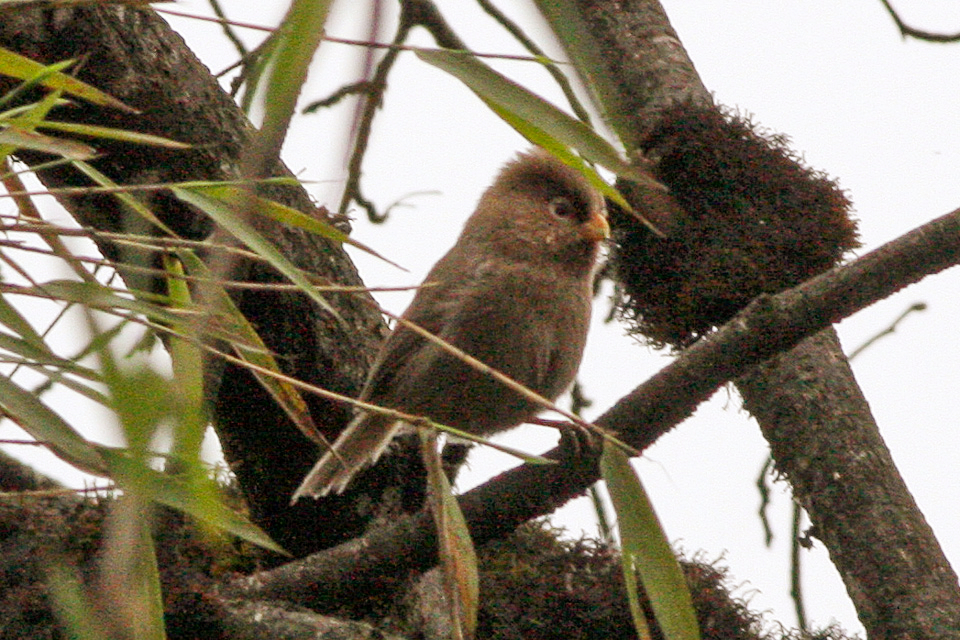
Yemen Warbler
Sylvia buryi
Order: Passeriformes / Family: Sylviidae

Wikimedia Commons
About the Yemen Warbler
The Yemen Warbler, known scientifically as Sylvia buryi, is a remarkable bird native to the mountainous regions of southern Yemen. This species belongs to the Sylviidae family and thrives in the unique montane forests that characterize this area. The Yemen Warbler is particularly significant due to its limited range and specialized habitat preferences, making it an important species for conservation efforts in the Arabian Peninsula. The bird's presence in the montane forests plays a crucial ecological role as it contributes to insect population control and seed dispersal, thereby maintaining the delicate balance of this unique ecosystem. Throughout the year, the Yemen Warbler exhibits various seasonal behaviors. During the breeding season, which typically occurs from March to June, these warblers become more vocal and territorial. The males sing to establish territory and attract mates, showcasing their melodious and complex song. Outside the breeding season, the Yemen Warbler adopts a more solitary lifestyle, often seen foraging alone or in pairs. While it remains mostly resident throughout the year, some altitudinal movements may occur as individuals adjust to changes in food availability and weather conditions. The Yemen Warbler's restricted range and specialized habitat requirements render it vulnerable to habitat destruction and climate change. As human activities continue to encroach on its montane forest habitat, conservationists stress the importance of preserving these environments. Initiatives aimed at protecting the Yemen Warbler's habitat not only benefit this particular species but also support a myriad of other flora and fauna that depend on the montane forests of Yemen.
The Yemen Warbler belongs to the family Sylviidae, within the order Passeriformes. These birds typically live average 2-3 years, with some living up to 5 years..
How to Identify a Yemen Warbler
The Yemen Warbler is a medium-sized sylviid, notable for its mostly dark gray-brown plumage that allows it to blend seamlessly into the forest understory. Adult Yemen Warblers exhibit a subtle yet distinctive appearance with a grayish-brown back, lighter underparts, and a slightly darker tail, which they often flick while perched. Their eyes are adorned with a subtle white eye-ring, adding a touch of contrast to their otherwise muted coloration. Juvenile Yemen Warblers resemble adults but tend to have more buffy tones in their plumage, particularly on the underparts. Unlike some warbler species, there is minimal sexual dimorphism in the Yemen Warbler, with males and females appearing very similar in the field. However, during the breeding season, males may be slightly more active and vocal, which can aid in identification. When compared to similar species, the Yemen Warbler's uniform dark plumage and distinctive song set it apart. In flight, the Yemen Warbler presents a slightly rounded silhouette with rapid wingbeats, typical of many sylviid warblers. When perched, their posture is upright, and they often remain still for extended periods, scanning for insects. Their subtle coloration may lead to confusion with other dark-plumaged birds, but their habitat preference and vocalizations are key distinguishing factors.
Having trouble telling birds apart? Upload a photo to our bird identification tool for an instant species match.
Yemen Warbler Habitat and Range
Preferred Habitat
The Yemen Warbler is primarily found in the montane forests of southern Yemen, where it inhabits altitudes ranging from 1,500 to 2,800 meters. These forests are characterized by dense vegetation, including juniper and olive trees, providing ample cover and foraging opportunities. The bird shows a preference for areas with a mix of shrub and tree cover, which offer both feeding and nesting sites. While the Yemen Warbler is primarily associated with forested habitats, it may occasionally venture into nearby scrublands or agricultural areas, especially when searching for food. The bird's reliance on montane forests means it is largely absent from urban environments and lowland areas. Seasonal shifts in habitat use are primarily driven by food availability, with some individuals moving to lower elevations during periods of scarcity in their preferred montane forests.
Geographic Range
The Yemen Warbler's range is restricted to the highland regions of southern Yemen, where it is considered endemic. This limited distribution makes it one of the more regionally specialized birds in the Arabian Peninsula. The species does not undertake long-distance migrations, remaining largely within its breeding range throughout the year. However, some altitudinal movements may occur, with individuals descending to lower elevations during the non-breeding season in search of food. The bird's population density is highest in areas where suitable forest habitats are abundant, such as the Haraz Mountains and Jabal Bura. These regions are known for their rich biodiversity and provide a haven for the Yemen Warbler and other montane species.
Want to know which birds visit your area? Browse our backyard birds by location guides for region-specific species lists.
What Does the Yemen Warbler Eat?
The Yemen Warbler primarily feeds on insects, making it an important predator of various invertebrate species in its montane forest habitat. Its diet consists mainly of caterpillars, beetles, and spiders, which it gleans from foliage and branches. The warbler exhibits a keen sense of sight and adept foraging skills, often seen methodically inspecting leaves and bark for hidden prey. During the breeding season, the need to feed chicks increases the warbler's foraging activity, resulting in a more intensive search for food. While insects form the bulk of its diet, the Yemen Warbler may occasionally consume small seeds or fruits, especially during periods when insect availability is low. The bird's feeding schedule is largely diurnal, with peak activity occurring in the early morning and late afternoon.
Yemen Warbler Behavior and Social Structure
The Yemen Warbler exhibits a primarily solitary lifestyle, although it may form loose associations with other insectivorous birds during foraging. This behavior increases feeding efficiency and predator vigilance. The warbler is territorial, with males vigorously defending their breeding territories through song and displays. During the breeding season, courtship involves males singing complex songs to attract females, often from prominent perches within their territory. The Yemen Warbler is also known for its unique tail-flicking behavior, which may serve as a territorial signal or a way to startle insects into movement. When faced with predators, the Yemen Warbler employs evasive maneuvers and utilizes dense vegetation for cover. Its daily activity pattern centers around feeding and territorial defense, with periods of rest during the hottest parts of the day.
Yemen Warbler Nesting and Reproduction
The Yemen Warbler constructs cup-shaped nests using a combination of grass, twigs, and leaves, often lined with softer materials such as feathers or plant down. Nests are typically placed in dense shrubs or small trees, providing concealment and protection from predators. The female is primarily responsible for nest construction, although the male may assist in gathering materials. Clutch size generally ranges from two to three eggs, which the female incubates for about 12-14 days. During this period, the male provides food for the female. Once hatched, both parents share in feeding the chicks, which fledge approximately 10-14 days after hatching. The Yemen Warbler may produce one or two broods per year, depending on environmental conditions and food availability.
Yemen Warbler Sounds and Vocalizations
The primary song of the Yemen Warbler is a melodious and complex series of whistles and trills, often delivered from a concealed perch. The song varies in pitch and rhythm, with each male possessing a unique repertoire that distinguishes him from rivals. In addition to the primary song, the Yemen Warbler produces a variety of call notes, including soft whistles and harsh alarm calls. These sounds serve as communication between mates and as warnings to potential intruders. The warbler's vocal activity peaks during the early morning and late afternoon, coinciding with periods of high territorial and foraging activity. The song's quality has been compared to the sound of a gentle breeze passing through leaves, creating a soothing and natural melody in the forest.
Interesting Facts About the Yemen Warbler
- 1The Yemen Warbler is one of the few bird species endemic to Yemen, highlighting its unique ecological niche.
- 2This warbler's limited range makes it an indicator species for the health of Yemen's montane forests.
- 3Unlike many warblers, the Yemen Warbler does not migrate long distances, remaining within its range year-round.
- 4The species' preference for dense vegetation makes it a challenging bird to observe, enhancing its elusive reputation.
- 5The Yemen Warbler's song is highly variable, with individual males possessing unique vocal signatures.
- 6Despite its small size, the Yemen Warbler plays a significant role in controlling insect populations in its habitat.
- 7Studies suggest that the Yemen Warbler's population may be declining due to increasing habitat fragmentation.
Yemen Warbler Conservation Status
The Yemen Warbler is currently classified as Near Threatened by the IUCN due to its restricted range and ongoing habitat loss. The primary threats to its population include deforestation, agricultural expansion, and climate change, which alter its montane forest habitat. Conservation efforts focus on habitat preservation and the establishment of protected areas within its range. Monitoring programs aim to provide updated population data and assess the effectiveness of conservation strategies. Despite these efforts, the Yemen Warbler's population remains vulnerable to environmental changes, underscoring the need for continued conservation attention and habitat management.