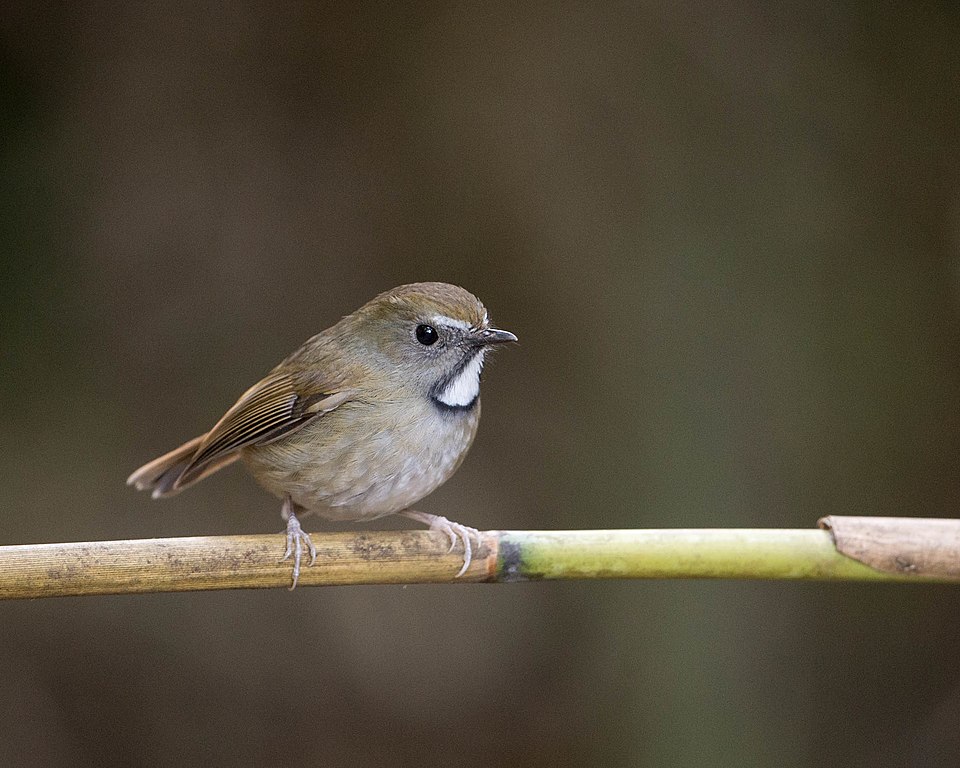
Abyssinian Wheatear
Oenanthe lugubris
Order: Passeriformes / Family: Muscicapidae

Wikimedia Commons
About the Abyssinian Wheatear
The Abyssinian Wheatear, Oenanthe lugubris, is a captivating bird native to the highlands of northeastern Africa, especially prevalent in Ethiopia and Eritrea. This bird is a member of the Muscicapidae family, which encompasses a variety of small passerines known for their vocal abilities and insectivorous diets. The Abyssinian Wheatear is particularly adapted to live in rocky, arid environments, displaying a remarkable ability to thrive in regions where vegetation is sparse. Its ecological role involves controlling insect populations, which is crucial for maintaining the balance in these fragile ecosystems. As an insectivore, this wheatear plays a pivotal role in managing the numbers of potential pest species, contributing to the health of the highland regions it inhabits. This bird favors elevations ranging from 1,200 to 3,500 meters, where it can often be seen hopping briskly among rocks or perching prominently on boulders. During the breeding season, which typically spans from March to June, the Abyssinian Wheatear becomes more territorial, with males engaging in conspicuous displays to defend their chosen areas. As seasons change, this bird may shift slightly in elevation but generally remains within the same geographical area year-round. Its consistent presence in its native range underscores its adaptation to the specific ecological niches found in these highland areas.
The Abyssinian Wheatear belongs to the family Muscicapidae, within the order Passeriformes. These birds typically live average 5-7 years, with some living up to 10 years..
How to Identify a Abyssinian Wheatear
Identifying the Abyssinian Wheatear involves noting its distinctive black and white coloration. Adult males exhibit a striking contrast with their black head, back, and wings, while their underparts and rump are white. This creates a bold pattern that is easily recognizable against the rocky landscapes they inhabit. Females and juveniles, on the other hand, present a more subdued appearance, with brownish tones replacing the stark black found in males, yet they still retain the characteristic white underparts. These subtle differences can be crucial for accurate identification in the field. In flight, the Abyssinian Wheatear shows a characteristic fluttering motion, often punctuated by brief glides. Its perching posture is upright, and it frequently returns to a favored perch after brief foraging flights. While there are other wheatears with similar black and white patterns, the Abyssinian Wheatear can be distinguished by its specific regional presence and the particular shading differences between sexes and age groups.
Having trouble telling birds apart? Upload a photo to our bird identification tool for an instant species match.
Abyssinian Wheatear Habitat and Range
Preferred Habitat
The preferred habitat of the Abyssinian Wheatear includes rocky highlands, characterized by sparse vegetation and open terrain interspersed with stones and boulders. These areas provide ample foraging opportunities and vantage points for seeing potential predators and prey. Ranging in elevation from 1,200 to 3,500 meters, this wheatear is often found in mountainous regions, such as the Ethiopian Highlands. It shows limited presence in urban areas, though it occasionally ventures into the outskirts of rural settlements, especially where suitable rocky substrates are available. Seasonal habitat shifts are minimal, as the bird remains largely sedentary, though it might adjust its elevation within the highland range in response to climatic variations.
Geographic Range
The Abyssinian Wheatear's range is primarily concentrated in northeastern Africa, with substantial populations in Ethiopia and Eritrea. It is not considered a migratory species, maintaining year-round residency within its range. Its breeding grounds align with its overall range, as it does not undergo significant migrations. Population density is highest in the Ethiopian Highlands, where the bird enjoys the ideal combination of open rocky terrain and available prey. Although its presence is less pronounced in surrounding regions, isolated populations may exist in similarly suitable habitats within adjacent countries.
Want to know which birds visit your area? Browse our backyard birds by location guides for region-specific species lists.
What Does the Abyssinian Wheatear Eat?
The diet of the Abyssinian Wheatear consists mainly of insects, which it hunts with precision and agility. It employs a sit-and-wait strategy, often perching on rocks or boulders to scan the ground for movement. Upon spotting prey, it swoops down swiftly to capture it. Its primary food sources include beetles, ants, and other ground-dwelling insects. Seasonal variations in diet occur as insect availability fluctuates, but the bird remains predominantly insectivorous throughout the year. The Abyssinian Wheatear may occasionally supplement its diet with small seeds or berries, particularly during lean periods. Foraging primarily occurs during the day, with peak activity in the morning and late afternoon when temperatures are more moderate.
Abyssinian Wheatear Behavior and Social Structure
The Abyssinian Wheatear exhibits a range of behaviors that reflect its adaptation to a solitary and territorial lifestyle. Males are especially territorial during the breeding season, which runs from March to June. They engage in elaborate displays, including song flights and vocalizations, to establish dominance and attract mates. Outside of the breeding season, the bird maintains a more solitary existence, though pairs may remain in close proximity. Flocking is uncommon, as the species tends to avoid dense congregations. When confronted with predators, the Abyssinian Wheatear relies on its agility and keen observation skills, often taking cover among rocks or employing distraction displays to draw threats away from nests. Its daily activity patterns involve periods of active foraging interspersed with rest, particularly during the hottest parts of the day.
Abyssinian Wheatear Nesting and Reproduction
Nesting for the Abyssinian Wheatear involves constructing a cup-shaped nest of grasses, leaves, and feathers, typically situated in a crevice or hole within a rocky terrain. This choice of nesting site provides protection from the elements and potential predators. Clutch sizes range from three to five eggs, with incubation lasting approximately two weeks. Both parents participate in feeding the chicks, which fledge about two weeks after hatching. The species generally raises one brood per year, although favorable conditions might allow for a second. Parental roles are clearly defined, with both the male and female sharing responsibilities in incubation and chick-rearing.
Abyssinian Wheatear Sounds and Vocalizations
The Abyssinian Wheatear's primary song is a series of melodious notes delivered in a flowing sequence. The rhythm is steady, with a moderate pitch that carries well across open landscapes. Calls are typically more abrupt, serving as contact calls or alarms when threats are perceived. Alarm calls are sharp and repetitive, intended to alert other wheatears to potential danger. During the dawn chorus, the Abyssinian Wheatear's song can be heard alongside other highland bird species, contributing to the rich acoustic tapestry of its environment. Comparatively, its song is softer and less complex than those of more prominent songbirds in its range.
Interesting Facts About the Abyssinian Wheatear
- 1The Abyssinian Wheatear can be seen at elevations up to 3,500 meters, showcasing its adaptability to high-altitude environments.
- 2Unlike many other wheatears, the Abyssinian Wheatear tends to remain within its native range year-round, exhibiting minimal migratory behavior.
- 3This species' name, 'wheatear,' derives from an old English phrase 'white arse,' referring to the bird's distinctive white rump.
- 4The Abyssinian Wheatear prefers rocky habitats, which provide not only feeding grounds but also nesting sites and protection from predators.
- 5Males of the species are easily distinguishable by their striking black and white plumage, a feature that aids in both territory defense and mate attraction.
Abyssinian Wheatear Conservation Status
Currently, the Abyssinian Wheatear is classified as Least Concern by the IUCN, with stable population trends. The species faces threats primarily from habitat degradation due to agricultural expansion and development. Conservation efforts focus on maintaining natural highland habitats and monitoring populations to prevent potential declines. Historically, the bird has maintained stable numbers, but ongoing environmental changes necessitate vigilance to ensure its continued well-being. Efforts to educate local communities on the importance of preserving highland ecosystems also play a crucial role in conservation strategies.