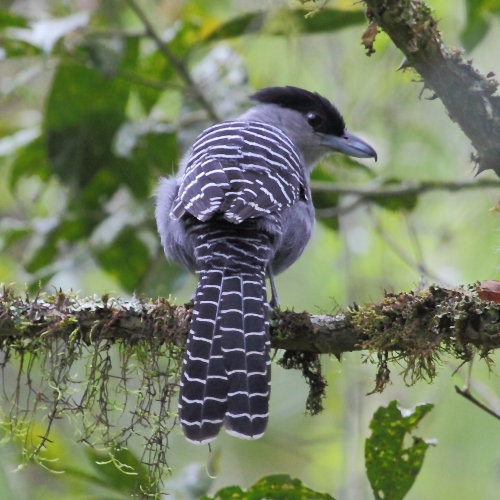
Acre Antshrike
Thamnophilus divisorius
Order: Passeriformes / Family: Thamnophilidae

Wikimedia Commons
About the Acre Antshrike
The Acre Antshrike, scientifically known as Thamnophilus divisorius, is a fascinating bird species belonging to the Thamnophilidae family, which is renowned for its diverse array of antbirds. This species is confined to a very specific region in the Amazon rainforest, primarily within the Acre state of Brazil and neighboring areas in Peru. As a member of the understory bird community, it plays a crucial role in the ecosystem by controlling insect populations and contributing to the complex web of interactions in this biodiverse region. The Acre Antshrike thrives in the dense, humid undergrowth of the rainforest, where its cryptic plumage provides excellent camouflage against predators. This bird's ecological role extends beyond mere insect control; it also participates in seed dispersal and indirectly influences plant growth patterns through its interactions with the forest fauna. The Acre Antshrike is a resident species, meaning it does not migrate, and it exhibits unique adaptations for surviving in its localized habitat. The dense foliage provides not only sustenance but also protection from extreme weather conditions typical of the tropical rainforest climate. Its behavior and lifestyle are closely tied to the seasonal fluctuations in the rainforest environment. During the wet season, the Acre Antshrike is most active, taking advantage of the abundance of food resources to feed and rear its young. In contrast, during the dry season, its activity levels decrease, and it becomes more reclusive as it conserves energy and seeks refuge in the thickest parts of the forest. This bird's significance extends beyond its ecological contributions; it is also an indicator species for the health of its habitat. Any changes in its population or behavior can signal broader environmental shifts, making it a valuable species for conservationists and researchers studying the impacts of deforestation and climate change in the Amazon basin. The Acre Antshrike's presence and well-being are crucial for maintaining the delicate balance of the rainforest ecosystem, showcasing the intricate connections between species and their environments.
The Acre Antshrike belongs to the family Thamnophilidae, within the order Passeriformes. These birds typically live average 4-5 years, maximum recorded 7 years..
How to Identify a Acre Antshrike
The Acre Antshrike is a medium-sized bird with a length of approximately 16-18 centimeters. Adult males display a striking contrast of black and white plumage, with a distinctive black cap and back, while their underparts are predominantly white. Females, on the other hand, are more subdued in appearance, featuring a rufous-brown coloration with paler underparts. This sexual dimorphism aids in field identification, although both sexes share a similar body shape and size. Juveniles resemble females but are generally duller, lacking the crispness of adult plumage. When observing the Acre Antshrike, note its strong, slightly curved bill, which is characteristic of antshrikes and aids in capturing prey. The bird's tail is relatively long and often held upright, a posture that is quite typical among its kind. In flight, the Acre Antshrike presents a compact silhouette with rapid wing beats, though it tends to be more terrestrial, preferring to move through dense undergrowth rather than taking to the air. While other antshrike species may pose identification challenges, the combination of plumage, vocalizations, and habitat preference helps distinguish Thamnophilus divisorius from its relatives. Although similar species may inhabit overlapping ranges, the Acre Antshrike's distinct vocal repertoire, comprising sharp, repetitive calls and songs, serves as a reliable identification cue for experienced birders.
Having trouble telling birds apart? Upload a photo to our bird identification tool for an instant species match.
Acre Antshrike Habitat and Range
Preferred Habitat
The Acre Antshrike inhabits the lowland rainforests of the Amazon basin, specifically within the Acre state of Brazil and adjacent areas in Peru. This bird thrives in dense, humid undergrowth where the forest canopy provides ample shade and moisture. Typically found at elevations below 500 meters, the Acre Antshrike is well adapted to the complex structure of the rainforest understory. This habitat offers an abundance of food resources, including insects and small invertebrates, which are essential for the bird's diet. Unlike many other bird species, the Acre Antshrike does not exhibit significant seasonal habitat shifts, remaining within its preferred environment year-round. Its presence is primarily in remote, undisturbed forest areas, far from urban centers and agricultural developments. The bird's reliance on pristine rainforest ecosystems underscores the importance of habitat conservation for its continued survival and highlights the impacts of deforestation on its population.
Geographic Range
The Acre Antshrike's range is confined to the southwestern Amazon basin, predominantly within the Acre state of Brazil and extending into parts of southeastern Peru. The species does not engage in long-distance migrations, remaining within its tropical rainforest home throughout the year. Its distribution is highly localized, with population density hotspots occurring in areas where dense undergrowth and abundant food resources coincide. The limited range of the Acre Antshrike makes it particularly vulnerable to habitat loss, as its specialized requirements restrict its ability to adapt to changing environments. Conservation efforts focus on protecting the rainforest areas within its range, ensuring the preservation of these critical habitats. While its range is restricted, the Acre Antshrike's presence is a testament to the rich biodiversity of the Amazon basin, highlighting the importance of this region for avian diversity.
Want to know which birds visit your area? Browse our backyard birds by location guides for region-specific species lists.
What Does the Acre Antshrike Eat?
The Acre Antshrike primarily feeds on insects and small invertebrates, which it skillfully extracts from the dense foliage of the rainforest understory. Its diet includes a variety of arthropods, such as ants, beetles, and spiders, which it captures using its strong, slightly curved bill. This bird employs a methodical foraging technique, moving deliberately through vegetation and often pausing to inspect leaf surfaces and crevices for hidden prey. During the wet season, when insect activity peaks, the Acre Antshrike's diet expands to include a broader array of invertebrates, providing crucial nutrition for breeding and raising young. In contrast, the dry season sees a slight shift in foraging behavior, with the bird focusing on areas where moisture and food remain plentiful. The Acre Antshrike's feeding schedule is diurnal, with peak activity occurring in the early morning and late afternoon, coinciding with periods of cooler temperatures and increased prey availability.
Acre Antshrike Behavior and Social Structure
The Acre Antshrike exhibits a solitary or paired lifestyle, with individuals often found alone or in monogamous pairs. It is territorial, with males actively defending their territory through vocalizations and occasional physical displays. Courtship involves elaborate displays, including wing flicking and tail fanning, accompanied by distinctive calls. The bird's response to predators includes remaining motionless or retreating into dense cover, relying on its cryptic plumage for protection. Daily activity patterns are influenced by the rainforest environment, with the Acre Antshrike most active during the cooler parts of the day. It engages in regular preening to maintain its plumage and can often be observed foraging at various heights within its territory. Flocking behavior is rare, as the bird prefers to maintain its territory and focus on individual or pair-based activities. Despite its reclusive nature, the Acre Antshrike's vocalizations play a crucial role in maintaining territory boundaries and facilitating pair bonding.
Acre Antshrike Nesting and Reproduction
The nesting habits of the Acre Antshrike involve constructing a cup-shaped nest, typically made from twigs, leaves, and plant fibers. These nests are strategically placed in dense shrubs or low trees within the rainforest understory, providing concealment from predators. The clutch size generally consists of two to three eggs, with both parents sharing incubation duties. The incubation period lasts approximately 14-16 days, after which the chicks hatch and are fed by both parents. Fledging occurs about 12-14 days post-hatching, with the young remaining dependent on parental care for several additional weeks. The Acre Antshrike typically raises one brood per year, although favorable conditions may allow for a second. Nest predation is a significant threat, with various rainforest predators posing risks to eggs and chicks. Parental roles are well defined, with both males and females participating in feeding and protecting the young.
Acre Antshrike Sounds and Vocalizations
The Acre Antshrike's vocalizations are distinctive, comprising a series of sharp, repetitive calls and melodious songs that resonate through the forest understory. Its primary song features a rhythmic sequence of notes, often described as a series of whistled phrases with a clear, piercing quality. Call notes are short and abrupt, serving as communication between mated pairs or as territorial signals. Alarm calls are harsher, delivered in response to perceived threats and are often accompanied by agitated movements. During the dawn chorus, the Acre Antshrike's song is particularly prominent, adding a vibrant soundscape to the early morning rainforest atmosphere. Its vocal repertoire is complex, reflecting the bird's need for effective communication in the dense, visually obstructed environment of the Amazon rainforest.
Interesting Facts About the Acre Antshrike
- 1The Acre Antshrike was first described in 2004, making it one of the more recently identified bird species in the Amazon.
- 2Despite its recent discovery, the Acre Antshrike's specialized habitat preferences limit its range to a small geographic area.
- 3The bird's vocalizations are a critical tool for territory defense and mate attraction in the dense rainforest understory.
- 4The Acre Antshrike's diet consists mainly of insects, which it hunts using a combination of visual and auditory cues.
- 5Both male and female Acre Antshrikes participate in raising their young, sharing incubation and feeding duties equally.
- 6The Acre Antshrike's plumage provides excellent camouflage, helping it avoid predators in the complex forest environment.
- 7The Acre Antshrike's presence is an indicator of healthy, intact rainforest ecosystems, making it a focus for conservationists.
Acre Antshrike Conservation Status
Currently, the Acre Antshrike is classified as Least Concern by the IUCN, although its population trend is uncertain due to ongoing habitat loss. The primary threat to this species is deforestation, driven by logging, agriculture, and infrastructure development in the Amazon basin. Efforts to conserve the Acre Antshrike focus on habitat protection and sustainable land use practices that minimize forest destruction. Historical population changes are hard to quantify, but continuous monitoring is essential to detect any declines. Conservation programs aim to raise awareness about the importance of preserving Amazonian biodiversity, highlighting the interconnectedness of species like the Acre Antshrike with the broader ecosystem.