
African Blue Flycatcher
Elminia longicauda
Order: Passeriformes / Family: Stenostiridae

Wikimedia Commons
About the African Blue Flycatcher
The African Blue Flycatcher, scientifically known as Elminia longicauda, is a small passerine bird that enchants birdwatchers with its vibrant blue plumage and sprightly behavior. It belongs to the family Stenostiridae, a group known for their agile flight and insectivorous diet. This species primarily inhabits the tropical forests and woodlands of sub-Saharan Africa, with its range extending across countries such as Nigeria, Cameroon, Kenya, and Tanzania. The African Blue Flycatcher thrives in lush environments where it can dart through foliage in pursuit of insects, exhibiting both grace and agility.
This bird plays a significant role in its ecosystem by controlling insect populations, thus contributing to the health of the forest habitats it occupies. Its presence can be an indicator of a healthy, biodiverse environment, as it relies on a rich supply of insects for food. The African Blue Flycatcher exhibits seasonal behaviors that reflect the availability of food and suitable nesting sites. During the breeding season, these birds become more vocal and territorial, establishing and defending their nesting areas with vigor.
Throughout the year, the African Blue Flycatcher maintains a relatively stable population in its preferred habitats, although some local migrations may occur, driven by food availability. This bird is not just a delight for birdwatchers but also a crucial component of its natural environment, helping to sustain the delicate balance of its ecosystem. Understanding its role and behaviors offers insights into the broader dynamics of tropical forest ecosystems in Africa.
The African Blue Flycatcher belongs to the family Stenostiridae, within the order Passeriformes. These birds typically live average 4-6 years, with a maximum recorded of 9 years..
How to Identify a African Blue Flycatcher
The African Blue Flycatcher is easily identifiable by its striking blue plumage, with males typically exhibiting a more vivid coloration compared to females. Adult birds display a bright blue crown and upperparts, contrasted by a paler, almost white underbelly. Juveniles have a duller appearance, often with brownish tones on their wings and back, making them less conspicuous than their adult counterparts.
Both males and females have long, graduated tails that assist in their agile flight maneuvers. Their wings are relatively short, contributing to a flight silhouette that is both distinctive and efficient for navigating dense foliage. The African Blue Flycatcher’s perching posture is upright, often with the tail held slightly downward, a characteristic that helps in quick sallying flights to catch insects.
Confusion with similar species, such as the Blue-mantled Crested Flycatcher, can occur, but the African Blue Flycatcher lacks the prominent crest and has a simpler, more uniform blue plumage. When observing this bird in the field, note the difference in tail length and overall coloration, which are key to correct identification.
Having trouble telling birds apart? Upload a photo to our bird identification tool for an instant species match.
African Blue Flycatcher Habitat and Range
Preferred Habitat
The African Blue Flycatcher predominantly inhabits tropical forests and woodlands, preferring areas with dense undergrowth and ample insect life. It is often found at elevations ranging from sea level up to about 2,000 meters in mountainous regions. These birds thrive in humid environments, where they can exploit the rich insect fauna that such habitats provide.
During different seasons, the African Blue Flycatcher may shift its habitat slightly in response to changes in food availability, moving to more open woodlands or forest edges where insects are plentiful. While it is primarily a forest species, occasional sightings occur in rural gardens and parks, especially in areas adjacent to forests or woodlands.
Urban environments are generally unsuitable for the African Blue Flycatcher due to the lack of sufficient insect prey and suitable nesting sites. Thus, its presence is more common in rural and remote areas where natural habitats remain largely undisturbed.
Geographic Range
The African Blue Flycatcher is a resident species across much of sub-Saharan Africa, with its range spanning from West Africa, through Central Africa, and into East Africa. It is commonly found in countries such as Nigeria, where it occupies forested regions, and extends eastward through Cameroon, the Democratic Republic of Congo, and into the forests of Kenya and Tanzania.
While the bird does not undertake long-distance migrations, it may engage in local movements to exploit seasonal food resources, particularly during times of breeding when energy demands increase. In regions like the Albertine Rift, the African Blue Flycatcher can be a year-round resident, taking advantage of the stable climate and consistent food supply.
Population density is highest in areas where forest cover is intact and insect populations flourish, such as the Ituri Forest in the Democratic Republic of Congo. The bird's adaptability to various forest types allows it to maintain a wide distribution, though habitat destruction can pose localized threats.
Want to know which birds visit your area? Browse our backyard birds by location guides for region-specific species lists.
What Does the African Blue Flycatcher Eat?
The African Blue Flycatcher primarily feeds on insects, capturing them in mid-air with remarkable agility. Its diet includes a variety of flying insects such as flies, moths, and beetles. The bird employs a sit-and-wait strategy, often perching quietly before launching into quick, acrobatic flights to snatch its prey.
During the wet season, when insect populations peak, the African Blue Flycatcher takes advantage of the abundance of food, feeding more frequently to store energy for breeding. In contrast, the dry season may prompt the flycatcher to broaden its diet slightly, including spiders and other small arthropods found in leaf litter or on tree bark.
The African Blue Flycatcher is predominantly diurnal in its feeding habits, with peak activity occurring in the early morning and late afternoon when insects are most active. Its keen eyesight and rapid reflexes make it a proficient hunter, capable of catching even the swiftest of insects.
African Blue Flycatcher Behavior and Social Structure
The African Blue Flycatcher exhibits a range of behaviors that reflect its social and ecological adaptations. It is generally a solitary bird, although pairs may form during the breeding season. Territorial behavior becomes pronounced at this time, with both males and females actively defending their chosen nesting sites from intruders.
Courtship displays involve the male fluttering his wings and performing aerial acrobatics to attract a mate. Once a pair is formed, they often remain together throughout the breeding cycle, showcasing a monogamous relationship. The African Blue Flycatcher is not known to form large flocks, but small family groups may be observed outside of the breeding season.
In response to predators, the flycatcher relies on its agility and speed, often fleeing to dense cover. Its vocalizations also play a role in alerting conspecifics to potential dangers. Daily activity patterns show the flycatcher most active during cooler parts of the day, with rest periods during the midday heat.
African Blue Flycatcher Nesting and Reproduction
Nesting for the African Blue Flycatcher involves constructing a delicate cup-shaped nest, usually placed in a fork of a tree branch or among dense foliage. The nest is built primarily by the female, using materials such as grass, leaves, and fine roots, bound together with spider silk to ensure stability.
A typical clutch consists of two to three eggs, which are incubated by the female for about 14 to 16 days. During this period, the male assists by providing food and defending the territory. Once hatched, the chicks remain in the nest for approximately 15 to 18 days before fledging.
Parental roles extend beyond hatching, with both parents involved in feeding and protecting the young until they are capable of independence. The African Blue Flycatcher typically raises one brood per year, although favorable conditions may allow for a second brood.
African Blue Flycatcher Sounds and Vocalizations
The African Blue Flycatcher produces a melodious song characterized by a series of high-pitched, trilling notes. These songs often include rapid warbles and clear whistles, creating a distinctive and pleasant acoustic presence in its forest habitat.
In addition to its primary song, the flycatcher emits sharp call notes that serve as communication between individuals or as alarm calls in response to predators. During the dawn chorus, the bird's song is particularly prominent, contributing to the symphony of forest sounds as daylight breaks.
Compared to similar species, the African Blue Flycatcher's song is more varied and intricate, allowing it to communicate effectively within its dense, noisy environment.
Interesting Facts About the African Blue Flycatcher
- 1The African Blue Flycatcher can catch insects mid-air with impressive precision thanks to its agile flight.
- 2Despite its bright blue plumage, the African Blue Flycatcher is surprisingly adept at blending into its forest environment.
- 3The tail of the African Blue Flycatcher is notably longer than that of most other flycatchers, aiding in its acrobatic flight.
- 4The African Blue Flycatcher participates in mixed-species flocks, benefiting from increased foraging efficiency and predator vigilance.
- 5This bird's song is a key identifier, with its complex whistles and warbles standing out in the dense forest soundscape.
- 6The African Blue Flycatcher often uses spider silk to bind its nest materials, creating a surprisingly strong structure.
- 7Young African Blue Flycatchers learn to hunt by imitating the precise hunting techniques of their parents.
African Blue Flycatcher Conservation Status
The African Blue Flycatcher is currently listed as a species of Least Concern by the IUCN, with its population considered stable across much of its range. However, habitat loss due to deforestation and land conversion for agriculture poses ongoing threats to its natural habitats. Conservation efforts focus on preserving forest habitats and promoting sustainable land use practices that minimize habitat destruction. Protected areas and national parks across sub-Saharan Africa play a crucial role in safeguarding the habitats of the African Blue Flycatcher and other forest-dependent species. Historical population trends show resilience, but continued monitoring is essential to ensure that environmental changes do not lead to declines. Public awareness and community engagement in conservation initiatives can further enhance efforts to protect this vibrant species.
Other Stenostiridae Species
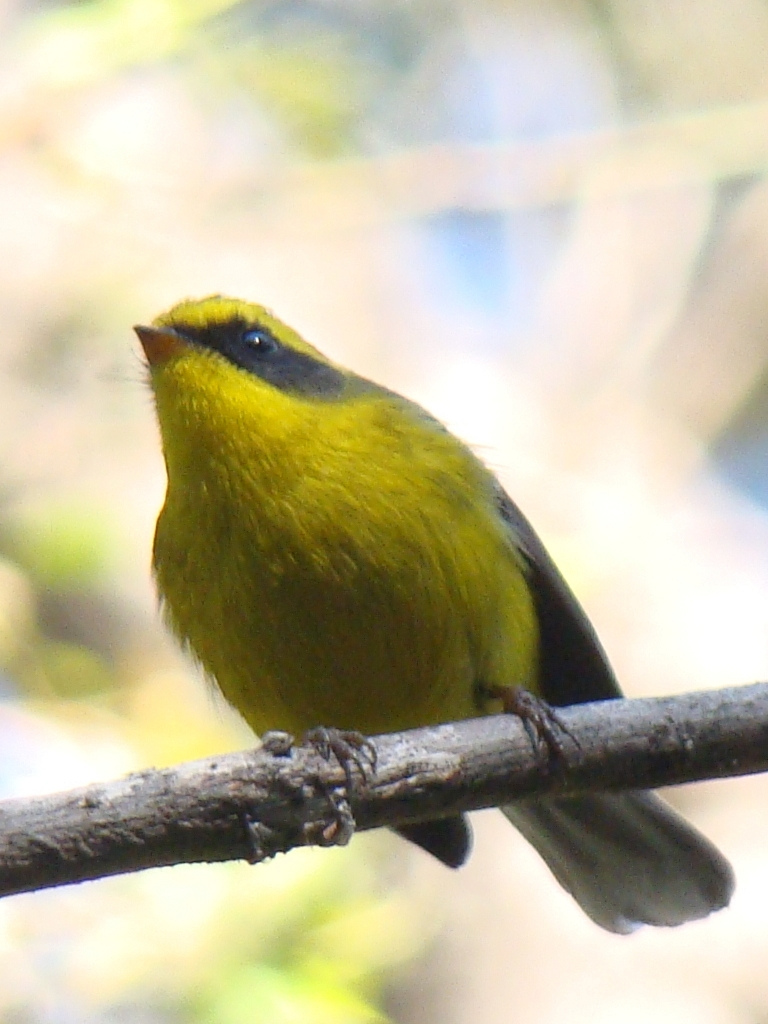


Birds Similar to the African Blue Flycatcher
These species are often confused with the African Blue Flycatcher due to similar appearance or overlapping range.

