
White-tailed Crested-Flycatcher
Elminia albonotata
Order: Passeriformes / Family: Stenostiridae

Wikimedia Commons
About the White-tailed Crested-Flycatcher
The White-tailed Crested-Flycatcher, scientifically known as Elminia albonotata, is a small, striking bird found primarily in the montane forests of East Africa. Its presence is largely notable in countries such as Kenya, Tanzania, Uganda, and Burundi. This bird is part of the Stenostiridae family, which is known for its energetic and agile flycatching behavior. The White-tailed Crested-Flycatcher plays a significant ecological role as an insect predator, helping to control insect populations within its habitat. This species typically resides in subtropical or tropical moist montane forests, where it finds an abundance of insect prey.
In terms of ecological significance, the White-tailed Crested-Flycatcher is a vital component of the forest ecosystem. It assists in maintaining the delicate balance of insect populations, which can have cascading effects on plant pollination and health. The presence of these birds often indicates a healthy, biodiverse environment. During the breeding season, which generally spans from October to January, these flycatchers become more vocal. This period is critical for ensuring the continuation of their population as they engage in elaborate courtship displays and territorial defense.
The White-tailed Crested-Flycatcher is also an indicator species for the health of montane forest ecosystems. Observations of population trends can provide insight into broader environmental changes, such as deforestation or climate alterations. Their reliance on specific habitat conditions makes them particularly sensitive to changes, underscoring the importance of conservation efforts in East African montane forests.
The White-tailed Crested-Flycatcher belongs to the family Stenostiridae, within the order Passeriformes. These birds typically live average 5 years, with a maximum recorded of 8 years..
How to Identify a White-tailed Crested-Flycatcher
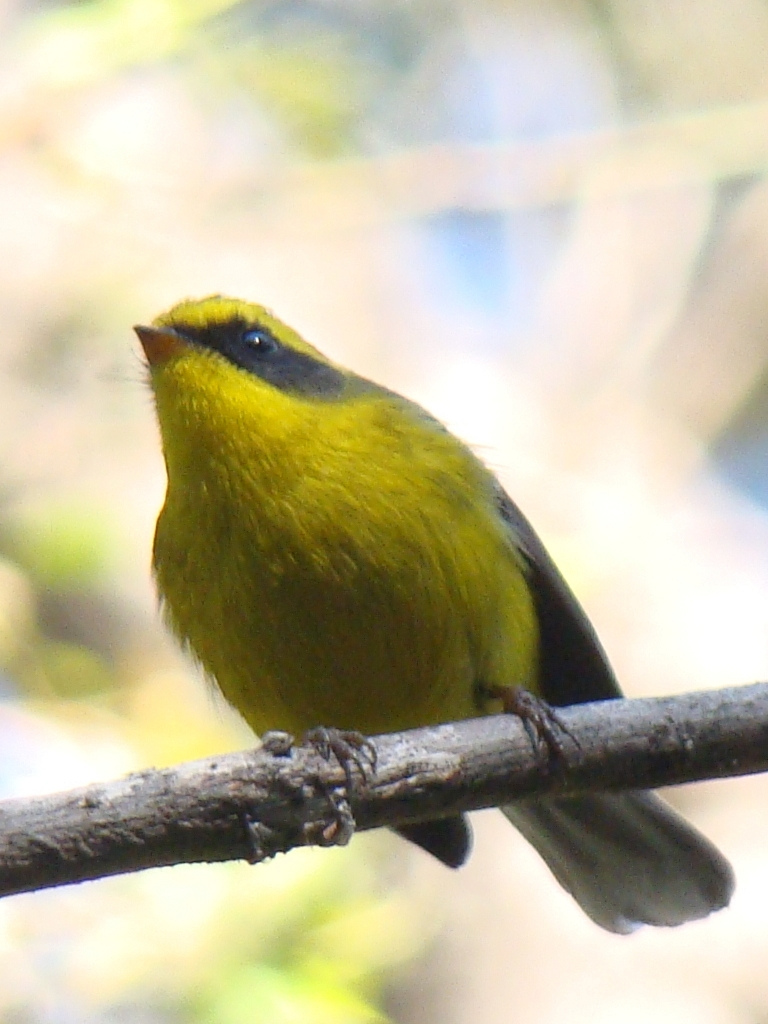
The White-tailed Crested-Flycatcher is easily identified by its distinctive plumage and unique physical characteristics. Adult birds display a striking combination of blue-gray upperparts and a contrasting white underbelly. The most notable feature, as the name suggests, is its white tail, which is particularly visible in flight and while perched. Both males and females share similar plumage, making gender differentiation challenging in the field.
Juveniles, however, may exhibit slightly duller plumage compared to adults, lacking the full intensity of the adults' white tail. The crest, another characteristic feature, is a tuft of elongated feathers on the head, giving the bird a unique silhouette that aids in its identification. In flight, the White-tailed Crested-Flycatcher shows a rapid, fluttering wingbeat, typical of flycatchers, which, combined with its white tail, makes it easy to spot even from a distance.
While observing these birds, one might confuse them with other small flycatching species, but the combination of a white tail and blue-gray coloration is distinctive. Their perching posture is upright, often on lower branches, from which they launch their agile insect-catching sallies.
Having trouble telling birds apart? Upload a photo to our bird identification tool for an instant species match.
White-tailed Crested-Flycatcher Habitat and Range
Preferred Habitat
The White-tailed Crested-Flycatcher inhabits subtropical or tropical moist montane forests, predominantly in regions ranging from 1,500 to 3,000 meters above sea level. These forests provide a rich environment filled with diverse insect life that supports their feeding habits. The species is particularly associated with the East African highlands, where it finds the dense foliage and cool climate favorable for its lifestyle.
Seasonal habitat shifts are minimal for this species, as they are generally non-migratory and tend to remain within their montane forest range throughout the year. While primarily forest dwellers, they can also be observed at forest edges and occasionally in wooded areas within agricultural landscapes, though such sightings are rare. Unlike some birds that adapt well to urban settings, the White-tailed Crested-Flycatcher is largely absent from urban environments, preferring the undisturbed forest habitat that supports its dietary and nesting needs.
Geographic Range
The range of the White-tailed Crested-Flycatcher is primarily confined to the highland regions of East Africa. They are found in countries such as Kenya, Tanzania, Uganda, and Burundi, particularly within the montane forest ecosystems of these regions. These birds do not undertake long-distance migrations and are considered resident across their range. This sedentary nature makes them more susceptible to habitat changes, as they do not readily relocate to new areas.
Within their range, population densities can vary, with higher concentrations typically found in well-preserved forest areas where food resources are abundant. In regions where deforestation has occurred, their numbers tend to decrease markedly. The lack of significant migratory behavior means that each population is relatively isolated, contributing to the importance of localized conservation efforts to ensure their continued presence in these regions.
Want to know which birds visit your area? Browse our backyard birds by location guides for region-specific species lists.
What Does the White-tailed Crested-Flycatcher Eat?
The White-tailed Crested-Flycatcher primarily feeds on a diet of insects, which it catches mid-air with remarkable agility. Flying insects such as moths, beetles, and various flies form the bulk of their diet. During the breeding season, their dietary needs increase to support their young, leading to a heightened foraging activity. While insects remain their primary food source year-round, during the rainy season, when insects are more plentiful, they may expand their diet to include spiders and small caterpillars.
Foraging techniques include sallying from a perch to snatch insects in mid-flight or gleaning them from foliage. This method is particularly effective in the dense forest environments they inhabit, where perches are plentiful, allowing for frequent and efficient foraging. Despite their small size, these birds are adept hunters, capable of catching and consuming prey items that are large relative to their body size.
White-tailed Crested-Flycatcher Behavior and Social Structure
The White-tailed Crested-Flycatcher displays a range of behaviors that reflect its adaptation to the montane forest environment. Socially, they are typically seen alone or in pairs, particularly during the breeding season when they establish and defend territories. Territories are often maintained through vocalizations and displays, ensuring access to resources for mating pairs.
Courtship involves a series of aerial displays and vocalizations, with males often showcasing their agility and the striking white of their tails to attract females. Once paired, these birds exhibit strong monogamous bonds, with both partners participating in raising the young. Their response to predators includes alarm calls that alert other birds to potential threats, often resulting in the mobbing of predators by multiple birds.
Daily activity patterns show that the White-tailed Crested-Flycatcher is diurnal, with peak activity occurring in the early morning and late afternoon. During these times, they are most vocal and active in foraging, taking advantage of the abundance of insects available. Their behavior also includes participation in mixed-species foraging flocks, a strategy that offers protection and increased foraging efficiency.
White-tailed Crested-Flycatcher Nesting and Reproduction
Nesting for the White-tailed Crested-Flycatcher involves constructing a small, cup-shaped nest made from a variety of natural materials. These nests are typically situated on lower tree branches or shrubs, well hidden from potential predators. The choice of nesting location is crucial, often in dense foliage that provides both camouflage and protection.
A typical clutch consists of two to three eggs, which are incubated primarily by the female. The incubation period lasts approximately 14 days, during which the male may assist by providing food to the nesting female. Once hatched, both parents share the responsibility of feeding the chicks, which fledge about 14 to 16 days after hatching.
The White-tailed Crested-Flycatcher usually raises one brood per year, though in exceptional conditions where food is abundant, a second brood may be attempted. Parental care continues even after fledging, as the young birds are taught essential skills for survival, including foraging techniques.
White-tailed Crested-Flycatcher Sounds and Vocalizations
The primary song of the White-tailed Crested-Flycatcher is a series of high-pitched, melodious whistles that vary in rhythm and pitch. These whistles are often heard during the breeding season as part of territory establishment and courtship. The calls are clear and musical, resembling a series of short, sweet notes that carry well through the forest.
In addition to their song, these birds have various call notes used for communication between pairs and family groups. Alarm calls are shorter and sharper, designed to alert others to the presence of a predator. During the dawn chorus, their distinctive whistles contribute to the rich tapestry of sounds typical of montane forests.
Interesting Facts About the White-tailed Crested-Flycatcher
- 1The White-tailed Crested-Flycatcher can catch insects mid-air with almost 100% accuracy, showcasing its exceptional hunting skills.
- 2Despite its small size, the White-tailed Crested-Flycatcher has a surprisingly loud and melodious song that can be heard over long distances.
- 3This bird species participates in mixed-species foraging flocks, which enhances its feeding efficiency and offers protection from predators.
- 4The crest of the White-tailed Crested-Flycatcher is not only decorative but also serves as a display feature during courtship rituals.
- 5Unlike many bird species, White-tailed Crested-Flycatchers do not migrate, remaining year-round residents of their montane forest homes.
- 6Their nests are often built from lichens and mosses, materials that blend seamlessly with the surrounding forest environment.
- 7White-tailed Crested-Flycatchers are considered indicator species, reflecting the health of their montane forest habitats.
White-tailed Crested-Flycatcher Conservation Status
The IUCN currently lists the White-tailed Crested-Flycatcher as a species of Least Concern. Despite this, their populations face pressures from habitat loss due to deforestation and agricultural expansion in East Africa. Population trends show a slight decline in areas where forest cover is diminishing. Conservation efforts focus on the preservation and restoration of montane forest habitats, which are crucial for their survival. Historical population data indicate that while they have maintained stable numbers in protected areas, regions experiencing habitat degradation show marked declines. Continued efforts to safeguard these environments are vital to ensure the long-term survival of this species.
Other Stenostiridae Species


Birds Similar to the White-tailed Crested-Flycatcher
These species are often confused with the White-tailed Crested-Flycatcher due to similar appearance or overlapping range.

