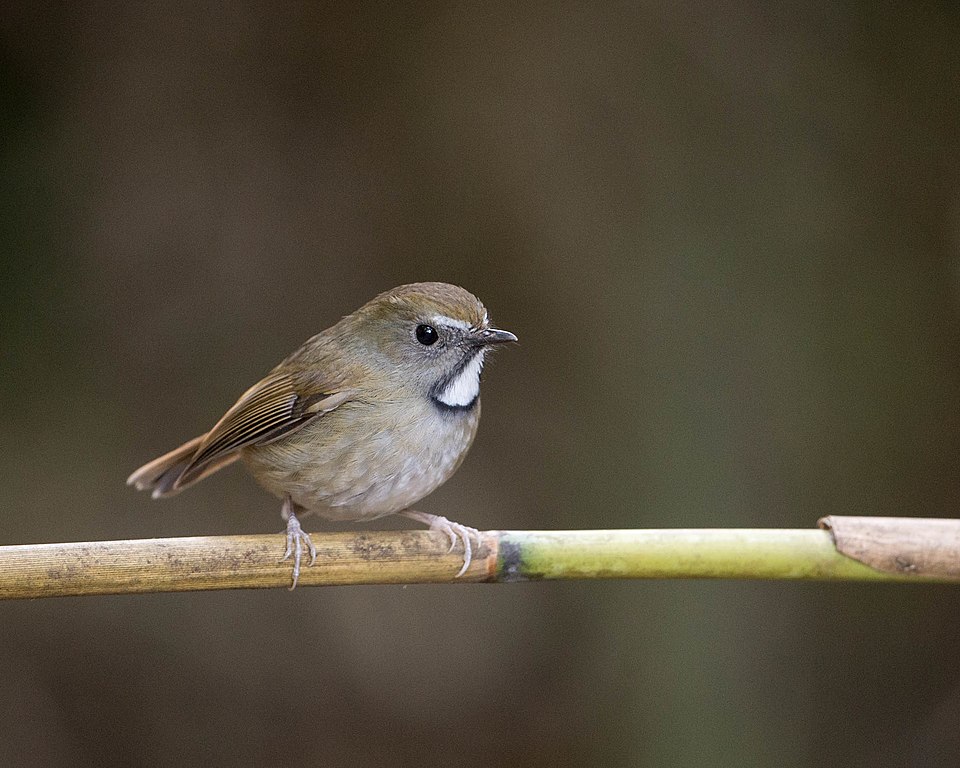
Archer's Robin-Chat
Cossypha archeri
Order: Passeriformes / Family: Muscicapidae

Wikimedia Commons
About the Archer's Robin-Chat
The Archer's Robin-Chat, scientifically known as Cossypha archeri, is a captivating songbird primarily found in the highland forests of East Africa. This bird is well-known for its vibrant orange breast, contrasting sharply with its slate-gray upperparts. Its natural habitat includes the montane forests of the Eastern Arc Mountains, particularly in countries such as Uganda, Kenya, and Tanzania. These regions provide the ideal environment of dense undergrowth and abundant insect life, which are crucial for its survival. The ecological role of the Archer's Robin-Chat is significant, as it contributes to insect population control and seed dispersal, aiding in forest regeneration.
Throughout the year, the Archer's Robin-Chat displays a series of seasonal behaviors, adapted to its high-altitude environment. During the breeding season, which coincides with the rainy months, the bird is more vocal, utilizing its melodious song to establish territories and attract mates. In contrast, during the dry season, it becomes more secretive, relying on its cryptic plumage to blend into the forest understory. Unlike many other species, the Archer's Robin-Chat does not undertake long migrations, instead moving altitudinally in response to temperature fluctuations and food availability.
The cultural significance of the Archer's Robin-Chat extends beyond its ecological role. In many local communities, its song is considered a harbinger of rain, a crucial indicator for agricultural cycles. Additionally, the bird's presence is seen as a sign of a healthy forest ecosystem, making it a symbol of environmental stewardship. Conservation efforts focus on preserving its montane forest habitat, which faces threats from logging and agricultural expansion. These efforts are vital not only for the Archer's Robin-Chat but also for the countless other species that share its habitat.
The Archer's Robin-Chat belongs to the family Muscicapidae, within the order Passeriformes. These birds typically live average 5-7 years with a maximum recorded of 9 years..
How to Identify a Archer's Robin-Chat
The Archer's Robin-Chat is a medium-sized songbird with distinctive plumage. Adults exhibit a striking orange breast that sharply contrasts with their slate-gray head and back. This vivid coloration helps birders easily identify them in dense foliage. The wings and tail are predominantly gray, with subtle white markings on the outer tail feathers visible during flight. Juveniles resemble adults but have a more muted coloration, with the orange breast appearing more buff and the gray being darker and less glossy.
Male and female Archer's Robin-Chats are similar in appearance, which can make sexing them in the field challenging. However, males tend to be slightly larger and their songs more varied and robust. In-flight, this bird displays a characteristic rounded wing shape and a relatively short tail, which differentiates it from other robin-chats. Its perching posture is upright, often with a slight forward lean, which is typical of the species when it is scanning for prey or displaying.
Confusion may arise with the similar-looking White-browed Robin-Chat (Cossypha heuglini), but the latter has a distinct white brow and a more vibrant orange extending to the belly. The Archer's Robin-Chat lacks these features, providing a reliable field mark for identification. Observers should note the bird's song and habitat, as these can further aid in distinguishing between similar species.
Having trouble telling birds apart? Upload a photo to our bird identification tool for an instant species match.
Archer's Robin-Chat Habitat and Range
Preferred Habitat
The Archer's Robin-Chat thrives in highland forest habitats, particularly in montane and submontane regions. It is typically found at elevations ranging from 1,500 to 3,200 meters, favoring areas with dense undergrowth and a rich layer of leaf litter. These forests provide the bird with ample cover and a plentiful supply of insects and other invertebrates for its diet.
In addition to primary forests, Archer's Robin-Chats can also be found in secondary forests and forest edges, where they may benefit from the influx of insect life. The species shows a preference for areas near streams and other water sources, which support a higher abundance of prey. Seasonal changes in temperature and food availability can cause the Archer's Robin-Chat to shift altitudinally, moving to lower elevations during colder months.
While primarily a forest species, the Archer's Robin-Chat can occasionally be found in more open habitats, such as gardens and plantations, particularly where these areas are adjacent to forested regions. However, it remains uncommon in highly urbanized areas, as it prefers the cover and resources provided by natural habitats.
Geographic Range
The range of the Archer's Robin-Chat is largely confined to East Africa. It breeds in the montane forests of Uganda, Kenya, and Tanzania, where it is a year-round resident. Notably, the bird is commonly found in the Eastern Arc Mountains and the Albertine Rift, both of which are biodiversity hotspots.
During the breeding season, the Archer's Robin-Chat remains within these montane forests, taking advantage of the increased insect activity that comes with the rains. Unlike many other passerines, this species does not engage in long-distance migrations. Instead, it may exhibit altitudinal movements, descending to lower elevations when temperatures drop or food becomes scarce at higher altitudes.
Population density is highest in regions where suitable forest habitat remains intact. The bird is less frequently encountered in heavily deforested areas or where human activity has significantly altered the landscape. Despite these challenges, the Archer's Robin-Chat continues to maintain stable populations in protected areas, underscoring the importance of conservation efforts in these regions.
Want to know which birds visit your area? Browse our backyard birds by location guides for region-specific species lists.
What Does the Archer's Robin-Chat Eat?
The Archer's Robin-Chat primarily feeds on insects and other small invertebrates. Its diet includes beetles, ants, caterpillars, and spiders, which it finds by foraging through leaf litter and probing into crevices in bark and foliage. This bird demonstrates a versatile foraging behavior, often seen hopping along the forest floor or making short sallies to catch flying insects.
Seasonal variations influence its diet. During the rainy season, the abundance of insect prey increases, allowing the Archer's Robin-Chat to consume a greater diversity of invertebrates. In drier months, when insects are less plentiful, the bird may supplement its diet with small fruits and seeds, particularly those from forest shrubs and trees.
Archer's Robin-Chats are primarily diurnal feeders, with peak activity occurring in the early morning and late afternoon. This feeding schedule coincides with the heightened activity of many of their prey species. Their foraging technique is methodical and often involves periods of stillness, during which they remain motionless before striking at prey. This patient approach allows them to take advantage of both stationary and moving targets.
Archer's Robin-Chat Behavior and Social Structure
The Archer's Robin-Chat is a solitary and territorial species, especially during the breeding season. Males establish territories through song, using their melodious calls to both attract females and deter rivals. These territories are fiercely defended, with males engaging in aggressive displays and vocal duels to maintain control.
Courtship involves a series of displays, where the male presents food to the female and engages in elaborate singing bouts. Once paired, the duo remains monogamous for the breeding season, often seen foraging and moving together. While generally solitary, on occasion, they may join mixed-species foraging flocks, particularly during non-breeding months.
In response to predators, the Archer's Robin-Chat exhibits a range of behaviors from alarm calls to rapid, evasive flight. When threatened, they may retreat into dense undergrowth, using their cryptic plumage as camouflage. They are most active during dawn and dusk, when they engage in foraging and territorial activities. During the heat of the day, they prefer to remain in the shade, conserving energy and avoiding predators.
Archer's Robin-Chat Nesting and Reproduction
Archer's Robin-Chats construct their nests low to the ground, often in dense undergrowth or near the base of small trees. The nest is an open cup structure, meticulously crafted from twigs, grass, and leaves, with a softer lining of feathers and moss. This construction provides both camouflage and insulation for the eggs and chicks.
The typical clutch size ranges from two to three eggs, which are pale with darker speckles. The incubation period lasts approximately 14 days, with both parents sharing responsibilities. After hatching, the chicks remain in the nest for about 14-16 days, during which they are fed a diet rich in insects provided by both parents.
Archer's Robin-Chats may raise two broods per year, particularly if conditions are favorable during the breeding season. Parental roles are well-defined, with both male and female participating in feeding and protecting the young. After fledging, the young birds stay close to the nest site, gradually gaining independence as they learn to forage on their own.
Archer's Robin-Chat Sounds and Vocalizations
The Archer's Robin-Chat is renowned for its complex and melodious song, characterized by a series of rich, fluty notes delivered in a varied sequence. The song's rhythm is fluid and the pitch often rises and falls, creating an engaging auditory experience. These vocalizations are primarily used during the breeding season for territory establishment and mate attraction.
In addition to their primary song, Archer's Robin-Chats emit a range of call notes, including soft whistles and harsher alarm calls when confronted with potential threats. Their alarm calls are sharp and short, serving as effective warnings to other birds in the vicinity.
During the dawn chorus, the Archer's Robin-Chat's song is particularly prominent, often setting the stage for the day as the forest comes alive with bird song. Its vocalizations bear a resemblance to those of other robin-chats, yet are distinct in their complexity and musicality.
Interesting Facts About the Archer's Robin-Chat
- 1The Archer's Robin-Chat's song is so melodious that it has earned the nickname 'the nightingale of the African forest' among bird enthusiasts.
- 2Unlike many songbirds, Archer's Robin-Chats do not migrate long distances but instead shift altitudinally within their range.
- 3The species was named after William Archer, a renowned ornithologist who first described it in the early 20th century.
- 4Archer's Robin-Chats have been observed using their song to mimic other bird species, a trait that enhances their vocal repertoire.
- 5The bird's orange breast not only aids in identification but also plays a role in courtship displays, attracting mates through visual cues.
- 6In some East African cultures, the song of the Archer's Robin-Chat is considered an omen of rain, linking it to local agricultural practices.
- 7Archer's Robin-Chats can live up to 10 years in the wild, a testament to their adaptability in diverse forest environments.
Archer's Robin-Chat Conservation Status
According to the IUCN Red List, the Archer's Robin-Chat is currently classified as a species of Least Concern, with stable population trends. However, the primary threats to its survival include habitat loss due to deforestation and agricultural expansion. Conservation efforts focus on protecting the montane forests that are crucial for the bird's existence. These efforts include establishing nature reserves and promoting sustainable land-use practices that benefit both wildlife and local communities. Historically, the Archer's Robin-Chat has maintained stable populations in protected areas, but continued vigilance is necessary to ensure these trends persist. Climate change poses an emerging threat, potentially altering the bird's high-altitude habitats and affecting food availability.