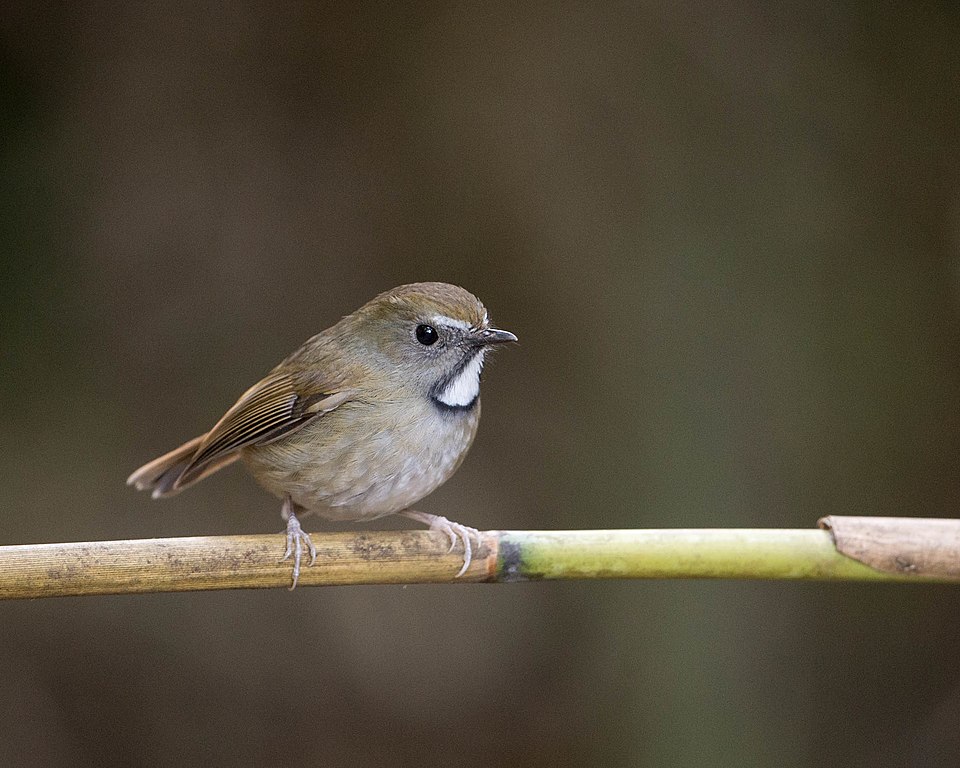
Ashy Flycatcher
Muscicapa caerulescens
Order: Passeriformes / Family: Muscicapidae

Wikimedia Commons
About the Ashy Flycatcher
The Ashy Flycatcher, scientifically named Muscicapa caerulescens, is a small bird prevalent in sub-Saharan Africa. Its ecological role is significant, primarily as a consumer of insects, which helps control pest populations. This flycatcher thrives in a variety of habitats but is most commonly found in forests and woodlands, including both dry and moist evergreen forests. It exhibits a degree of adaptability, often inhabiting areas that have been lightly disturbed by human activity. The Ashy Flycatcher is an important part of its ecosystem, serving as both predator and prey. Its presence indicates a healthy insect population, which in turn supports a balanced ecological community.
Throughout the year, the Ashy Flycatcher remains mostly sedentary, although some local movements might occur in response to food availability. Its range spans several African countries, including Kenya, Tanzania, and Zimbabwe, where it inhabits lowland and montane forests. The bird's adaptability to different forest types, from dry woodlands to riverine forests, reflects its versatile foraging strategies. By consuming a wide range of insects, the Ashy Flycatcher aids in maintaining the balance of the ecosystems it inhabits.
In terms of behavior, the Ashy Flycatcher is a diurnal species, engaging in most of its activities during the day. It is primarily insectivorous, employing a sallying flight technique to capture prey. The bird often perches quietly, scanning its surroundings before darting out to seize an insect mid-air. This method not only showcases its agility but also its keen eyesight. During the breeding season, which varies depending on the region, the Ashy Flycatcher becomes more territorial, with pairs defending their nesting sites vigorously. Its role in the ecosystem as an insect predator and its adaptability to varying forest conditions underscore its ecological importance.
The Ashy Flycatcher belongs to the family Muscicapidae, within the order Passeriformes. These birds typically live 6 years average, up to 10 years recorded.
How to Identify a Ashy Flycatcher
The Ashy Flycatcher is best recognized by its ashy gray plumage, which covers most of its body, providing effective camouflage against the forest backdrop. The underparts are slightly paler, while the wings exhibit a subtle hint of darker gray or even black, contributing to a slight contrast that aids in identification. Both males and females appear similar, making visual sex differentiation challenging without observing behavioral cues during breeding. Juveniles tend to have a browner tinge, particularly on the wings and back, which fades as they mature.
Adult Ashy Flycatchers possess a slight crest, which they occasionally raise, giving the head a more pronounced silhouette. The beak is short and slender, typical of insectivorous birds, while the legs are dark and relatively long, aiding in perching and maneuvering within dense foliage. In flight, the Ashy Flycatcher demonstrates swift, agile movements, with a flight silhouette characterized by rapid wing beats and splayed tail feathers for balance and steering.
Similar species that might cause confusion include other small gray flycatchers and certain warblers. However, the Ashy Flycatcher's consistent ashy hue and specific habitat preferences often help distinguish it from these lookalikes. The bird’s behavior of sallying forth to catch insects is another key identifying trait, setting it apart from more sedentary species.
Having trouble telling birds apart? Upload a photo to our bird identification tool for an instant species match.
Ashy Flycatcher Habitat and Range
Preferred Habitat
The Ashy Flycatcher typically inhabits forests and woodlands, including both moist and dry types. It is most frequently observed in lowland and montane forests across sub-Saharan Africa. This bird shows a particular affinity for areas with a mixture of trees and open spaces, where it can easily hunt for insects. Notable habitats include the miombo woodlands of southern Africa and the acacia savannas in eastern Africa.
Elevation-wise, the Ashy Flycatcher ranges from sea level to around 2000 meters. It tends to remain in forested areas but can also adapt to secondary growth and edges of plantations. Unlike some other species, it does not exhibit significant seasonal habitat shifts, although during dry seasons, it may move to areas where insects are more plentiful.
While it is not typically found in urban environments, the Ashy Flycatcher can sometimes be seen in parks or large gardens that mimic its natural woodland settings. Its adaptability to varying forest types, including those affected by human activity, highlights its resilience and ecological versatility.
Geographic Range
The Ashy Flycatcher is distributed widely across sub-Saharan Africa, encompassing a variety of regions with suitable habitats. It is a resident breeder from southern Kenya and Uganda, extending southward through Tanzania, Malawi, Zimbabwe, and into northern South Africa. While it does not engage in long-distance migrations, some local seasonal movements can occur, particularly in response to food availability and rainfall patterns.
In terms of population density hotspots, the bird is commonly found in the extensive miombo woodlands of Zambia and Mozambique. These areas provide an ideal mix of open spaces and dense foliage, conducive to the Ashy Flycatcher’s foraging style. Additionally, the bird is a familiar presence in the acacia-dominated regions of East Africa, such as the Serengeti.
Overall, the Ashy Flycatcher maintains a relatively stable range, with no known significant expansions or contractions in recent years. This stability can largely be attributed to its adaptability to various forest environments and its non-reliance on a specific migratory corridor.
Want to know which birds visit your area? Browse our backyard birds by location guides for region-specific species lists.
What Does the Ashy Flycatcher Eat?
The Ashy Flycatcher primarily consumes insects, making it a vital part of the ecosystem as a natural pest controller. Its diet predominantly consists of flies, beetles, and other small arthropods which it expertly catches in mid-air using a technique known as sallying. This method involves the bird launching from a perch to snatch prey with precision before returning to its vantage point.
Seasonal changes can influence the exact composition of its diet. During wetter months, when insect populations are high, the Ashy Flycatcher may increase its consumption of larger insects such as moths and grasshoppers. In drier periods, it may rely more on smaller, more abundant prey.
The Ashy Flycatcher typically forages alone or in pairs, maintaining a territory that it actively defends from other insectivores. It is most active during the early morning and late afternoon, aligning its feeding schedule with peak insect activity. This bird's reliance on a diverse range of insect prey highlights its adaptability and important role in maintaining ecological balance.
Ashy Flycatcher Behavior and Social Structure
The Ashy Flycatcher is known for its active and agile behavior, particularly during hunting. It often perches quietly, scanning for movement before launching into a swift aerial pursuit of its prey. This sallying tactic is a hallmark of its foraging strategy, demonstrating both its agility and keen vision.
Socially, the Ashy Flycatcher is relatively solitary, typically seen alone or in pairs, especially during the breeding season. It establishes and defends territories against other flycatchers and potential competitors. Courtship involves a series of displays, including fluttering flights and vocalizations that strengthen pair bonds. Once paired, the male and female work collaboratively to defend their nesting area.
In response to predators, the Ashy Flycatcher relies on its quick reflexes and ability to remain inconspicuous. It often gives a series of short, sharp calls to alert other birds of a threat. Its daily activity patterns show peaks in the morning and late afternoon, aligning with times of high insect activity. This pattern underscores its role as a diurnal insectivore, adapted to maximizing feeding efficiency during daylight hours.
Ashy Flycatcher Nesting and Reproduction
The Ashy Flycatcher constructs a cup-shaped nest, typically placed in a tree fork or on a horizontal branch, well-hidden among leaves. The nest is made from grass stems, leaves, and other plant fibers, bound together with spider webs to provide structural integrity. Lichen and moss are often used to camouflage the nest, blending it seamlessly with the surrounding foliage.
Clutch size for the Ashy Flycatcher usually ranges from two to three eggs, which are pale with darker speckles. Both parents share incubation duties, which generally last around 12-14 days. After hatching, the chicks are altricial, requiring constant care and feeding. The fledgling period extends for about 14-16 days, during which both parents actively feed and protect the young.
This species typically has one to two broods per year, depending on environmental conditions and food availability. Parental roles are fairly equitable, with both male and female contributing to feeding and protection. This cooperative breeding behavior is crucial for the survival of the young, particularly in environments where food resources can fluctuate.
Ashy Flycatcher Sounds and Vocalizations
The Ashy Flycatcher produces a distinctive song, characterized by a series of clear, melodious whistles that vary in pitch and rhythm. These songs are often repeated, serving both territorial and mate-attracting functions. The primary song has a lilting quality, comparable to a gentle flute.
In addition to its song, the Ashy Flycatcher emits sharp call notes, used to communicate with its mate or convey alarm. These calls are typically short, sharp, and repeated in quick succession. During the dawn chorus, the Ashy Flycatcher often participates actively, contributing to the symphony of sounds that mark the beginning of the day.
Alarm calls are more harsh and metallic, designed to alert other birds to potential predators. These vocalizations are crucial for maintaining communication within pairs and defending territory from intruders.
Interesting Facts About the Ashy Flycatcher
- 1The Ashy Flycatcher can catch its insect prey mid-flight, showcasing remarkable agility and precision.
- 2This bird's use of spider webs in nest construction not only strengthens the nest but also helps it blend into its surroundings.
- 3Unlike many birds, both male and female Ashy Flycatchers share in the responsibilities of incubating eggs and feeding chicks.
- 4The Ashy Flycatcher's song is often described as flute-like, with melodious whistles that vary in pitch and rhythm.
- 5Their adaptation to a wide range of forest types has allowed Ashy Flycatchers to maintain a stable population despite habitat changes.
- 6Ashy Flycatchers are often seen fluttering their wings during courtship displays, a behavior that helps strengthen pair bonds.
- 7The species' ability to thrive in both dry and moist forests makes it a versatile and resilient part of the African avifauna.
Ashy Flycatcher Conservation Status
The Ashy Flycatcher is currently listed as Least Concern by the IUCN, reflecting its stable population across sub-Saharan Africa. Despite facing localized threats such as habitat destruction and fragmentation, the bird's adaptability to various forest environments has allowed it to maintain a robust presence in its range. Population trends for the Ashy Flycatcher have remained relatively stable over recent decades. Conservation efforts focus primarily on protecting forest habitats and promoting sustainable land-use practices. These efforts aim to mitigate the impacts of deforestation and ensure the longevity of suitable habitats for the species. Historically, the Ashy Flycatcher has not experienced significant population declines, largely due to its flexible habitat requirements and insectivorous diet. The continued protection of its habitat and monitoring of population trends are essential to maintaining its conservation status.