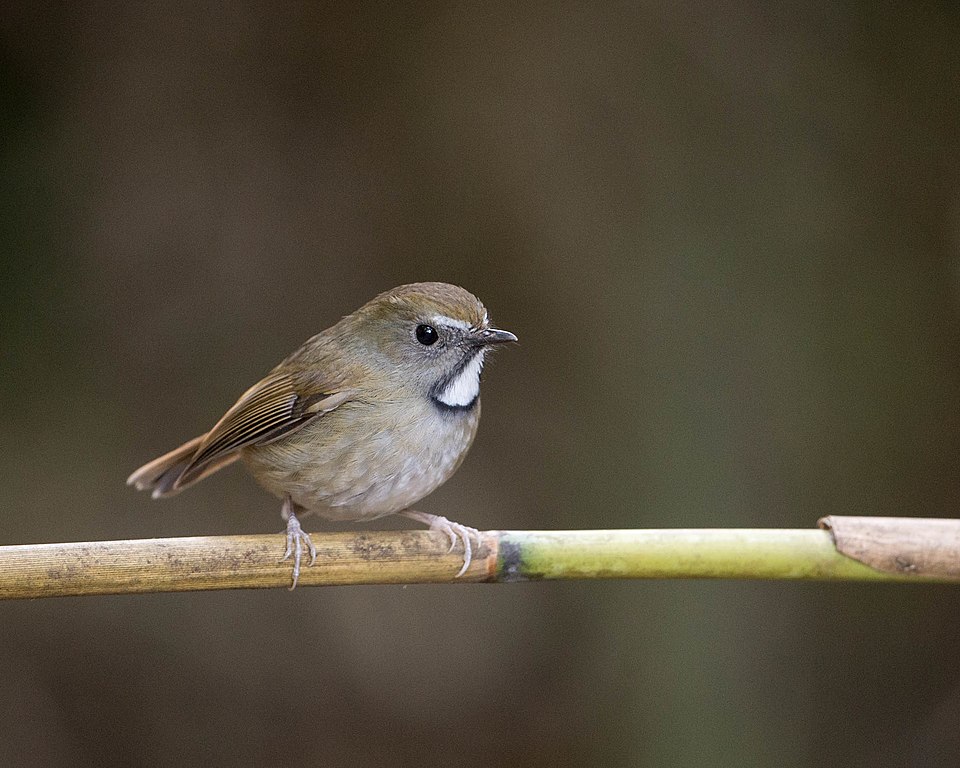
Böhm's Flycatcher
Muscicapa boehmi
Order: Passeriformes / Family: Muscicapidae

Wikimedia Commons
About the Böhm's Flycatcher
Böhm's Flycatcher (Muscicapa boehmi) is a small passerine bird belonging to the family Muscicapidae, commonly found in the miombo woodlands across southern Africa. Its habitat spans countries like Zambia, Angola, and Tanzania, where it thrives in wooded areas with a good canopy cover. This bird plays a significant role in controlling insect populations, acting as a natural pest controller within its ecosystem. Böhm's Flycatcher is not just a passive dweller of the woodlands; it actively contributes to the ecological balance by managing insect densities, thus supporting plant health in its environment. The bird exhibits a unique seasonal behavior, particularly noticeable during the breeding season when its activity level peaks. During this time, Böhm's Flycatcher becomes more vocal and visible as it engages in courtship and territorial displays. Its presence in the miombo woodlands also marks a vital part of these ecosystems, given its role in seed dispersal, albeit to a lesser degree than some other bird species. The bird's reliance on specific woodland habitats highlights the importance of these ecosystems, not only for the flycatcher but also for the myriad of species that depend on them. Böhm's Flycatcher, with its understated plumage and vital ecological role, underscores the intricate connections within these southern African habitats. As woodlands face pressures from human activities such as logging and agriculture, understanding and conserving this flycatcher becomes crucial. Its presence serves as an indicator of habitat health, providing insights into the overall status of the miombo woodlands. Thus, the significance of Böhm's Flycatcher extends beyond its immediate ecological niche, reflecting broader environmental conditions in the regions it inhabits.
The Böhm's Flycatcher belongs to the family Muscicapidae, within the order Passeriformes. These birds typically live 5 years average, up to 9 years recorded.
How to Identify a Böhm's Flycatcher
Böhm's Flycatcher is relatively small, measuring about 13 cm in length. Its plumage is predominantly gray, with subtle variations that make it blend seamlessly with its woodland surroundings. The upperparts are a uniform gray, while the underparts are paler with a slightly buffy wash on the throat and breast. Juveniles may display a more mottled appearance with spots that gradually fade as they mature. Males and females exhibit similar plumage, making visual sex differentiation difficult in the field. One distinguishing feature is its short bill, adapted for catching insects mid-flight. The bird's rounded wings and relatively long tail aid in its agile flight, crucial for its insectivorous diet. When perched, Böhm's Flycatcher often holds a slightly upright posture, frequently flicking its wings and tail. This behavior, combined with its characteristic calls, helps in identifying it among similar species. Confusion may arise with other flycatchers, such as the Dusky Flycatcher, but Böhm's Flycatcher can be distinguished by its more uniform gray coloration and specific vocalizations. Observers should note the bird's active foraging behavior and listen for its distinct calls to confirm identification.
Having trouble telling birds apart? Upload a photo to our bird identification tool for an instant species match.
Böhm's Flycatcher Habitat and Range
Preferred Habitat
Böhm's Flycatcher thrives in miombo woodlands, characterized by a mix of Brachystegia and Julbernardia trees, which provide ample cover and foraging opportunities. These woodlands primarily occur at elevations ranging from 900 to 1500 meters. The bird's presence is closely tied to these wooded habitats, where it finds the necessary resources for survival and reproduction. While it predominantly inhabits rural areas with minimal human disturbance, it can occasionally be found in woodland patches within urban landscapes, provided these areas maintain sufficient tree cover. Seasonal habitat shifts are minimal, as the bird remains a resident of the woodlands year-round. However, local movements may occur in response to food availability and breeding requirements. The preference for dense canopy cover underscores its reliance on well-preserved miombo woodlands.
Geographic Range
Böhm's Flycatcher is primarily distributed across southern Africa, with its range extending through countries like Zambia, Angola, and southwestern Tanzania. The bird's distribution is closely linked to the presence of miombo woodlands, which provide its preferred habitat. While it does not undertake long migrations, local movements may occur in response to seasonal changes in food availability and breeding conditions. The flycatcher's population density tends to be higher in areas with dense woodland cover, particularly in regions with minimal human disturbance. These population hotspots are crucial for the bird's conservation, as they provide the necessary resources for sustaining healthy populations. Monitoring these areas helps track the flycatcher's status and informs conservation strategies in southern Africa.
Want to know which birds visit your area? Browse our backyard birds by location guides for region-specific species lists.
What Does the Böhm's Flycatcher Eat?
Böhm's Flycatcher primarily feeds on insects, making it an important insectivore within the miombo woodlands. Its diet consists of a variety of flying insects, such as flies, beetles, and moths, which it catches mid-air using agile flight maneuvers. The bird employs a sit-and-wait foraging technique, perched on a branch before darting out to capture prey. This method allows it to efficiently exploit the insect-rich environment of its woodland habitat. Seasonal diet changes are minimal, as the woodlands provide a consistent supply of insects throughout the year. However, during the breeding season, the flycatcher may increase its foraging activity to meet the nutritional demands of raising chicks. Its versatile diet and effective hunting strategy highlight its adaptability and role in controlling insect populations.
Böhm's Flycatcher Behavior and Social Structure
Böhm's Flycatcher exhibits a range of behaviors that underscore its adaptability and role in its ecosystem. Socially, the bird is primarily solitary or found in pairs, especially during the breeding season when it becomes more territorial. Territorial behavior is marked by vocal displays and occasional skirmishes with intruding conspecifics. Courtship displays involve a combination of vocalizations and flight maneuvers, as males attempt to attract mates with a show of agility and vigor. The bird's daily activity patterns are largely diurnal, with foraging and other activities peaking during early morning and late afternoon. When faced with predators, Böhm's Flycatcher relies on stealth and its cryptic coloration to avoid detection. In some cases, it may employ distraction displays to protect nests and young. During non-breeding periods, the bird may join mixed-species flocks, which offers additional protection and foraging opportunities. Its behavior reflects a balance between the need for territoriality during breeding and the advantages of social interactions during other times.
Böhm's Flycatcher Nesting and Reproduction
Böhm's Flycatcher constructs its nests in well-concealed locations within the miombo woodlands, often choosing the fork of a tree or a dense bush for added protection. The nest is an intricate cup made from grasses, leaves, and spider webs, providing a secure and camouflaged environment for eggs and chicks. Clutch size typically ranges from two to three eggs, which are incubated primarily by the female. The incubation period lasts about 12 to 14 days, after which the chicks hatch and are fed by both parents. Fledging occurs approximately 14 to 17 days post-hatching, during which the young birds develop the skills needed for independent survival. Böhm's Flycatcher generally raises one brood per year, although favorable conditions may lead to a second brood. The bird's nesting habits reflect its adaptation to the woodland environment, ensuring reproductive success amidst potential threats.
Böhm's Flycatcher Sounds and Vocalizations
Böhm's Flycatcher's primary song is a series of short, sweet whistles, delivered in a rhythmic pattern that can carry through the woodland canopy. The pitch is generally high, with a clear and melodious quality, making it a distinctive sound in its habitat. Call notes are simpler, often consisting of short, sharp 'chip' sounds used for communication between mates or as an alarm. Alarm calls are more urgent and harsher, alerting nearby birds to potential threats. During the dawn chorus, Böhm's Flycatcher contributes to the woodland symphony with its song, often one of the first to be heard as day breaks. The quality of its vocalizations is reminiscent of other flycatchers, yet distinct enough to aid in identification by experienced birders.
Interesting Facts About the Böhm's Flycatcher
- 1Böhm's Flycatcher was named after German ornithologist Richard Böhm, who explored Africa in the late 19th century.
- 2This flycatcher is an adept aerial hunter, capable of catching insects mid-flight with remarkable precision.
- 3Böhm's Flycatcher contributes to the dawn chorus, a natural phenomenon where birds sing vigorously at first light.
- 4The miombo woodlands, home to Böhm's Flycatcher, are one of the largest ecoregions in Africa, spanning over 2.7 million square kilometers.
- 5Despite its non-migratory nature, Böhm's Flycatcher may undertake local movements in search of food or breeding sites.
Böhm's Flycatcher Conservation Status
Böhm's Flycatcher is currently listed as Least Concern by the IUCN, with stable population trends across its range. However, primary threats include habitat loss due to deforestation and land conversion for agriculture. Conservation efforts focus on maintaining and protecting miombo woodlands, which are crucial for the bird's survival. Habitat preservation initiatives and sustainable land management practices aim to mitigate the pressures on these ecosystems. Historical population changes have been relatively stable, but ongoing habitat threats necessitate vigilance. Engaging local communities in conservation efforts is vital for ensuring the long-term survival of Böhm's Flycatcher and the ecosystems it inhabits.