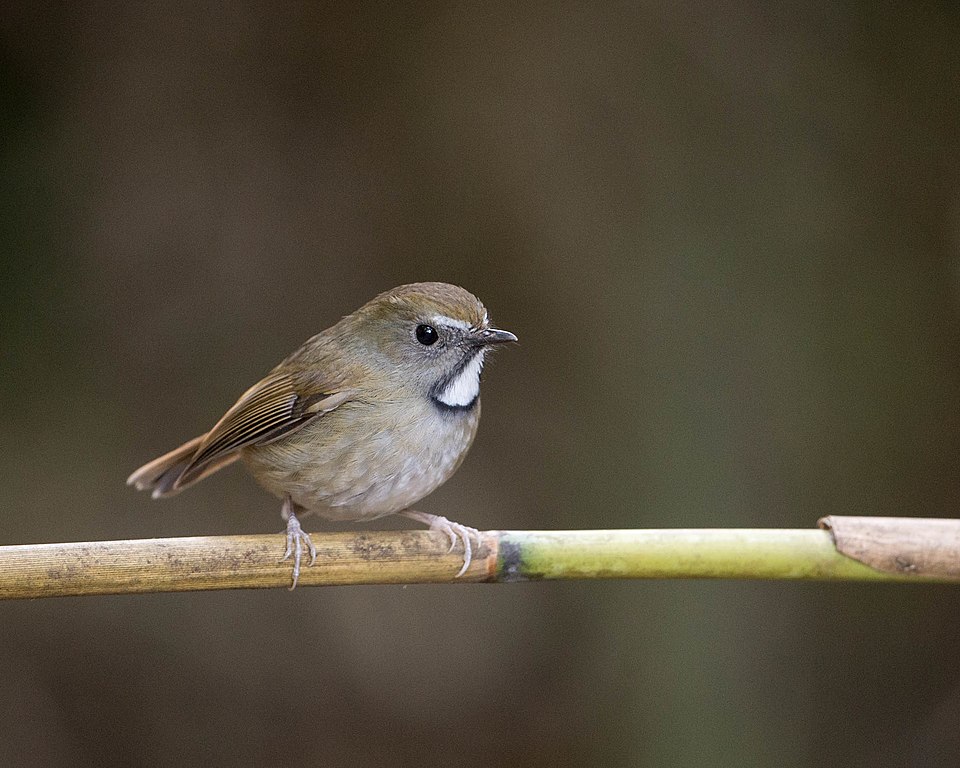
Black-backed Forktail
Enicurus immaculatus
Order: Passeriformes / Family: Muscicapidae

Wikimedia Commons
About the Black-backed Forktail
The Black-backed Forktail (Enicurus immaculatus), a striking member of the Muscicapidae family, is a small passerine bird primarily found in the montane forests of Southeast Asia. This bird is renowned for its bold black and white plumage, which makes it easily recognizable in its natural habitat. It primarily resides in countries like Bhutan, India, Myanmar, and Thailand, where it inhabits subtropical or tropical moist montane forests. Typically, the Black-backed Forktail thrives in regions with fast-flowing streams and rivers, where it forages along the banks for insects and other small invertebrates. Its presence in these ecosystems plays a critical role in maintaining the ecological balance by controlling insect populations. During the breeding season, usually occurring from April to July, these birds display increased territorial behavior, often seen chasing intruders away from their nesting sites. The seasonal behaviors of the Black-backed Forktail are closely linked to its habitat and food availability. In the monsoon season, the increased water flow in streams and rivers provides an abundance of food resources, which is critical for feeding their young. Conversely, during the dry season, the birds may need to expand their foraging range to find sufficient food. This adaptability is vital for their survival in the fluctuating environments of Southeast Asia. Over time, the Black-backed Forktail has evolved to become an integral part of the forest ecosystem, contributing to seed dispersal through its feeding habits and providing prey for larger predators. It is also seen as an indicator species, with its presence reflecting the health of the forest and stream ecosystems in which it resides. Conservation efforts have focused on preserving these natural habitats, which are essential for the survival of not only the Black-backed Forktail but also numerous other species that share these environments.
The Black-backed Forktail belongs to the family Muscicapidae, within the order Passeriformes. These birds typically live average 5-8 years, with a maximum recorded of 11 years..
How to Identify a Black-backed Forktail
The Black-backed Forktail is easily identifiable by its striking black and white coloration. The adult bird possesses a glossy black back, head, and wings contrasted sharply with its bright white underparts and broad white bars on the wings. Its long, forked tail, which is predominantly white with black edges, is a distinctive feature that aids in its identification. Juvenile Black-backed Forktails differ somewhat from adults, exhibiting a more muted plumage with brownish tones that blend into their black feathers, providing them with better camouflage against predators. Males and females are similar in appearance, though males may exhibit slightly more vibrant black coloration during the breeding season. When compared to similar species, such as the White-crowned Forktail, the Black-backed Forktail lacks the prominent white crown, making it distinguishable in the field. In flight, the Black-backed Forktail presents a unique silhouette, characterized by its long, forked tail that it often fans out. While perching, this bird maintains an upright posture, frequently flicking its tail, a behavior that aids in communication and balance.
Having trouble telling birds apart? Upload a photo to our bird identification tool for an instant species match.
Black-backed Forktail Habitat and Range
Preferred Habitat
The Black-backed Forktail inhabits dense montane forests, particularly favoring areas close to clear, fast-flowing streams and rivers. These habitats are typically found at elevations ranging from 300 to 2,000 meters above sea level. They are more common in regions that provide a mix of shaded forest canopies and open areas near water bodies, which offer a rich supply of insects and other prey. During the breeding season, the availability of secluded spots for nesting is critical, and the bird is often found in ravines or near waterfalls where there are ample nesting sites. In terms of urban versus rural presence, the Black-backed Forktail is primarily a bird of the wild, with very few sightings in urban environments. Seasonal habitat shifts are minimal, as these birds are largely sedentary, but they may move to slightly lower elevations or different areas along streams to adapt to changes in water levels and food availability during different seasons.
Geographic Range
The range of the Black-backed Forktail spans several countries in Southeast Asia, predominantly in Bhutan, northeastern India, Myanmar, and northern Thailand. It is a resident bird, meaning it does not engage in long-distance migrations. Instead, it remains within its established territory year-round, although some minor altitudinal movements may occur in response to seasonal changes in food availability. The bird's breeding range coincides with its overall distribution, with breeding activity concentrated in montane forests where suitable nesting sites and food resources are abundant. Although the Black-backed Forktail is relatively widespread within its range, population density can vary significantly depending on habitat quality and availability. In regions where forest habitats are well-preserved, such as protected areas in Bhutan and northern India, the bird is more commonly encountered.
Want to know which birds visit your area? Browse our backyard birds by location guides for region-specific species lists.
What Does the Black-backed Forktail Eat?
The Black-backed Forktail primarily feeds on a diet of insects and other small invertebrates, which it skillfully captures along the edges of streams and rivers. Common prey items include beetles, ants, and various aquatic insects. During the wet season, the abundance of food increases, allowing these birds to consume a wider variety of prey, including small crustaceans that become more accessible due to increased water flow. Foraging typically occurs during the day, with peak activity in the early morning and late afternoon when insect activity is highest. The bird employs a methodical foraging technique, often seen hopping along rocks and debris near water, flicking its tail, and carefully inspecting crevices for hidden prey. The size of the prey is generally small to medium, ensuring that it can be easily handled and consumed. In times of scarcity, the Black-backed Forktail may expand its foraging area to include forest floors further from water sources, demonstrating its adaptability in a fluctuating environment.
Black-backed Forktail Behavior and Social Structure
The Black-backed Forktail exhibits a solitary and territorial behavior, especially during the breeding season. Males are known to be fiercely protective of their territory, often engaging in vocal and physical displays to ward off intruders. These displays can include tail fanning, wing flicking, and singing. Courtship behavior involves a series of elaborate displays where the male showcases his plumage and agility, often accompanied by soft calls to attract a mate. Once paired, the bond between mates is strong, and they work collaboratively in nesting and raising their young. Outside the breeding season, Black-backed Forktails may be seen in loose association with other individuals, although they do not form large flocks. Their response to predators involves a combination of alarm calls and evasive flight, using their agile flying skills to navigate through dense forest vegetation. Daily activity patterns include foraging during the cooler parts of the day and resting in shaded areas during midday.
Black-backed Forktail Nesting and Reproduction
The nesting habits of the Black-backed Forktail involve building cup-shaped nests made from moss, leaves, and twigs, often located in crevices on stream banks or among rocks near waterfalls. These locations provide safety from predators and proximity to abundant food sources. The typical clutch size ranges from two to four eggs, with incubation carried out primarily by the female for a period of 12 to 14 days. Both parents participate in feeding the chicks once they hatch, ensuring a steady supply of food. The fledging period lasts approximately 12 to 15 days, after which the young birds leave the nest but remain under parental care for several weeks. The Black-backed Forktail typically raises one brood per year, although in optimal conditions, a second brood may occur. Parental roles are well-defined, with the male often taking on the responsibility of guarding the nest while the female focuses on nurturing the young.
Black-backed Forktail Sounds and Vocalizations
The primary song of the Black-backed Forktail is a series of clear, melodic whistles that vary in pitch and rhythm, often described as a cheerful and fluid melody. This song is most commonly heard during the breeding season when males use it to establish territory and attract mates. In addition to their song, Black-backed Forktails produce a variety of call notes, including sharp, high-pitched chips used as contact calls between mates or family members. Alarm calls are more abrupt and harsh, serving as a warning to nearby birds of potential danger. During the dawn chorus, the Black-backed Forktail contributes with its melodic song, adding to the symphony of forest sounds. These vocalizations play a critical role in communication, ensuring the bird maintains social bonds and territorial boundaries.
Interesting Facts About the Black-backed Forktail
- 1The Black-backed Forktail's distinctive tail flicking behavior is thought to help flush out prey from hiding spots.
- 2Despite its striking appearance, the Black-backed Forktail is often overlooked due to its preference for dense, shaded habitats.
- 3The bird's long tail not only aids in balance but also plays a role in communication during courtship displays.
- 4With a wingspan of approximately 20 centimeters, the Black-backed Forktail is a nimble flyer, adept at navigating dense forest canopies.
- 5Black-backed Forktails can adapt their foraging strategies based on seasonal prey availability, showcasing their ecological versatility.
- 6The bird's melodic song is an essential part of the dawn chorus in its montane forest habitat, contributing to the local soundscape.
- 7The Black-backed Forktail's presence is often an indicator of healthy montane stream ecosystems, reflecting the biodiversity of the area.
Black-backed Forktail Conservation Status
The Black-backed Forktail is currently listed as a species of Least Concern by the IUCN, with a stable population trend. However, habitat loss due to deforestation and changes in land use poses a significant threat to its natural environment. Conservation efforts focus on preserving the montane forest habitats essential for the survival of this species. Protected areas and national parks in countries like Bhutan and India play a crucial role in safeguarding these birds by maintaining the integrity of their habitats. Historically, the Black-backed Forktail has adapted to a range of environmental conditions, but ongoing habitat degradation could impact future population stability. Continued habitat preservation and sustainable land management practices are vital for ensuring the long-term survival of this unique bird.