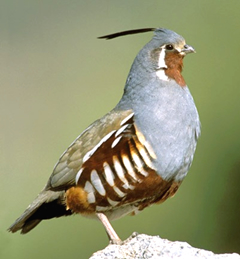
Black-eared Wood-Quail
Odontophorus melanotis
Order: Galliformes / Family: Odontophoridae

Wikimedia Commons
About the Black-eared Wood-Quail
The Black-eared Wood-Quail, Odontophorus melanotis, is a striking bird found primarily in the dense montane forests of Central America. This species belongs to the family Odontophoridae, which includes other New World quails. Known for its elusive nature, the Black-eared Wood-Quail is often heard rather than seen, as it tends to stay hidden in the thick underbrush. These birds play a significant role in their ecosystem as they help disperse seeds through their foraging activities. Inhabiting a range that includes countries such as Costa Rica, Panama, and extending into parts of Nicaragua, the Black-eared Wood-Quail is well adapted to the humid, tropical climates of these regions. Typically found at elevations ranging from 800 to 2500 meters, this bird prefers cloud forests where the canopy provides ample cover from predators. During the rainy season, their activities may become more subdued, with less vocalization as the forest becomes more lush and food more abundant. The Black-eared Wood-Quail contributes to the ecological balance by controlling insect populations and assisting in the propagation of plant species, thanks to its varied diet. Their presence indicates a healthy forest ecosystem, making them important indicators for conservationists monitoring habitat health. Despite their natural shyness, these birds are known to be quite social within their family groups, often foraging and moving through the forest together. Seasonal behaviors include forming larger coveys during the breeding season, which increases their chances of survival and reproductive success. While the Black-eared Wood-Quail is not currently considered threatened, habitat loss due to deforestation remains a significant concern. Conservation efforts focus on preserving their natural habitats to ensure these birds continue to thrive.
The Black-eared Wood-Quail belongs to the family Odontophoridae, within the order Galliformes. These birds typically live typically 5-8 years, with some individuals living up to 10 years..
How to Identify a Black-eared Wood-Quail
The Black-eared Wood-Quail is a medium-sized bird, typically measuring between 25 to 30 centimeters in length. Its plumage features a rich array of colors, including brown and black, which helps it blend seamlessly into the forest floor. The most notable characteristic is the black ear patch that contrasts sharply with its otherwise brown face, a key identifier when spotting this bird in the wild. Adult males and females are similar in appearance, making sex differentiation challenging without close observation. Juveniles, however, exhibit a duller plumage with less distinct markings compared to adults, which gradually become more pronounced as they mature. When observing the bird in flight, its silhouette is compact with rounded wings, typical of ground-dwelling quails that engage in short, rapid flights. Its perching posture is often low to the ground, staying close to the cover of underbrush, which can make detection difficult. When compared to similar species, such as the Spotted Wood-Quail, the Black-eared Wood-Quail's distinct ear patch is a reliable field mark.
Having trouble telling birds apart? Upload a photo to our bird identification tool for an instant species match.
Black-eared Wood-Quail Habitat and Range
Preferred Habitat
The Black-eared Wood-Quail predominantly inhabits tropical and subtropical montane forests, thriving in the dense undergrowth of these regions. It is most commonly found in cloud forests, where the cool, moist environment supports a rich diversity of flora and fauna. These birds prefer elevations between 800 and 2500 meters, where they can find ample cover and food resources. The habitat preferences of the Black-eared Wood-Quail do not typically include urban or heavily disturbed areas, as they require dense vegetation for foraging and protection. During different seasons, they may move slightly in elevation to follow food availability, but they largely remain within their montane forest habitats. The preservation of these forested areas is crucial, as the species is highly sensitive to habitat disturbance and loss.
Geographic Range
The range of the Black-eared Wood-Quail extends across several Central American countries, including Costa Rica, Panama, and parts of Nicaragua. This species is non-migratory, residing year-round in its preferred montane forest habitats. In Costa Rica, it is often found in protected areas such as the Monteverde Cloud Forest Reserve and the Braulio Carrillo National Park, where conservation efforts help maintain its habitat. In Panama, they are frequently observed in the highland regions such as the Chiriquí Highlands. While the Black-eared Wood-Quail does not undertake long migrations, it may exhibit minor altitudinal movements in response to seasonal changes in food availability. Population density can be higher in undisturbed, mature forests where human activity is minimal.
Want to know which birds visit your area? Browse our backyard birds by location guides for region-specific species lists.
What Does the Black-eared Wood-Quail Eat?
The Black-eared Wood-Quail has an omnivorous diet, primarily feeding on seeds, fruits, and a variety of small invertebrates. Seasonal variations in food availability influence their diet, with an increased consumption of seeds and nuts during the dry season when other food sources are scarce. Foraging typically occurs on the forest floor, where they scratch through leaf litter in search of food. They may also consume small insects and larvae, which provide essential proteins. The bird's diet plays a critical role in seed dispersal, aiding in the regeneration of forest plants. Feeding usually occurs during the early morning and late afternoon, which are the cooler parts of the day, allowing these birds to avoid peak temperatures and potential predators.
Black-eared Wood-Quail Behavior and Social Structure
The Black-eared Wood-Quail is known for its social and secretive nature, often forming small family groups or coveys. These coveys usually consist of the breeding pair and their offspring, providing safety in numbers as they forage through the underbrush. Territorial behavior is evident during the breeding season, with males establishing territories through vocal displays and physical presence. Courtship involves a combination of vocalizations and subtle displays, where the male may perform a series of calls to attract a mate. Flocking behavior can vary seasonally, with larger groups forming outside the breeding season, possibly to increase foraging efficiency and predator vigilance. The Black-eared Wood-Quail is generally diurnal, being most active during the cooler parts of the day. When threatened, they prefer to run rather than fly, relying on their camouflage and speed to escape predators. Alarm calls are used to alert the group of potential danger, prompting a rapid retreat to dense cover.
Black-eared Wood-Quail Nesting and Reproduction
The nesting habits of the Black-eared Wood-Quail involve selecting hidden locations on the forest floor, often beneath dense vegetation or fallen logs. Nests are shallow depressions lined with leaves and other plant materials, providing a soft, insulated environment for the eggs. A typical clutch consists of 4 to 8 eggs, which are incubated by the female for approximately 18 to 20 days. Both parents may assist in caring for the chicks, which are precocial and leave the nest soon after hatching. Fledging occurs relatively quickly, as the young birds need to learn essential survival skills. Generally, Black-eared Wood-Quails produce one brood per year, but favorable conditions might allow for a second brood.
Black-eared Wood-Quail Sounds and Vocalizations
The vocalizations of the Black-eared Wood-Quail are distinct and often heard before the bird is seen. Its primary song is a series of rhythmic, resonant whistles that carry through the dense forest, serving as a territorial marker and a means of communication between covey members. Call notes are shorter, more abrupt, and are often used during foraging to keep the group cohesive. Alarm calls are sharp and urgent, designed to alert others in the group of nearby danger. During the dawn chorus, the Black-eared Wood-Quail's calls blend with those of other forest inhabitants, creating a rich tapestry of sound that signifies the start of a new day.
Interesting Facts About the Black-eared Wood-Quail
- 1The Black-eared Wood-Quail is known for its ability to run swiftly, preferring to escape predators on foot rather than by flying.
- 2Despite being elusive, the Black-eared Wood-Quail's calls are loud and carry well through the forest, often betraying its presence.
- 3These birds are monogamous, forming long-term pair bonds that last for several breeding seasons.
- 4The diet of the Black-eared Wood-Quail includes a variety of seeds, contributing to the dispersal of several plant species.
- 5They are more often heard than seen due to their secretive nature and preference for dense forest habitats.
- 6During the breeding season, males perform a unique call to establish and defend their territory.
- 7The species' preference for dense underbrush makes it an important indicator of forest health.
Black-eared Wood-Quail Conservation Status
The Black-eared Wood-Quail is currently classified as 'Least Concern' by the IUCN, but its populations face pressures from habitat destruction and fragmentation, primarily due to deforestation for agriculture and development. Though stable in protected areas, populations outside these regions are vulnerable to further decline. Conservation efforts focus on habitat preservation, particularly in key areas like Costa Rica's national parks. Historical changes in population have been influenced by land use practices, but increased awareness and the establishment of protected areas have contributed to more stable conditions in recent years.