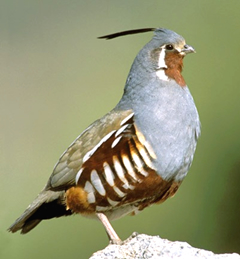
Black-fronted Wood-Quail
Odontophorus atrifrons
Order: Galliformes / Family: Odontophoridae

Wikimedia Commons
About the Black-fronted Wood-Quail
The Black-fronted Wood-Quail (Odontophorus atrifrons) is a captivating bird native to the cloud forests of the northern Andes, primarily found in Colombia and Venezuela. This species, belonging to the family Odontophoridae, plays a significant role in the undergrowth of these dense forests, contributing to seed dispersal and acting as both predator and prey in its ecosystem. The Black-fronted Wood-Quail thrives in subtropical and tropical montane forests, where it navigates the thick underbrush with remarkable agility. These forests provide a refuge that supports a variety of flora and fauna, and the presence of the Black-fronted Wood-Quail indicates a healthy, biodiverse habitat. The species is non-migratory, remaining within its montane habitat year-round. However, its activities and behaviors can vary seasonally. During the breeding season, the Black-fronted Wood-Quail becomes particularly vocal, establishing territories and engaging in courtship displays. In contrast, during the non-breeding season, it may be slightly less conspicuous, although it remains an integral part of the forest's acoustic landscape. The ecological role of the Black-fronted Wood-Quail extends beyond its immediate environment. By foraging on seeds, insects, and small invertebrates, it helps control insect populations and promotes forest regeneration through seed dispersal. Its ground-dwelling habits contribute to the aeration and turnover of the forest floor, enhancing soil fertility. The species' interactions with other forest inhabitants, including predators such as raptors and small mammals, underscore its importance in the food web. Preservation of its habitat ensures the continued ecological balance in these montane ecosystems, highlighting the need for conservation efforts that safeguard both the Black-fronted Wood-Quail and its environment.
The Black-fronted Wood-Quail belongs to the family Odontophoridae, within the order Galliformes. These birds typically live average 5-7 years, with a max recorded of 10 years.
How to Identify a Black-fronted Wood-Quail
The Black-fronted Wood-Quail is a medium-sized bird with a robust body and a predominantly brown plumage, which provides excellent camouflage in the forest undergrowth. The most distinctive feature of this species is its striking black facial mask, which extends over the forehead and around the eyes, providing a vivid contrast to its otherwise subdued coloration. The rest of the head and neck are grayer, while the breast and belly display a pattern of fine barring. Adult males and females are similar in appearance, though males might exhibit slightly brighter markings. Juvenile Black-fronted Wood-Quails are generally duller and lack the pronounced black mask seen in adults, which can make them slightly more challenging to identify. In terms of size, the Black-fronted Wood-Quail measures approximately 25 to 30 centimeters in length. It has a short tail and powerful legs, adapted for its terrestrial lifestyle. While its plumage is primarily designed for camouflage, the species' confident foraging behavior often betrays its presence. In flight, the Black-fronted Wood-Quail displays a rapid, whirring wingbeat, but it typically prefers to run rather than fly when startled.
Having trouble telling birds apart? Upload a photo to our bird identification tool for an instant species match.
Black-fronted Wood-Quail Habitat and Range
Preferred Habitat
The Black-fronted Wood-Quail inhabits montane cloud forests in the Andes, thriving at elevations ranging from 1,500 to 3,000 meters. These habitats are characterized by high humidity, dense canopy cover, and rich biodiversity. The undergrowth, where the quail primarily resides, offers ample cover and foraging opportunities. Seasonal shifts in rainfall and temperature can slightly alter the availability of food resources, but the species generally remains within the same habitat year-round. Unlike some other quail species, the Black-fronted Wood-Quail tends to avoid open areas and is rarely found in urban settings, preferring the seclusion of thick forest areas. These montane forests are crucial not only for the Black-fronted Wood-Quail but also for a multitude of other species, making their conservation a priority in both Colombia and Venezuela.
Geographic Range
The Black-fronted Wood-Quail is endemic to the northern Andes, with its range primarily encompassing parts of Colombia and western Venezuela. In Colombia, it inhabits the Andean mountain ranges, including the Central and Eastern Cordilleras. In Venezuela, it is found in the Sierra de Perijá and other highland areas. The species does not migrate, maintaining a relatively stable presence in these regions year-round. Population density can be higher in areas with undisturbed forests, as these provide the ideal conditions for nesting, foraging, and shelter. Despite its limited range, the Black-fronted Wood-Quail is not considered migratory, and its movements are largely confined to local areas within its habitat, dictated by the availability of food and nesting sites.
Want to know which birds visit your area? Browse our backyard birds by location guides for region-specific species lists.
What Does the Black-fronted Wood-Quail Eat?
The diet of the Black-fronted Wood-Quail is predominantly composed of seeds, fruits, insects, and small invertebrates. This omnivorous diet allows the bird to exploit a variety of food sources depending on seasonal availability. During the wet season, when insect activity is high, the quail consumes a greater proportion of insects and larvae, which are rich in protein. In contrast, during drier periods, seeds and fruits become more prominent in its diet. The quail forages primarily on the forest floor, using its strong legs and beak to scratch through leaf litter and soil. This foraging technique not only provides sustenance but also plays a role in the ecological processes of the forest, such as seed dispersal and soil turnover. The Black-fronted Wood-Quail typically feeds in small family groups, which can increase foraging efficiency and reduce the risk of predation.
Black-fronted Wood-Quail Behavior and Social Structure
The Black-fronted Wood-Quail exhibits a fascinating range of social and territorial behaviors. It is typically found in coveys, small family groups that consist of a breeding pair and their offspring. These coveys maintain territories that they defend vigorously through vocalizations and displays. The species is known for its distinctive calls, which serve both to communicate with covey members and to warn intruders of their presence. During the breeding season, males engage in elaborate courtship displays to attract females, which can include vocalizations and physical demonstrations of fitness. Flocking behavior is also observed, particularly in response to predators. When threatened, the covey will often scatter, using the dense undergrowth for cover before regrouping once the danger has passed. The Black-fronted Wood-Quail is diurnal, with most of its activities, including foraging and social interactions, occurring during daylight hours. At night, it roosts in the lower branches of trees or dense shrubs to avoid ground-dwelling predators.
Black-fronted Wood-Quail Nesting and Reproduction
The nesting habits of the Black-fronted Wood-Quail reflect its adaptation to the forest floor. Nests are typically shallow depressions lined with leaves, grasses, and other plant materials, providing camouflage and insulation. These nests are usually situated in concealed locations under dense vegetation or at the base of trees to protect against predators. A typical clutch consists of 4 to 6 eggs, which are incubated primarily by the female for about 18 to 21 days. Both parents participate in rearing the chicks, which are precocial and leave the nest shortly after hatching. The fledging period is relatively short, with chicks becoming increasingly independent over a few weeks. The Black-fronted Wood-Quail typically raises one or two broods per year, depending on food availability and environmental conditions.
Black-fronted Wood-Quail Sounds and Vocalizations
The vocalizations of the Black-fronted Wood-Quail are an essential aspect of its communication and social structure. Its primary song is a series of clear, whistling notes that can be described as rhythmic and melodious. These calls are often heard at dawn and dusk, marking territory and maintaining contact within the covey. Alarm calls are shorter and sharper, serving to alert members of the group to potential threats. The dawn chorus of the Black-fronted Wood-Quail is a notable feature of its habitat, contributing to the acoustic tapestry of the Andean forests. The calls can be compared to those of other quail species but are distinct enough to be recognizable to experienced birders.
Interesting Facts About the Black-fronted Wood-Quail
- 1The Black-fronted Wood-Quail's black facial mask distinguishes it from other wood-quail species.
- 2Despite being a ground-dweller, the Black-fronted Wood-Quail can fly short distances when necessary.
- 3The species' strong legs are adapted for scratching through leaf litter in search of food.
- 4The Black-fronted Wood-Quail's call is often one of the first sounds heard at dawn in its habitat.
- 5With a range restricted to the Andes, this quail is a true endemic of the South American montane forests.
- 6The quail's covey structure helps reduce predation risk and improves foraging success.
- 7The Black-fronted Wood-Quail contributes to seed dispersal, aiding forest regeneration.
Black-fronted Wood-Quail Conservation Status
Classified as 'Near Threatened' by the IUCN, the Black-fronted Wood-Quail faces several conservation challenges. Habitat loss due to deforestation, agriculture, and human encroachment poses the most significant threat to its populations. Conservation efforts focus on preserving the montane cloud forests in Colombia and Venezuela, which are crucial for the species' survival. Although comprehensive population data are lacking, the species is believed to have experienced declines in some areas due to habitat degradation. Protected areas and reserves play a critical role in conserving its habitat, and continued efforts are necessary to ensure the long-term viability of the Black-fronted Wood-Quail.