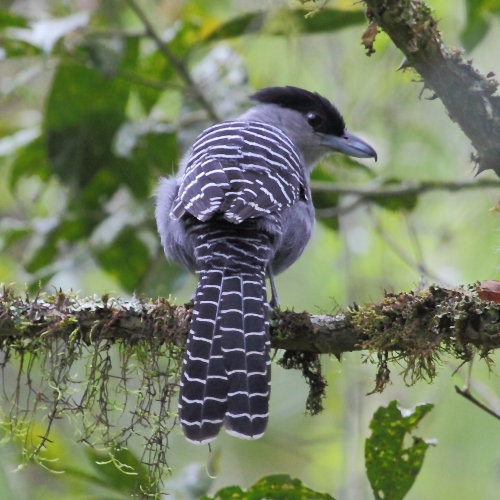
Black-hooded Antshrike
Thamnophilus bridgesi
Order: Passeriformes / Family: Thamnophilidae
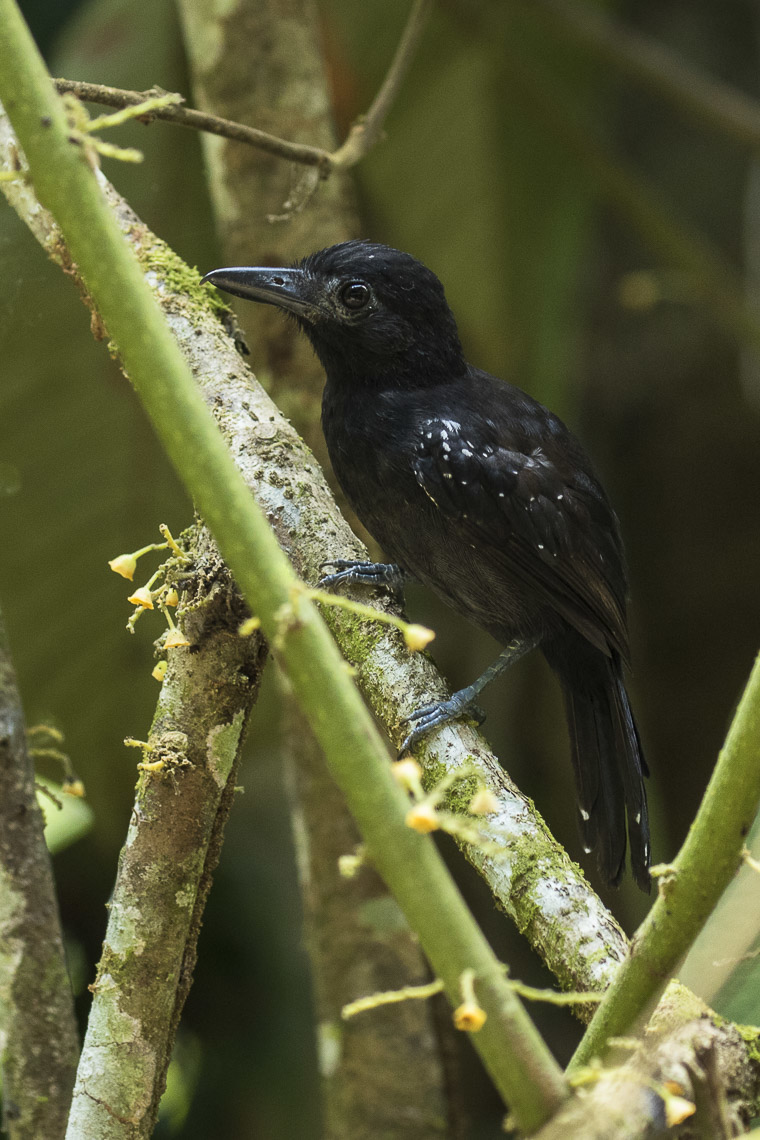
Wikimedia Commons
About the Black-hooded Antshrike
The Black-hooded Antshrike, scientifically known as Thamnophilus bridgesi, is a fascinating bird native to the humid lowland forests of Central America, primarily found in countries like Costa Rica and Panama. This bird plays a critical role in maintaining the ecological balance in its habitat, primarily through its insectivorous diet, which helps control insect populations. The species thrives in dense, tropical forests, often inhabiting the understory and mid-levels of the canopy, where it is both a predator and prey. Its presence indicates a healthy forest ecosystem, as it relies on the rich biodiversity offered by these environments.
This antshrike is a non-migratory species, meaning it resides in its habitat year-round, showing minor seasonal changes in behavior. During the breeding season, which typically extends from March to August, males engage in territorial displays to ward off rivals and attract mates. The Black-hooded Antshrike's role extends beyond predation, as it also serves as prey for larger birds of prey and mammals, thereby contributing to the forest's complex food web.
In terms of significance, the Black-hooded Antshrike is an essential indicator species. Its health and population trends reflect the broader environmental conditions of its habitat. Conservationists monitor this bird to gather data on forest health and biodiversity. The Black-hooded Antshrike also holds importance among bird watchers, given its distinctive appearance and vocalizations. Its presence in ecotourism areas in Costa Rica and Panama highlights its role in promoting environmental awareness and conservation-focused tourism.
The Black-hooded Antshrike belongs to the family Thamnophilidae, within the order Passeriformes. These birds typically live average 4-5 years, maximum recorded 7 years..
How to Identify a Black-hooded Antshrike
The Black-hooded Antshrike is easily identified by its striking sexual dimorphism. Males display a prominent black hood covering their head, throat, and upper chest, which contrasts with their gray body. Females, in contrast, have a rich brown head and upper parts, with a lighter chestnut color on their underparts. Both sexes possess a distinctive stout bill adapted for capturing insects. Juvenile birds resemble females but have a more subdued coloration.
In terms of behavior, the antshrike often perches with a slightly hunched posture, which is characteristic of the Thamnophilidae family. When in flight, the bird shows a rounded wing silhouette, generally staying low to the ground as it moves through the dense forest understory. This flight pattern helps avoid predation and allows for effective foraging.
Confusion may arise with similar species like the Barred Antshrike (Thamnophilus doliatus), which shares some habitat range. However, the Barred Antshrike has distinct barring patterns across its body, offering a clear distinction. The Black-hooded Antshrike's lack of barring and its distinctive hood is a reliable field mark for identification in the wild.
Having trouble telling birds apart? Upload a photo to our bird identification tool for an instant species match.
Black-hooded Antshrike Habitat and Range
Preferred Habitat
The Black-hooded Antshrike primarily inhabits the humid lowland forests of Central America, with a preference for dense understory and mid-levels of the canopy. This habitat choice offers ample cover from predators and a rich supply of insects. The bird is most commonly found at elevations ranging from sea level to about 1,200 meters.
Although the Black-hooded Antshrike is not typically found in urban environments, it may occasionally be observed in forested areas adjacent to human settlements, particularly those that maintain a high degree of native vegetation. Seasonal habitat shifts are minimal, as the species is largely sedentary, but it may move slightly within the forest to exploit changes in insect abundance.
The presence of a healthy population of Black-hooded Antshrikes often indicates a well-preserved forest ecosystem. Conservation efforts focus on maintaining these critical habitats, especially in regions experiencing deforestation pressures.
Geographic Range
The Black-hooded Antshrike's range is confined to specific parts of Central America, notably in the Pacific lowlands of Costa Rica and western Panama. It is not a migratory bird, so it does not undertake long-distance seasonal movements. Instead, it remains within these regions throughout the year.
In terms of breeding range, it occupies the same areas, utilizing the abundant resources offered by these tropical forests. The bird's preference for dense understory and mid-level canopy layers means it is more often heard than seen, although it is relatively common within its range.
Population density hotspots for the Black-hooded Antshrike are typically located in regions where forest cover remains intact. Such areas include protected national parks and reserves in Costa Rica, like Corcovado National Park, where conservation efforts ensure the stability of these vital ecosystems.
Want to know which birds visit your area? Browse our backyard birds by location guides for region-specific species lists.
What Does the Black-hooded Antshrike Eat?
Primarily insectivorous, the Black-hooded Antshrike feeds on a diverse diet of insects and their larvae, including beetles, ants, and caterpillars. During the wet season, when insect populations surge, the antshrike takes advantage by increasing its intake to meet energy demands, especially during the breeding period.
Its foraging technique involves gleaning insects from foliage and branches, often working through the understory with meticulous precision. The bird employs a sit-and-wait strategy, perching quietly before making quick, darting movements to capture prey.
While insects constitute the majority of its diet, the Black-hooded Antshrike occasionally supplements its intake with small invertebrates like spiders. This dietary flexibility helps the bird adapt to seasonal variations in prey availability, ensuring its survival in the dynamic forest environment.
Black-hooded Antshrike Behavior and Social Structure
The Black-hooded Antshrike exhibits a complex social structure, often seen in pairs or small family groups. During the breeding season, males become highly territorial, engaging in aggressive displays and vocalizations to defend their territory from rivals. These displays include puffing out their plumage and calling loudly to assert dominance.
Courtship behavior involves the male performing a series of calls and displays to attract a mate, often presenting food items as part of the ritual. Once paired, the birds maintain a strong bond, working together to rear their young.
Flocking behavior is uncommon for the Black-hooded Antshrike, as they prefer to remain in small, family-centric groups. In response to predators, these birds utilize alarm calls to alert others of danger. Their daily activity pattern peaks in the early morning and late afternoon, aligning with the periods of highest prey activity.
Black-hooded Antshrike Nesting and Reproduction
The Black-hooded Antshrike constructs a cup-shaped nest made from twigs, leaves, and fibers, strategically placed in the dense understory to offer protection from predators. Nests are typically located 1 to 3 meters off the ground, securely positioned in the fork of a tree or shrub.
Clutch size generally consists of two to three eggs, which are incubated by both parents for approximately 14 to 16 days. The eggs are often pale with brownish spots, providing some camouflage against the nest's natural materials.
After hatching, the young remain in the nest for about 12 to 14 days, during which both parents actively feed and protect them. The Black-hooded Antshrike usually raises one to two broods per year, depending on food availability and environmental conditions. Parental roles are shared equally, with both male and female contributing to feeding and nurturing the chicks.
Black-hooded Antshrike Sounds and Vocalizations
The Black-hooded Antshrike produces a distinctive song characterized by a series of rapid, descending notes that can be described as a rolling trill. This song serves both to communicate with mates and to establish territory boundaries. The pitch is moderately high, and the quality is clear and melodious, making it a pleasant addition to the forest soundscape.
Their call notes are sharp and short, often used to maintain contact between pairs or to signal alarm. During the dawn chorus, the Black-hooded Antshrike is one of the first to sing, its voice carrying through the dense forest as daylight breaks.
Alarm calls are notably harsher, serving as a warning to nearby birds of approaching threats. These calls are more abrupt and less musical, reflecting the urgency of the situation.
Interesting Facts About the Black-hooded Antshrike
- 1The Black-hooded Antshrike is part of the Thamnophilidae family, which includes over 230 species primarily found in the Neotropics.
- 2Unlike many bird species, Black-hooded Antshrikes exhibit strong monogamous pair bonds, often staying with the same mate for several breeding seasons.
- 3Their diet primarily consists of insects, making them vital for controlling pest populations in their forest habitats.
- 4Black-hooded Antshrikes are known for their ability to remain motionless for extended periods, a tactic that aids in both hunting and avoiding predators.
- 5The species name, bridgesi, honors the naturalist Thomas Bridges, who extensively studied South American flora and fauna in the 19th century.
Black-hooded Antshrike Conservation Status
The Black-hooded Antshrike is currently listed as Least Concern by the IUCN, indicating a stable population. However, habitat destruction poses a significant threat to its long-term survival. Deforestation for agriculture and urban development in Central America has led to habitat fragmentation, which could impact future population trends. Conservation efforts focus on preserving and restoring forest habitats, particularly in key regions within Costa Rica and Panama. Protected areas and national parks play a critical role in safeguarding the natural environments required by the Black-hooded Antshrike. Historically, populations have remained stable, but ongoing monitoring is essential to detect any potential declines that may arise from increased human activity. Conservationists advocate for sustainable land-use practices to ensure the preservation of these vital forest ecosystems.