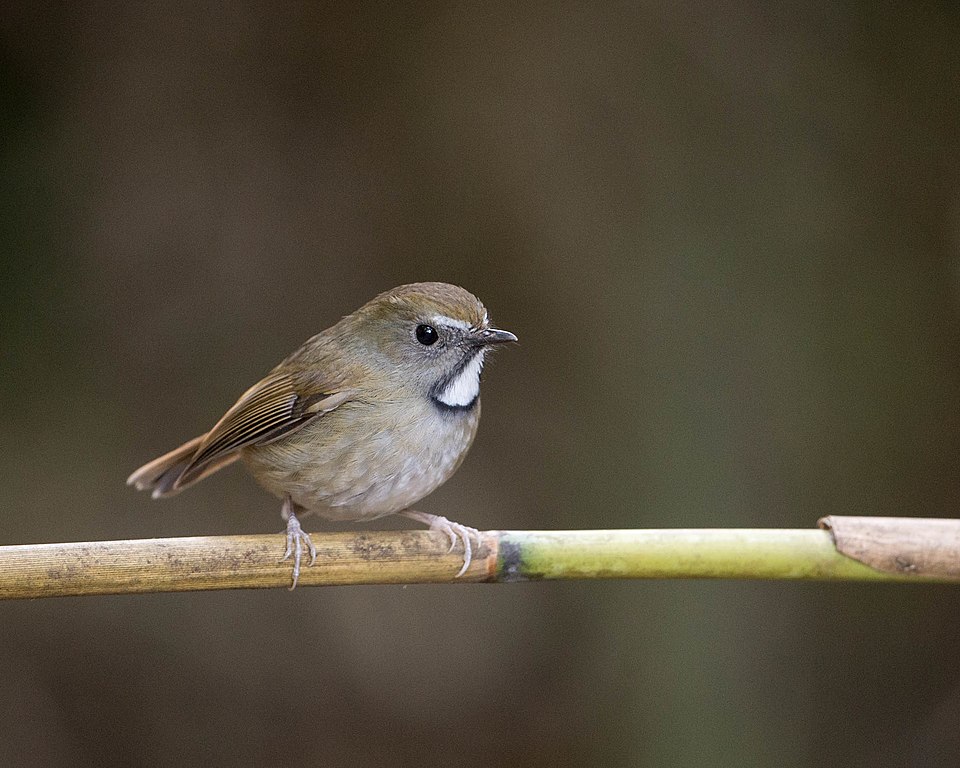
Bornean Forktail
Enicurus borneensis
Order: Passeriformes / Family: Muscicapidae

Wikimedia Commons
About the Bornean Forktail
The Bornean Forktail (Enicurus borneensis) is a captivating bird endemic to the island of Borneo. This species is a member of the family Muscicapidae and is best known for its distinctive black and white plumage, which provides excellent camouflage among the dappled light of its streamside habitats. The Bornean Forktail is primarily found in the montane forests of the Crocker Range and the Kinabalu National Park, two notable regions that boast rich biodiversity and provide the ideal environmental conditions for this bird. As an insectivore, the Bornean Forktail plays a crucial role in controlling insect populations, making it an integral part of the forest ecosystem. This bird contributes to the ecological balance by preying on aquatic and terrestrial insects, which helps maintain the health of the forest understory.
Bornean Forktails are typically solitary or found in pairs, showcasing a preference for fast-flowing streams and rivers where they forage for food. Their presence is an indicator of healthy, unpolluted waterways, making them a key species for environmental monitoring. The Bornean Forktail also exhibits seasonal variations in behavior, with some movement to lower elevations during the rainy season when high-altitude streams become more turbulent. This seasonal altitudinal migration ensures that they can access food resources year-round without facing the risks posed by high floodwaters.
The Bornean Forktail's ecological role extends beyond insect population control; it also contributes to seed dispersal. This occurs indirectly when the bird disturbs the forest floor while foraging, aiding in the germination of various plant species. Their unique foraging technique, which involves darting movements and tail flicking, not only assists in capturing prey but also contributes to soil aeration. The presence of the Bornean Forktail in Borneo's montane forests is a testament to the island's rich biodiversity and the intricate interdependencies within its ecosystems.
The Bornean Forktail belongs to the family Muscicapidae, within the order Passeriformes. These birds typically live average 5-7 years, with a maximum recorded of 10 years..
How to Identify a Bornean Forktail
The Bornean Forktail is easily identifiable by its striking black and white coloration. Adult birds feature a glossy black head and upperparts, contrasting sharply with their white underparts and the distinctive white bar across their wings. Their long, slightly forked tail, which is predominantly black with white tips, is a key feature that aids in identification. This tail is often flicked up and down, a behavior characteristic of forktails. Juveniles resemble adults but have a slightly duller coloration and may exhibit more browning on the back.
Sexual dimorphism is minimal in Bornean Forktails, with males and females appearing similar in plumage. However, during the breeding season, females may exhibit slightly paler underparts. In flight, the Bornean Forktail's silhouette is marked by its long tail and rapid wingbeats, which distinguish it from other forest birds. When perched, it displays an upright posture and can often be seen near the water's edge, scanning for insects.
The Bornean Forktail may be confused with the similar-looking White-crowned Forktail (Enicurus leschenaulti), which also inhabits Southeast Asia. However, the White-crowned Forktail is distinguishable by its white crown and broader white wing bars, traits absent in the Bornean Forktail. The latter's preference for higher elevations further helps in differentiating between the two species.
Having trouble telling birds apart? Upload a photo to our bird identification tool for an instant species match.
Bornean Forktail Habitat and Range
Preferred Habitat
The Bornean Forktail is most commonly associated with the montane forests of Borneo, thriving at elevations ranging from 900 to 3,000 meters. Within these forests, it favors the cool, moist environments along fast-flowing streams and rivers. These watercourses provide abundant food resources and suitable nesting sites. Unlike many birds, the Bornean Forktail does not frequent lowland areas or urban environments, as it relies heavily on the pristine forest conditions found at higher elevations.
Seasonally, the Bornean Forktail may move to slightly lower elevations during the rainy season. This altitudinal shift allows the bird to avoid the increased turbulence of high-altitude streams and access more stable water sources. However, it remains within the montane forest zone, never straying far from the dense cover and insect prey its habitat provides.
The bird's habitat selection is highly specific, as it requires both dense vegetation for cover and open spaces near water for foraging. The presence of moss-covered rocks, fallen logs, and leaf litter along stream banks is essential, as these features support the diverse insect life that forms the bulk of the Bornean Forktail's diet.
Geographic Range
The Bornean Forktail is an endemic resident of the island of Borneo, which is divided among Malaysia, Indonesia, and Brunei. Its range is primarily concentrated in the northern and central highlands, particularly within the Malaysian states of Sabah and Sarawak. Notable locations include the Crocker Range, the Kinabalu National Park, and the high-altitude regions of Mount Trusmadi.
Unlike some of its migratory relatives, the Bornean Forktail does not undertake long-distance migrations. Instead, it exhibits local movements, primarily altitudinal, in response to seasonal changes in water level and food availability. These movements are typically limited to within the montane forest zone and do not extend outside the island.
Population density is highest in protected areas like Kinabalu National Park, where conservation efforts help maintain the pristine condition of montane forests. Outside these regions, the Bornean Forktail is patchily distributed, often restricted to isolated forest fragments that provide suitable habitat.
Want to know which birds visit your area? Browse our backyard birds by location guides for region-specific species lists.
What Does the Bornean Forktail Eat?
The Bornean Forktail's diet consists primarily of insects, which it captures along forest streams. This bird has a particular preference for aquatic insects such as mayflies, caddisflies, and stoneflies, which it skillfully plucks from the water's surface or from rocks and vegetation along the stream banks. Terrestrial insects, including ants, beetles, and bugs, also form a significant part of its diet, especially during periods when aquatic prey is less abundant.
Foraging occurs predominantly during the early morning and late afternoon, with the Bornean Forktail exhibiting a methodical approach. It often wades into shallow water or hops along rocks, using its keen eyesight to detect movement. Its long tail aids in balance as it maneuvers through the varied terrain, while its rapid, darting movements help surprise and capture prey.
Seasonal changes in diet are influenced by the availability of prey. During the dry season, when insect activity is lower, the Bornean Forktail may extend its foraging to include more terrestrial insects. Conversely, the rainy season, with its associated increase in insect hatches, sees a greater focus on aquatic prey, allowing the bird to exploit the seasonal abundance effectively.
Bornean Forktail Behavior and Social Structure
The Bornean Forktail is predominantly solitary or found in pairs, especially during the breeding season. These birds are highly territorial and will vigorously defend their streamside territories from intruders, using a combination of vocalizations and physical displays. The flicking of their long tail, while foraging or during territorial disputes, serves as both a visual signal and a means of maintaining balance on uneven terrain.
Courtship displays in the Bornean Forktail are subtle, involving mutual preening and synchronized movements along favored stretches of stream. While not as elaborate as some other bird species, these displays strengthen pair bonds and signal readiness for breeding.
The Bornean Forktail is diurnal, with peak activity occurring during the cooler parts of the day, such as early morning and late afternoon. During these times, it can be observed foraging, bathing, or engaging in territorial defense. In response to predators, the bird relies on its cryptic coloration and rapid flight to escape danger, often retreating into dense vegetation for cover.
Bornean Forktail Nesting and Reproduction
The Bornean Forktail constructs its nest close to water, typically placing it on a ledge, in a crevice, or among the roots of a tree or shrub along stream banks. Nests are constructed using a variety of materials, including moss, leaves, and twigs, providing camouflage and insulation. The female primarily builds the nest, although the male may assist by gathering materials.
Clutch size usually ranges from two to four eggs, which are pale with darker speckles. The female incubates the eggs for approximately 14 to 16 days, during which time the male provides food and protection. Once hatched, both parents participate in feeding the chicks, which fledge about 18 to 21 days post-hatching.
The Bornean Forktail typically raises one to two broods per year, depending on environmental conditions and food availability. The choice of nest site, often well-hidden and near water, helps reduce the risk of predation and ensures a consistent food supply for the growing chicks.
Bornean Forktail Sounds and Vocalizations
The Bornean Forktail's song is a series of melodious whistles, often described as both sweet and clear. These vocalizations serve to establish territory and communicate with mates. The song consists of a sequence of two to four ascending notes, each separated by a brief pause. Call notes include a sharp 'tik-tik' sound, which is commonly heard during foraging and territorial interactions.
Alarm calls are rapid, harsh 'churr' notes, signaling the presence of potential threats. During the dawn chorus, the Bornean Forktail's song can be heard echoing through the montane forests, adding to the rich acoustic landscape of its habitat.
The bird's vocalizations are an essential aspect of its behavior, facilitating communication in the dense forest environment where visual signals may be less effective.
Interesting Facts About the Bornean Forktail
- 1The Bornean Forktail's tail-flicking behavior helps dislodge insects, making them easier to catch.
- 2Despite its name, the Bornean Forktail's tail is not deeply forked but rather slightly notched.
- 3This bird's preference for pristine streams makes it a reliable indicator of water quality in its habitat.
- 4The Bornean Forktail is one of the few bird species endemic to Borneo's montane forests.
- 5Unlike many songbirds, the Bornean Forktail does not migrate long distances, instead moving altitudinally.
- 6With its striking plumage, the Bornean Forktail can easily blend into the contrasting light and shadow of its forest home.
- 7The Bornean Forktail contributes to ecosystem health by controlling insect populations and aiding in seed dispersal.
Bornean Forktail Conservation Status
The Bornean Forktail is currently listed as Least Concern by the IUCN, with populations considered stable. However, habitat loss due to logging and land conversion poses a significant threat to its montane forest habitats. Conservation efforts are focused on protecting key areas such as Kinabalu National Park and the Crocker Range, where the bird is most abundant. Historical data suggest that the Bornean Forktail's range has contracted slightly, primarily due to deforestation. Efforts to mitigate these impacts include reforestation and the establishment of protected areas. Continued monitoring and research are essential to ensure the long-term survival of this species, as it serves as an important indicator of ecosystem health.