
Black Bradyornis
Bradyornis ater
Order: Passeriformes / Family: Muscicapidae
About the Black Bradyornis
The Black Bradyornis, scientifically known as Bradyornis ater, is a fascinating bird species belonging to the Muscicapidae family. Known for its striking black plumage, this bird plays a vital role in the ecosystems it inhabits. The Black Bradyornis is primarily found in the lush forests and dense woodlands of Southeast Asia, where it thrives in both lowland and montane regions. Its presence is most notable in countries like Thailand, Malaysia, and Indonesia, where it is a common sight in protected national parks and reserves. This bird’s ecological significance lies in its role as both a predator and a prey species. It helps control insect populations, thereby maintaining the balance within its ecosystem. Additionally, the Black Bradyornis serves as a food source for larger avian predators, playing a crucial role in the food web. Seasonal behaviors of the Black Bradyornis include territorial displays during the breeding season, which typically occurs from March to July. During these months, males can be observed performing elaborate vocal performances and physical displays to attract females. Outside of the breeding season, the Black Bradyornis becomes more solitary, although it may form loose flocks during migration or in areas with abundant food resources. The Black Bradyornis is also an indicator species, reflecting the health of the forest ecosystems it inhabits. Its presence or absence can provide valuable insights into changes in habitat quality due to factors such as deforestation or climate change. Conservation efforts in regions where the Black Bradyornis resides are crucial to maintaining the biodiversity of these rich ecosystems. This bird’s adaptability to various forest types, from evergreen to deciduous, highlights its resilience; however, ongoing habitat loss poses a significant threat to its populations. As a key species within its habitat, the Black Bradyornis contributes to seed dispersal through its diet, which includes a wide variety of fruits and berries. By spreading seeds across different areas, it facilitates forest regeneration and plant diversity. The Black Bradyornis is an integral part of its environment, and its conservation ensures the continued health and diversity of Southeast Asian forests.
The Black Bradyornis belongs to the family Muscicapidae, within the order Passeriformes. These birds typically live average 5 years with a max recorded of 8 years..
How to Identify a Black Bradyornis
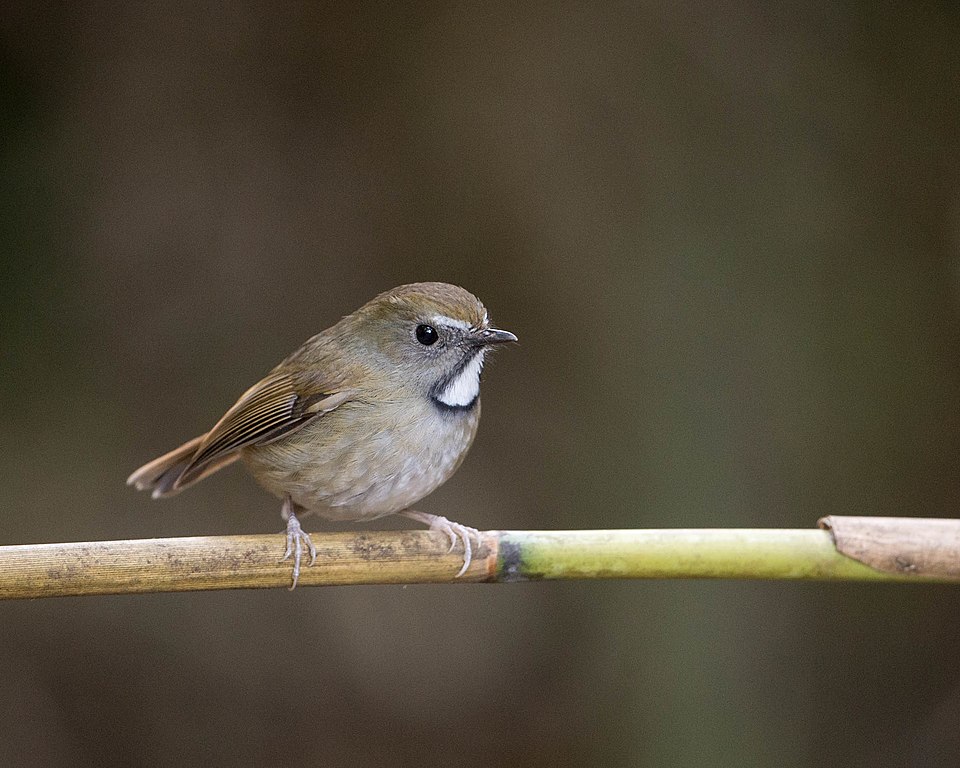
The Black Bradyornis is easily recognized by its uniformly glossy black plumage, which is a defining characteristic of both males and females. This sleek appearance distinguishes it from many other birds in its habitat. Adult Black Bradyornis have a slightly iridescent sheen, particularly noticeable on sunny days. Juveniles, in contrast, may display a duller black color with subtle brownish hues as they transition into adult plumage. Males and females are similar in appearance, making sex differentiation in the field challenging without behavioral cues. The bird's silhouette in flight is relatively straightforward, with a medium-sized body, short wings, and a tail that fans out slightly. When perched, the Black Bradyornis has an upright posture, often observed scanning its surroundings for food or potential threats. This posture, combined with its keen-eyed alertness, is a helpful clue for identification. Confusion with other species is possible. For instance, it can be mistaken for the Asian Glossy Starling, but the latter's more metallic sheen and red eyes set it apart. Observers should also note that the Black Bradyornis lacks any distinct markings or color variations, unlike species with streaked or barred patterns.
Having trouble telling birds apart? Upload a photo to our bird identification tool for an instant species match.
Black Bradyornis Habitat and Range
Preferred Habitat
The Black Bradyornis primarily inhabits tropical and subtropical forests, thriving in dense woodland environments. It is most commonly found at elevations ranging from sea level up to 1,500 meters, though it can adapt to higher altitudes in some mountain ranges. This bird prefers regions with a rich canopy and abundant understory, which provide ample food resources and nesting sites. Seasonal shifts in habitat are minimal, as the Black Bradyornis tends to remain in forested areas year-round. However, during breeding seasons, it may seek out territories with denser foliage to support its reproductive activities. While generally preferring rural, undisturbed environments, the Black Bradyornis can occasionally be spotted in urban parks or gardens that offer sufficient tree cover and natural vegetation. Its adaptability to different forest types, from evergreen to deciduous, demonstrates its resilience, though ongoing habitat destruction due to logging and agricultural expansion poses a significant threat to its preferred environments.
Geographic Range
The Black Bradyornis has a range confined to Southeast Asia, making it a regional endemic. Its breeding range spans across the dense forests of Thailand, Malaysia, and Indonesia, with notable populations in Sumatra and Borneo. During the non-breeding season, the Black Bradyornis may expand its range slightly but generally remains within the same geographic regions. Migration patterns are minimal, with the bird exhibiting some altitudinal movement in response to temperature and food availability. Despite its relatively limited range, the Black Bradyornis is considered locally common in suitable habitats, with population density hotspots in protected areas such as the Taman Negara National Park in Malaysia and the Khao Sok National Park in Thailand. However, outside these protected zones, populations are more scattered, and the bird's presence can be inconsistent due to habitat degradation. Conservation areas play a crucial role in supporting stable populations, and efforts are ongoing to establish additional reserves to protect the Black Bradyornis and other forest-dependent species.
Want to know which birds visit your area? Browse our backyard birds by location guides for region-specific species lists.
What Does the Black Bradyornis Eat?
The diet of the Black Bradyornis is diverse, reflecting its opportunistic feeding habits. Primarily insectivorous, it consumes a wide range of insects, including beetles, caterpillars, and ants, which it skillfully catches on the wing or gleans from foliage. The bird supplements its diet with fruits and berries, particularly during the wet season when these resources are abundant. This dietary shift helps the Black Bradyornis maintain its energy levels and contributes to its role as a seed disperser within its ecosystem. Foraging techniques include sallying from perches to catch flying insects and hopping along branches to inspect leaf surfaces for prey. The Black Bradyornis exhibits a diurnal feeding pattern, with peak activity occurring in the early morning and late afternoon when insects are most active. Prey size varies but generally ranges from small to medium-sized invertebrates, making the Black Bradyornis a versatile and efficient predator within its habitat.
Black Bradyornis Behavior and Social Structure
The Black Bradyornis displays a range of interesting behaviors, particularly during the breeding season. Males engage in elaborate courtship displays that involve a combination of vocalizations and physical maneuvers to attract females. These displays often occur in the early morning hours and can include wing-fluttering, tail-fanning, and hopping from branch to branch in a rhythmic pattern. Socially, the Black Bradyornis is primarily solitary or found in pairs, especially during the breeding season. However, outside of this period, it may join mixed-species foraging flocks, which offer increased protection from predators through collective vigilance. Territorial behavior is pronounced, with males fiercely defending their chosen area from intruders by engaging in aggressive chases and vocal confrontations. The Black Bradyornis also exhibits a strong response to perceived threats, using a series of alarm calls to warn conspecifics and deter predators. Daily activity patterns center around foraging and territorial maintenance, with periods of rest during the hottest parts of the day.
Black Bradyornis Nesting and Reproduction
The nesting habits of the Black Bradyornis are characterized by careful site selection and intricate nest construction. Nests are typically built in dense foliage, often in the fork of a tree or shrub, providing concealment from predators. The nest itself is a cup-shaped structure, crafted from twigs, leaves, and grasses, and lined with softer materials like moss and feathers for insulation. Clutch size varies but generally consists of two to four eggs, which are incubated primarily by the female. The incubation period lasts approximately 12-14 days, during which the male plays a supporting role by bringing food to the nesting female. After hatching, both parents share in feeding and caring for the chicks. Fledging occurs after about 14-16 days, although the young may remain dependent on their parents for a few weeks longer. The Black Bradyornis typically raises one to two broods per year, depending on environmental conditions and resource availability.
Black Bradyornis Sounds and Vocalizations
The Black Bradyornis is renowned for its melodious song, characterized by a series of rich, flute-like notes that vary in pitch and rhythm. This song serves both as a territorial marker and an attractant for potential mates. In addition to its primary song, the Black Bradyornis produces a variety of call notes, including a sharp 'chip' sound used for communication between mates and a harsher, more urgent call that functions as an alarm. During the dawn chorus, the Black Bradyornis frequently participates with extended bouts of singing, contributing to the vibrant soundscape of its forest habitat. These vocalizations are not only a delight for bird enthusiasts but also play a crucial role in the bird's social interactions and survival strategies.
Interesting Facts About the Black Bradyornis
- 1The Black Bradyornis can consume up to 1.5 times its body weight in insects daily during peak feeding periods.
- 2Its song, often compared to a flutist's melody, can be heard over distances of up to 500 meters in dense forest.
- 3The species is known to join mixed-species flocks, enhancing its foraging efficiency and predator vigilance.
- 4Black Bradyornis nests are typically located at heights from 2 to 10 meters, providing protection from ground predators.
- 5The bird's iridescent plumage appears most vibrant at dawn and dusk when the angle of light enhances its sheen.
- 6It plays a key role in seed dispersal, aiding in the regeneration of forest ecosystems.
- 7Despite its predominantly black plumage, the Black Bradyornis has excellent camouflage in the shadowy understory.
Black Bradyornis Conservation Status
The Black Bradyornis currently holds a status of Least Concern on the IUCN Red List, but its populations are under pressure due to habitat loss from deforestation and land conversion for agriculture. While the overall population trend is considered stable, localized declines have been reported in areas experiencing significant environmental changes. Conservation efforts focus on protecting critical habitats through the establishment of reserves and national parks. Additionally, initiatives to restore degraded forests and promote sustainable land-use practices are vital for ensuring the long-term survival of the Black Bradyornis. Historical population changes have been relatively modest, but ongoing monitoring is essential to detect any emerging threats and to implement timely conservation actions.
Other Muscicapidae Species


Birds Similar to the Black Bradyornis
These species are often confused with the Black Bradyornis due to similar appearance or overlapping range.