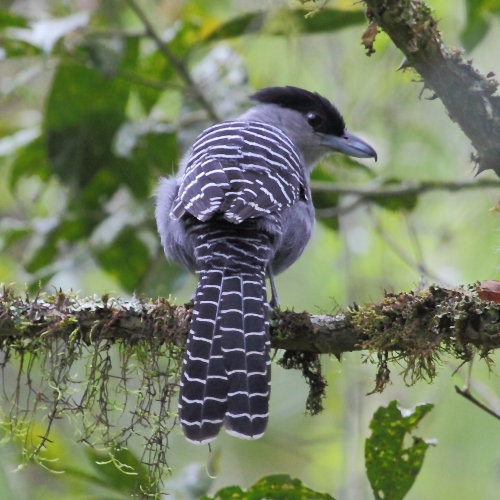
Brown-bellied Antwren
Epinecrophylla gutturalis
Order: Passeriformes / Family: Thamnophilidae

Wikimedia Commons
About the Brown-bellied Antwren
The Brown-bellied Antwren (Epinecrophylla gutturalis) is a small but significant member of the family Thamnophilidae, primarily inhabiting the lush tropical rainforests of South America. This bird has carved out a niche in the dense understory, where its unique adaptations allow it to thrive. Its presence is most notable in countries like Brazil, Colombia, and Peru, where vast tracts of Amazonian rainforest provide the ideal environment. The bird's role in the ecosystem is multifaceted; it acts as both predator and prey. By controlling insect populations, it helps maintain the delicate balance of the forest biome. Seasonal behaviors of the Brown-bellied Antwren include subtle shifts in territory and foraging patterns, primarily driven by the availability of food resources. During wet seasons, when insect populations surge, these antwrens exhibit increased activity and vocalization. Their calls and songs become a more prominent feature of the forest soundscape, serving both in territorial defense and mate attraction. In the dry season, the bird's activity may decrease slightly, coinciding with a reduction in prey availability. The Brown-bellied Antwren's ecological significance extends beyond its immediate environment. It serves as an indicator species, with its presence often signaling a healthy, biodiverse forest. Conservationists and researchers study its habits to gain insights into the health of rainforest ecosystems. As deforestation and habitat fragmentation pose increasing threats, understanding and preserving species like the Brown-bellied Antwren becomes crucial. This bird embodies the complex interconnections of the rainforest, playing a role in seed dispersal and nutrient cycling through its diet and foraging activities. The Brown-bellied Antwren's subtle yet profound influence on its environment underscores the importance of conserving these integral components of tropical ecosystems.
The Brown-bellied Antwren belongs to the family Thamnophilidae, within the order Passeriformes. These birds typically live average 4-6 years, with some individuals living up to 8 years..
How to Identify a Brown-bellied Antwren
The Brown-bellied Antwren can be identified by its characteristic brown underparts, which contrast with its grayish-brown upper body. Adult males and females display subtle sexual dimorphism. Males typically exhibit a more pronounced dark throat patch, while females have more subdued coloration. The Brown-bellied Antwren's plumage harmonizes with the dappled light of the forest floor, aiding in camouflage. Juveniles resemble adults but often display slightly duller tones. Their plumage provides excellent concealment from predators. In the field, this bird's behavior and vocalizations are reliable identification aids. A persistent forager, it moves methodically through the understory, often in mixed-species flocks. Its flight is characterized by short, rapid bursts, with wings held close to the body. The bird's perching posture is typically upright, allowing it to scan for prey effectively. Confusion may arise with other antwren species, such as the Stipple-throated Antwren or the White-flanked Antwren. However, the Brown-bellied Antwren's specific plumage pattern and vocalizations help distinguish it. Observers should note the bird's preference for dense, tangled vegetation, a habitat choice that sets it apart from similar species favoring more open areas.
Having trouble telling birds apart? Upload a photo to our bird identification tool for an instant species match.
Brown-bellied Antwren Habitat and Range
Preferred Habitat
The Brown-bellied Antwren is a denizen of dense, humid tropical rainforests, particularly those found in the Amazon Basin. It thrives in the understory, where the complex structure of vegetation provides ample cover and foraging opportunities. These habitats are characterized by a high density of shrubs, vines, and small trees, which the bird navigates with agility. Elevations for this species typically range from lowland forests to mid-elevation montane forests, up to about 1200 meters. Seasonal habitat shifts are minimal, as the antwren primarily remains in its preferred forest environment year-round. While the Brown-bellied Antwren is not commonly found in urban areas, it may occasionally venture into secondary forests or forest fragments near human settlements, provided there is sufficient cover and food availability. Unlike some other bird species, it does not adapt well to open habitats or heavily disturbed areas, highlighting its reliance on intact forest ecosystems for survival.
Geographic Range
The Brown-bellied Antwren's range is primarily concentrated in the northern regions of South America. It is resident in the expansive rainforests of Brazil, particularly within the Amazon Basin, where the species finds a continuous expanse of suitable habitat. Its range extends into parts of Colombia and Peru, where similar forest conditions prevail. In these countries, the bird thrives in both primary and secondary forests, provided the latter retain sufficient understory complexity. The Brown-bellied Antwren does not undertake long migrations, maintaining a relatively stable presence within its core range throughout the year. However, local movements may occur in response to seasonal changes in food availability or breeding opportunities. Population density hotspots are often correlated with areas of high insect abundance, which typically coincide with regions of high forest biodiversity. Despite its relatively stable range, the Brown-bellied Antwren faces threats from deforestation and habitat fragmentation, which can isolate populations and reduce genetic diversity.
Want to know which birds visit your area? Browse our backyard birds by location guides for region-specific species lists.
What Does the Brown-bellied Antwren Eat?
The diet of the Brown-bellied Antwren consists primarily of insects and other small arthropods, making it an important insectivore within its rainforest habitat. The bird's foraging technique is characterized by deliberate, methodical movements through dense vegetation, where it gleans prey from leaves, branches, and the forest floor. It often employs a hover-gleaning strategy to snatch insects from the undersides of leaves. This antwren's diet varies with the seasons; during the wet season, when insect populations peak, it has access to a wider variety of prey. Conversely, in the dry season, it may rely more heavily on ants and other available arthropods. While small insects form the bulk of its diet, it occasionally consumes spiders and small invertebrates. The Brown-bellied Antwren typically forages during the cooler parts of the day, such as early morning and late afternoon, when insect activity is highest. Its feeding schedule is closely tied to the rhythm of the rainforest, allowing it to capitalize on periods of peak prey abundance.
Brown-bellied Antwren Behavior and Social Structure
The Brown-bellied Antwren exhibits a complex social structure, often forming loose associations with other antwren species and participating in mixed-species foraging flocks. These flocks enhance foraging efficiency and provide additional protection from predators. Territorial behavior is pronounced, with males vigorously defending their territories through vocalizations and displays. Courtship displays involve a combination of vocalizations and physical displays, with males puffing out their throats and performing short flights to attract females. During the breeding season, pairs become more solitary, focusing on nest-building and rearing young. This antwren is generally non-migratory, maintaining a consistent presence in its home range year-round. In response to predators, the Brown-bellied Antwren relies on its cryptic plumage and the dense forest understory for concealment. When startled, it may emit alarm calls to alert nearby birds of potential danger. Daily activity patterns are influenced by the availability of food, with peak activity occurring during cooler parts of the day. The Brown-bellied Antwren contributes to the dynamic tapestry of rainforest life, its behaviors serving as both a predator and a participant in the symbiotic relationships that characterize these ecosystems.
Brown-bellied Antwren Nesting and Reproduction
The nesting habits of the Brown-bellied Antwren reflect its preference for dense understory habitats. Nests are typically constructed low to the ground, often in shrubs or saplings, where they are well-concealed by foliage. The bird uses a variety of materials to build its nest, including leaves, twigs, and plant fibers, creating a cup-shaped structure that blends seamlessly with its surroundings. Clutch sizes usually range from two to three eggs, with both parents sharing incubation duties. The incubation period lasts approximately 14 to 16 days, during which time the parents take turns keeping the eggs warm and protected. Once hatched, the chicks remain in the nest for about 10 to 14 days before fledging. Both parents actively participate in feeding and caring for the young, ensuring they receive a steady supply of insects and small arthropods. The Brown-bellied Antwren typically raises one brood per year, although in areas with abundant resources, they may attempt a second. The nesting cycle of this bird is intricately linked to the rhythm of the rainforest, with breeding often timed to coincide with peak food availability, ensuring the best chance of survival for their offspring.
Brown-bellied Antwren Sounds and Vocalizations
The Brown-bellied Antwren's primary song is a series of soft, rapid notes that rise and fall in pitch, creating a rhythmic pattern that echoes through the dense forest understory. This song serves multiple purposes, including territory establishment and mate attraction. In addition to its primary song, the antwren produces a variety of call notes, including short, sharp chirps and more complex sequences used in communication with flock members. Alarm calls are distinct, consisting of harsh, repeated notes that signal potential threats. During the dawn chorus, the antwren's song is more frequent and pronounced, contributing to the vibrant cacophony of sounds that characterize the rainforest awakening. The Brown-bellied Antwren's vocalizations are an essential aspect of its behavior, facilitating interactions with both conspecifics and other species within its habitat.
Interesting Facts About the Brown-bellied Antwren
- 1The Brown-bellied Antwren's foraging method, known as hover-gleaning, involves capturing insects from the undersides of leaves.
- 2Despite its small size, the Brown-bellied Antwren can produce a surprisingly loud song, audible even in dense forest habitats.
- 3This antwren participates in mixed-species flocks, enhancing its foraging efficiency by associating with other insectivorous birds.
- 4The Brown-bellied Antwren's nest is often camouflaged so effectively that it's nearly invisible in the dense forest understory.
- 5The species is a key indicator of rainforest health, with its presence often signaling a biodiverse and thriving ecosystem.
- 6Brown-bellied Antwrens are predominantly sedentary, rarely moving beyond their established territories in the rainforest.
- 7Their vocalizations are not only crucial for territory defense but also play a role in maintaining pair bonds during the breeding season.
Brown-bellied Antwren Conservation Status
The Brown-bellied Antwren is currently classified as Least Concern by the IUCN, with a stable population trend. Despite this status, the species faces significant threats from deforestation and habitat fragmentation, primarily due to agriculture, logging, and infrastructure development in the Amazon Basin. Conservation efforts focus on preserving large tracts of intact rainforest, which are crucial for the survival of this and many other species. Protected areas and sustainable land-use practices play vital roles in mitigating habitat loss. Historically, the Brown-bellied Antwren has maintained a steady population, benefiting from the expansive and relatively undisturbed forests of South America. However, ongoing monitoring and conservation initiatives remain essential to ensure its continued survival amid increasing anthropogenic pressures.