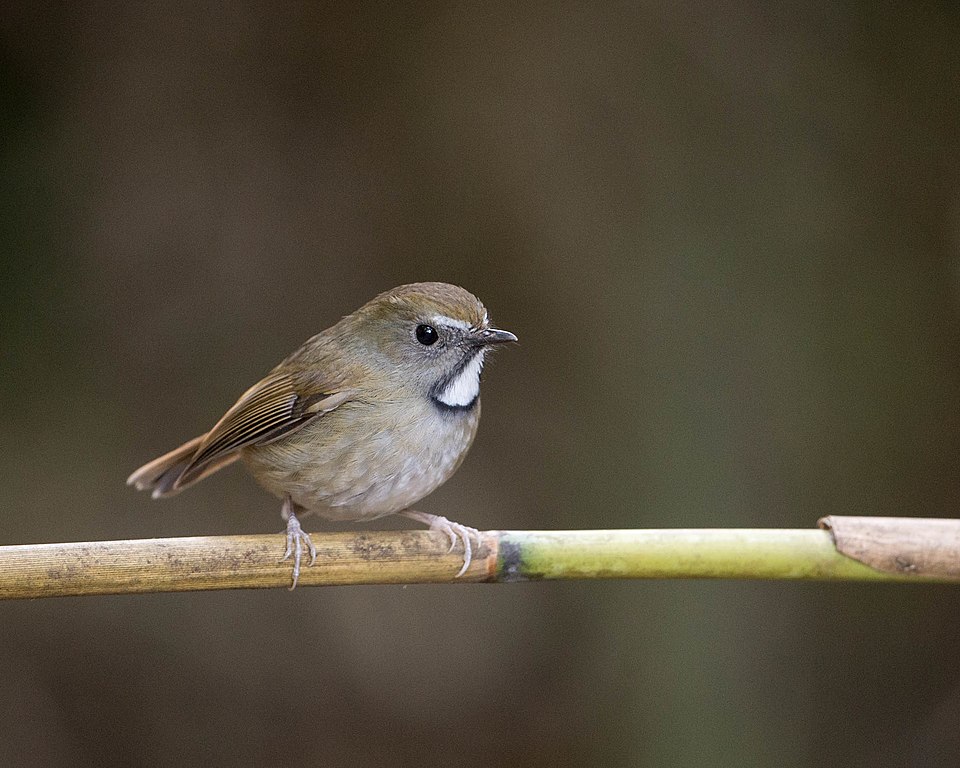
Brown-breasted Flycatcher
Muscicapa muttui
Order: Passeriformes / Family: Muscicapidae

Wikimedia Commons
About the Brown-breasted Flycatcher
The Brown-breasted Flycatcher, scientifically known as Muscicapa muttui, is a small passerine bird that belongs to the family Muscicapidae. This flycatcher is a subtle but intriguing resident of the Indian subcontinent, particularly found in the Western Ghats and the forests of Sri Lanka. Its ecological role as an insectivore makes it crucial for controlling insect populations in its native habitats, contributing to the balance of these ecosystems.
Primarily known for its warm brown plumage and distinctive breast color, the Brown-breasted Flycatcher occupies a niche in the dense, evergreen forests of these regions. The bird prefers the shaded understory layers where its plumage blends seamlessly with the environment, making it an elusive subject for bird watchers. Its presence in these ecosystems indicates healthy forest conditions, as it relies on abundant insect life.
The Brown-breasted Flycatcher is significant due to its limited range and specific habitat requirements, which also make it a reliable indicator of forest health. During the breeding season, which generally spans from March to June, this flycatcher is more vocal and easier to observe. The bird’s seasonal behaviors include heightened territoriality and increased vocalization to attract mates and defend territory. When the breeding season ends, the flycatcher becomes more solitary, focusing on feeding and maintaining its plumage.
Throughout its range, the Brown-breasted Flycatcher plays a vital role in the food web as both a predator and prey species. It competes with other insectivorous birds and must avoid predation from larger raptors. Conservation of its forest habitats is essential to maintain its populations and ensure the continued health of the ecosystems it inhabits.
The Brown-breasted Flycatcher belongs to the family Muscicapidae, within the order Passeriformes. These birds typically live usually 5 years, with a maximum recorded lifespan of 7 years..
How to Identify a Brown-breasted Flycatcher
Adult Brown-breasted Flycatchers exhibit a subtle yet charming combination of plumage colors. The upperparts are generally gray-brown, while the breast is a warmer, more pronounced brown that stands out against its paler belly. The face features a faint eye-ring and a slightly darker eye stripe, giving the bird a gentle and unobtrusive appearance.
Juvenile birds resemble adults but may show more rufous coloration on their wings and edges of their feathers, giving them a slightly more mottled appearance. There are no significant sexual dimorphisms in this species, making males and females difficult to distinguish in the field.
While similar in size to other Muscicapa species, the Brown-breasted Flycatcher can be distinguished by its specific breast coloration and song. It shares its habitat with other flycatchers, but its unique combination of plumage and patterning helps in positive identification. In flight, its silhouette displays a typical flycatcher profile with a broad head and short tail. When perched, it often sits upright, scanning its surroundings for insects.
Having trouble telling birds apart? Upload a photo to our bird identification tool for an instant species match.
Brown-breasted Flycatcher Habitat and Range
Preferred Habitat
The Brown-breasted Flycatcher thrives in subtropical and tropical moist lowland forests. Its preferred habitat includes dense, evergreen forests with a well-developed understory. The bird often dwells in the Western Ghats of India and the forested regions of Sri Lanka, typically at elevations ranging from sea level up to 1800 meters.
This flycatcher shows a strong preference for undisturbed, mature forests, which provide ample cover and a rich supply of insects for food. Although it primarily inhabits rural and wild areas, it can sometimes be spotted in large gardens or parks that mimic its native environment, though this is less common. Seasonal habitat shifts are minimal as the bird tends to be relatively sedentary, remaining within its preferred forested areas year-round.
Geographic Range
The Brown-breasted Flycatcher has a relatively restricted range, primarily within the Indian subcontinent. It is predominantly found in the Western Ghats, a biodiversity hotspot in southwestern India, and extends to the rich forests of Sri Lanka. This limited range makes the species vulnerable to habitat loss and underscores the importance of these regions in its conservation.
While the flycatcher is largely sedentary, some minor altitudinal movements may occur depending on climatic conditions, particularly during harsh weather when it might seek lower elevations. Within its range, population densities can vary, with certain areas like the Nilgiri Hills hosting higher concentrations, particularly during the breeding season.
Want to know which birds visit your area? Browse our backyard birds by location guides for region-specific species lists.
What Does the Brown-breasted Flycatcher Eat?
The diet of the Brown-breasted Flycatcher consists primarily of insects, which it captures in flight with remarkable agility. Its foraging technique involves sallying from perches to snatch insects mid-air, a behavior typical of many flycatchers. Common prey includes flies, mosquitoes, and various small beetles, with occasional consumption of spiders and other arthropods.
During the breeding season, the bird's diet may diversify slightly to include more protein-rich prey, supporting both the adults and their chicks. Feeding typically occurs during daylight hours, with peak activity in the early morning and late afternoon when insect activity is highest. Seasonal changes in diet are minimal due to the bird's relatively stable habitat conditions.
Brown-breasted Flycatcher Behavior and Social Structure
The Brown-breasted Flycatcher exhibits a solitary and territorial nature, especially during the breeding season. Males often establish and defend small territories through vocalizations and displays, ensuring access to resources and attracting females. Courtship involves softer calls and aerial displays, with pairs forming monogamous bonds for the duration of the breeding season.
Outside the breeding season, these flycatchers may become less territorial and more focused on feeding. They are typically diurnal, with activity peaking during cooler parts of the day. Their response to predators involves alarm calls and evasive flight, often retreating deeper into dense foliage to avoid detection.
Brown-breasted Flycatcher Nesting and Reproduction
The Brown-breasted Flycatcher constructs cup-shaped nests, typically made from fine grasses, leaves, and spider webs, intricately woven together to provide stability and camouflage. Nests are often placed in the fork of a tree or bush, well-hidden within dense foliage to protect from predators.
A typical clutch consists of 2 to 3 eggs, with both parents participating in incubation over a period of approximately 12 to 14 days. After hatching, the chicks remain in the nest for another 12 days before fledging. Parental care continues for a short period post-fledging, with both parents involved in feeding and protecting the young. The species generally raises one brood per year due to its specific habitat requirements and limited breeding season.
Brown-breasted Flycatcher Sounds and Vocalizations
The primary song of the Brown-breasted Flycatcher is a series of melodious whistles, often described as a soft 'peew-peew' followed by a trill. These vocalizations serve to establish territory and attract mates. Calls can vary in rhythm and pitch but maintain a generally sweet and clear quality.
In addition to its song, the flycatcher emits sharper, more abrupt calls as alarms when disturbed, alerting other birds to potential threats. During the dawn chorus, its whistles blend with those of other forest dwellers, contributing to the rich soundscape of its habitat.
Interesting Facts About the Brown-breasted Flycatcher
- 1The Brown-breasted Flycatcher's song can be heard over considerable distances, aiding in territory defense.
- 2Despite its limited range, the Brown-breasted Flycatcher shows remarkable adaptability within its preferred forest habitats.
- 3This species was first described by Edward Blyth, a British zoologist, in the mid-19th century.
- 4Some Brown-breasted Flycatchers may undertake minor altitudinal migrations in response to harsh weather conditions.
- 5The flycatcher's reliance on insect prey makes it a valuable ally in controlling pest populations in forests.
Brown-breasted Flycatcher Conservation Status
The Brown-breasted Flycatcher is currently classified as Least Concern by the IUCN, but its population trend is uncertain, with potential threats from habitat destruction due to deforestation and land-use changes. Conservation efforts focus on preserving its natural forest habitats, especially in biodiversity hotspots like the Western Ghats and Sri Lanka. Historical data suggests that while the species has maintained stable populations, ongoing habitat loss could pose future risks. Preserving large tracts of undisturbed forest is crucial for its continued survival.