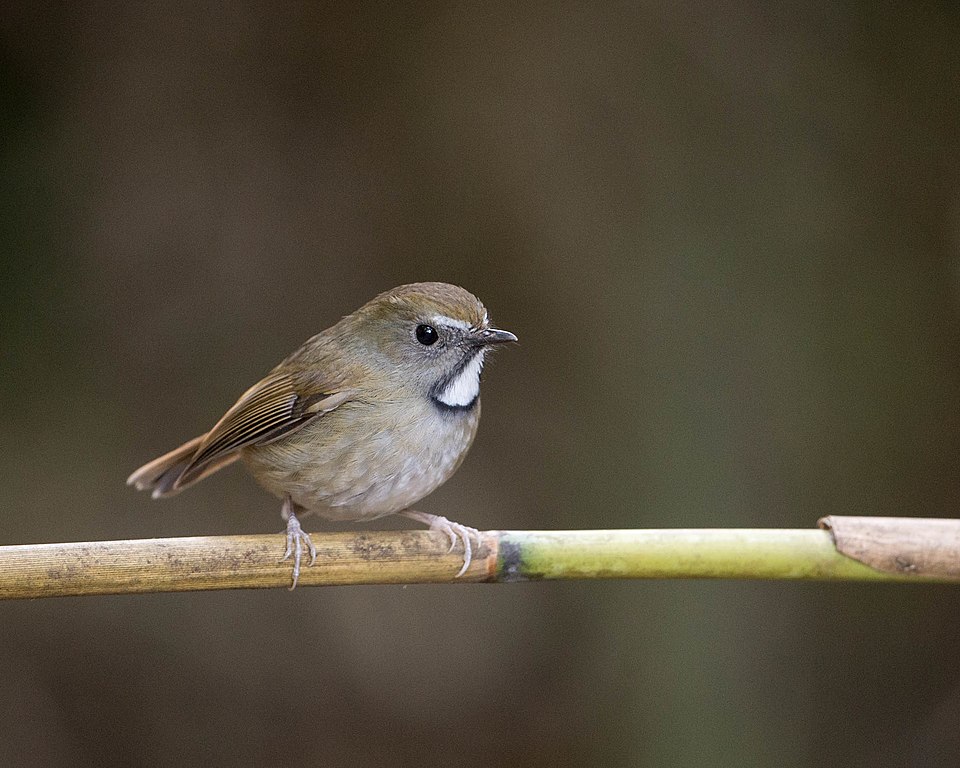
Brown-chested Alethe
Chamaetylas poliocephala
Order: Passeriformes / Family: Muscicapidae

Wikimedia Commons
About the Brown-chested Alethe
The Brown-chested Alethe (Chamaetylas poliocephala) is an intriguing songbird of the family Muscicapidae, noted for its preference for the rich, densely vegetated undergrowth of African montane and lowland forests. This bird is particularly significant due to its role in the ecosystem as a seed disperser and insect predator, contributing to the health and regeneration of forest environments. Spanning a range of over ten countries in Central and West Africa, the Brown-chested Alethe makes its home in countries like Cameroon, Nigeria, and Uganda. Its presence is a reliable indicator of the health of the forest ecosystems in these regions.
Throughout the year, the Brown-chested Alethe exhibits varied behaviors depending on the season. During the breeding season, typically between March and June, the bird becomes more vocal and territorial, ensuring its presence is known to potential mates and rivals alike. This period also sees an increase in insect availability, providing ample food resources for raising young. Outside of the breeding season, the Brown-chested Alethe tends to be more reclusive, remaining within its established territory and engaging in quieter foraging activities.
This species is also an important subject of study for ornithologists and conservationists, as its population trends can signal changes in forest health. The Brown-chested Alethe's preference for undisturbed forest habitats makes it particularly vulnerable to deforestation and habitat fragmentation, threats that are unfortunately common across its range. Conservation efforts aimed at preserving its habitat are crucial for maintaining not only its populations but also the biodiversity of the regions it inhabits.
The Brown-chested Alethe belongs to the family Muscicapidae, within the order Passeriformes. These birds typically live average 4 years with max recorded 7 years..
How to Identify a Brown-chested Alethe
The Brown-chested Alethe is a small bird, approximately 16-18 cm in length. It is easily recognized by its striking brown chest, which contrasts with its gray head and neck. The upperparts are a rich olive-brown, blending effectively into the forest floor and understory. The wings and tail are similarly olive-brown, providing camouflage against predators.
In terms of sexual dimorphism, both male and female Brown-chested Alethes share similar plumage, making it difficult to differentiate between the sexes in the field. Juvenile birds, however, can be distinguished by their more mottled and less defined brown chest, lacking the clear demarcation seen in adults. When perched, the Brown-chested Alethe often adopts an upright stance, which, combined with its modest size, helps in spotting it among the dense foliage.
While similar in appearance to the closely related White-chested Alethe, the Brown-chested Alethe can be differentiated by the absence of white on the chest and its slightly more subdued coloration. In flight, the Brown-chested Alethe's silhouette is fairly typical of small forest songbirds, with rapid wingbeats and a direct flight path that often keeps it close to the ground.
Having trouble telling birds apart? Upload a photo to our bird identification tool for an instant species match.
Brown-chested Alethe Habitat and Range
Preferred Habitat
The Brown-chested Alethe inhabits the undergrowth of both montane and lowland tropical forests. It prefers areas with dense vegetation, which provide cover and abundant food sources. This bird can be found at elevations ranging from sea level to about 2,500 meters, although it is more commonly observed in mid-elevation forests.
Seasonal habitat shifts are minimal for the Brown-chested Alethe, as it tends to remain within the same general area year-round. However, slight altitudinal movements may occur in response to changes in food availability and breeding conditions. Unlike some forest songbirds, the Brown-chested Alethe shows little adaptation to urban environments, thriving instead in undisturbed forest interiors.
The preservation of its forest habitat is crucial for the survival of this species, as it relies heavily on the intact undergrowth for feeding and nesting. The bird's presence in a forest is often an indicator of a healthy, biodiverse ecosystem.
Geographic Range
The Brown-chested Alethe is found across a wide range of Central and West Africa, with a distribution that includes countries such as Nigeria, Cameroon, Gabon, and Uganda. Its breeding range primarily consists of these regions, where it remains year-round due to the stable climate and continuous availability of resources.
Unlike many migratory birds, the Brown-chested Alethe does not undertake long-distance migrations. It is considered a resident species, maintaining its territory throughout the year. However, some local movements may occur as it adjusts to seasonal variations in food supply and environmental conditions.
Population densities of the Brown-chested Alethe are highest in areas of dense forest cover, particularly in protected reserves and national parks where human impact is minimized. The bird's absence in disturbed or heavily deforested areas highlights the ongoing threats to its habitat from logging and land conversion.
Want to know which birds visit your area? Browse our backyard birds by location guides for region-specific species lists.
What Does the Brown-chested Alethe Eat?
The diet of the Brown-chested Alethe primarily consists of insects and other small invertebrates, which it forages for on the forest floor and within the understory. Its feeding strategy involves a combination of gleaning and short sallies to capture prey, often seen hopping along the ground or low branches as it searches for food.
During the breeding season, the bird's diet becomes even more insect-focused, providing the necessary protein for growing chicks. At this time, the Brown-chested Alethe may also consume small fruits and seeds, particularly when insect populations are lower.
Prey items typically include beetles, ants, spiders, and caterpillars, with the bird demonstrating a preference for small, easily manageable prey. The Brown-chested Alethe forages actively throughout the day, with peaks in activity during the cooler morning and late afternoon hours.
Brown-chested Alethe Behavior and Social Structure
The Brown-chested Alethe exhibits a range of behaviors that reflect its adaptation to forest life. It is generally a solitary or paired bird, with individuals maintaining territories that they defend through vocalizations and occasional aggressive displays. These territories are crucial for access to food resources and suitable nesting sites.
During the breeding season, males engage in courtship displays that include singing from prominent perches and performing aerial displays to attract females. Once paired, the bond between mates is strong, with both partners participating in nest building and chick rearing.
In terms of social structure, the Brown-chested Alethe tends not to form large flocks, although loose associations may occur during non-breeding periods when food is plentiful. Its response to predators involves remaining hidden within dense foliage, relying on camouflage and stillness to avoid detection. The bird's daily activity pattern typically follows the rhythm of the forest, with periods of foraging interspersed with rest and preening.
Brown-chested Alethe Nesting and Reproduction
The nesting habits of the Brown-chested Alethe are closely tied to its forest habitat. Nests are typically constructed low to the ground, often in a well-concealed location such as a dense bush or a tangle of vines. The nest itself is a cup-like structure, made from a combination of leaves, grasses, and other plant materials, bound together with spider webs and lined with softer materials for added insulation.
Clutch sizes generally range from two to three eggs, with both parents sharing incubation duties over a period of about 14-16 days. Once hatched, the chicks are altricial, requiring significant parental care, including feeding and protection.
Fledging occurs approximately 14-18 days after hatching, at which point the young birds begin to explore their surroundings under the watchful eyes of their parents. The species typically raises one brood per year, although favorable conditions may occasionally allow for a second.
Brown-chested Alethe Sounds and Vocalizations
The primary song of the Brown-chested Alethe is a melodious series of clear, whistling notes that rise and fall in pitch, often described as reminiscent of a flute. This song is most frequently heard during the breeding season, serving both to attract mates and to assert territorial boundaries.
Call notes are softer and more subtle, consisting of short 'chip' sounds that help maintain contact between mates or signal alarm. When disturbed or threatened, the Brown-chested Alethe may emit sharper, more urgent calls to alert others to potential danger.
The bird also participates in the dawn chorus, contributing its voice to the symphony of the forest as it awakens each day. Its song, though beautiful, can be challenging to distinguish from those of other forest songbirds, requiring a trained ear to identify with confidence.
Interesting Facts About the Brown-chested Alethe
- 1The Brown-chested Alethe is a member of the Muscicapidae family, which includes the familiar Old World flycatchers.
- 2Despite its discreet nature, the Brown-chested Alethe plays a crucial ecological role by controlling insect populations in forests.
- 3This bird's preference for dense undergrowth reflects its reliance on camouflage to avoid predators like snakes and birds of prey.
- 4The Brown-chested Alethe's song, although melodious, can be easily mistaken for those of other forest birds, requiring careful listening.
- 5While many birds display vibrant plumage, the Brown-chested Alethe's subdued colors are perfectly adapted for life in the shadows.
- 6The species' populations are often used as indicators of forest health, highlighting areas in need of conservation attention.
- 7The Brown-chested Alethe is particularly elusive, often heard rather than seen due to its tendency to remain hidden in dense foliage.
Brown-chested Alethe Conservation Status
The Brown-chested Alethe is currently classified as Least Concern by the IUCN, though its populations are experiencing pressures from habitat loss and degradation. Deforestation due to logging and agricultural expansion poses the most significant threat, fragmenting the continuous forest cover necessary for its survival. Conservation efforts focus on protecting existing forest habitats and promoting sustainable land-use practices. National parks and reserves play a vital role in preserving populations by providing safe havens free from the impacts of human activity. Monitoring programs are also in place to track population trends, helping to inform future conservation strategies. Historically, the Brown-chested Alethe has been more abundant, with declines primarily linked to increasing deforestation rates. Continued efforts to curb habitat destruction are essential to safeguard this species and the broader ecological community it supports.