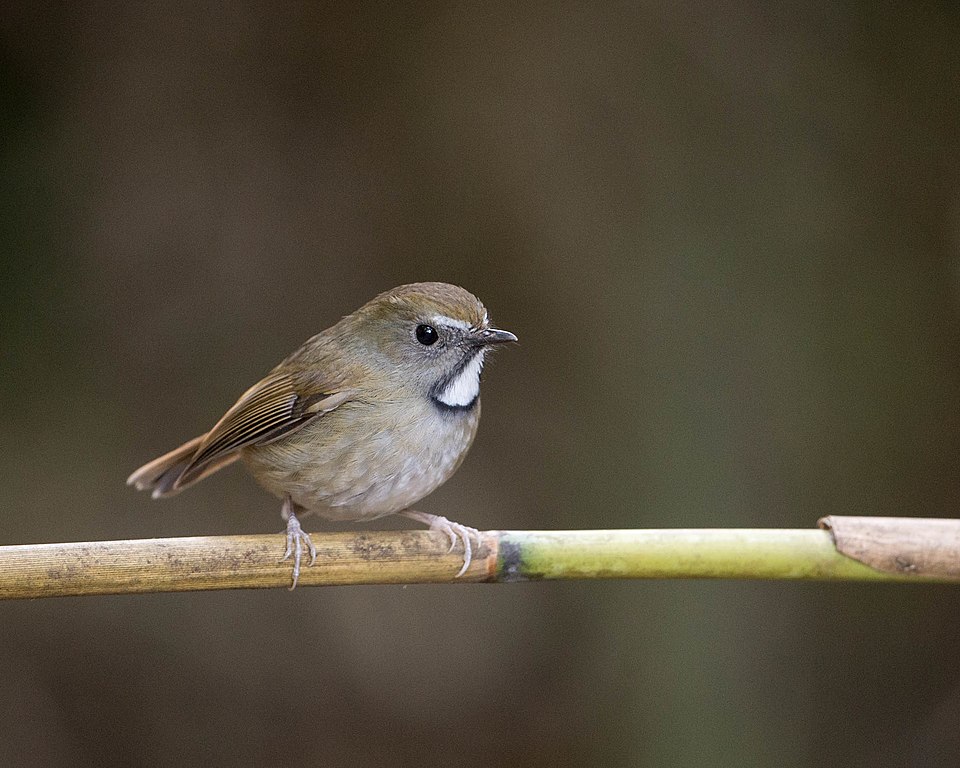
Brown-tailed Rock Chat
Oenanthe scotocerca
Order: Passeriformes / Family: Muscicapidae

Wikimedia Commons
About the Brown-tailed Rock Chat
The Brown-tailed Rock Chat (Oenanthe scotocerca) is a small passerine bird belonging to the Muscicapidae family. Often found in regions characterized by arid landscapes, this bird prefers rocky habitats where it can blend seamlessly with its surroundings. Predominantly inhabiting parts of North Africa and the Middle East, the Brown-tailed Rock Chat is particularly adapted to desert environments, though it can also be spotted in semi-arid areas. A key feature of this species is its adaptability to harsh climates, making it a resilient dweller of the rocky plains and harsh terrains it calls home. The ecological role of the Brown-tailed Rock Chat is significant in controlling insect populations in its habitat. Its diet primarily consists of insects, which it catches with agility and precision. By keeping insect numbers in check, it helps maintain the ecological balance of its habitat. Birdwatchers value the Brown-tailed Rock Chat not only for its ecological role but also for the unique opportunity it offers to observe a bird that thrives in such demanding conditions. Seasonally, the Brown-tailed Rock Chat exhibits some migratory behaviors, although many populations are largely sedentary. During breeding season, typically in the spring, these birds become more territorial and visible as they search for mates and establish nesting territories. Outside of the breeding season, their behavior remains unobtrusive, with individuals often observed alone or in pairs, foraging quietly among the rocks. The Brown-tailed Rock Chat has a significant presence in the natural history of the regions it inhabits, often serving as an indicator species for the health of arid and semi-arid ecosystems. Its presence signals a relatively undisturbed environment, an aspect that underscores the importance of conserving these habitats not just for the Brown-tailed Rock Chat, but for the myriad of other species that coexist in these unique landscapes.
The Brown-tailed Rock Chat belongs to the family Muscicapidae, within the order Passeriformes. These birds typically live average 5-7 years with a maximum recorded of 9 years..
How to Identify a Brown-tailed Rock Chat
The Brown-tailed Rock Chat can be identified by its medium-sized structure, typically measuring about 14-16 cm in length. Its plumage is subtly colored, with a dominant brown upper body and lighter underparts, which can sometimes appear almost white. The bird's most distinguishing feature is its brown tail, which contrasts with the rest of its body and aids in identification during flight. Males and females appear largely similar, though males may exhibit slightly richer coloration during the breeding season. Juvenile Brown-tailed Rock Chats are similar to adults but display more mottled plumage, offering some camouflage against predators. In flight, the Brown-tailed Rock Chat shows a somewhat rounded wing structure with a characteristic bounding flight pattern. When perched, it often adopts an upright posture, frequently flicking its tail. This behavior, combined with its preference for elevated perches such as rocks or low shrubs, makes it a conspicuous presence in its habitat. Confusion can occasionally arise with other rock-dwelling birds, such as the Eastern Black-eared Wheatear, but the distinct brown tail and overall color scheme of the Brown-tailed Rock Chat help differentiate it.
Having trouble telling birds apart? Upload a photo to our bird identification tool for an instant species match.
Brown-tailed Rock Chat Habitat and Range
Preferred Habitat
The Brown-tailed Rock Chat primarily inhabits arid and semi-arid regions, with a preference for rocky landscapes interspersed with sparse vegetation. In North Africa and the Middle East, it can be found at elevations ranging from sea level up to 2000 meters. Its habitat selection is largely influenced by the availability of rocky outcrops and cliffs, which provide essential nesting and foraging opportunities. During the breeding season, these birds are more likely to be found in areas with adequate cover for nesting, such as rock crevices or small caves. While the Brown-tailed Rock Chat is typically associated with rural and natural habitats, it can occasionally be seen near human settlements, particularly in less densely populated areas where its preferred rocky habitats intersect with agricultural land. The species demonstrates little seasonal habitat shift, remaining in these arid regions year-round, although some minor altitudinal movements may occur in response to extreme weather conditions.
Geographic Range
The Brown-tailed Rock Chat is primarily distributed across North Africa and parts of the Middle East. Its core breeding range includes countries such as Morocco, Algeria, and Tunisia, extending eastward into Libya and Egypt. In the Middle East, it is found in regions of Israel, Jordan, and parts of the Arabian Peninsula, including Saudi Arabia. The species is considered a resident bird with limited migratory behavior, though some populations may undertake short-distance movements in response to food availability and climatic conditions. Population densities tend to be higher in regions where rocky habitats are abundant, particularly in the foothills and plateaus of these arid areas. While the Brown-tailed Rock Chat is widespread within this range, its presence is often localized to suitable habitats, leading to a patchy distribution across its extensive range.
Want to know which birds visit your area? Browse our backyard birds by location guides for region-specific species lists.
What Does the Brown-tailed Rock Chat Eat?
The diet of the Brown-tailed Rock Chat is primarily insectivorous, with a strong preference for beetles, ants, and other small arthropods. During the breeding season, its diet may expand to include a wider variety of insects, taking advantage of the increased abundance. The bird employs a sit-and-wait foraging strategy, often perching on rocks or low shrubs to scan the ground for prey. This method allows the Brown-tailed Rock Chat to conserve energy in its arid environment. Prey is typically small, ranging from a few millimeters to a couple of centimeters in size. While insects constitute the majority of its diet, the bird may occasionally consume small amounts of plant material, particularly seeds and berries, though this forms a minor component. Feeding occurs primarily during the cooler parts of the day, with peak foraging activity observed in the early morning and late afternoon.
Brown-tailed Rock Chat Behavior and Social Structure
The Brown-tailed Rock Chat exhibits a range of behaviors adapted to its arid environment. It is primarily solitary or seen in pairs, especially during the breeding season when it becomes more territorial. Courtship involves a series of display flights and vocalizations, where males sing from prominent perches to attract females. Once paired, both sexes participate in nest building and territory defense. The Brown-tailed Rock Chat is diurnal, with activity patterns closely tied to temperature. It tends to seek shelter during the hottest part of the day, becoming more active in the cooler mornings and late afternoons. Flocking behavior is rare, though small loose groups may form outside the breeding season. In response to predators, the bird relies on its cryptic coloration and quick, low flights to escape detection. Vocal alarms are given if a threat is perceived, warning nearby conspecifics of potential danger.
Brown-tailed Rock Chat Nesting and Reproduction
The nesting habits of the Brown-tailed Rock Chat are closely tied to its rocky habitat. Nests are typically built in crevices or sheltered spots among rocks, providing protection from predators and the elements. The nest is a simple cup structure, constructed from twigs, grass, and lined with softer materials such as feathers. Clutch size ranges from 3 to 5 eggs, with an incubation period lasting about 12 to 14 days. Both parents share incubation duties, though the female may take a more significant role. After hatching, chicks remain in the nest for approximately 14 to 16 days before fledging. During this time, both parents are actively involved in feeding and caring for the young. The Brown-tailed Rock Chat typically raises one brood per year, though a second brood may occur if conditions are favorable.
Brown-tailed Rock Chat Sounds and Vocalizations
The vocalizations of the Brown-tailed Rock Chat are characterized by a series of melodious and varied whistles. Its primary song consists of short, repeated phrases with a clear, flute-like quality that can carry over long distances. These songs are often delivered from a prominent perch and serve both to attract mates and defend territory. In addition to its song, the Brown-tailed Rock Chat produces a range of call notes, including sharp 'chip' sounds used as contact calls. Alarm calls are more harsh and rapid, intended to alert others of potential threats. During the dawn chorus, its song is most prominent and serves as a key feature of the acoustic landscape in its habitat.
Interesting Facts About the Brown-tailed Rock Chat
- 1The Brown-tailed Rock Chat's song is so distinctive that it can be heard up to a quarter mile away on quiet mornings.
- 2Despite its preference for arid habitats, the Brown-tailed Rock Chat can survive without direct water sources, extracting moisture from its insect prey.
- 3This bird often uses the same nesting site for several years, showcasing strong site fidelity.
- 4The Brown-tailed Rock Chat can adjust its breeding season based on rainfall patterns, demonstrating remarkable adaptability.
- 5In certain regions, the Brown-tailed Rock Chat is known to follow grazing herds, catching insects disturbed by the animals.
- 6The species displays a unique 'rock-tapping' behavior, using stones to uncover hidden prey beneath.
- 7The Brown-tailed Rock Chat's ability to thrive in extreme temperatures makes it a subject of interest for studies on avian thermoregulation.
Brown-tailed Rock Chat Conservation Status
The Brown-tailed Rock Chat is currently classified as a species of Least Concern by the IUCN. Its population trend appears stable, although specific data are limited. The primary threats to this species include habitat degradation and loss due to human activities such as mining and agriculture expansion. Conservation efforts focus on preserving natural habitats and mitigating the impacts of land use changes. Historically, the bird has maintained stable populations, and its adaptability to arid environments has helped buffer against some anthropogenic pressures. Continued monitoring and habitat protection are crucial to ensure the long-term viability of its populations.