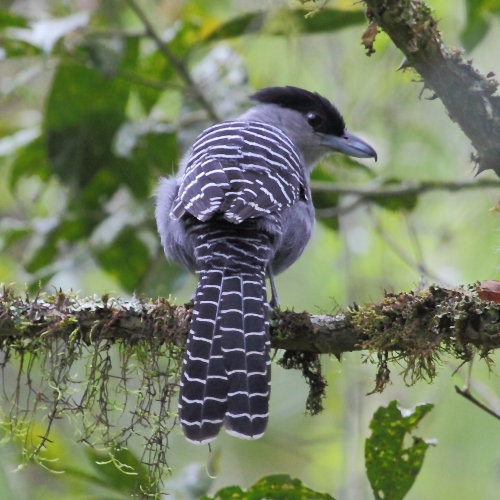
Caatinga Antwren
Herpsilochmus sellowi
Order: Passeriformes / Family: Thamnophilidae

Wikimedia Commons
About the Caatinga Antwren
The Caatinga Antwren (Herpsilochmus sellowi) is a small passerine bird endemic to Brazil, specifically adapted to the unique arid environment of the Caatinga biome. This bird plays a crucial role in the ecosystem as both predator and prey, maintaining the balance of insect populations and serving as a food source for larger predators. Primarily found in the northeastern regions of Brazil, the Caatinga Antwren thrives in areas such as Bahia, Ceará, and Piauí. These regions are characterized by thorny scrublands, low-lying vegetation, and seasonally dry forests. The Caatinga Antwren exhibits fascinating seasonal behavior, often altering its activity patterns and foraging strategies in response to the availability of insects during the wet and dry seasons. During the wet season, when insect abundance peaks, it becomes more active in foraging, while in the dry season, it conserves energy by reducing its activity levels. This antwren is significant for its adaptability to a challenging environment, displaying remarkable resilience in the face of habitat degradation. Its presence indicates a relatively healthy ecosystem, as it depends on a diverse and abundant insect population for sustenance. Observing the Caatinga Antwren provides insights into the ecological health of the Caatinga biome. The bird's ecological role is further emphasized by its interactions with other species within its habitat. It often participates in mixed-species flocks, a behavior that enhances its foraging efficiency and provides protection from predators. Its quick movements and distinctive calls make it an integral part of the bird community in the Caatinga, contributing to the rich biodiversity of this unique biome.
The Caatinga Antwren belongs to the family Thamnophilidae, within the order Passeriformes. These birds typically live average 5 years with a max recorded of 7 years..
How to Identify a Caatinga Antwren
The Caatinga Antwren is easily identified by its striking black-and-white coloration. Adult males display a predominantly black upper body with contrasting white underparts and a prominent white supercilium. Females, on the other hand, have a more muted appearance, with brownish tones replacing the male's stark black, yet they maintain the distinctive white eyebrow. Juveniles resemble females but may appear duller with slightly less crisp plumage. In terms of size, this antwren is small, measuring approximately 11-12 cm in length, with a weight ranging from 8 to 10 grams. Its small stature and agile movements aid in its identification, especially when it flits through dense undergrowth in search of food. The Caatinga Antwren's flight is typically short and rapid, characterized by quick bursts of wingbeats interspersed with gliding. When perching, it frequently adopts an upright posture, often cocking its tail slightly upwards, which can be a helpful field mark. Confusion may arise with similar species such as the Narrow-billed Antwren, but the Caatinga Antwren's more contrasting plumage and distinctive vocalizations help differentiate it.
Having trouble telling birds apart? Upload a photo to our bird identification tool for an instant species match.
Caatinga Antwren Habitat and Range
Preferred Habitat
The Caatinga Antwren inhabits the dry, deciduous woodlands and scrublands of the Caatinga biome in northeastern Brazil. This region is characterized by its harsh, semi-arid climate, with vegetation primarily consisting of thorny shrubs, cacti, and scattered trees. The antwren is typically found at elevations ranging from sea level to about 500 meters, favoring areas with dense undergrowth that provide ample cover and foraging opportunities. During the wet season, the antwren may shift slightly within its range to exploit areas with increased insect activity. Unlike many birds, it has adapted to the sparse and open nature of the Caatinga, rarely venturing into urban areas, preferring instead the more isolated and undisturbed regions of its habitat. This preference for remote areas underscores its reliance on specific habitat conditions for survival.
Geographic Range
The Caatinga Antwren's range is restricted to the northeastern parts of Brazil, primarily within the Caatinga biome. It is found in the states of Bahia, Pernambuco, Ceará, and Piauí, where its preferred dry woodland habitats are prevalent. The species is non-migratory, maintaining a year-round presence within its range. However, localized movements may occur as it seeks out food resources, especially during periods of environmental stress such as drought. Population density is generally higher in regions where the habitat remains relatively intact and undisturbed by human activities. While the antwren does not undertake long-distance migrations, its limited range makes it particularly vulnerable to habitat loss and fragmentation.
Want to know which birds visit your area? Browse our backyard birds by location guides for region-specific species lists.
What Does the Caatinga Antwren Eat?
The Caatinga Antwren primarily feeds on a diet of insects and other small invertebrates. It employs a variety of foraging techniques, including gleaning insects from leaves and branches, sallying to capture prey mid-air, and occasionally probing bark or foliage. The bird's diet consists of ants, beetles, caterpillars, and spiders, with prey size typically ranging from small to medium-sized invertebrates. During the wet season, when insect abundance is at its peak, the antwren increases its foraging activity to take advantage of the plentiful food supply. In contrast, the dry season sees a reduction in insect availability, prompting the bird to adapt its feeding schedule and technique to cope with the scarcity. This adaptability in diet and foraging behavior underscores its ability to thrive in the challenging conditions of the Caatinga biome.
Caatinga Antwren Behavior and Social Structure
The Caatinga Antwren exhibits a range of behaviors that are both fascinating and essential for its survival. It is primarily a solitary or paired bird, but it often joins mixed-species flocks, which can enhance its foraging efficiency and provide some protection from predators. Territorial behavior is prominent during the breeding season, with males defending their territories through vocal displays and occasional physical confrontations. The antwren's courtship displays involve a series of rapid calls and subtle posturing, often culminating in a mating dance performed by the male. Flocking patterns are more pronounced outside the breeding season, when food resources are scarcer, and cooperation with other species becomes advantageous. The Caatinga Antwren exhibits a specific response to predators, often issuing a series of sharp alarm calls and engaging in distraction displays to protect its young. Daily activity patterns are largely diurnal, with peak activity occurring at dawn and dusk when temperatures are cooler and insect prey is more active.
Caatinga Antwren Nesting and Reproduction
The Caatinga Antwren constructs a small, cup-shaped nest, typically using materials such as grasses, leaves, and spider silk to bind the structure together. These nests are often located in low shrubs or small trees, concealed within dense foliage to protect from predators. The typical clutch size for the Caatinga Antwren is 2 to 3 eggs, which are incubated by both parents for approximately 14 to 16 days. After hatching, the young remain in the nest for about 10 to 12 days before fledging. Both parents play active roles in feeding and caring for the chicks, which rely on the adults for sustenance and protection during the initial weeks after leaving the nest. The Caatinga Antwren typically raises one brood per year, although favorable conditions may occasionally allow for a second.
Caatinga Antwren Sounds and Vocalizations
The Caatinga Antwren's primary song is a rapid series of high-pitched notes, often described as a 'trilling' or 'chattering' sequence. This song serves various purposes, including territorial defense and mate attraction. Call notes are typically short, sharp chips, used for communication between mates or as alarm signals. The antwren also emits a distinctive alarm call, a series of harsh, repetitive notes that alert other birds to potential danger. During the dawn chorus, the Caatinga Antwren's song is one of the more prominent sounds, cutting through the ambient noise of the awakening forest. The bird's vocalizations are a key element in its interactions with other species, particularly in mixed-species flocks.
Interesting Facts About the Caatinga Antwren
- 1The Caatinga Antwren is named after the Caatinga biome, meaning 'white forest' in Tupi, a reference to the pale appearance of the landscape during the dry season.
- 2Despite its small size, the Caatinga Antwren is known for its loud and rapid song, which can carry over long distances in its open habitat.
- 3This species is a member of the Thamnophilidae family, commonly known as antbirds, which includes over 230 species primarily found in the Neotropics.
- 4The Caatinga Antwren has adapted to the arid conditions of its environment by being able to subsist on minimal water intake, relying on its insect prey for moisture.
- 5Its participation in mixed-species flocks is a strategic behavior that enhances its foraging success and reduces individual vulnerability to predators.
- 6The Caatinga is one of the most biodiverse dry forest regions in the world, yet it is one of the least protected, making species like the Caatinga Antwren particularly vulnerable.
- 7The Caatinga Antwren's population is estimated to be fewer than 10,000 individuals, emphasizing the need for immediate conservation action.
Caatinga Antwren Conservation Status
The Caatinga Antwren is currently listed as Near Threatened on the IUCN Red List, with its population trend showing a decline. The primary threats to its survival include habitat loss and fragmentation due to agricultural expansion, logging, and urban development within the Caatinga biome. Conservation efforts focus on protecting the remaining patches of suitable habitat, promoting sustainable land-use practices, and raising awareness about the ecological importance of the Caatinga. Historical data indicate that the population was once more widespread, but pressures from human activities have significantly reduced its range. Efforts to establish protected areas and engage local communities in conservation initiatives are crucial for ensuring the long-term survival of this unique species.