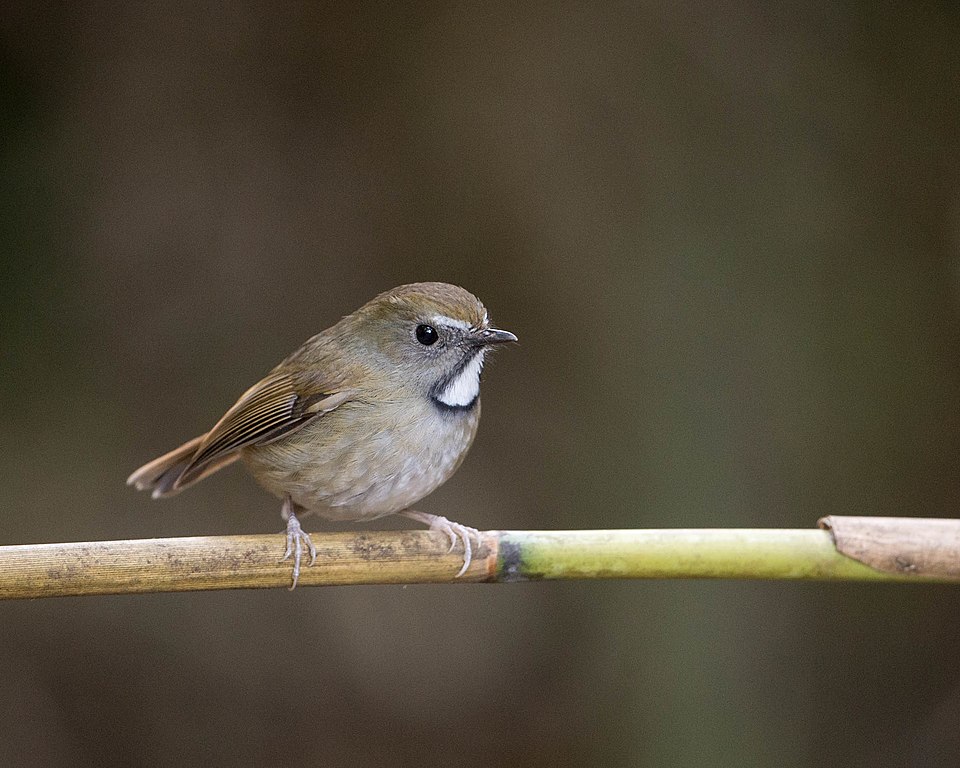
Cape Robin-Chat
Dessonornis caffer
Order: Passeriformes / Family: Muscicapidae

Wikimedia Commons
About the Cape Robin-Chat
The Cape Robin-Chat (Dessonornis caffer) is an engaging and familiar songbird across southern Africa, celebrated for its melodious song and vibrant orange throat that stands out against its otherwise subdued plumage. This member of the Muscicapidae family plays a significant ecological role as both a predator of small invertebrates and a disperser of seeds, contributing to the health of the ecosystems it inhabits. Found in a variety of environments, from suburban gardens to forest edges and fynbos, the Cape Robin-Chat displays remarkable adaptability, adjusting its behavior and diet according to the season and availability of resources. In regions such as South Africa's Cape provinces, Zimbabwe, and Botswana, the Cape Robin-Chat thrives in both rural and urban settings, demonstrating its ability to coexist with human development. Its presence is often a delightful accompaniment to the morning dawn chorus, providing an auditory link between nature and human habitations. Seasonally, the Cape Robin-Chat adjusts its breeding activities to coincide with favorable environmental conditions, typically nesting during the Southern Hemisphere's spring and summer months when food is abundant. The bird's ecological contributions include controlling insect populations, which helps maintain a balanced ecosystem, and its seed dispersal activities support plant regeneration and diversity. The Cape Robin-Chat’s adaptability and widespread presence make it a vital component of the avian community, influencing both natural and human-altered landscapes across its range.
The Cape Robin-Chat belongs to the family Muscicapidae, within the order Passeriformes. These birds typically live 5-8 years with a maximum recorded of 11 years..
How to Identify a Cape Robin-Chat
The Cape Robin-Chat is a medium-sized songbird, easily identified by its distinctive orange throat and upper chest, contrasting with its gray head and back. Adults exhibit a subtle blend of colors, with a grayish-brown body, white eyebrow stripe, and a distinctive black band across the face. Juveniles, however, differ in appearance with their mottled brown plumage, lacking the vibrant orange found in adults, making them less conspicuous. Both male and female Cape Robin-Chats share similar plumage, rendering gender differentiation challenging without behavioral observation. In flight, their rounded wings and slightly rounded tail are noticeable. When perched, their upright posture and flicking tail movements are characteristic traits. Although similar in size and shape to other chats, the Cape Robin-Chat’s unique orange throat and melodious song set it apart from species that inhabit overlapping regions, such as the White-browed Robin-Chat. Birders should note the Cape Robin-Chat’s distinctive silhouette and coloration to avoid confusion with similarly sized birds in its habitat.
Having trouble telling birds apart? Upload a photo to our bird identification tool for an instant species match.
Cape Robin-Chat Habitat and Range
Preferred Habitat
The Cape Robin-Chat inhabits a diverse array of habitat types, thriving in environments ranging from coastal scrub to mountainous regions. It flourishes in the fynbos of South Africa's Western Cape, the dense woodlands of Zimbabwe, and the urban gardens of Pretoria. This bird typically prefers habitats with dense undergrowth or bushy areas that provide ample cover and foraging opportunities. While it can be found at various elevations, it is most commonly seen at altitudes under 2,000 meters. Seasonal shifts in habitat usage occur, with birds moving to more sheltered areas during harsh weather conditions and spreading into open gardens when the climate is mild. Its ability to adapt to both rural and urban settings has allowed the Cape Robin-Chat to maintain a stable presence in many human-influenced landscapes.
Geographic Range
The Cape Robin-Chat boasts a wide distribution across southern Africa, extending from the southern regions of South Africa northwards to Zimbabwe and western Mozambique. Breeding territories are well established in the Eastern and Western Cape provinces, KwaZulu-Natal, and the highveld regions. During the non-breeding season, some populations may disperse locally in search of food, although they are largely sedentary. Migration corridors are not prominent due to the bird's resident nature, yet slight altitudinal movements might occur in response to climatic conditions. Population densities are highest in areas with abundant cover and food, such as the suburban and rural regions of Gauteng and the coastal thickets of the Eastern Cape.
Want to know which birds visit your area? Browse our backyard birds by location guides for region-specific species lists.
What Does the Cape Robin-Chat Eat?
The Cape Robin-Chat's diet primarily consists of insects and other small invertebrates, such as beetles, ants, and caterpillars. In addition to these primary food sources, it also consumes a variety of fruits and berries, particularly during the non-breeding season when insects are less plentiful. This dietary flexibility allows the Cape Robin-Chat to exploit a range of food resources throughout the year. Foraging behavior is active and methodical, typically involving short, deliberate hops on the ground, with occasional flights to snatch insects from mid-air or foliage. The bird's keen eyesight and agility make it an effective predator of small prey, which it hunts primarily during the early morning and late afternoon when temperatures are cooler and prey is more active. Seasonal shifts in diet may occur, with an increased reliance on fruit and seeds during late summer and autumn.
Cape Robin-Chat Behavior and Social Structure
Cape Robin-Chats are solitary or found in pairs, exhibiting strong territorial behavior, particularly during the breeding season. Males defend territories through song and display, often engaging in confrontational posturing to deter rivals. Courtship involves elaborate vocal exchanges and displays, with males showcasing their vibrant throats while singing. Outside the breeding season, these birds may display less territorial aggression, occasionally joining loose flocks with other species. The Cape Robin-Chat remains active throughout the day, with peak activity in the early morning and late afternoon. When threatened by predators, it employs a variety of alarm calls and may retreat to dense cover, using its agility and familiarity with local terrain to evade capture. Despite their assertive territoriality, Cape Robin-Chats coexist well with other bird species, often sharing feeding grounds and roosting sites.
Cape Robin-Chat Nesting and Reproduction
Cape Robin-Chats build cup-shaped nests primarily from grass, leaves, and twigs, often lining them with softer materials such as feathers and hair. Preferred nesting sites include dense shrubs, trees, and occasionally man-made structures that offer concealment and protection. Typical clutch size ranges from two to three eggs, with an incubation period of approximately 14 to 16 days. Both parents participate in incubation and feeding the young, showcasing a strong biparental care strategy. The fledging period spans around 14 days, during which the chicks develop rapidly, aided by the parents' diligent provisioning of food. Cape Robin-Chats generally manage one to two broods per year, with breeding activity closely tied to favorable climatic conditions, ensuring ample food supply for the growing chicks.
Cape Robin-Chat Sounds and Vocalizations
The Cape Robin-Chat's song is a rich, melodious sequence of whistles and chirps, often delivered from a prominent perch at dawn and dusk. The rhythm is varied and complex, with a clear, ringing quality that makes it one of the more recognizable calls in its range. In addition to its primary song, the Cape Robin-Chat produces a series of softer call notes, used for communication between mates and signaling alarm in the presence of predators. During the dawn chorus, its voice blends with other avian species, yet its distinctive tone often stands out. The bird's song serves both to establish territory and attract mates, with males singing frequently during the breeding season.
Interesting Facts About the Cape Robin-Chat
- 1The Cape Robin-Chat can recognize individual human faces, often reacting differently based on prior interactions.
- 2Despite its name, the Cape Robin-Chat is not closely related to the European Robin, though both are popular garden birds.
- 3A Cape Robin-Chat's territory can span over half a hectare, depending on the richness of the habitat.
- 4Their melodious songs include mimicry, incorporating sounds from other bird species into their own repertoire.
- 5The Cape Robin-Chat has adapted to urban environments more successfully than many other native bird species.
- 6These birds play a crucial role in seed dispersal, aiding in the regeneration of native plant species.
- 7Cape Robin-Chats are known to engage in 'anting,' a behavior where they use ants to remove parasites from their feathers.
Cape Robin-Chat Conservation Status
Currently, the Cape Robin-Chat holds a status of Least Concern according to the IUCN Red List, reflecting its stable population trends and wide distribution. Although its habitat faces threats from urban expansion and agricultural development, the bird's adaptability has allowed it to persist in altered landscapes. Conservation efforts focus on preserving natural habitats and ensuring connectivity between them, which supports not only the Cape Robin-Chat but also the broader avian community. Historical data indicates stable or slightly increasing population numbers, though ongoing monitoring is necessary to detect potential impacts from environmental changes or human activities.