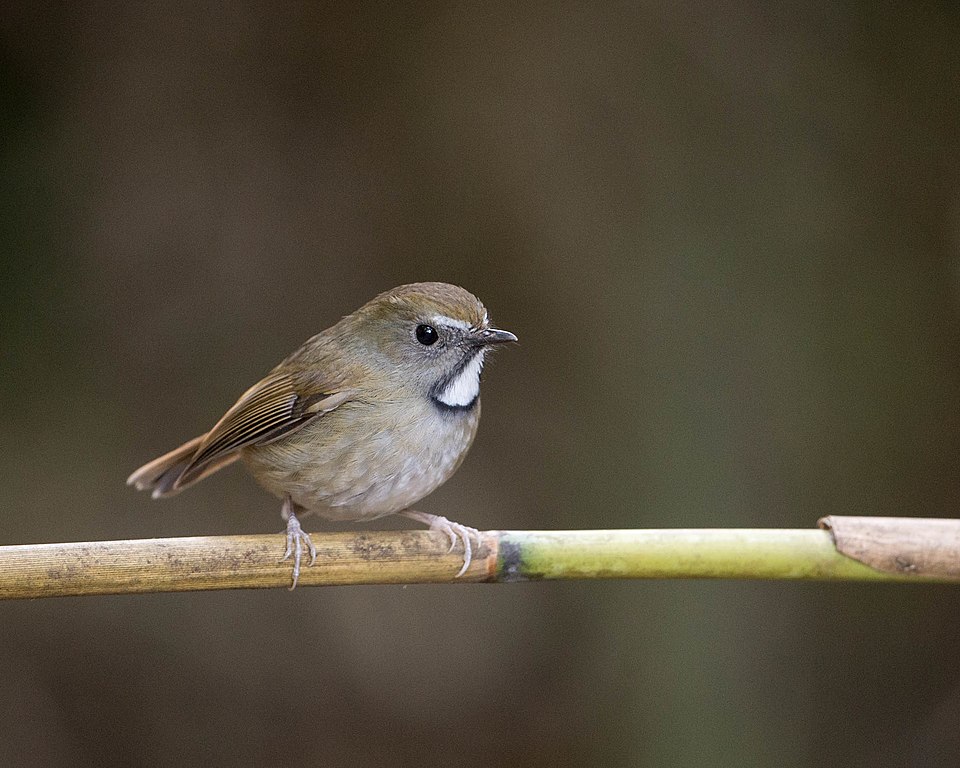
Cassin's Flycatcher
Muscicapa cassini
Order: Passeriformes / Family: Muscicapidae

Wikimedia Commons
About the Cassin's Flycatcher
Cassin's Flycatcher, scientifically known as Muscicapa cassini, is an intriguing member of the Muscicapidae family found predominantly in the dense, humid forests of West and Central Africa. This species plays a crucial role in the ecosystem by controlling insect populations, acting as a natural pest deterrent. It thrives in countries like Cameroon, Gabon, and the Democratic Republic of Congo, where it inhabits the understory of lowland rainforests. The bird is well-adapted to its environment, showcasing remarkable agility and precision as it flits through the forest in pursuit of prey. During the breeding season, Cassin's Flycatcher exhibits fascinating behaviors, including courtship displays characterized by rapid wing flicks and melodic calls. Outside of breeding, its movements are relatively sedentary, although it may undertake minor local migrations in response to seasonal changes in insect availability. The flycatcher's adaptability to varying forest conditions highlights its resilience, yet habitat destruction poses a threat, making conservation efforts vital. The bird's presence signifies a healthy, biodiverse forest ecosystem, as it often coexists with other species like the African Paradise Flycatcher and various sunbirds. Despite its relatively inconspicuous nature compared to more flamboyant avian residents of African forests, Cassin's Flycatcher's ecological significance cannot be understated. Observing this bird offers insight into the intricate balance of forest ecosystems and the importance of maintaining biodiversity.
The Cassin's Flycatcher belongs to the family Muscicapidae, within the order Passeriformes. These birds typically live typically around 4-6 years, with the longest recorded at 8 years..
How to Identify a Cassin's Flycatcher
Cassin's Flycatcher presents a subtle yet distinctive appearance that aids in its identification. Adults exhibit a predominantly brownish-gray plumage, with a slightly paler underbelly that helps distinguish it from similar species. The bird's wings and tail are a darker brown, providing contrast against the lighter body, while the face features a faint eye-ring, adding a touch of elegance to its otherwise understated appearance. Juvenile Cassin's Flycatchers resemble adults but may exhibit slightly more mottled plumage, with a hint of rufous on their flanks and wing coverts. Male and female birds appear similar, making gender differentiation challenging without close observation of behavior during the breeding season. In flight, Cassin's Flycatcher maintains a characteristic silhouette with a relatively short, square tail and rounded wings, adept for agile maneuvers within forested environments. Perched, the bird holds a slightly upright posture, often flicking its wings and tail in a distinctive manner. Although it shares its habitat with other flycatchers, such as the Dusky-blue Flycatcher, Muscicapa cassini can be distinguished by its more subdued coloration and unique call patterns. Its adeptness at capturing insects in mid-air is another hallmark of this species, often visible in its swift, acrobatic flight.
Having trouble telling birds apart? Upload a photo to our bird identification tool for an instant species match.
Cassin's Flycatcher Habitat and Range
Preferred Habitat
Cassin's Flycatcher predominantly inhabits the dense, humid lowland rainforests of Central and West Africa. It favors the understory and mid-canopy layers, where it finds abundant insect prey. This flycatcher thrives in evergreen forests, particularly those with a closed canopy that provides a stable microclimate and a rich insect population. Although primarily a forest dweller, it occasionally ventures into secondary forests and forest edges, especially where these intersect with water bodies. This species typically resides at elevations ranging from sea level to about 1,200 meters, although it shows a preference for areas with dense vegetation and minimal disturbance. Seasonal habitat shifts are minimal, as the bird remains largely sedentary throughout the year, though it may adjust its range slightly based on local food availability. Unlike some avian species, Cassin's Flycatcher rarely inhabits urban areas, sticking to its forested strongholds where it can best exploit its hunting skills.
Geographic Range
Cassin's Flycatcher is native to the tropical regions of Central and West Africa, where it occupies a relatively stable range within the continent's equatorial forest belt. Its breeding range extends across several countries, including Nigeria, Cameroon, Equatorial Guinea, Gabon, and the Democratic Republic of Congo. Within these areas, the flycatcher is typically found in lowland rainforest habitats that provide ample food resources and suitable nesting sites. The species is non-migratory, maintaining consistent territories year-round, although it may undertake short-distance movements to exploit local fluctuations in insect abundance. Population density hotspots are primarily located in regions with extensive, undisturbed forest cover, such as Gabon's Lopé National Park and Congo's Odzala-Kokoua National Park. Despite its relatively stable range, habitat loss and fragmentation due to logging and agricultural expansion represent significant threats that could impact its distribution in the future. Consequently, Cassin's Flycatcher's presence often indicates robust, healthy forest ecosystems.
Want to know which birds visit your area? Browse our backyard birds by location guides for region-specific species lists.
What Does the Cassin's Flycatcher Eat?
Cassin's Flycatcher's diet consists mainly of insects, which it captures with remarkable agility and precision. This bird favors small to medium-sized insects, such as flies, beetles, and moths, which are abundant in its forested habitats. During the wet season, when insect activity peaks, the flycatcher may consume a wider variety of prey, benefiting from the increased abundance. The bird employs a sit-and-wait foraging strategy, perching quietly before launching into a swift aerial pursuit of passing insects. Cassin's Flycatcher uses its keen eyesight to spot prey from a distance, executing acrobatic maneuvers mid-flight to secure its meal. This foraging technique allows it to exploit the vertical space of the forest, feeding at various canopy levels. The bird typically hunts during daylight hours, with activity peaking in the early morning and late afternoon when insects are most active. While insects form the core of its diet, the flycatcher occasionally consumes small spiders and other arthropods, further demonstrating its adaptability as an insectivore.
Cassin's Flycatcher Behavior and Social Structure
Cassin's Flycatcher exhibits fascinating behaviors reflective of its adaptability and ecological niche. This species is typically solitary or found in pairs, with each pair maintaining a well-defined territory during the breeding season. Territorial behavior includes vocal displays and occasional aggressive posturing to ward off intruders. During courtship, males perform elaborate displays, fluttering their wings and producing soft, melodic calls to attract females. While generally non-flocking, Cassin's Flycatcher may join mixed-species foraging flocks, especially outside the breeding season, capitalizing on the increased foraging efficiency and predator vigilance. The bird demonstrates a strong attachment to its territory, rarely straying far from its established range. Its response to predators includes alarm calls and evasive flight, often seeking cover within dense foliage. Daily activity patterns are diurnal, with periods of active foraging interspersed with rest and preening. Cassin's Flycatcher's behavior reflects its role as a skilled insect hunter and a vital component of its forest ecosystem.
Cassin's Flycatcher Nesting and Reproduction
Cassin's Flycatcher constructs a cup-shaped nest using a combination of moss, leaves, and spider webs, which provides structural integrity and camouflage. Nests are typically placed in the fork of a small tree or shrub, often at a height ranging from 2 to 5 meters above the ground, ensuring protection from ground predators and easy access to food resources. The female lays a clutch of two to three eggs, with an incubation period lasting approximately 14 to 16 days. Both parents share the responsibilities of incubation and feeding, demonstrating a strong cooperative breeding strategy. After hatching, the chicks remain in the nest for about 15 to 18 days before fledging. During this period, the parents diligently provide food and protection, ensuring the survival of their offspring. Cassin's Flycatcher usually raises one to two broods per year, depending on environmental conditions and food availability. The bird's nesting habits reflect its adaptability to forest environments and commitment to successful reproduction.
Cassin's Flycatcher Sounds and Vocalizations
Cassin's Flycatcher is known for its melodic and varied vocalizations, which play an essential role in territory establishment and mate attraction. The primary song consists of a series of clear, whistling notes delivered in a rhythmic pattern, often described as a sweet, cascading melody. This song can frequently be heard at dawn, as the bird participates in the forest's dawn chorus. In addition to its song, Cassin's Flycatcher produces a range of call notes, including sharp, short whistles used as contact calls between mates or to signal alarm. Alarm calls are typically high-pitched and rapid, serving to alert other birds to potential threats. The bird's vocal repertoire, though not as extensive as some songbirds, is distinctive and aids in distinguishing it from other flycatcher species within its range.
Interesting Facts About the Cassin's Flycatcher
- 1Cassin's Flycatcher was named after John Cassin, a 19th-century American ornithologist known for his work on African birds.
- 2This species can perform over 10 aerial maneuvers per minute while foraging, showcasing its incredible agility.
- 3Cassin's Flycatcher has adapted to coexist with over 200 bird species in its forest habitat, highlighting its ecological resilience.
- 4Despite its name, Cassin's Flycatcher does not migrate, remaining within its range year-round and adapting to local food availability.
- 5The bird's diet primarily consists of insects, but it can consume up to 50 different prey species, varying with seasonal availability.
- 6Cassin's Flycatcher can recognize individual calls of its mate, allowing for effective communication during foraging and nesting.
- 7This flycatcher uses its distinctive wing flicking as a form of communication, signaling both potential threats and courtship intentions.
Cassin's Flycatcher Conservation Status
Cassin's Flycatcher is currently classified as Least Concern by the IUCN, indicating a relatively stable population. However, its long-term conservation status remains dependent on the preservation of its forest habitat. The primary threats to this species include habitat loss and fragmentation due to logging, agriculture, and infrastructure development. Conservation efforts focus on protecting forested areas within its range, including the establishment of national parks and reserves that safeguard critical habitats. Initiatives to promote sustainable forestry practices and community engagement in conservation activities also contribute to the species' protection. While historical population data is limited, ongoing monitoring and research are essential to ensure that Cassin's Flycatcher continues to thrive in its native environment.