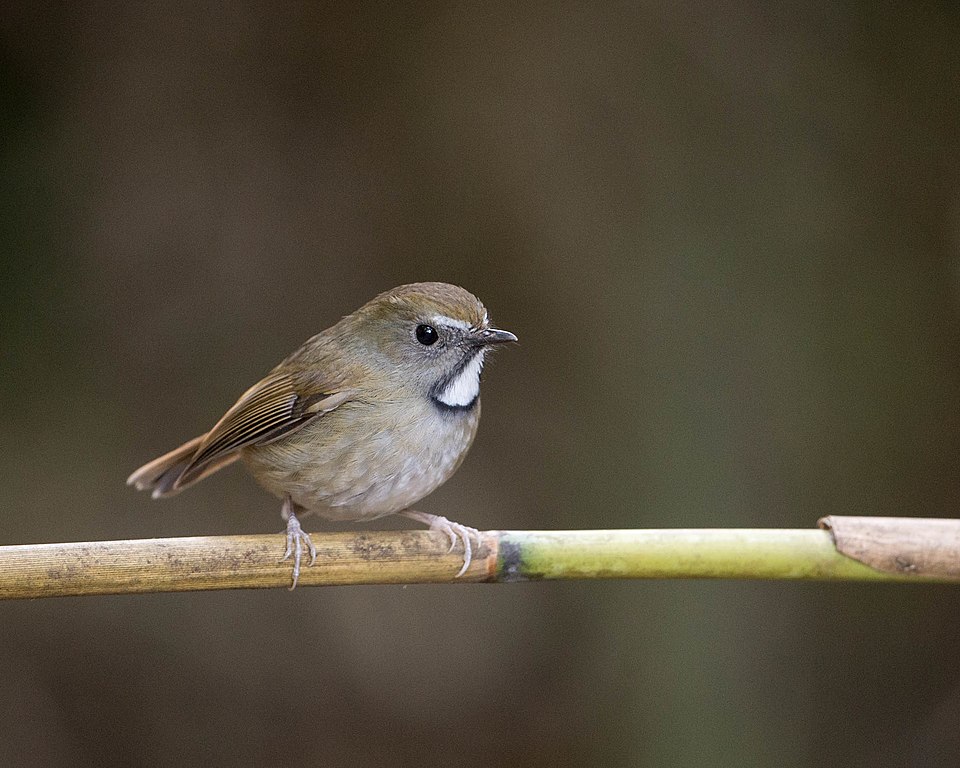
Chestnut-bellied Rock-Thrush
Monticola rufiventris
Order: Passeriformes / Family: Muscicapidae

Wikimedia Commons
About the Chestnut-bellied Rock-Thrush
The Chestnut-bellied Rock-Thrush (Monticola rufiventris) is a vibrant and captivating member of the Muscicapidae family, primarily inhabiting the montane regions of South Asia. This bird is noteworthy for its striking coloration and melodious song, which contribute to its reputation as a cherished species among bird enthusiasts and ornithologists. The male is especially eye-catching with its deep blue head and back, contrasting with the rich chestnut belly that gives the species its name. Females, while more subdued in coloration, possess a beauty all their own, exhibiting a more muted palette of browns and grays. Found predominantly in the Himalayas, its range extends from eastern Afghanistan through northern India, Nepal, Bhutan, and into western Myanmar. During the breeding season, which typically spans from April to July, the Chestnut-bellied Rock-Thrush engages in elaborate courtship displays, often accompanied by its rich, warbling song. The species typically selects high-altitude forested areas for nesting, favoring habitats that offer a mix of open areas and dense vegetation. The ecological role of the Chestnut-bellied Rock-Thrush is significant, as it helps control insect populations and contributes to the pollination of certain plant species through its feeding habits. Its presence serves as a key indicator of healthy montane ecosystems, making its conservation status of particular interest to environmentalists. Despite facing threats from habitat loss due to deforestation and agricultural expansion, the Chestnut-bellied Rock-Thrush remains relatively stable across much of its range. Conservation efforts focus on habitat protection and monitoring population trends to ensure this captivating bird continues to thrive in its natural habitat.
The Chestnut-bellied Rock-Thrush belongs to the family Muscicapidae, within the order Passeriformes. These birds typically live average lifespan is 6-8 years, with some recorded up to 11 years..
How to Identify a Chestnut-bellied Rock-Thrush
The adult male Chestnut-bellied Rock-Thrush is unmistakable with its combination of bright blue upperparts and a striking chestnut-colored belly. The head and back shimmer with a deep blue hue, which can appear almost iridescent in certain lighting conditions. The throat and breast transition to a rich chestnut, providing a vivid contrast that is easily spotted in its native habitats. Females and juveniles lack the intense coloration of the males, instead displaying a more subdued pattern with brownish upperparts and a lighter, speckled belly. This dimorphic plumage helps them blend into the forest understory, providing camouflage from predators. In terms of size, the Chestnut-bellied Rock-Thrush is a medium-sized songbird, typically measuring about 20 cm in length. Its silhouette in flight is characterized by broad wings and a relatively short tail, which aid in its agile movements among trees and rocky outcrops. When perched, it often adopts an upright posture, allowing easy observation of its distinctive coloring. While similar species, such as the Blue Rock-Thrush, can cause confusion, the chestnut belly of Monticola rufiventris serves as a definitive field mark that sets it apart.
Having trouble telling birds apart? Upload a photo to our bird identification tool for an instant species match.
Chestnut-bellied Rock-Thrush Habitat and Range
Preferred Habitat
The preferred habitat of the Chestnut-bellied Rock-Thrush includes montane and submontane forests, where it inhabits elevations ranging from 1,800 to 3,600 meters. These environments offer a mix of open clearings and dense vegetation, providing both foraging opportunities and shelter. The bird frequently occupies areas with rocky outcrops, where it can perch and survey its surroundings. Seasonal shifts in habitat are observed, as the species may descend to lower altitudes during colder months, seeking milder conditions and more abundant food sources. While primarily a denizen of forested areas, the Chestnut-bellied Rock-Thrush occasionally ventures into rural gardens and orchards, although it remains largely absent from urban settings. Its presence in these diverse habitats underscores its adaptability, yet it remains reliant on the preservation of natural forested regions for breeding and feeding.
Geographic Range
The breeding range of the Chestnut-bellied Rock-Thrush is largely centered in the Himalayas, spanning regions from eastern Afghanistan to western Myanmar. In India, it is commonly found in the states of Uttarakhand, Himachal Pradesh, and Sikkim, extending into Nepal and Bhutan. During the breeding season, the species occupies high-altitude forests, while in winter, it may migrate to lower elevations in search of more temperate climates and available food sources. Although not a long-distance migrant, the Chestnut-bellied Rock-Thrush makes altitudinal movements that are crucial for its survival during harsher weather conditions. Population density is typically higher in undisturbed forested areas, where the bird benefits from ample food supply and suitable nesting sites. Conservation areas such as national parks in the Himalayas play a vital role in safeguarding its habitats, ensuring that the populations remain stable across its range.
Want to know which birds visit your area? Browse our backyard birds by location guides for region-specific species lists.
What Does the Chestnut-bellied Rock-Thrush Eat?
The diet of the Chestnut-bellied Rock-Thrush primarily consists of insects and other invertebrates, making it an insectivorous bird. Beetles, caterpillars, and orthopterans form the bulk of its diet, particularly during the breeding season when protein demands are high. The bird uses a combination of ground foraging and aerial sallies to capture prey, showcasing its versatility as a hunter. Seasonal changes in diet occur as the availability of insect prey fluctuates, prompting the Chestnut-bellied Rock-Thrush to supplement its diet with fruits and berries, especially during the winter months. The bird often feeds during the cooler parts of the day, such as early morning and late afternoon, which corresponds with peak insect activity. Despite its diet primarily consisting of relatively small prey, the Chestnut-bellied Rock-Thrush plays a significant role in controlling insect populations within its habitat.
Chestnut-bellied Rock-Thrush Behavior and Social Structure
The behavior of the Chestnut-bellied Rock-Thrush is characterized by its solitary and territorial nature, especially during the breeding season. Males establish and defend territories through vocal displays and physical posturing, often perching prominently to sing their melodious songs. Courtship involves elaborate displays where males fan their tails, spread their wings, and perform aerial chases to attract a mate. Outside of the breeding season, the bird becomes less territorial and may be seen in loose associations with other small bird species, particularly during foraging. The species exhibits a keen awareness of predators and will emit sharp alarm calls to alert others of danger. Its daily activity pattern is predominantly diurnal, with most feeding and social interactions occurring during daylight hours. The Chestnut-bellied Rock-Thrush typically roosts in dense foliage at night, seeking cover from nocturnal predators.
Chestnut-bellied Rock-Thrush Nesting and Reproduction
The Chestnut-bellied Rock-Thrush constructs its nest in natural cavities or crevices, often selecting sites in rock faces or hollow trees. The nest itself is a compact cup structure made from grasses, moss, and leaves, lined with softer materials such as feathers or animal hair. Clutch size generally ranges from 3 to 5 eggs, which are incubated primarily by the female over a period of about 12 to 14 days. Both parents participate in feeding the chicks, which fledge approximately 14 to 16 days after hatching. The fledglings remain dependent on parental care for several weeks post-fledging while they develop the skills necessary for independent survival. Typically, the species raises one brood per year, although in favorable conditions, a second brood may be attempted.
Chestnut-bellied Rock-Thrush Sounds and Vocalizations
The primary song of the Chestnut-bellied Rock-Thrush is a series of rich, melodious warbles that vary in pitch and rhythm. This song serves both to establish territory and to attract a mate during the breeding season. Additionally, the bird produces call notes that are shorter and less complex, often used for communication between mates or to signal alarm. Alarm calls are sharp and abrupt, serving to warn of potential threats. During the dawn chorus, the Chestnut-bellied Rock-Thrush is one of the first species to vocalize, its song resonating through forested valleys and rocky outcrops. The quality of its vocalizations can be compared to fluting or whistling, with a clear, resonant tone that carries well across its montane habitat.
Interesting Facts About the Chestnut-bellied Rock-Thrush
- 1The Chestnut-bellied Rock-Thrush is known to mimic the calls of other bird species, showcasing its vocal versatility.
- 2This species exhibits altitudinal migrations, moving to lower elevations during harsh winters in the Himalayas.
- 3The male Chestnut-bellied Rock-Thrush's striking colors can change in intensity based on lighting conditions.
- 4Females of the species typically choose nesting sites, demonstrating a strong preference for natural rock crevices.
- 5The Chestnut-bellied Rock-Thrush plays a crucial role in controlling insect populations, acting as a natural pest regulator.
- 6Despite its striking appearance, the bird's plumage provides excellent camouflage in its rocky, forested habitats.
- 7The song of the Chestnut-bellied Rock-Thrush is considered one of the most melodious among Himalayan birds.
Chestnut-bellied Rock-Thrush Conservation Status
The IUCN currently lists the Chestnut-bellied Rock-Thrush as Least Concern due to its broad range and stable population numbers. However, habitat loss resulting from deforestation and agricultural expansion poses ongoing threats. Conservation efforts focus on protecting key habitats within its range, particularly in the Himalayas where logging and development pressures are increasing. Monitoring programs have been established in several countries to track population trends and assess the impact of environmental changes. Historically, the species has maintained a stable presence in suitable habitats, benefiting from protected areas such as national parks and wildlife reserves. Continued conservation initiatives aim to ensure that the Chestnut-bellied Rock-Thrush remains a thriving component of the montane forest ecosystem.