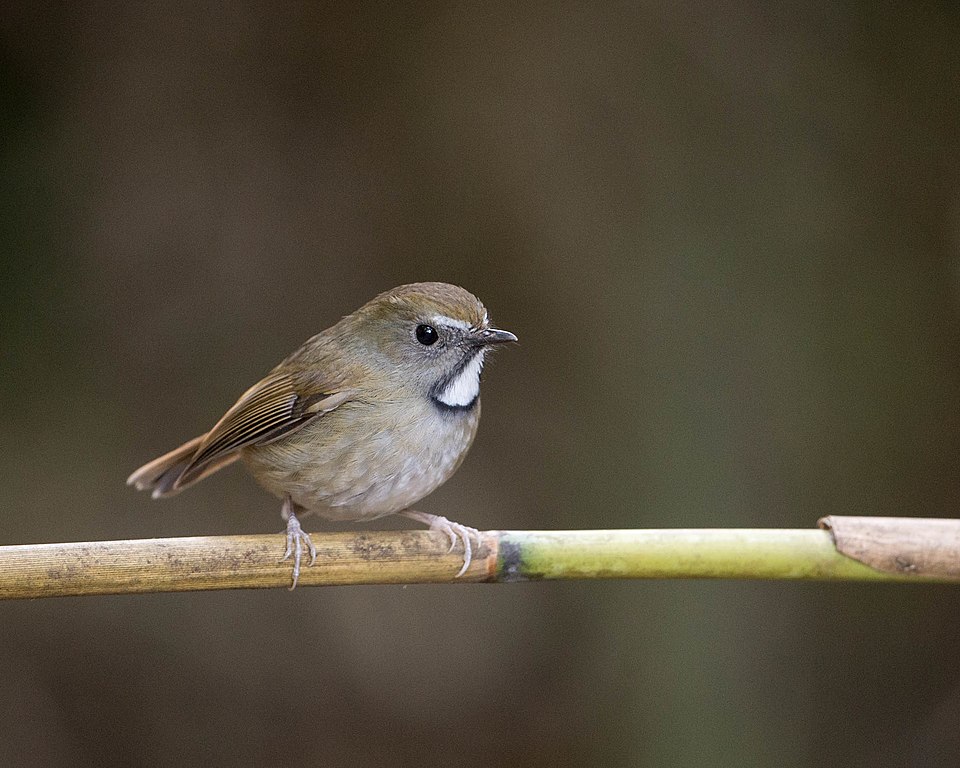
Chinese Vivid Niltava
Niltava oatesi
Order: Passeriformes / Family: Muscicapidae

Wikimedia Commons
About the Chinese Vivid Niltava
The Chinese Vivid Niltava (Niltava oatesi) is an enchanting bird that belongs to the family Muscicapidae and is a prominent member of the flycatcher group. This species is primarily found in the subtropical and tropical montane forests of Southeast Asia, particularly in countries like China, Myanmar, Vietnam, and Thailand. The altitudinal range where it thrives often lies between 900 to 2500 meters. These dense, humid forests offer the perfect environment for its feeding and nesting habits.
The ecological role of the Chinese Vivid Niltava is significant, as it helps control insect populations, thus maintaining the ecological balance within its habitat. As an insectivore, it predominantly preys on a variety of arthropods, which it deftly captures through its adept flycatching skills. This dietary preference aids in the regulation of insect communities, underscoring its importance in the forest ecosystems where it resides.
Seasonal behaviors of the Chinese Vivid Niltava are subtle yet important to note. During the breeding season, which typically spans from March to July, these birds exhibit increased vocal activity and territorial displays. Both male and female engage in courtship rituals that involve a series of complex calls and displays. In contrast, the non-breeding season sees them adopting a more solitary lifestyle, with reduced vocalization and less conspicuous behavior. Overall, the Chinese Vivid Niltava plays a crucial role as both a predator and a prey species, contributing to the dynamic equilibrium of its forest habitat.
The Chinese Vivid Niltava belongs to the family Muscicapidae, within the order Passeriformes. These birds typically live average 5 years with a maximum recorded of 10 years..
How to Identify a Chinese Vivid Niltava
The Chinese Vivid Niltava is a medium-sized bird, measuring approximately 15 to 18 centimeters in length. Adult males are particularly striking, boasting a vibrant cobalt-blue plumage that covers the head, back, and wings, contrasting with their black face and throat. The underparts are a rich orange-rufous, providing a startling contrast to the vivid blues. In comparison, females are more subdued, with olive-brown upperparts and a duller orange-buff on the underparts. They lack the intense blue coloration of the males, making them less conspicuous in their leafy surroundings.
Juveniles resemble females but are generally duller, with a more muted color palette that provides better camouflage against predators. This difference between the sexes, known as sexual dimorphism, plays a critical role during the breeding season, when males utilize their bright plumage to attract females.
One might confuse the Chinese Vivid Niltava with other vivid niltavas or even the related Rufous-bellied Niltava. However, the latter species can be distinguished by its darker, more orange belly and less pronounced blue coloration. In flight, the Chinese Vivid Niltava exhibits a rapid, direct flight pattern, with short bursts of flapping interspersed with glides, a silhouette typical of flycatchers. When perched, it often holds an erect posture, scanning for prey with quick, jerky movements.
Having trouble telling birds apart? Upload a photo to our bird identification tool for an instant species match.
Chinese Vivid Niltava Habitat and Range
Preferred Habitat
The Chinese Vivid Niltava predominantly inhabits subtropical and tropical montane forests, where dense canopy cover and ample insect life provide ideal living conditions. These forests are typically found at elevations ranging from 900 to 2500 meters. Within these habitats, the bird favors areas with thick understory growth and a high density of shrubs and trees, which offer both foraging opportunities and nesting sites.
During the breeding season, the Chinese Vivid Niltava becomes more selective about its habitat, often choosing territories that offer a rich abundance of food and suitable nesting locations. In contrast, during non-breeding periods, it may venture into slightly less dense forest areas or even near the edges of human habitation, although it remains predominantly a forest-dweller.
The bird's preference for montane forests means it is less commonly found in urban environments, although fragmentation of its natural habitat sometimes forces it to adapt to more disturbed areas. Seasonal habitat shifts are minimal since the bird is generally sedentary, with only local movements influenced by food availability and breeding requirements.
Geographic Range
The Chinese Vivid Niltava has a relatively restricted range within Southeast Asia. Its breeding range primarily encompasses the montane regions of southern China, including the provinces of Yunnan and Sichuan. Beyond China, it is also found in the mountainous areas of northern Myanmar and Vietnam, with some populations extending into Thailand.
During the breeding season, these birds are typically found at higher elevations, ranging from 900 to 2500 meters. They prefer the cooler, moist climates of montane forests, where insect prey is abundant. This specific range makes them somewhat localized, and they are not considered widespread across the broader landscape of Southeast Asia.
Migration does not play a significant role in the life of the Chinese Vivid Niltava. Instead, it exhibits more sedentary behavior, with only minor altitudinal movements in response to seasonal changes in food availability. As a result, population density hotspots are closely tied to these montane forest regions, where habitat conditions remain relatively stable throughout the year.
Want to know which birds visit your area? Browse our backyard birds by location guides for region-specific species lists.
What Does the Chinese Vivid Niltava Eat?
The Chinese Vivid Niltava is primarily insectivorous, relying on a diet rich in arthropods to meet its nutritional needs. It skillfully captures a wide variety of insects, including beetles, flies, and caterpillars, using its agile flycatching techniques. During the warmer months, when insect populations are at their peak, it actively forages throughout the day, employing a sit-and-wait strategy that involves quick, darting flights to snatch prey from the air or foliage.
In addition to insects, the Chinese Vivid Niltava occasionally supplements its diet with small fruits and berries, especially during the non-breeding season when insect availability may decline. This dietary flexibility ensures it can sustain itself even when primary food sources become scarce.
The bird's foraging schedule is largely diurnal, with peak activity occurring in the early morning and late afternoon when insects are most active. Its keen eyesight and quick reflexes make it a highly effective predator in its montane forest habitat.
Chinese Vivid Niltava Behavior and Social Structure
The Chinese Vivid Niltava exhibits a range of intriguing behaviors that are typical of many flycatcher species. Socially, it tends to be solitary or found in pairs, particularly during the breeding season when territorial behavior becomes pronounced. Males establish and defend territories through vocalizations and displays, using their striking plumage to assert dominance and deter rivals.
Courtship displays are a captivating aspect of this species' behavior. Males perform a series of intricate flights and vocalizations intended to attract females. These displays often involve rapid wing and tail movements, accompanied by a repertoire of melodious calls that resonate through the forest.
Flocking is not a common behavior for the Chinese Vivid Niltava, as it tends to be more territorially driven. However, outside the breeding season, small groups may form loosely, particularly in areas with abundant food resources. In the face of predators, the bird's response is typically to freeze or retreat into dense foliage, relying on its drab coloration to avoid detection.
Daily activity patterns are diurnal, with foraging and other activities concentrated in the early morning and late afternoon. The bird's alert posture and quick movements make it a dynamic and engaging species to observe in its native habitat.
Chinese Vivid Niltava Nesting and Reproduction
The nesting habits of the Chinese Vivid Niltava are carefully adapted to its montane forest environment. It constructs cup-shaped nests using a variety of materials such as moss, roots, and leaves, often lined with finer materials to provide insulation and comfort for the eggs and chicks. These nests are typically placed in the forks of branches or nestled within dense shrubbery, providing concealment from potential predators.
A typical clutch consists of two to four eggs, with the incubation period lasting approximately 14 to 16 days. Both parents share incubation duties, although the female often takes the lead role. Once hatched, the chicks are altricial, requiring intensive parental care and feeding for about two weeks until fledging.
The fledging timeline is relatively quick, with young birds leaving the nest around 14 to 18 days after hatching. Both parents continue to feed the fledglings for a short period post-fledging, ensuring they develop the necessary skills to forage independently. The Chinese Vivid Niltava typically raises one brood per year, although in optimal conditions, a second brood may be attempted.
Chinese Vivid Niltava Sounds and Vocalizations
The vocal repertoire of the Chinese Vivid Niltava is both varied and melodious, with its primary song consisting of a series of clear, whistling notes that rise and fall in pitch. This song serves as a territorial call and a means to attract mates during the breeding season. The rhythm is deliberate and measured, often compared to the sound of a flute played in a tranquil forest setting.
In addition to its primary song, the Chinese Vivid Niltava also utilizes a range of call notes and alarm calls. These are typically short and sharp, designed to alert others of potential threats. During the dawn chorus, its song becomes more pronounced, contributing to the vibrant symphony of the forest.
The bird's vocalizations are distinctive, yet they can occasionally be confused with those of closely related species. However, the unique tonal quality and phrasing of its calls make it a recognizable presence in its natural habitat.
Interesting Facts About the Chinese Vivid Niltava
- 1The Chinese Vivid Niltava can be found at elevations as high as 2500 meters, showcasing its adaptability to montane environments.
- 2Males use their vivid blue plumage not only to attract females but also to intimidate rivals during territorial disputes.
- 3Despite its striking appearance, the Chinese Vivid Niltava is adept at blending into its forest surroundings when needed.
- 4The bird's diet is so insect-centric that it plays a crucial role in controlling pest populations in its habitat.
- 5The Chinese Vivid Niltava's song is often described as flute-like, adding a musical backdrop to montane forests.
- 6This bird is part of the Muscicapidae family, which includes many well-known flycatchers and chats.
- 7Niltava oatesi is named after Eugene William Oates, a 19th-century British naturalist and ornithologist.
Chinese Vivid Niltava Conservation Status
The Chinese Vivid Niltava is currently classified as Least Concern by the IUCN, indicating that its populations remain relatively stable. However, ongoing habitat loss due to deforestation and land-use changes poses a potential threat to its long-term survival. Conservation efforts focus on preserving the montane forest habitats that are crucial for its breeding and foraging activities. Historically, populations have fluctuated with changes in forest cover, but the current trend appears stable due to the bird's adaptability to varying environmental conditions. Continued monitoring and habitat protection are essential to ensure this species does not face increased risks in the future.